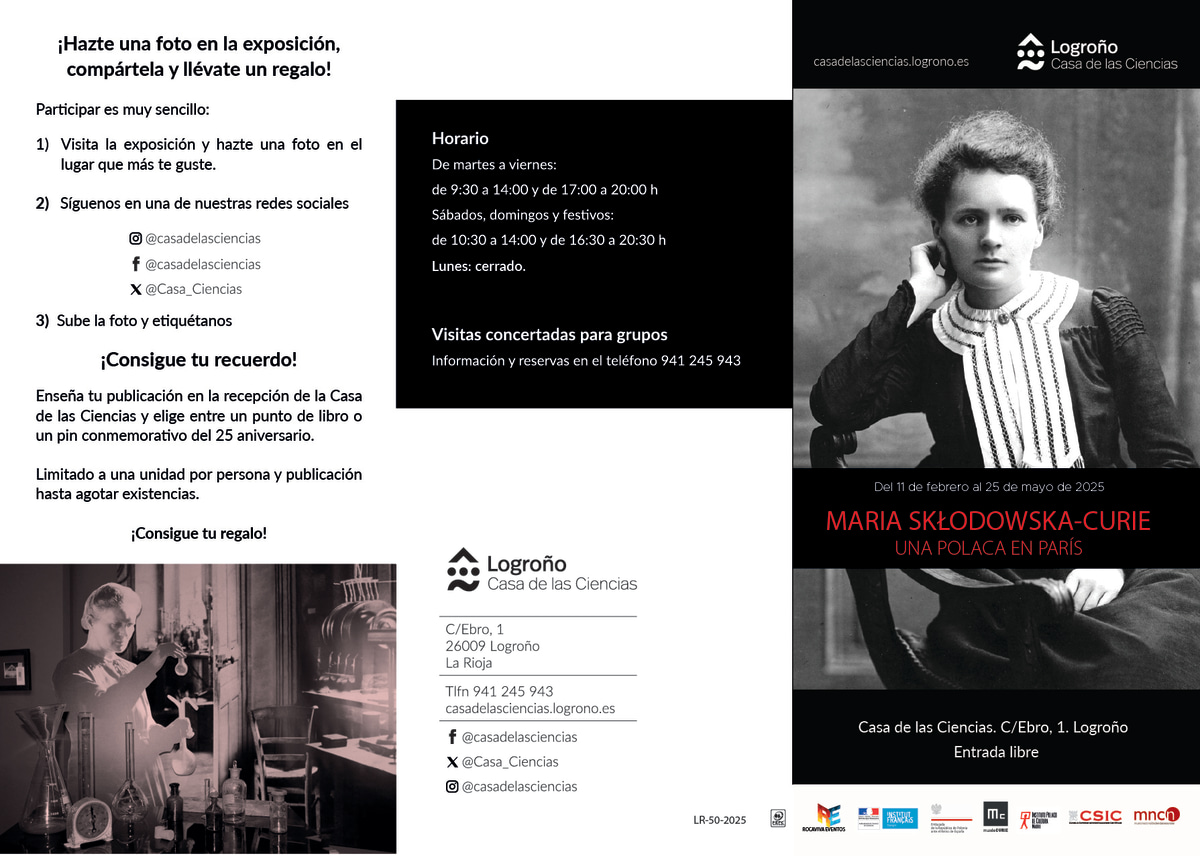
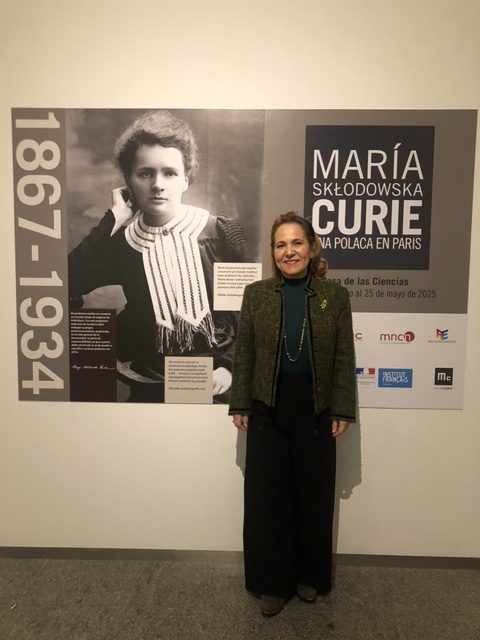
This traveling exhibition traces the life and work of the eminent Polish-French scientist and two-time Nobel Prize laureate, Maria Sklodowska-Curie. The exhibition was created by the cultural company Rocaviva Eventos and is curated by Belen Yuste and Sonnia L. Rivas-Caballero, authors of the biographies “Maria Sklodowska-Curie. Ella misma” (Ed. Palabra) and “Descubriendo a Cajal” (Ed. Planeta).
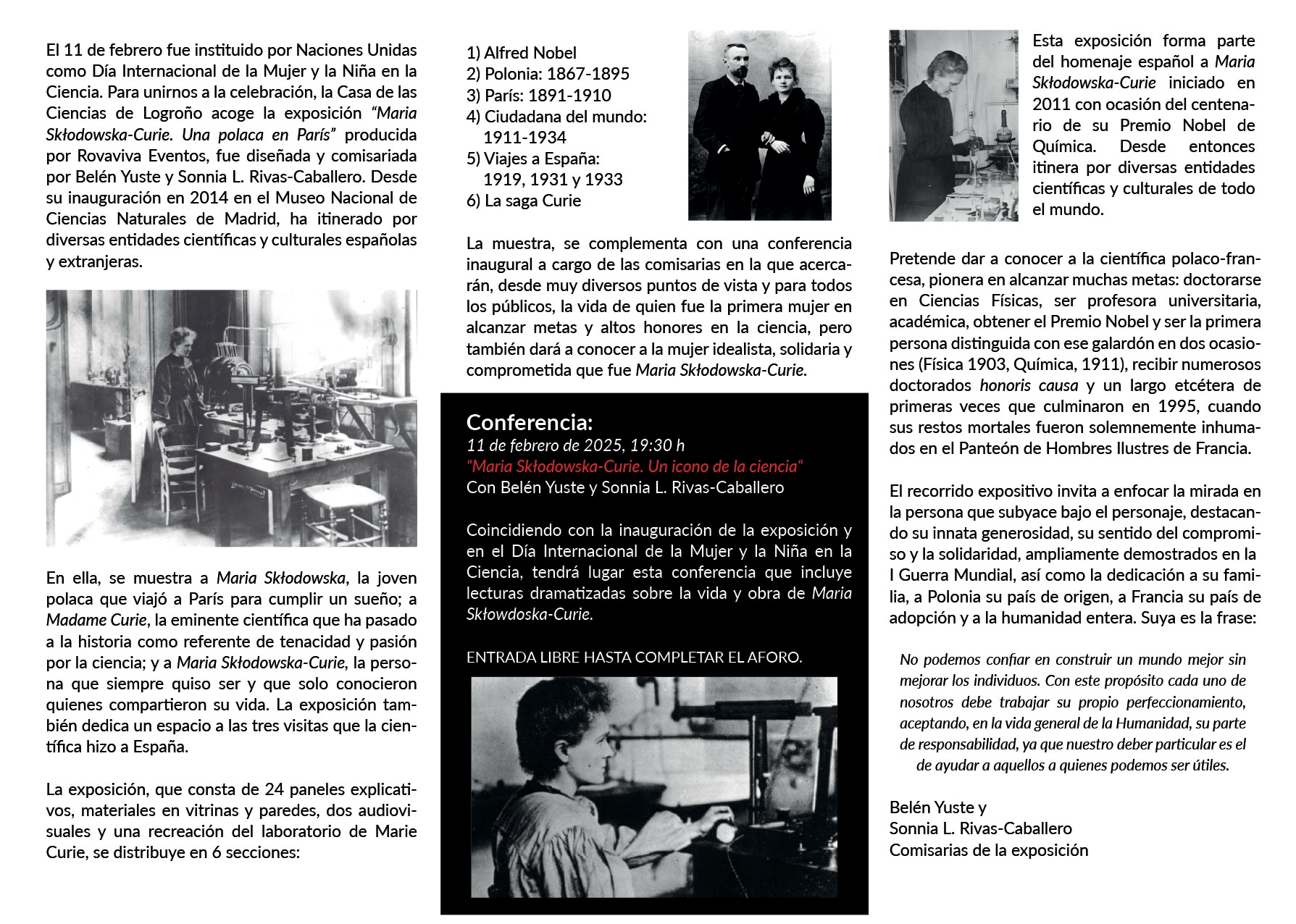
The exhibition Maria Sklodowska-Curie: A Polish Woman in Paris was inaugurated on February 11 by the mayor of Logrono on the occasion of the International Day of Women and Girls in Science.
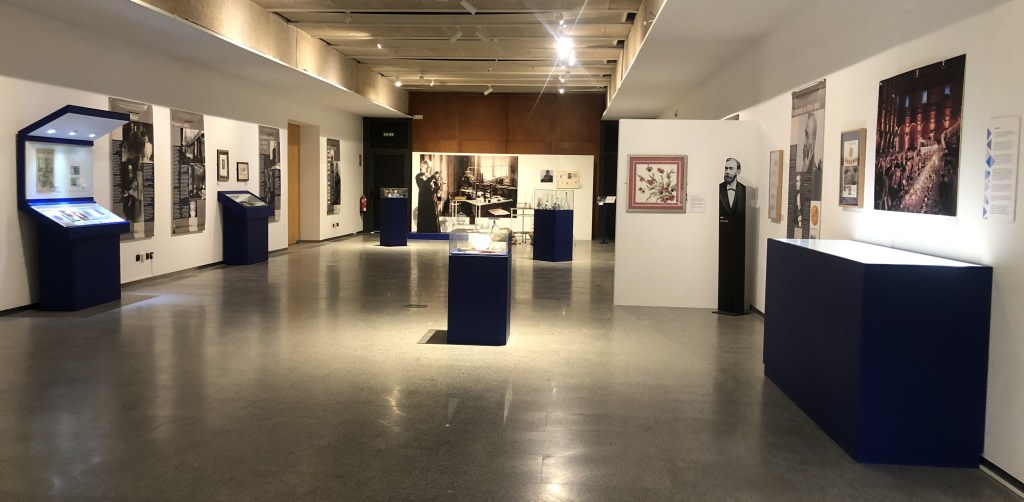
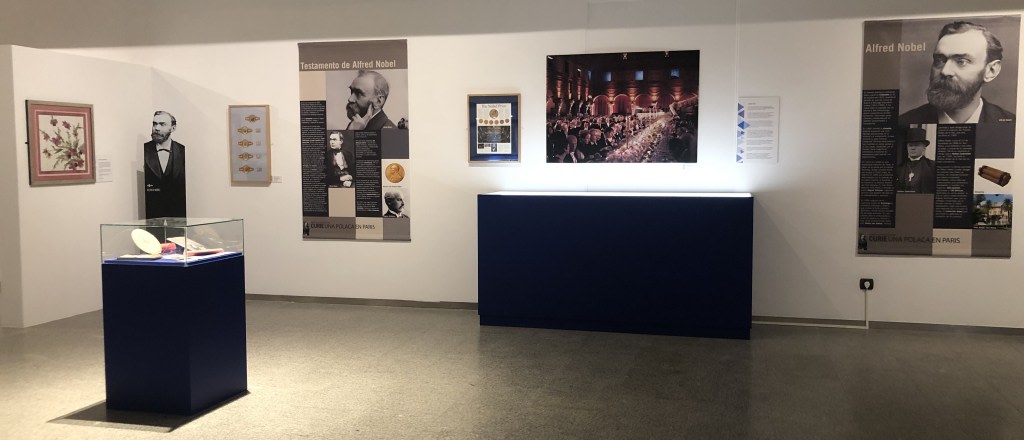
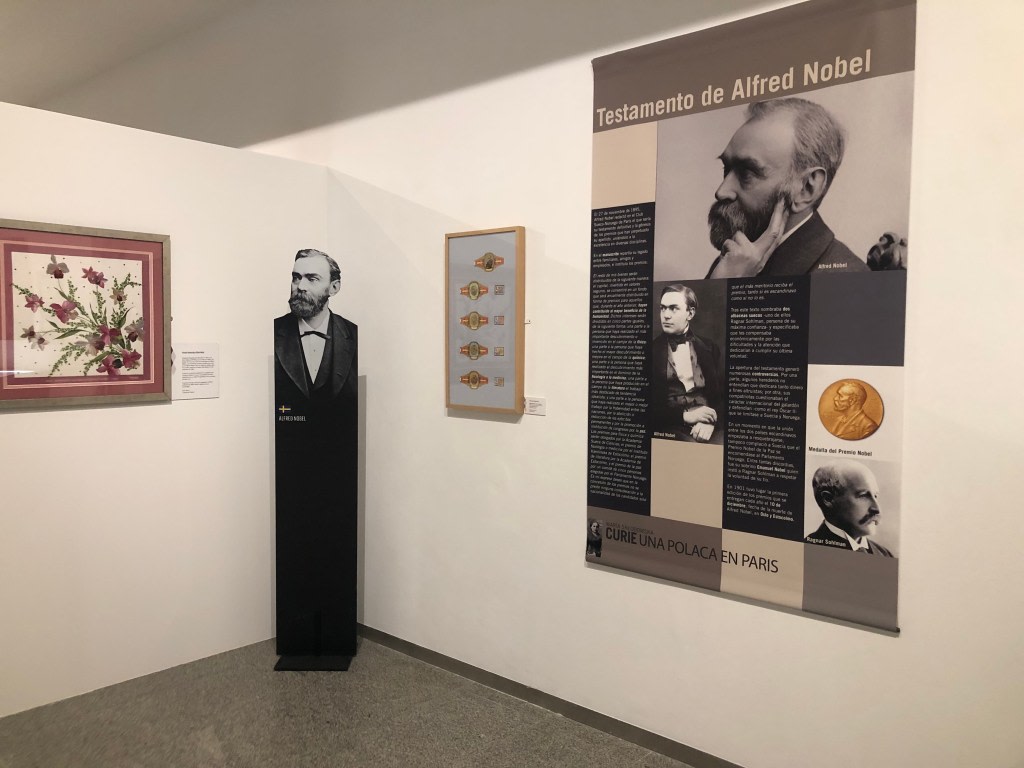
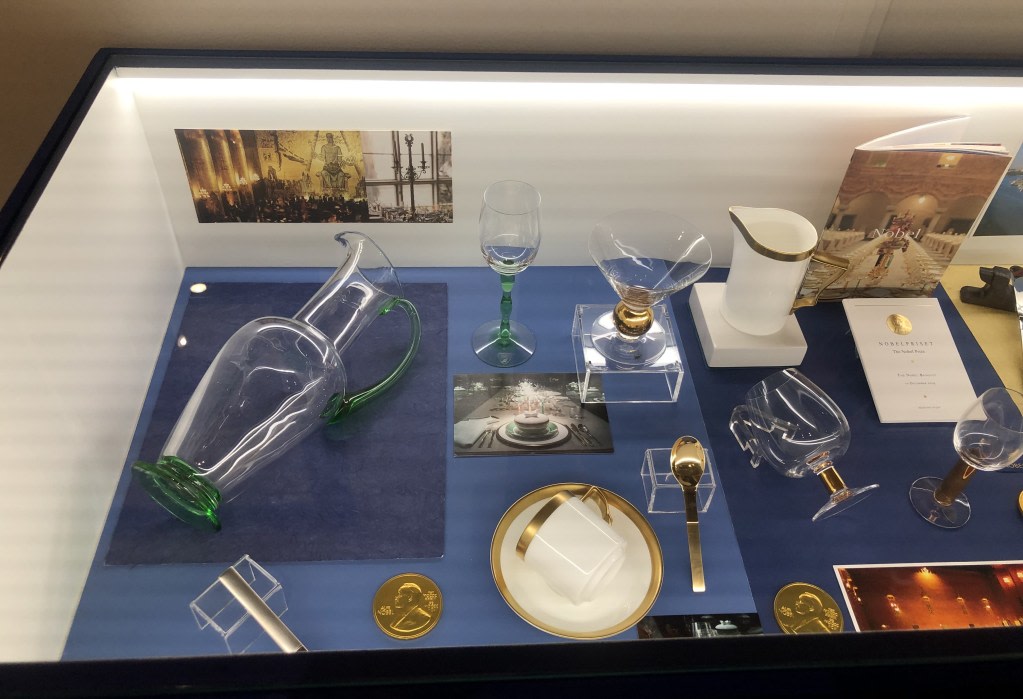
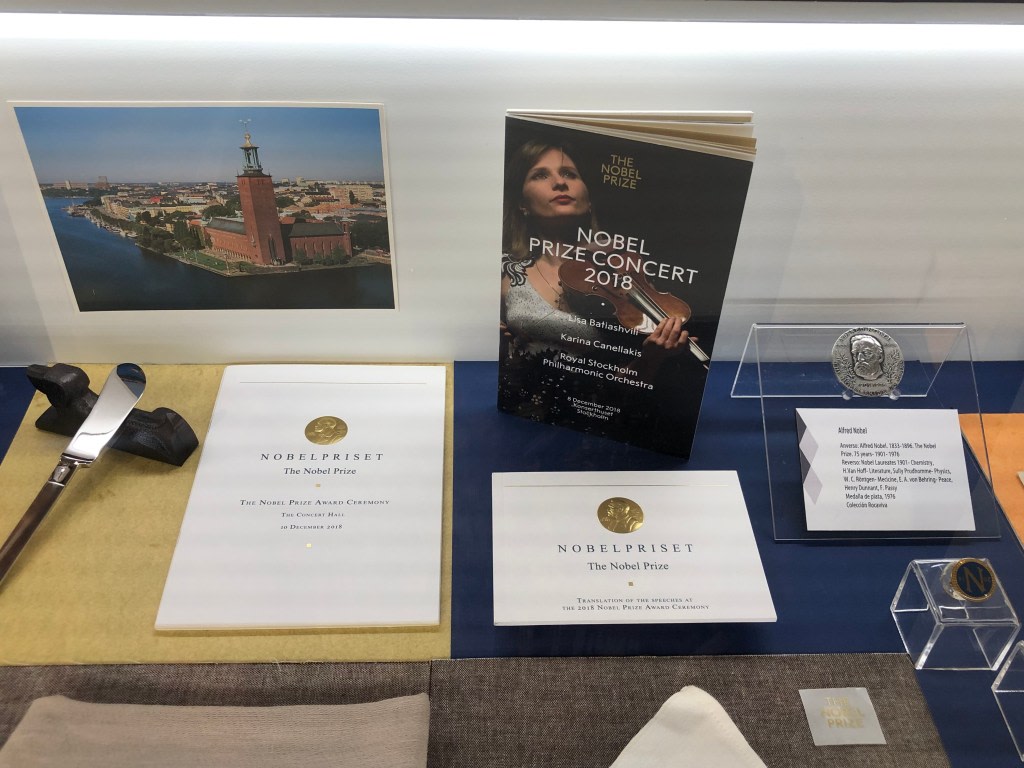
The exhibition tour begins with a section dedicated to Alfred Nobel — the Swedish industrialist who created the famous prizes — and includes pieces from the tableware of the exclusive Nobel banquet.
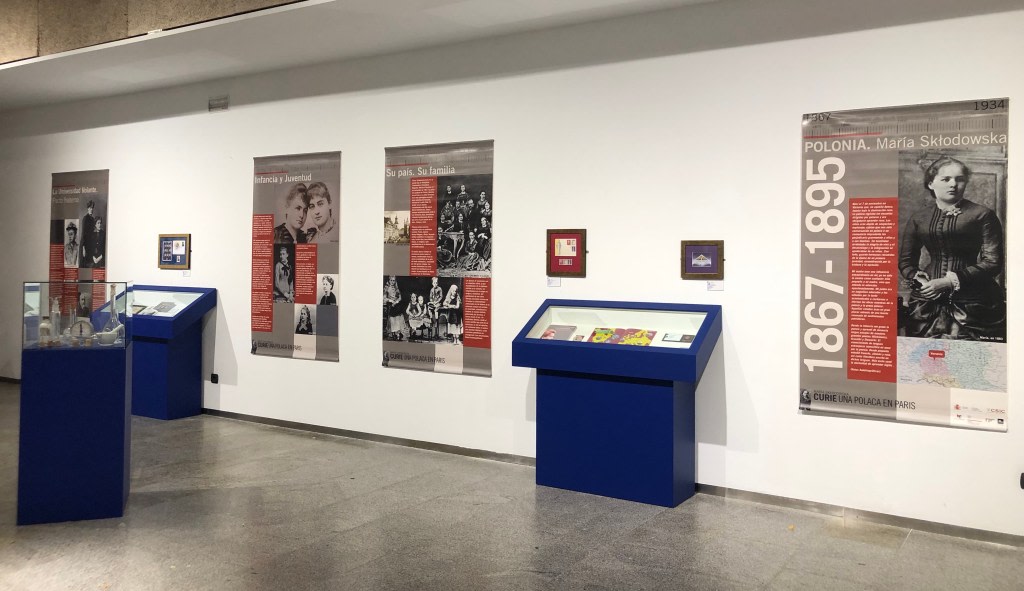
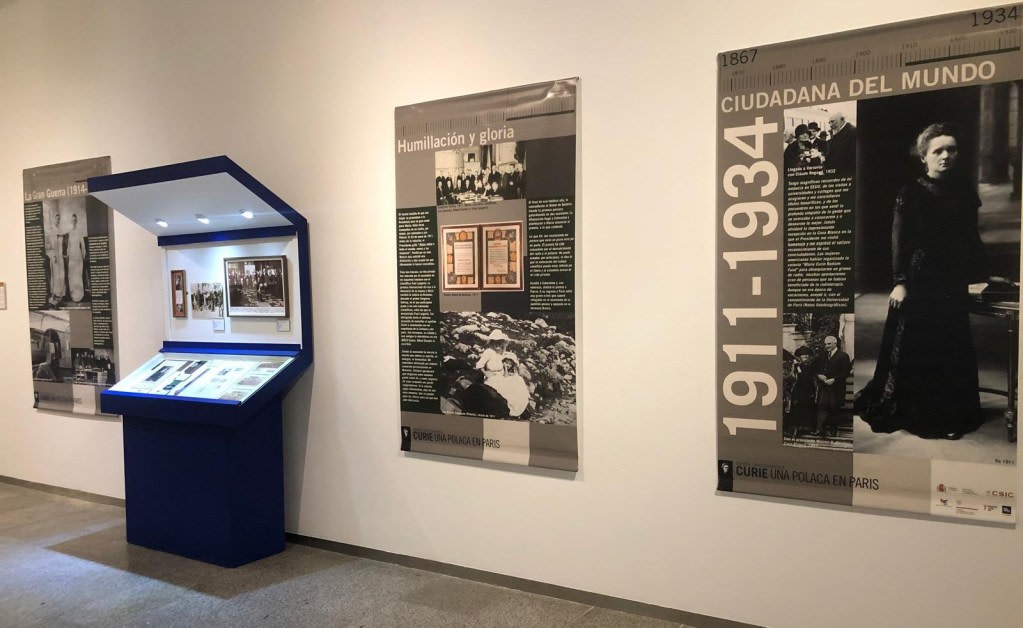
The introduction dedicated to Alfred Nobel gives way to a chronological itinerary through the life of the protagonist, with various sections devoted to key periods in her life: Poland, Paris, and Citizen of the World.
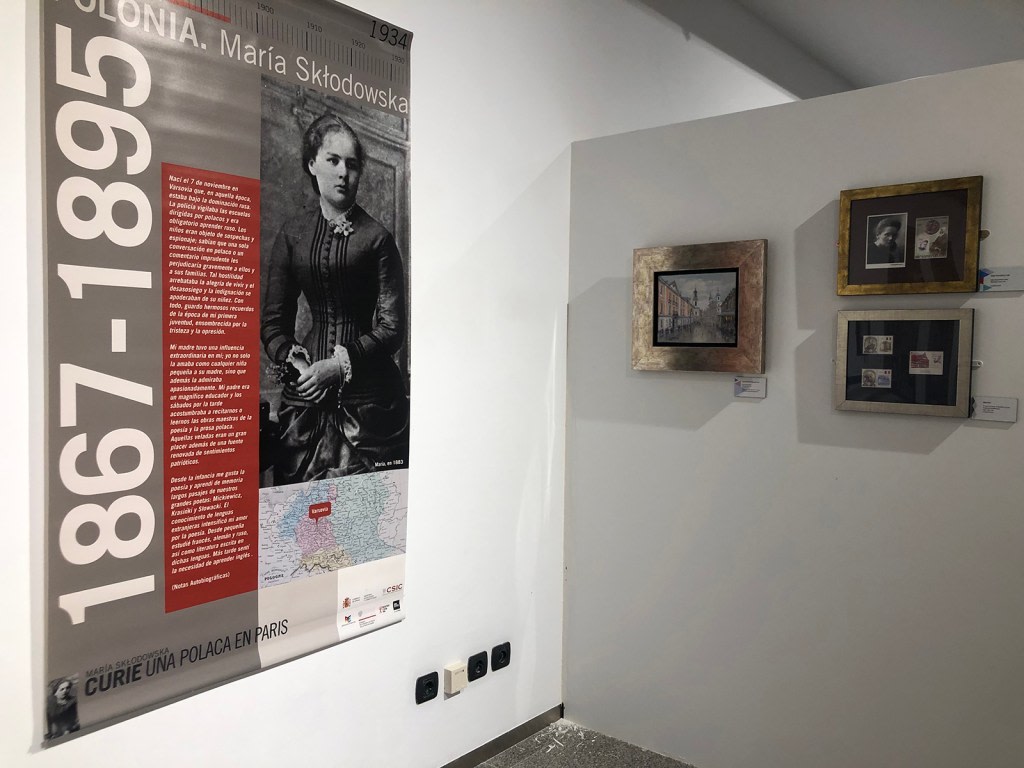
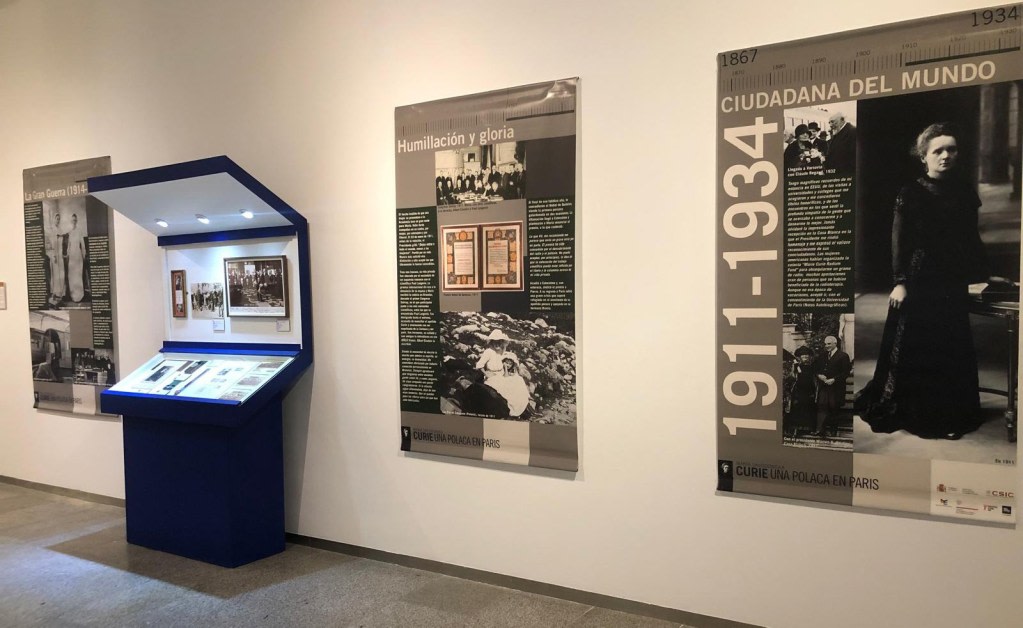
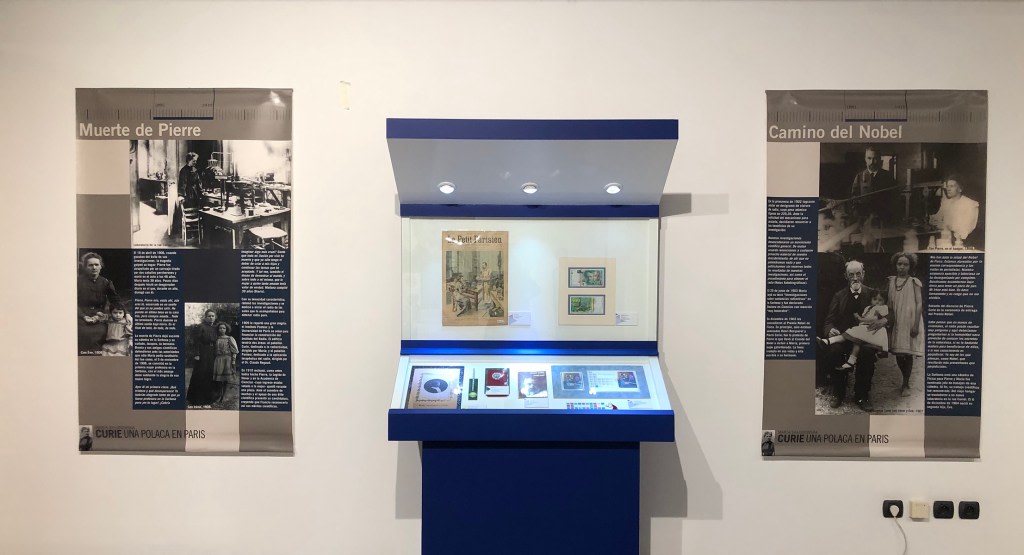
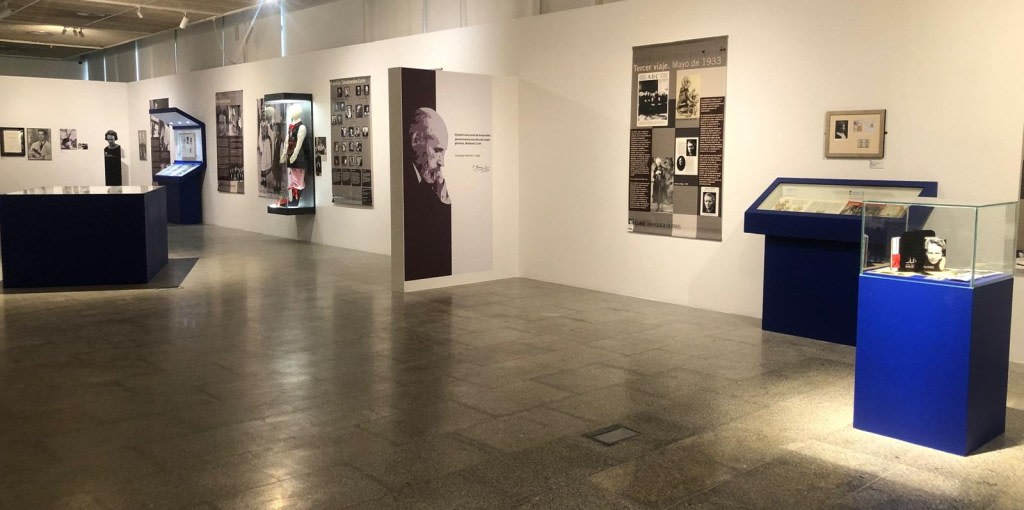
A special section is dedicated to her three trips to Spain (1919, 1931, and 1933), and the final section covers the Curie saga.
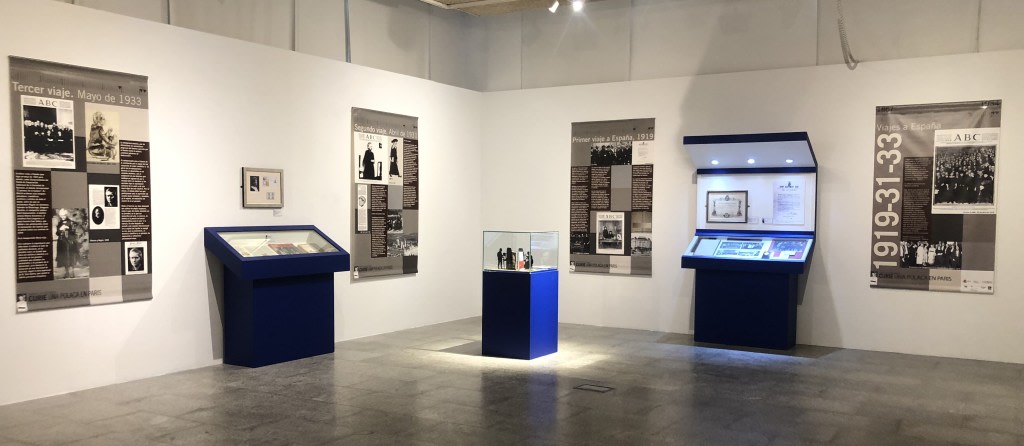
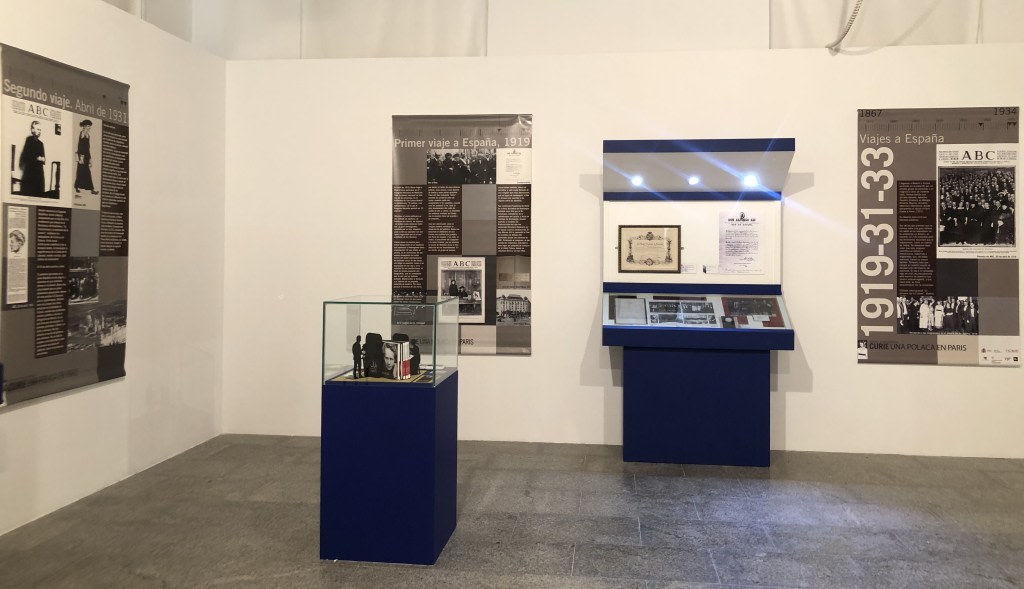
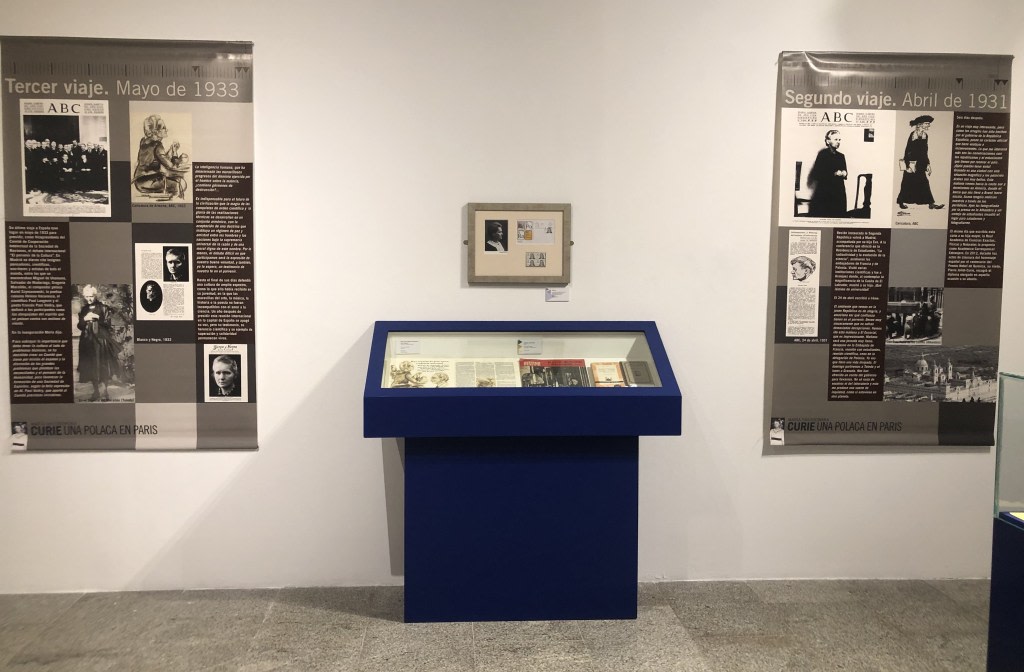
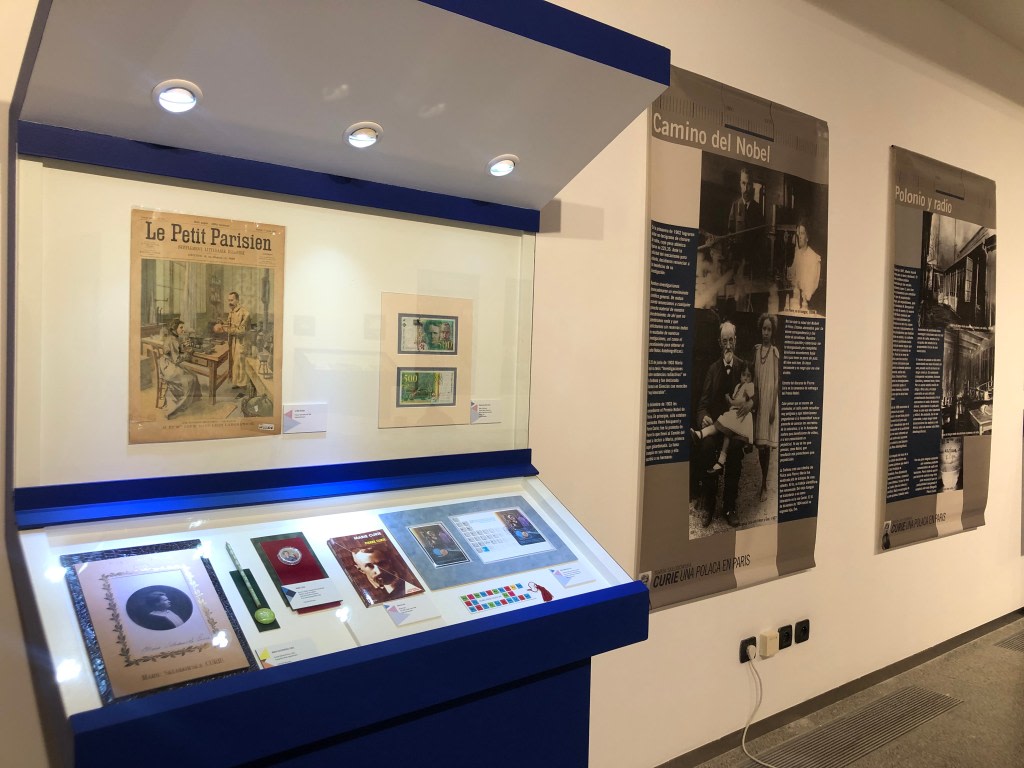
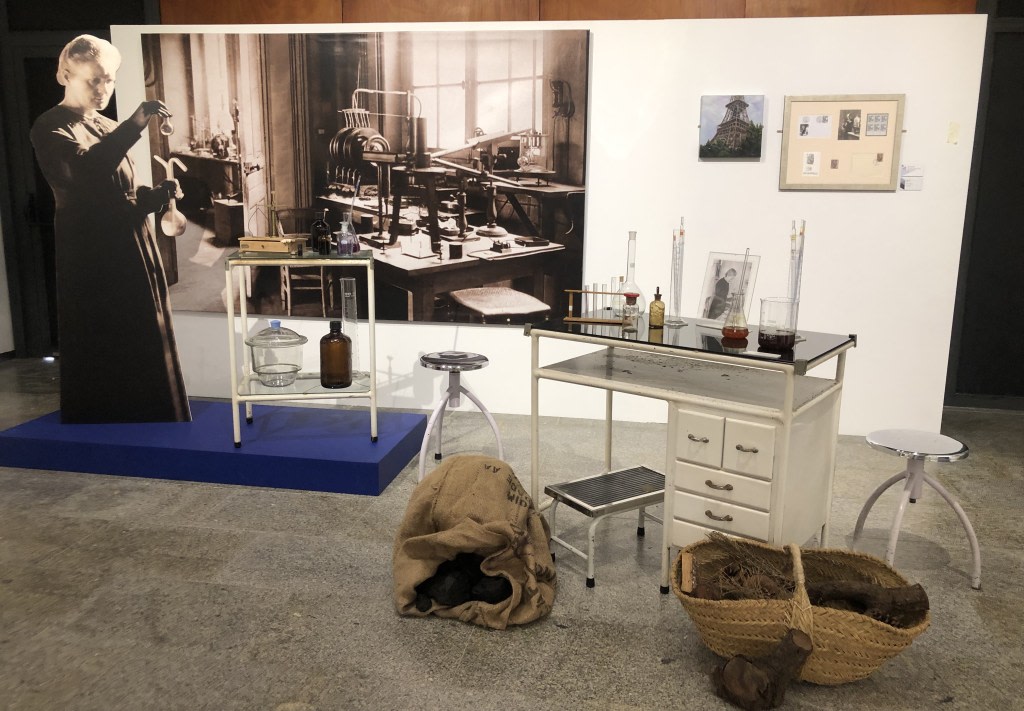
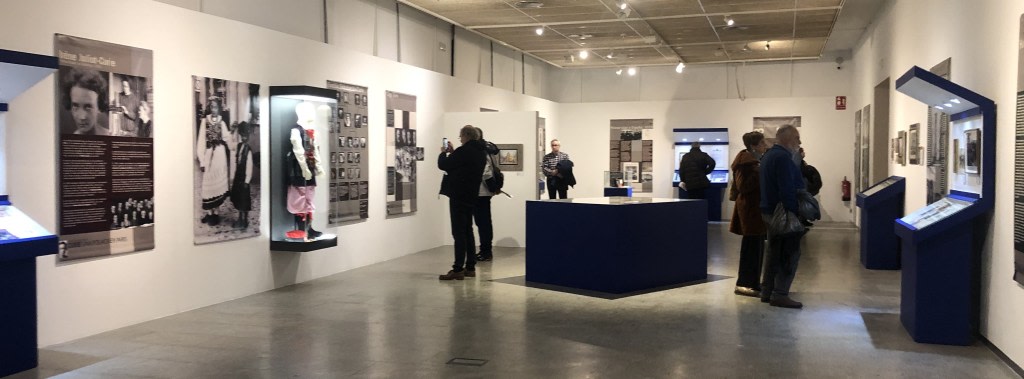
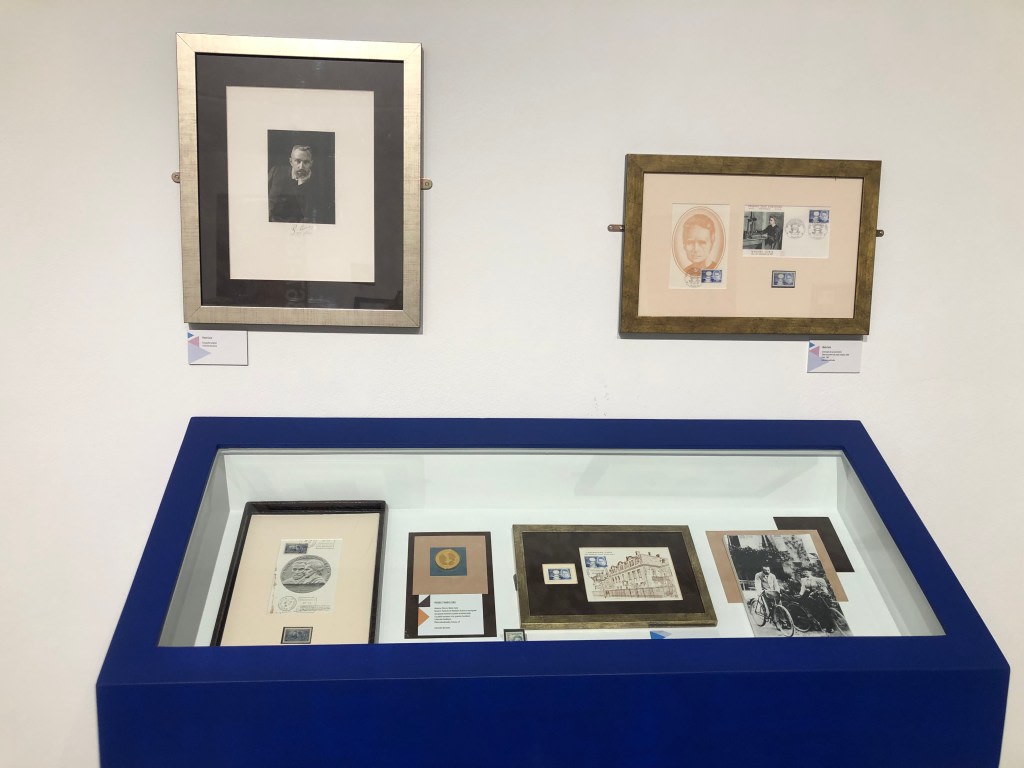
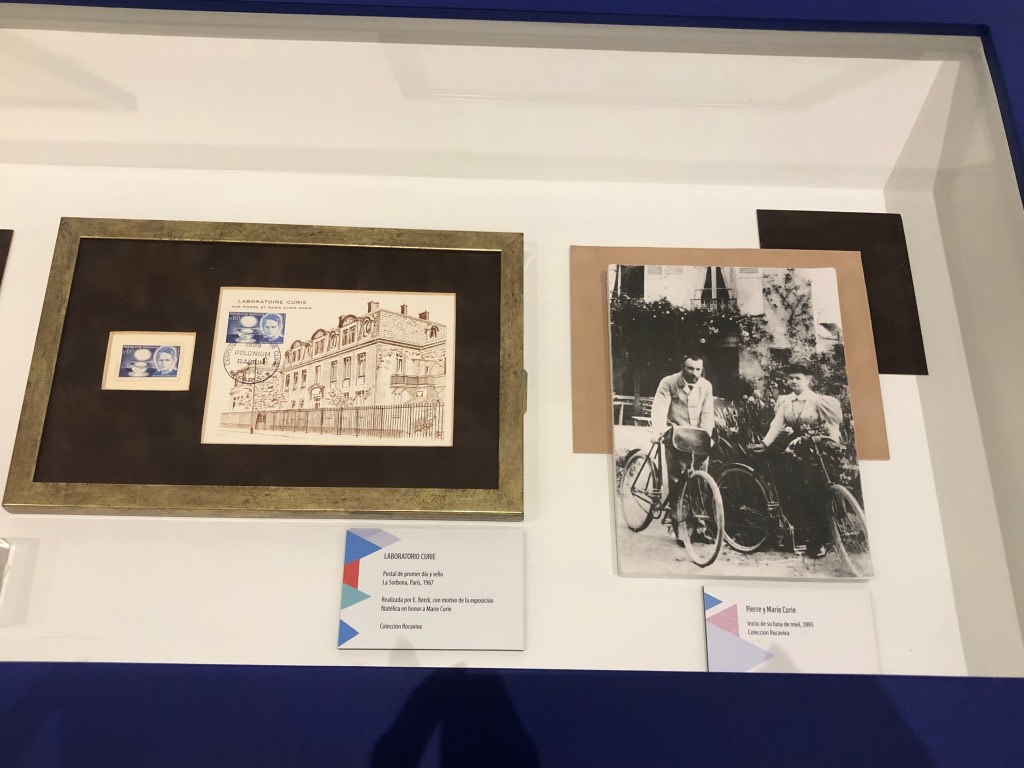
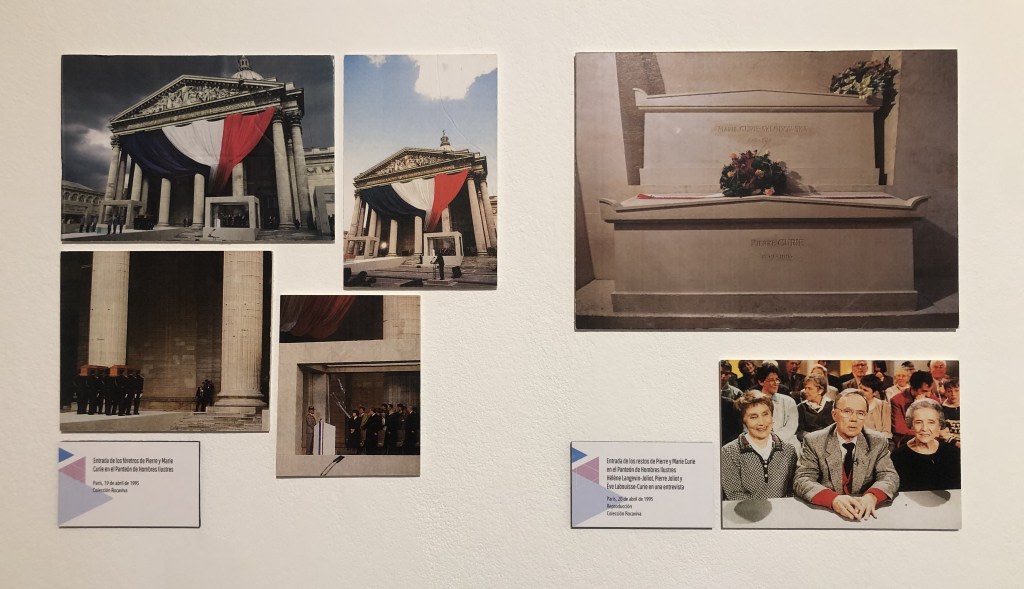
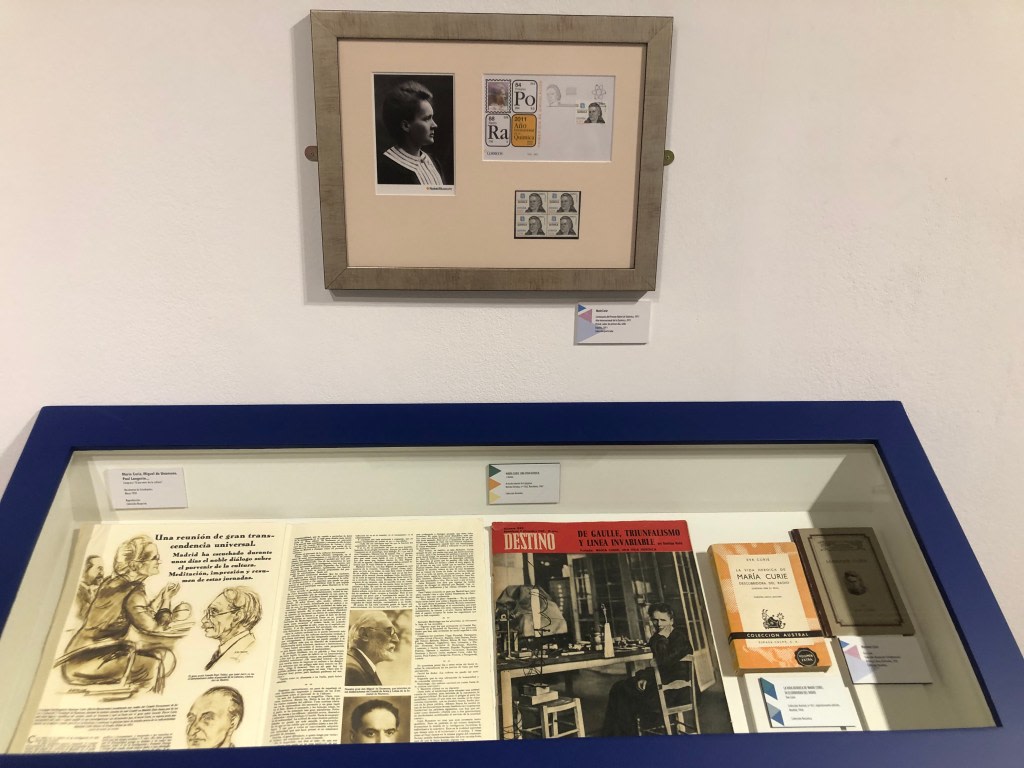
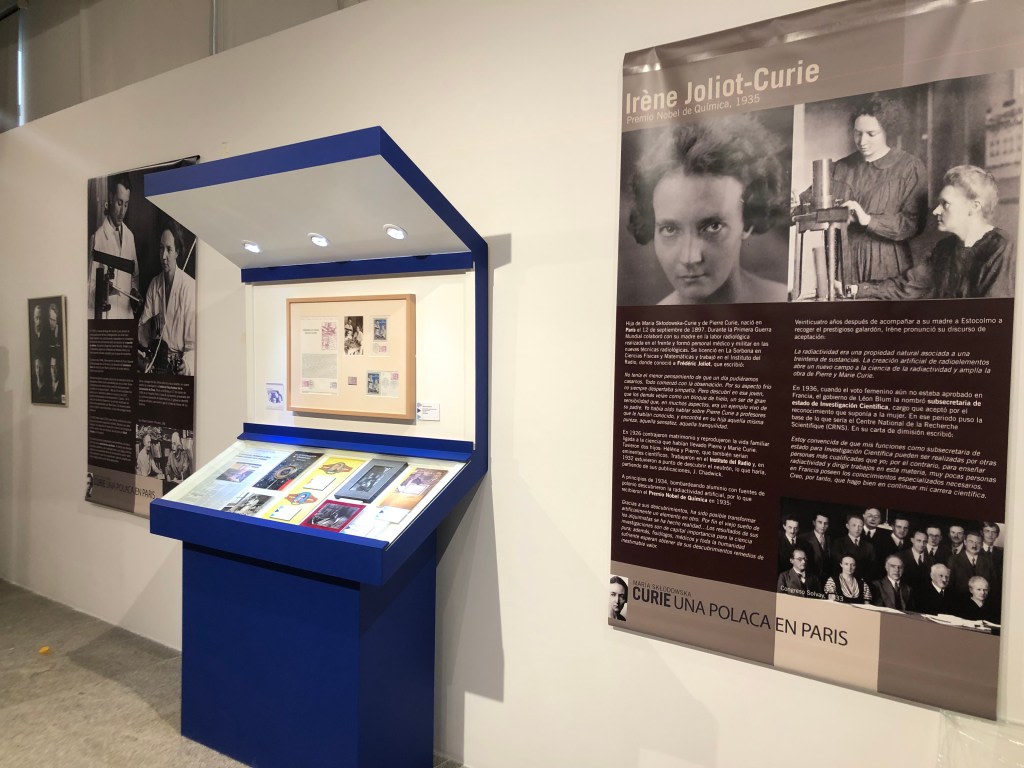
The exhibition consists of explanatory panels, international philately and numismatics, a reconstruction of her laboratory, books, publications, photographs, awards, and diplomas.
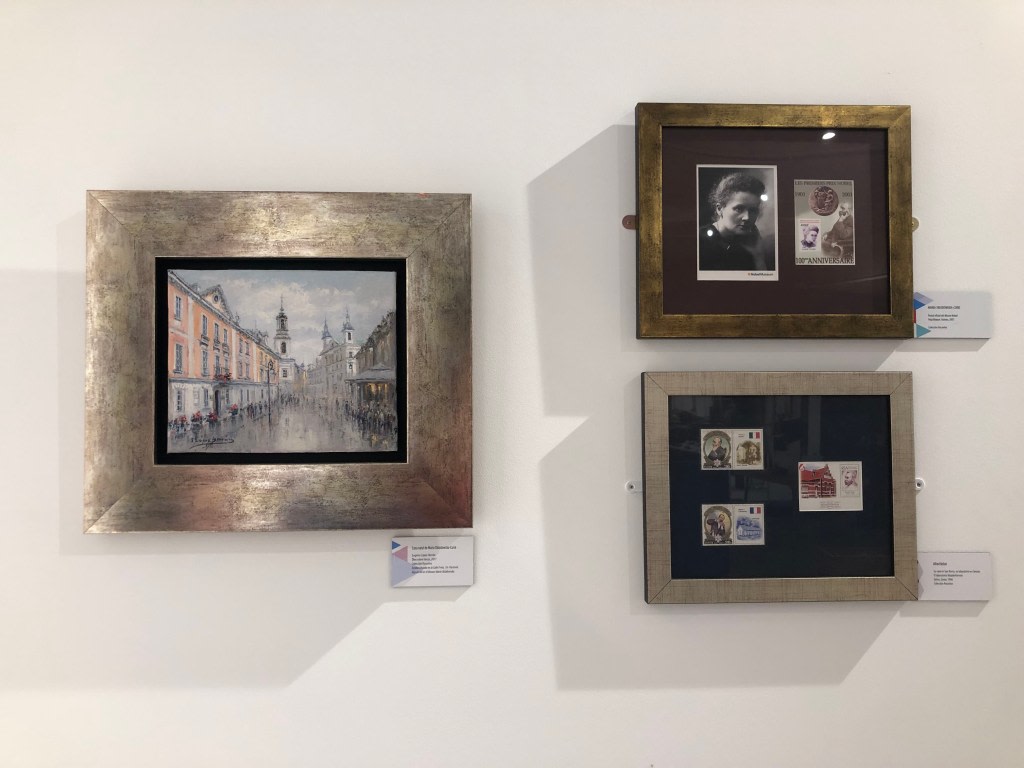
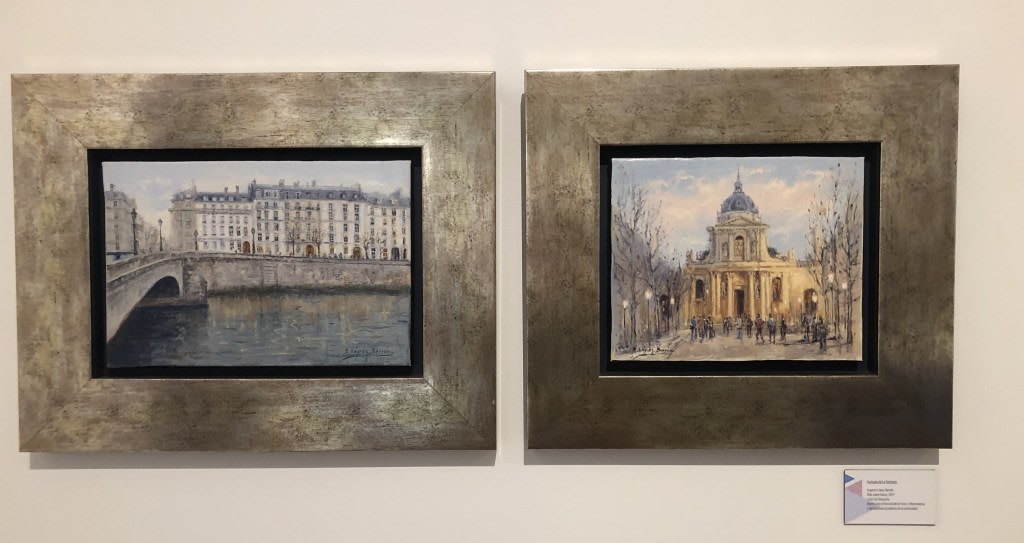
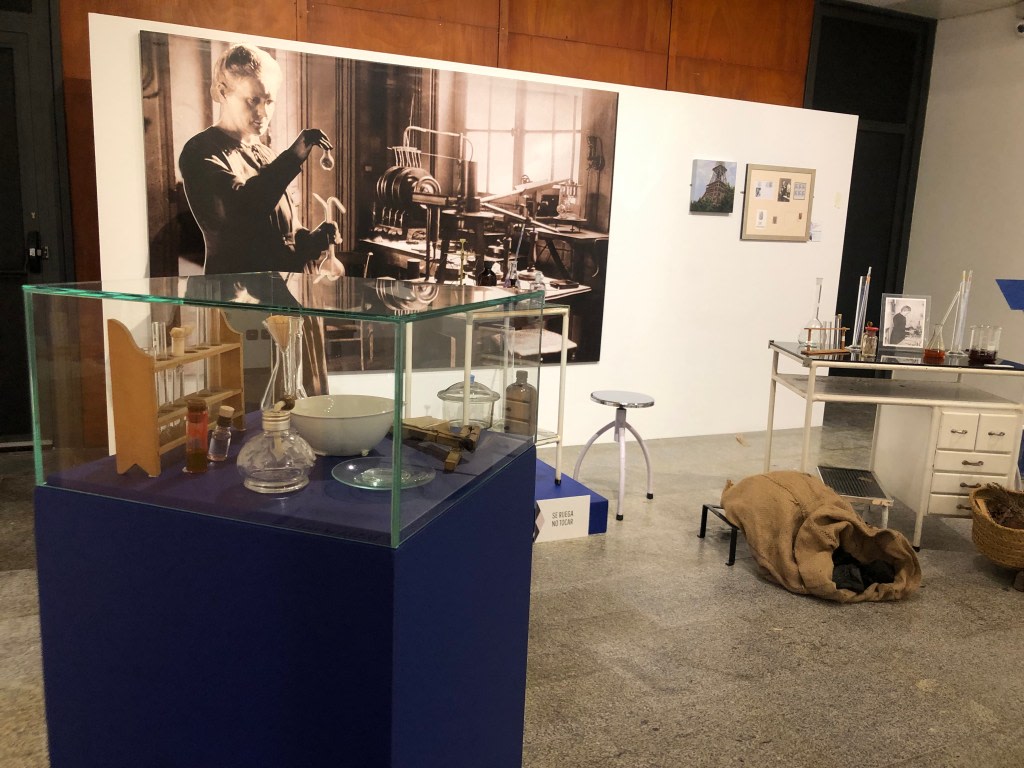
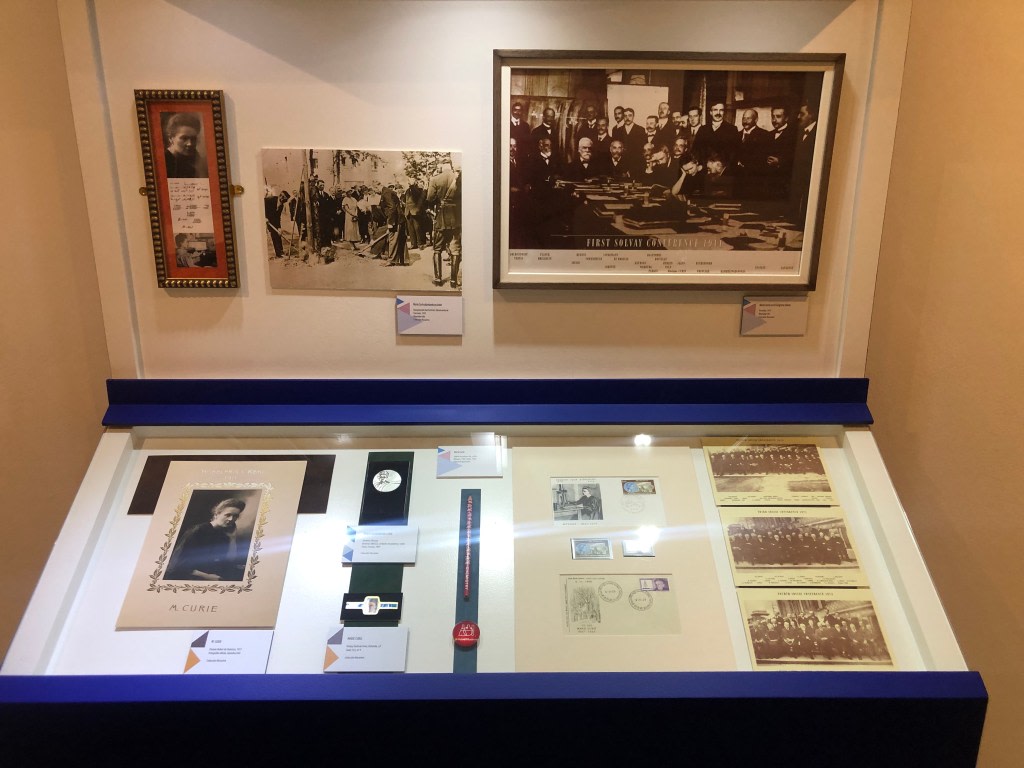
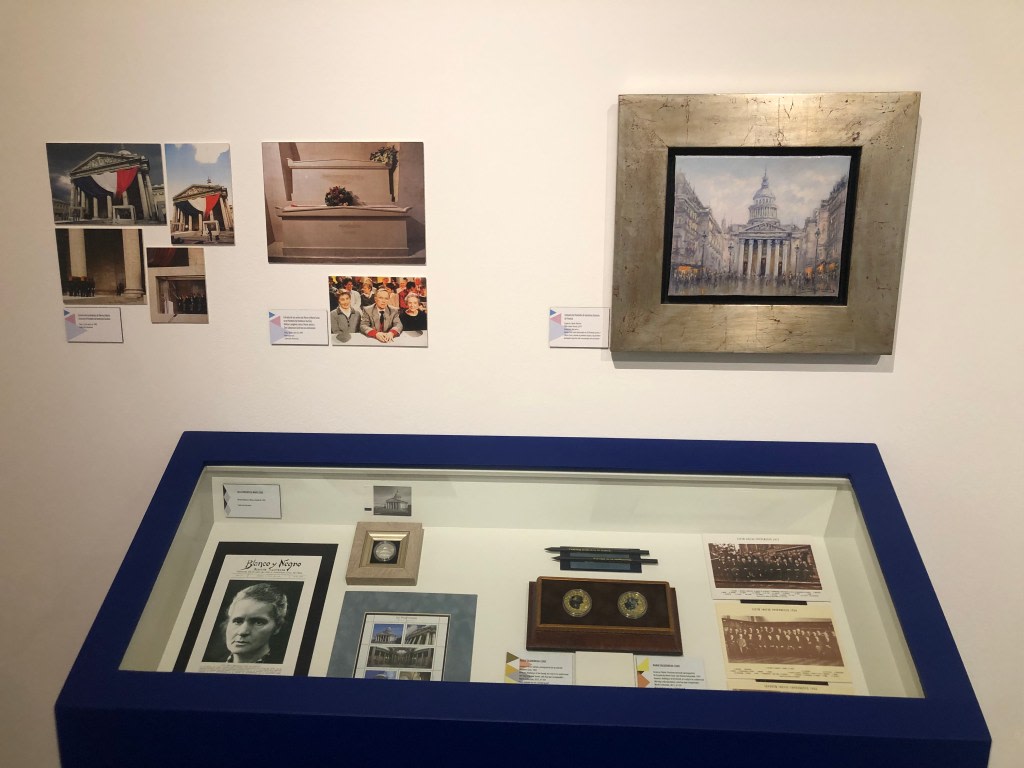
The exhibition includes a nod to our Nobel Prize laureate, Santiago Ramon y Cajal. The two scientists were contemporaries. Santiago Ramon y Cajal was born on May 1, 1852, in the Navarrese town of Petilla de Aragon; Maria Sklodowska-Curie was born fifteen years later, on November 2, 1867, in Warsaw, which at that time was under Russian rule. Death came to both in the same year: 1934. The Polish-French scientist died at age 67, on July 4, in a sanatorium in the French Alps at the foot of Mont Blanc, a victim of pernicious aplastic anemia caused by prolonged accumulation of radiation; the Spanish scientist died on October 17, at age 82, at his home in Madrid facing El Retiro Park, from uremia, as stated in his death certificate.
In none of the legacies, museums, or family archives consulted have we found evidence that Santiago Ramon y Cajal crossed paths with Marie Curie during any of her three visits to Spain. The first was in 1919, with her elder daughter Irene; the second in 1931, with her younger daughter Eve; and the third in 1933, alone. Spain was the country she visited most often, with the exception of Poland, her native land.
In 1919, she came to Madrid to participate, from April 20 to 28, in the 1st National Congress of Medicine, which had been postponed several times due to the misnamed “Spanish flu.” That congress, attended by numerous Spanish, Portuguese, and Latin American physicians, was inaugurated by King Alfonso XIII at the Teatro Real, where the Polish-French scientist participated as guest of honor.
Her discoveries of polonium and radium, which had given rise to the field of radioactivity, had already been crowned with two Nobel Prizes: in Physics in 1903, and in Chemistry in 1911. During the First World War, she had devised the Petites Curie, radiological vehicles equipped with an X-ray apparatus that made it possible to locate shrapnel in the bodies of wounded soldiers, so they could be operated on at the battlefield. This little-known humanitarian work carried out by the great scientist saved countless lives and prevented numerous amputations. During the armed conflict, Curie greatly advanced the development of the nascent field of radiology, even writing the book “Radiology and the War” (“La radiologie et la guerre”).
During her speech at the opening ceremony of the congress, held on April 20 at the Teatro Real, Marie Curie thanked Alfonso XIII for the humanitarian work carried out from Spain’s neutrality during the war on behalf of prisoners on both sides. This altruistic effort was widely publicized in France, because it began with a letter that a French washerwoman addressed to the king requesting his help to find her husband, a soldier who had gone missing at the Battle of Charleroi in August 1914. After mobilizing the Spanish embassies in Berlin and Paris, Alfonso XIII informed her that her husband was a prisoner of the Germans. From that moment on, the king resolved to do everything possible to facilitate communication between prisoners on both sides and their families. Thousands of aid cases were managed from the Royal Palace, involving the various embassies. Arthur Rubinstein, Vaslav Nijinsky, Maurice Chevalier, and relatives of Giacomo Puccini were among the beneficiaries of Spain’s mediation. For this humanitarian aid during the First World War, Alfonso XIII was nominated for the Nobel Peace Prize by the Pro Captives Office (Oficina Pro Cautivos).
Marie Curie’s speech at the inauguration of the Congress of Medicine, in which she mentioned the king’s role during the conflict, was enthusiastically applauded. The eminent physician and humanist Gregorio Maranon published an account in the newspaper El Liberal, and two days later also reviewed the lecture the scientist delivered at the Faculty of Medicine of San Carlos, which was attended by the queen mother Maria Cristina. Before returning to Paris, Marie Curie was named honorary president of the Royal Spanish Society of Radiology and Medical Electrology, and Alfonso XIII awarded her the Cross of the Order of Alfonso XII, a decoration that had been requested through the pages of the newspaper ABC.
Marie Curie’s second trip to Spain took place in April 1931, shortly after the proclamation of the Second Republic. She arrived accompanied by the great Spanish physicist Blas Cabrera to deliver two lectures on radioactivity. On April 23, she gave the first one, organized by the Society of Courses and Lectures of the Residencia de Estudiantes, which was attended by a young Severo Ochoa and several Spanish intellectual women. The second lecture was coordinated by the professor of Inorganic Chemistry, Enrique Moles, at the Central University. Carmen de Michelena, then a student, recalled the impression the eminent scientist had made on her: She was gentle, engaging, and likable. She dressed in dark colors and had very delicate hands, those of a researcher (“Era dulce, atrayente y simpatica. Vestia de oscuro y tenia unas manos finisimas, de investigadora”).
During that trip, Gregorio Maranon received Marie Curie and her daughter Eve at his magnificent cigarral in Toledo. Before returning to Paris, they traveled through the south and the Levante region of Spain, and from Barcelona they returned by train to the French capital. The letters Marie Curie wrote to her daughter Irene during that trip are a valuable testimony of the atmosphere in the nascent Spanish Republic, as well as of her concern that the Spanish people would not suffer too many disappointments. During that trip, she was elected a foreign corresponding member of the Royal Academy of Exact, Physical, and Natural Sciences.
Her third and final trip to Spain took place one year before her death, in May 1933. She attended as vice-president of the International Committee on Intellectual Cooperation of the League of Nations, to preside over the 2nd International Meeting of the Committee of Letters and Arts on “The Future of Culture” at the Residencia de Estudiantes. This gathering, which brought together the foremost representatives of international culture, science, and art in Madrid, took place from May 3 to 6. Among the attendees were the Spaniards Miguel de Unamuno, Salvador de Madariaga, and Gregorio Maranon, the French scientist Paul Langevin, the Romanian-French poet Elena Vacarescu, the Polish composer Karol Szymanowski, and the French poet Paul Valery, who described the participants as Don Quixotes of the spirit tilting at their windmills (“Donquijotes del espiritu que se pelean contra sus molinos de viento”). At the inaugural ceremony, held on May 3, Marie Curie delivered her famous statement:
It is indispensable for the future of civilization that the magic of the conquests of the scientific order and the glory of technical achievements develop in a harmonious whole, with the acceptance of a doctrine that institutes a regime of peace and friendship among men and nations, under the universal supremacy of reason and a morality worthy of its name.
(“Es indispensable para el futuro de la civilizacion que la magia de las conquistas de orden cientifico y de la gloria de las realizaciones tecnicas se desarrollen en un conjunto armonico, con la aceptacion de una doctrina que instituya un regimen de paz y de amistad entre los hombres y las naciones, bajo la supremacia universal de la razon y de una moral digna de este nombre.”)
Despite the scientific and social prominence of Santiago Ramon y Cajal, whose groundbreaking research on the structure of the nervous system had earned him the 1906 Nobel Prize in Medicine, there is no evidence that the two scientists met during any of Marie Curie’s three stays in Spain. Yet Santiago Ramon y Cajal certainly admired her, for he praised her momentous scientific work on more than one occasion. In his book “Rules and Advice on Scientific Research” (“Reglas y Consejos sobre Investigacion Cientifica”), written to advise young researchers on laboratory work and which has inspired numerous vocations — among them that of Severo Ochoa — Cajal cites Marie Curie and her husband, Pierre Curie, several times. The first instance appears in the second chapter of the book:
In general, it may be affirmed that there are no exhausted subjects, only men exhausted by subjects. When the ground has been depleted for one scholar, it proves fertile for another. A fresh talent, arriving without prejudice to analyze a matter, will always find a new aspect, something that escaped those who believed that study had been definitively completed. So fragmentary is our knowledge that even in the most thoroughly explored topics, unexpected discoveries suddenly emerge. Who, a few years ago, would have suspected that light and heat still held secrets for Science! And yet, there stand the argon of the atmosphere, Roentgen’s X-rays, and the radium of the Curie couple, to demonstrate how insufficient our methods are and how premature our syntheses.
Chapter II. Enervating Preoccupations of the Beginner.
The text of the third chapter contains Cajal’s phrase about Marie Curie that we selected for the vinyl panel that forms part of our exhibition in Logrono:
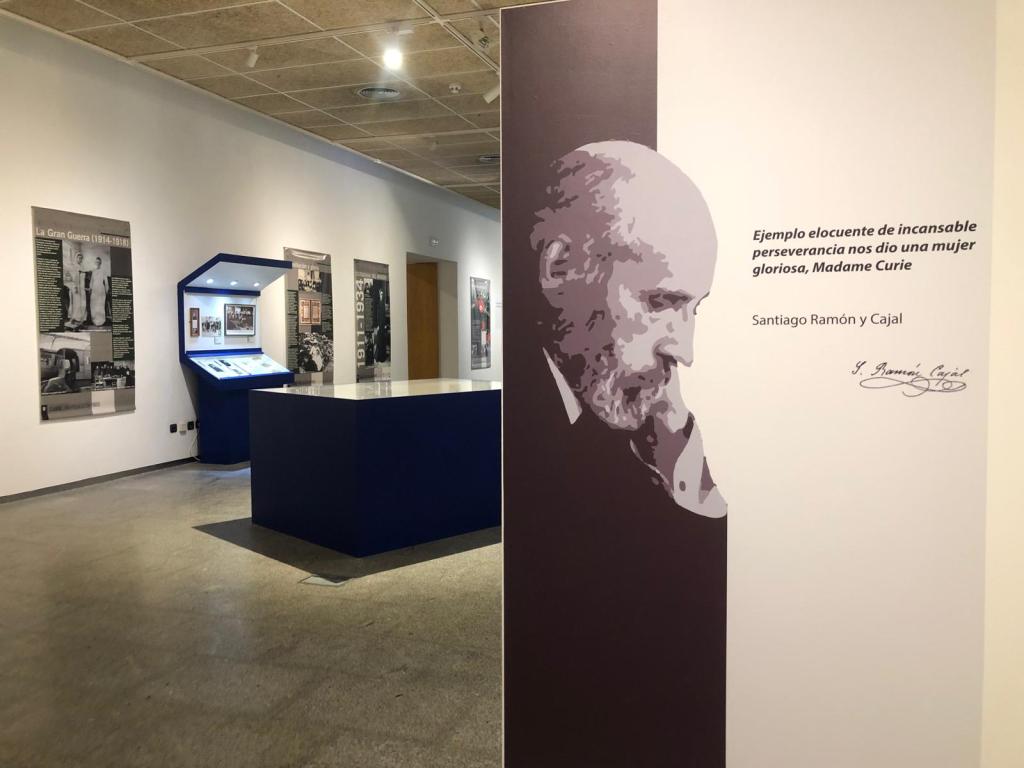
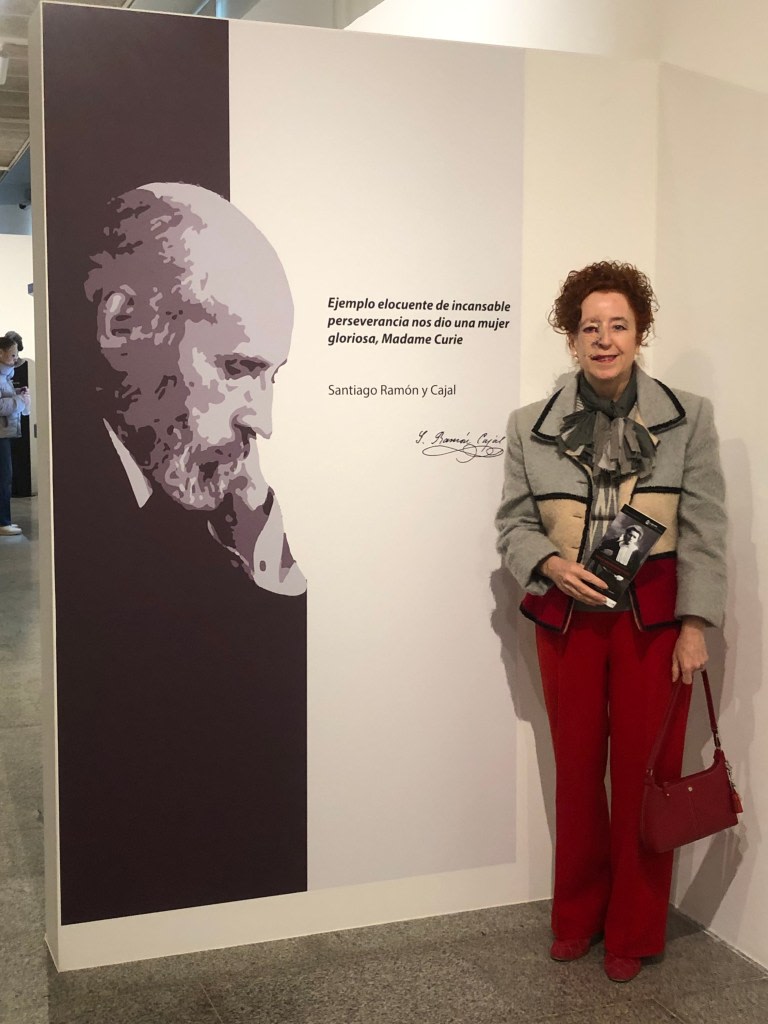
In any case, if someone gets ahead of us, we would be wrong to become discouraged. Let us continue our work undaunted, for our turn will come at last. An eloquent example of tireless perseverance was given to us by a glorious woman, Madame Curie, who, having discovered the radioactivity of thorium, suffered the unpleasant surprise of learning that shortly before, the same fact had been announced by Schmidt in the “Wiedermann Annalen”; far from being disheartened by the news, she continued her research without respite, tested new substances with the electroscope, among them a certain uranium oxide (pitchblende) from the Johanngeorgenstadt mine, whose radioactive power surpassed that of uranium by four times. And suspecting that this highly active material contained a new element, she undertook, with the collaboration of M. Curie, a series of ingenious, patient, and heroic experiments, the reward of which was the discovery of a new element, the stupendous radium, whose marvelous properties, by provoking numerous investigations, have revolutionized chemistry and physics.
Chapter III. Moral Qualities the Researcher Must Possess.
Two chapters later, he cites the Curie couple again:
Convinced evolutionists in theory, they prove to be providentialists in practice. As if trusting in miracles, they wish to begin with a prodigious feat. Perhaps recalling that Hertz, Mayer, Schwann, Roentgen, and Curie launched their scientific careers with a great discovery, they aspire to rise, from the very first battle, from soldiers to generals, and they spend their lives planning and designing, building and revising, always in feverish activity, always in constant revision, incubating the grand creation, the astonishing and overwhelming work. And the years pass, and expectations grow weary, and rivals murmur, and friends strain their imagination to justify the great man’s silence. And meanwhile, on that topic so thoroughly explored, caressed, and polished, important monographs rain down from abroad, snatching from our ambitious researcher the joy of priority, and forcing him to change course. Undiscouraged, the megalophile tackles another topic, and when the imposing monument is nearly finished, new rivals, who allow themselves to produce science in small doses, once again embitter his existence. And at last he reaches old age amid the indulgent silence of his disciples and the ironic smile of scholars.
Chapter V. Diseases of the Will.
And the final citation appears in Chapter VI of the book, where he refers to married couples who, in addition to sharing their lives, have shared their love of science and many hours of research:
With what admiration, not without envy, we have observed in some laboratories those happy couples, eagerly devoted to the same labor, in which each spouse contributes the finest of their mental temperament and technical skills! Without dwelling on the touching example of the Curie couple, discoverers of radium, and confining ourselves to the limited circle of our friendships and scientific interests, there come to mind the images of three admirable couples: M. and Mme. Dejerine, of Paris, devoted to the study of normal and pathological anatomy of the brain; M. and Mme. Nageotte, of the same city, engaged together in histological and neurological research; and, finally, the Vogt couple, of the Neurological Institute of Berlin, occupied with the great enterprise of the parcellary cartography of the human brain, in the manner of astronomers who spend their lives absorbed in the photography and cataloguing of nebular stars.
Chapter VI. Social Conditions Favorable to Scientific Work.
Given his evident esteem for Marie Curie, it is surprising that Santiago Ramon y Cajal did not meet with her during the three trips the eminent scientist made to our country. Surely the poor health of the Spanish scientist, which forced him into periods of rest, and his aversion to official events were the cause of his absences.
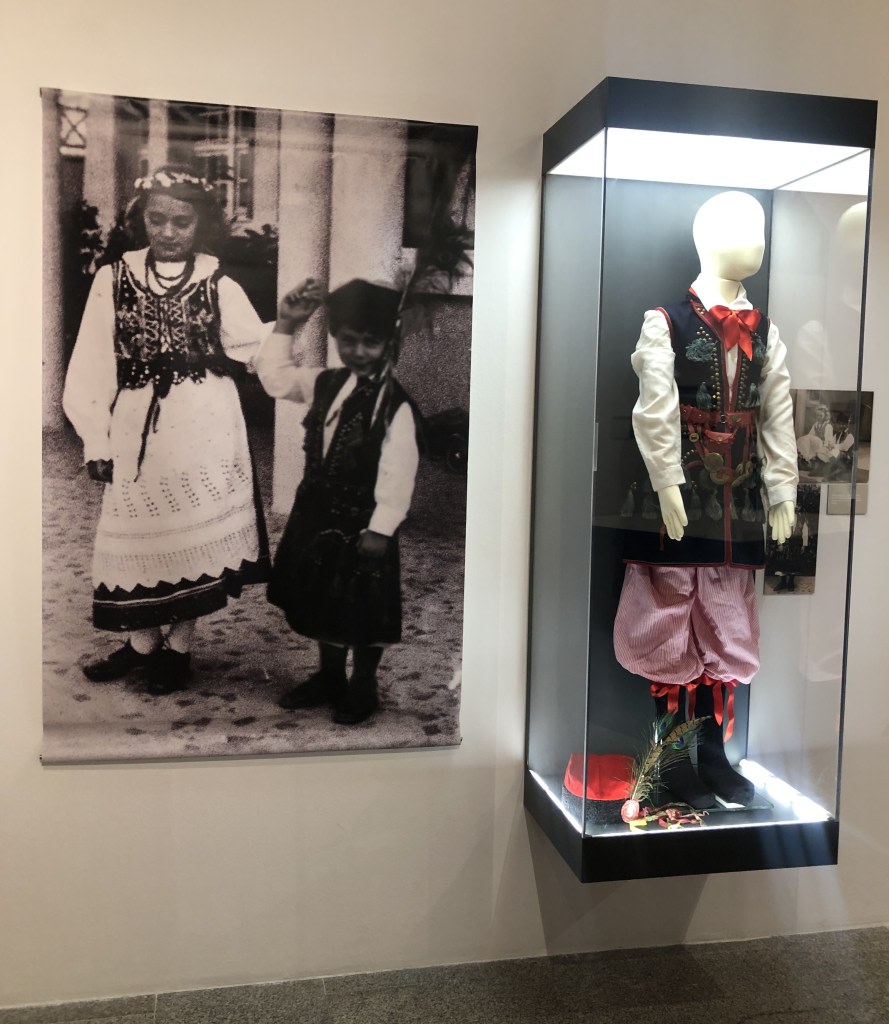
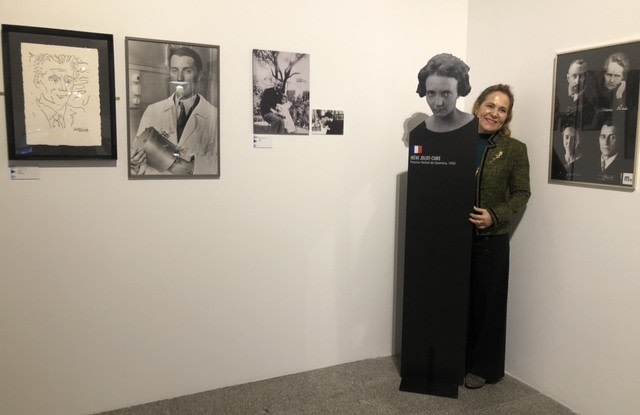
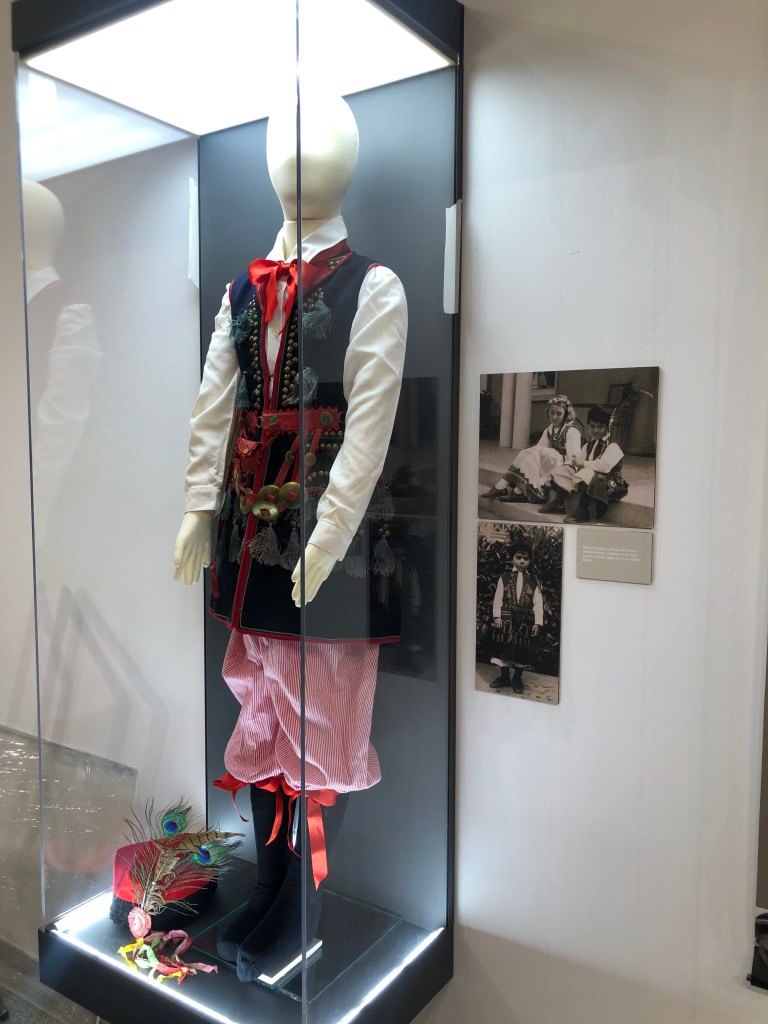
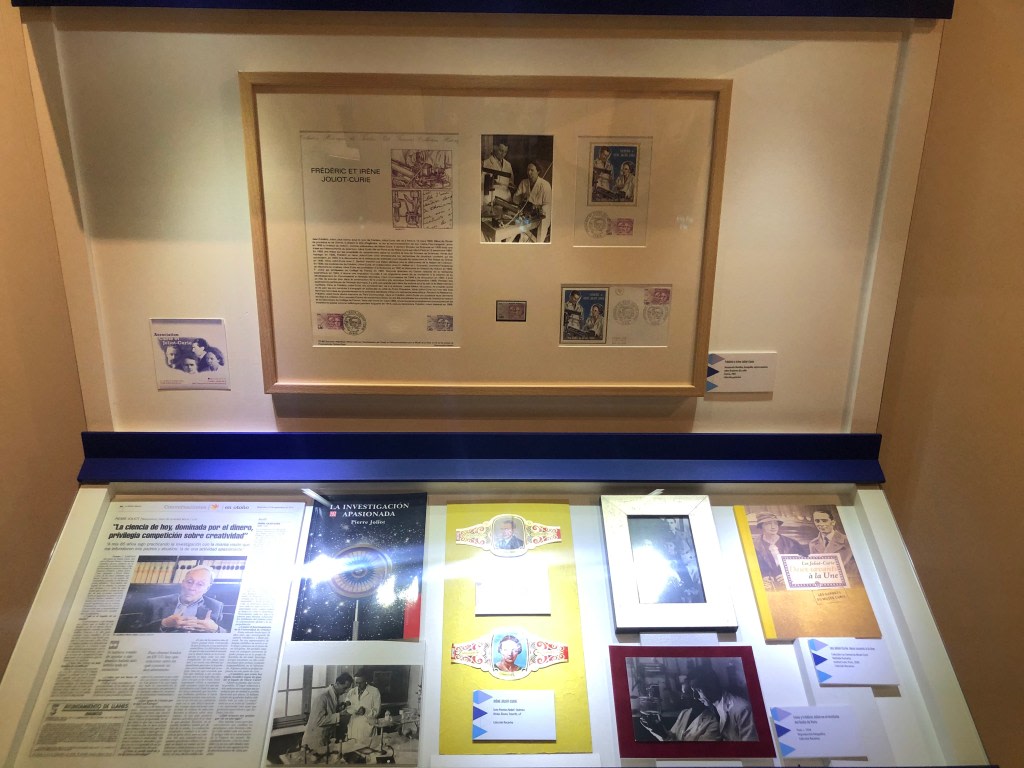
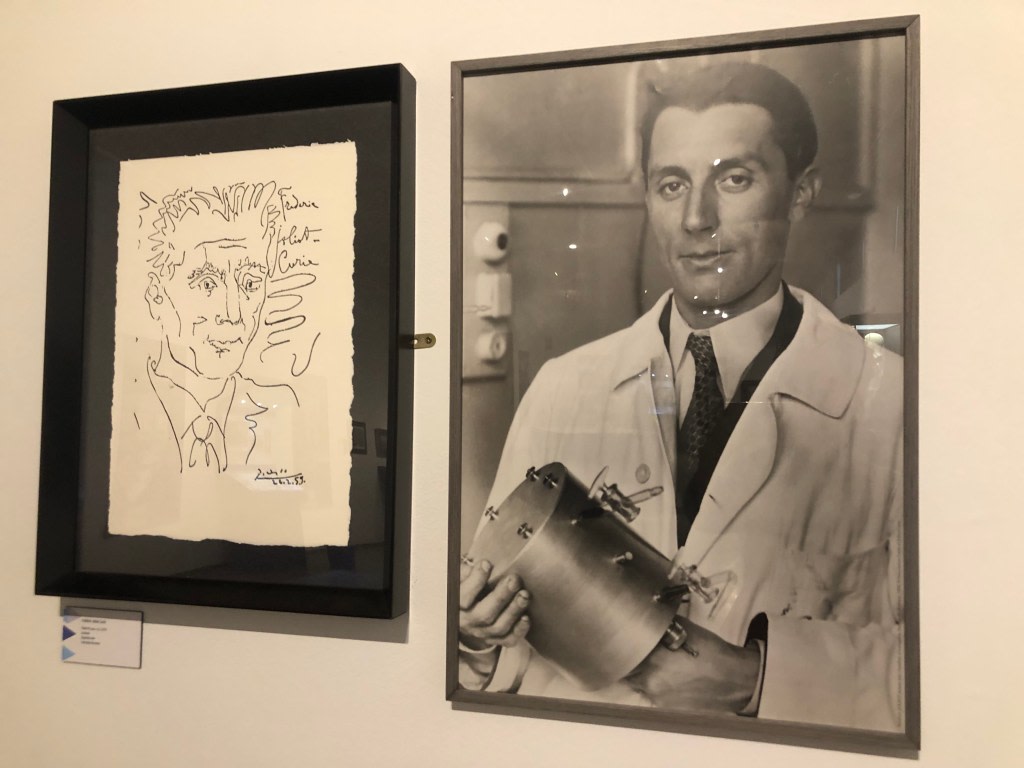
The exhibition tour ends with a section dedicated to the “Curie Saga”: her daughter Irene and her son-in-law Frederic Joliot, who in 1935 received the Nobel Prize in Chemistry for their discovery of artificial radioactivity, making the Curie family the most awarded in history: 5 Nobel Prizes. This section also features the children of the Joliot-Curie couple: Helene Langevin-Joliot and Pierre Joliot, eminent scientists who have followed the path of their grandparents and parents. Pierre Joliot has specifically donated for this exhibition the traditional Cracow costume that was given to him by his grandmother’s sister, Bronia Sklodowska, and which has been used by all the children in the family since then. This costume is displayed in a glass case.
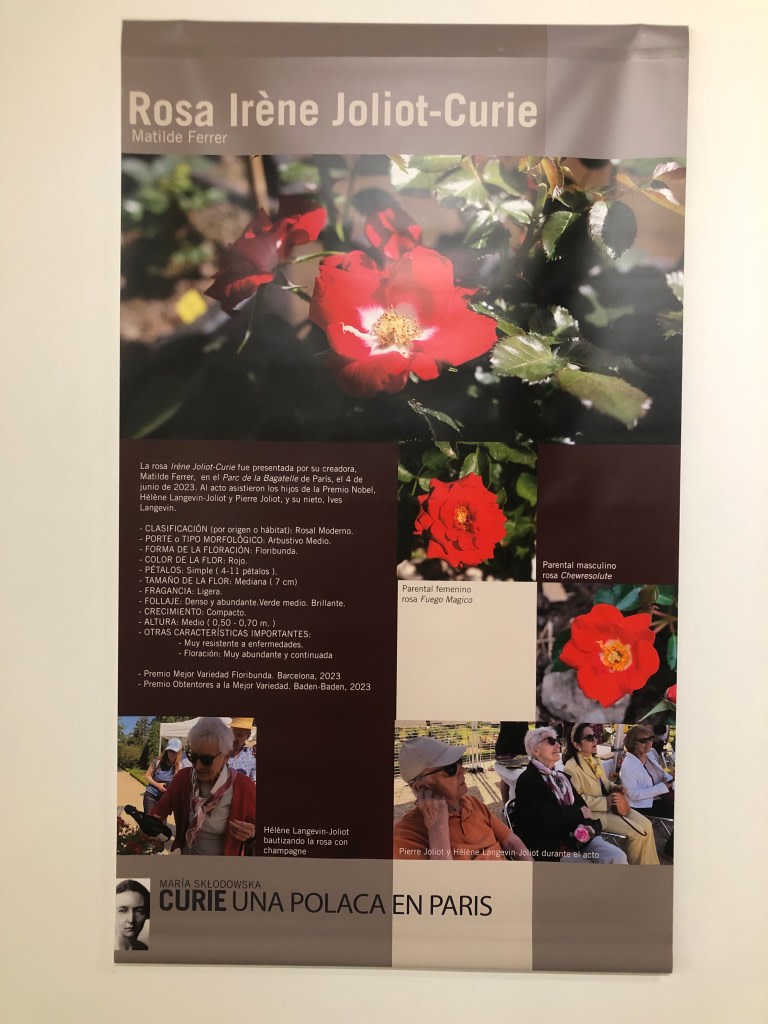
The exhibition concludes with a panel dedicated to the rose “Irene Joliot-Curie,” created by the prestigious breeder of new roses, Matilde Ferrer, who also created the rose “Ramon y Cajal.” The rose “Irene Joliot-Curie” was presented on June 4, 2023, by her children Helene Langevin-Joliot and Pierre Joliot at the Bagatelle rose garden in the Bois de Boulogne in Paris.
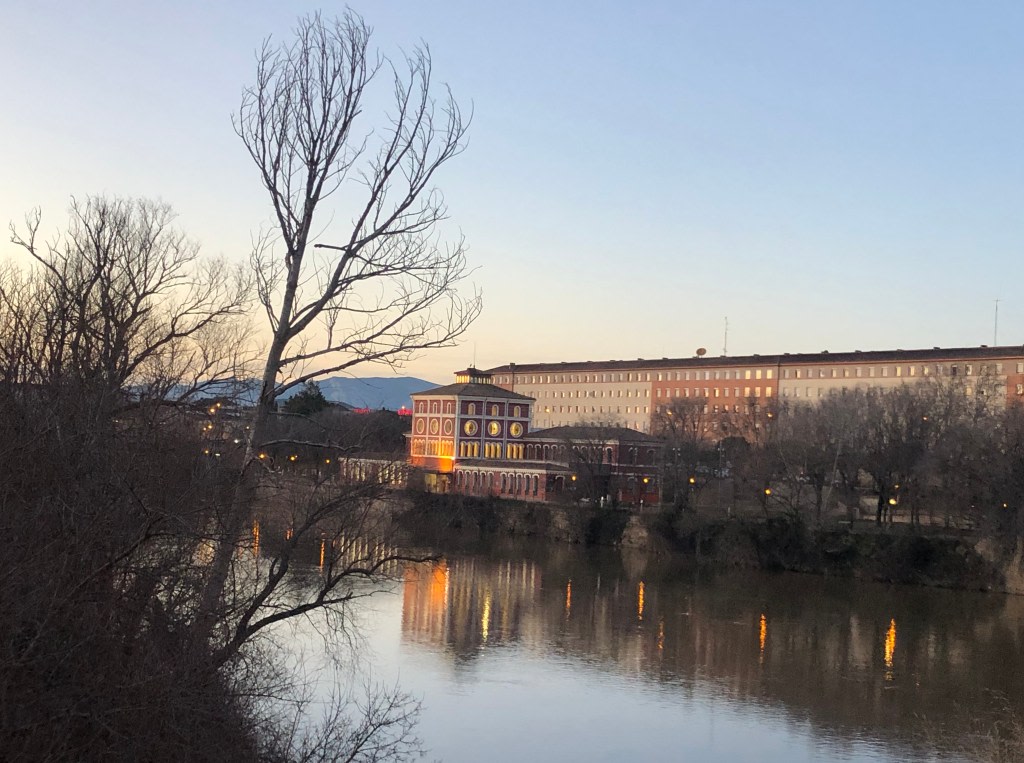
Until May 25, 2025, you can enjoy the exhibition Maria Sklodowska-Curie: A Polish Woman in Paris at the Casa de las Ciencias in Logrono. After its closing, it will continue traveling to various Spanish and international venues.


