The Cajal School and the Polio Drama in Spain
Prologue: The Silver Age and the Neuron Doctrine
Historical Context: The Spanish Scientific Renaissance
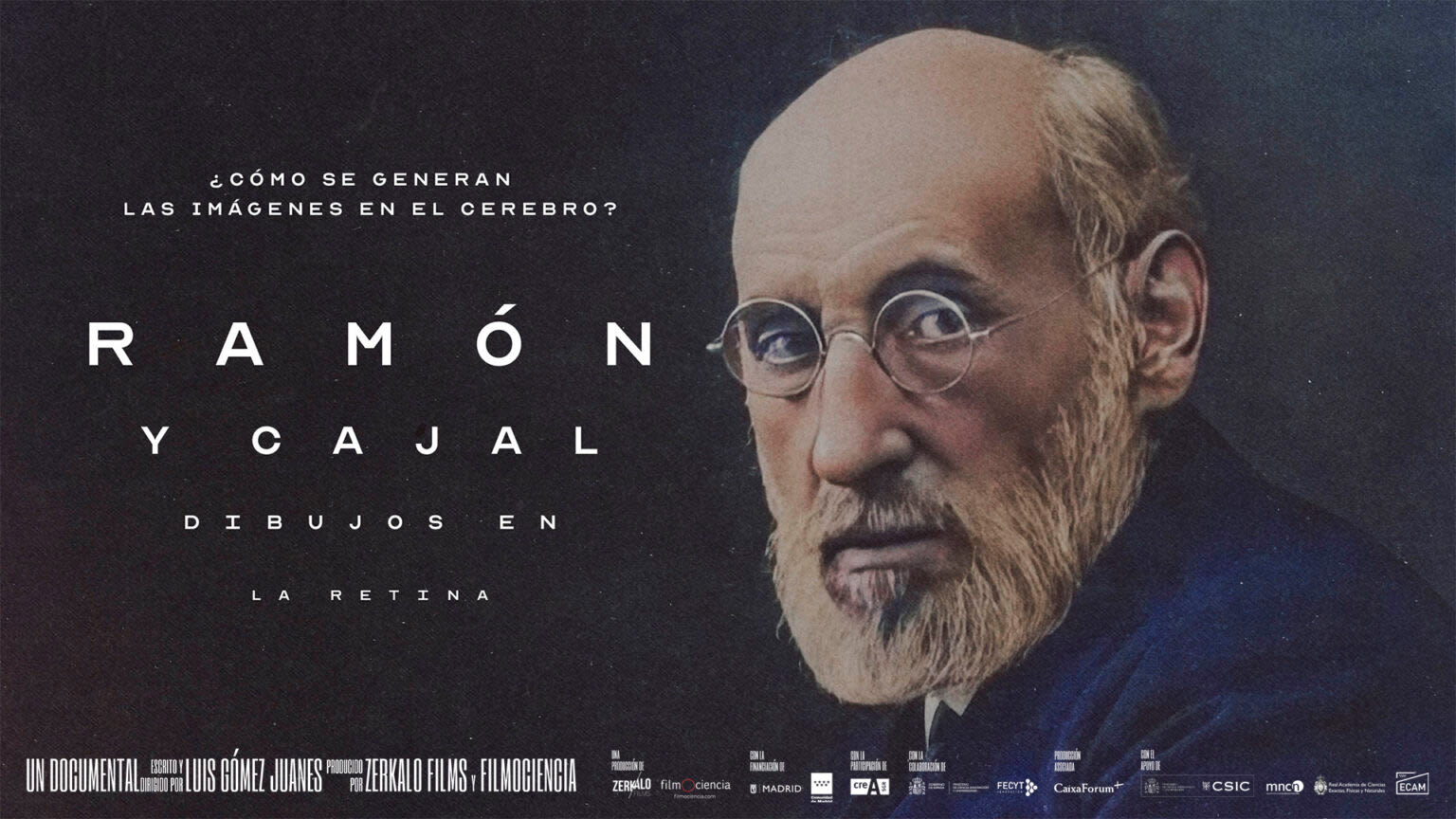
At the end of the nineteenth century, Spain was plunged into a profound crisis of identity. The loss of its last overseas provinces — Cuba, the Philippines, Guam, and Puerto Rico — in 1898, the “Disaster of ‘98,” not only represented a military defeat but also catalyzed an intense national debate about the causes of the country’s decline. In this climate of introspection and yearning for modernization, an intellectual and cultural movement known as Regenerationism (“Regeneracionismo”) emerged, seeking to revitalize the nation through education, economics, and, crucially, Science¹. Figures such as Santiago Ramon y Cajal argued vehemently that Spain’s weakness did not lie in some supposed racial incapacity, but in its profound scientific and technological backwardness. In his own words, Spain had been defeated — “it must be confessed that our ignorance, even more than our poverty, has caused the disaster, in which we have not even achieved the sad consolation of selling our lives dearly. Once again, science — the creator of wealth and strength — has avenged itself on those who ignore and despise it” (“es preciso confesar que nuestra ignorancia, aun mas que nuestra pobreza, ha causado el desastre, en el cual no hemos logrado ni el triste consuelo de vender caras nuestras vidas. Una vez mas la ciencia creadora de riqueza y de fuerza se ha vengado de los que la desconocen y menosprecian”).
This regenerationist fervor found its greatest institutional expression in the creation of the Board for the Extension of Studies and Scientific Research (JAE) in 1907, a body promoted by Cajal himself that would become the engine of the so-called “Silver Age” of Spanish science³⁻⁵. The JAE, inspired by the principles of the Free Institution of Education (“Institucion Libre de Ensenanza”), promoted a structural change in the educational and scientific system, sending the most promising young scholars to train at leading European research centers and creating laboratories and study centers in Spain so they could apply and develop the knowledge acquired upon their return³, ². This national project of modernization through knowledge sought to bring Spain out of its scientific isolation and place it at the international forefront — a goal that, during a few glorious decades, seemed within reach⁴, ⁵.
Santiago Ramon y Cajal: The Architect of the Modern Brain
At the heart of this scientific renaissance stood the monumental figure of Santiago Ramon y Cajal (1852–1934)³, ⁶. Before his arrival, knowledge about the fine structure of the nervous system was a terra incognita, an unexplored territory dominated almost entirely by the Reticular Theory⁴, ⁵. Proposed by Joseph von Gerlach and fervently championed by the Italian histologist Camillo Golgi, this theory postulated that the central nervous system was organized as a syncytium — a continuous, uninterrupted network of interconnected fibrils, without beginning or end⁴, ⁶, ⁵. This view of the brain as a diffuse mesh prevented understanding how information was processed and transmitted in a directional and specific manner.
The decisive moment for Cajal — and for modern neuroscience — came in 1887. His encounter with a staining technique developed by Golgi would forever change the map of the brain.
The Catalyst: Luis Simarro and the Golgi Method
Cajal’s breakthrough did not emerge in a vacuum. It depended critically on the introduction of a foreign technique through a key intermediary: the neuropsychiatrist Luis Simarro Lacabra (1851–1921). Simarro, a multifaceted figure trained in Paris under the tutelage of the prestigious histologist Louis-Antoine Ranvier, was a fundamental link between Spanish science and the most advanced European currents⁷. In 1887, during a visit by Cajal to his private laboratory in Madrid, Simarro showed him preparations of the nervous system stained with Camillo Golgi’s “reazione nera” (black reaction)⁴, ⁵.
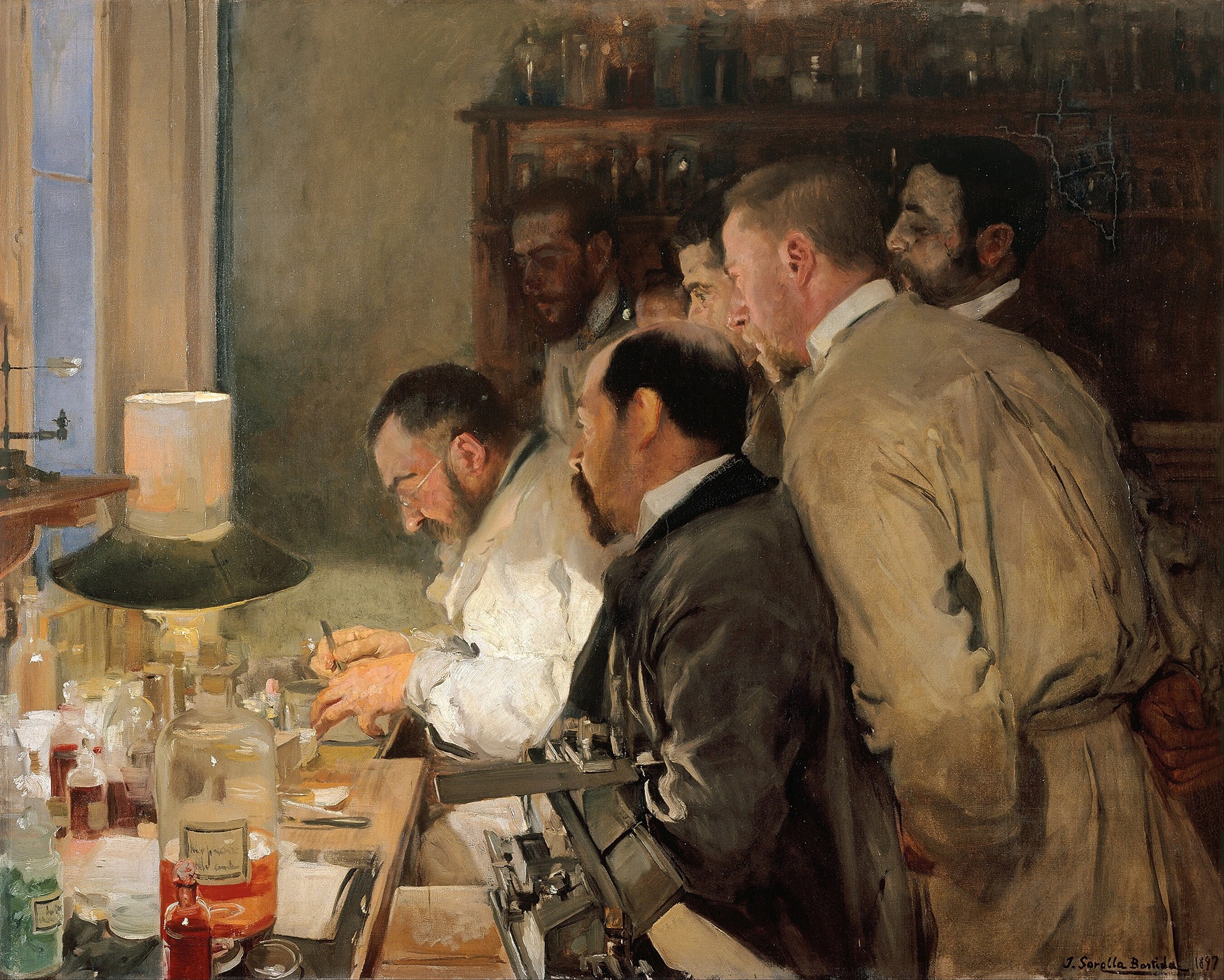
This technique, which used a solution of potassium dichromate and silver nitrate, had the almost magical property of staining an intense black a small and random number of neurons, leaving the surrounding cells transparent⁶. For the first time, it was possible to observe a neuron in its entirety, with its cell body and all its intricate extensions, like a solitary tree in an invisible forest. For Cajal, it was a revelation. He immediately understood the potential of a method that he himself would adopt, perfect, and use with unmatched mastery⁴, ⁶, ⁵. This episode underscores that the “Silver Age” was not a purely endogenous phenomenon, but the fruit of a crucial openness to European science, facilitated by cosmopolitan figures like Simarro and formally institutionalized by the JAE.
The Revolution of the Neuron Doctrine
Armed with the Golgi method, Cajal began in his chair in Barcelona what he himself called his “summit year, year of fortune” (“ano cumbre, ano de fortuna”)⁵. Between 1888 and 1892, his research demolished the foundations of the Reticular Theory. By studying the cerebellum and the retina, he demonstrated unequivocally that nerve fibers did not form a continuous network but terminated freely, establishing contact by contiguity rather than continuity with other cells⁴, ⁵.
From these observations arose the pillars of the Neuron Doctrine:
-
The Neuron as an Individual Unit: The nervous system is composed of discrete, independent cells — the neurons — which are the fundamental anatomical and functional units⁶.
-
The Law of Dynamic Polarization: The nerve impulse flows in a constant and predictable direction: from the dendrites and cell body toward the axon, which transmits it to the next neuron⁴, ⁵.
-
The Specificity of Connections: Neurons do not connect at random but form precise circuits at specialized sites that Charles Sherrington would later name “synapses.”
Furthermore, Cajal described with astonishing precision previously unknown cellular structures, such as dendritic spines (small protuberances on dendrites that act as synaptic contact points) and axonal growth cones (dynamic structures at the tip of developing axons that guide their path)³, ⁴, ⁵. His drawings, executed freehand in India ink, were not mere illustrations but true theoretical models that abstracted the functional essence of neuronal circuits. These works of scientific art, declared Memory of the World by UNESCO in 2017, were the principal vehicle for the dissemination and acceptance of his revolutionary ideas⁴. With the Neuron Doctrine, Cajal had not only mapped a new continent but had provided the language and grammar to understand how it works.
| Year | Milestones of the Spanish Neurological School / Milestones of Poliomyelitis in Spain and the World / Socio-Political Context in Spain / 1887 |
|---|---|
| 1888 | Cajal publishes his first works refuting the Reticular Theory⁴, ⁵. |
| 1899 | Joaquin Sorolla paints “Sad Inheritance!” (“Triste herencia!”)⁵. Height of Regenerationism. |
| 1902 | Jorge Francisco Tello becomes Cajal’s first disciple. |
| 1906 | Santiago Ramon y Cajal and Camillo Golgi share the Nobel Prize⁴, ⁵. |
| 1907 | Creation of the Board for the Extension of Studies (JAE), chaired by Cajal³, ⁴, ⁵. |
| 1918 | Premature death of Nicolas Achucarro⁴, ⁵. |
| 1919 | Pio del Rio Hortega describes microglia⁷. |
| 1921 | Pio del Rio Hortega describes oligodendroglia⁸. Primo de Rivera Dictatorship (1923–1930). |
| 1929 | First Nobel Prize nomination for Pio del Rio Hortega. |
| 1931 | Proclamation of the Second Republic. |
| 1934 | Death of Santiago Ramon y Cajal⁴, ⁵. |
| 1936 | Start of the Spanish Civil War. Exile of many scientists. |
| 1939 | End of the Civil War. Beginning of the Francoist dictatorship and the purges³, ⁵. Growing epidemic phase of polio in Spain⁵. |
| 1944 | Julian Sanz Ibanez publishes “Experimental Poliomyelitis” (“Poliomielitis experimental”)⁹. Autarky and international isolation. |
| 1950–1963 | Peak of the polio epidemic in Spain⁵. |
| 1955 | Salk’s inactivated vaccine (IPV) approved in the U.S. |
| 1961 | Sabin’s attenuated oral vaccine (OPV) approved. |
| 1963 | First national mass vaccination campaign in Spain with the Sabin vaccine¹⁰. |
Chapter I: The Pillars of the Madrid School: Tello, Achucarro, and the Next Generation
The creation of the Laboratory of Biological Research in 1902, funded with the money from the Moscow International Prize that Cajal had won in 1900, and its subsequent consolidation as the Cajal Institute, provided the institutional framework for the flourishing of what would become known as the Spanish Neurological School or Madrid School³, ⁴, ⁵, ²⁹. This was not simply a workplace but a dynamic scientific ecosystem, a crucible of ideas and techniques where a generation of young researchers, under the master’s tutelage, would expand the frontiers of neuroscience.
Jorge Francisco Tello: The Faithful Disciple
Jorge Francisco Tello Munoz (1880–1958) holds the distinction of being Cajal’s first and most loyal disciple. Their relationship began in 1902, when Tello, a brilliant medical student who initially leaned toward surgery, was captivated by histology and became Cajal’s collaborator, abandoning the operating room forever for the microscope. His loyalty and talent made him the master’s most trusted man, who appointed him deputy director of the Cajal Institute in 1926 and proposed him as his successor in the chair at the University of Madrid.
Tello’s research focused on expanding and consolidating Cajal’s findings. His work on the degeneration and regeneration of the nervous system was fundamental, providing crucial experimental evidence of neurotropism — the idea that growing nerve fibers are guided by chemical signals — a concept proposed by Cajal⁶. He conducted exhaustive studies on the histogenesis of the nervous system in various species and under different conditions, such as the morphological changes that occur during hibernation, and contributed significantly to knowledge of the development of the sympathetic nervous system⁴, ⁵. His collaboration with Cajal was so close that they co-authored two highly influential manuals: the Manual of Pathological Anatomy and the Elements of Normal Histology and Micrographic Technique. Tello represented continuity — the pillar upon which the orthodoxy of the School rested, dedicated to exploring and detailing the vast territory the master had discovered.
Nicolas Achucarro: The Bridge to Neuropathology
If Tello represented the deepening of the Cajalian paradigm, Nicolas Achucarro y Lund (1880–1918) was responsible for its expansion into new horizons. Born in Bilbao, Achucarro possessed an exceptionally cosmopolitan education for his time. He spent long periods in Germany, where he worked with the most important figures in neuropathology and psychiatry, such as Alois Alzheimer and Franz Nissl, as well as in France, Italy, and the United States. This training provided him with a unique perspective that combined clinical neurology and psychiatry with the highest level of histopathological research.
Upon his return to Spain, he joined Cajal’s laboratory and directed the Laboratory of Histopathology of the Nervous System. His fundamental contribution was the introduction into the School of the systematic study of non-neuronal cells — the neuroglia — and their involvement in pathological processes⁴, ⁵. While attention focused almost exclusively on neurons, Achucarro began to investigate the “rod cells” and “granulo-adipose cells” that appeared in diseased brains⁷. It was his pioneering work that led Cajal to postulate the existence of a “third element” in the nerve centers, in addition to the already-known neurons and astrocytes, opening a new and fruitful line of research⁴, ⁵. His premature death from Hodgkin’s disease in 1918, at the age of 37, was a tragedy that deprived Spanish science of one of its most brilliant and promising talents — the man destined to consolidate neurology as an independent specialty in Spain.
The Consolidation of the School
The Cajal School was not a simple hierarchy of master and apprentices but a true scientific ecosystem. Alongside Tello and Achucarro, other disciples made notable contributions. The laboratory’s fame grew exponentially, and Madrid became a pilgrimage center for scientists from around the world who wished to learn the techniques and thinking of the School⁴, ⁵. The arrival of those who would be Cajal’s last two great direct disciples, Fernando de Castro (1896–1967) and Rafael Lorente de No (1902–1990), would mark a new stage. Both, with a more physiological orientation, sought to unravel not only the structure but also the function of the circuits their predecessors had described in such detail, opening the School to modern neurophysiology. This programmatic evolution — from structure (Cajal, Tello) to pathology (Achucarro) and finally to function (de Castro, Lorente de No) — demonstrates the vitality and adaptability of a scientific ecosystem that, before its tragic destruction, stood at the pinnacle of world science.
| Name and Dates | Principal Role and Affiliation / Key Scientific Contribution / Relationship with Other Actors / Fate after the Civil War / Santiago Ramon y Cajal |
|---|---|
| Pedro Ramon y Cajal | (1854–1950) Professor in Cadiz and Zaragoza. Comparative histology of the NS, Gynecology. Brother and collaborator of Cajal. Died in 1950. |
| Laura Forster | (1858–1917) Visiting researcher. Physician. Degeneration of the spinal cord in birds. Visitor in Cajal’s laboratory. Died in 1917 (World War I). |
| Domingo Sanchez Sanchez | (1860–1947) Disciple of Cajal. Zoologist. NS of invertebrates, refutation of reticularism. Collaborator at the Cajal Institute. Died in 1947. |
| Jorge Francisco Tello | (1880–1958) Disciple of Cajal. Director of the Cajal Institute. Professor in Madrid. Studies on nerve regeneration and neurotropism. First and most faithful disciple of Cajal. Purged from his chair and positions. Internal exile. |
| Nicolas Achucarro | (1880–1918) Disciple of Cajal. Director of the Lab. of Histopathology. Pioneer in the study of neuroglia and neuropathology. Trained with Alzheimer. Master and protector of Rio Hortega. Died in 1918. |
| Pio del Rio Hortega | (1882–1945) Disciple of Achucarro. Director of the Lab. of Histopathology. Discovery of microglia and oligodendroglia. Protege of Achucarro. Exiled to France, United Kingdom, and Argentina. Died in exile. |
| Gonzalo R. Lafora | (1886–1971) Disciple of Cajal and Simarro. Neuropsychiatrist. Neuropathology, Lafora Disease. Disciple of Cajal and Simarro. Exiled to Mexico. |
| Fernando de Castro | (1896–1967) Disciple of Cajal. Professor in Seville and Madrid. Discovery of the chemoreceptors of the carotid body. Close disciple of Cajal. Collaborator of Tello in protecting the Legacy. Marginalized. Internal exile. |
| Manuela Serra | (1901–1988) Laboratory technician (“preparadora”). Gliofibrils in frog neuroglia. Collaborator in Cajal’s laboratory. Left science after marrying in 1927. |
| Rafael Lorente de No | (1902–1990) Disciple of Cajal. Researcher at the Rockefeller Institute (U.S.). Columnar organization of the cortex. Reverberating circuits. Youngest disciple of Cajal. Pioneer of cybernetics. Exiled to the United States, where he developed his entire career. |
| Julian Sanz Ibanez | (1904–1963) Last disciple of Cajal. Professor in Madrid. “Experimental Poliomyelitis,” Virology. Disciple of Cajal, collaborator of Perez Gallardo. Promoted during the Franco regime. |
Chapter II: Pio del Rio Hortega: The Revolution of the “Third Element”
Within the constellation of talents that made up the Cajal School, the figure of Pio del Rio Hortega (1882–1945) shines with its own light — complex and, at times, tragic. After Cajal himself, he is perhaps the School’s most distinguished figure, a researcher whose genius led him to complete the cellular map of the central nervous system.
The Heir of Achucarro
Born in Portillo (Valladolid), Rio Hortega arrived in Madrid in 1912 with the intention of working with Cajal. However, he found his place alongside Nicolas Achucarro, who welcomed him into his Laboratory of Normal and Pathological Histology. Under Achucarro’s tutelage — a world-class master — Rio Hortega not only perfected his mastery of metallic impregnation techniques but also absorbed a vision of science that integrated histology with pathology and clinical practice. When Achucarro died prematurely in 1918, Rio Hortega, his most brilliant disciple, remained as the natural heir to his principal line of research: unraveling the nature of that mysterious “third element” of the nervous system that neither Cajal nor Achucarro himself had managed to fully characterize.
The Silver Carbonate Method and the Great Discovery
The key to solving the enigma came from a combination of perseverance and chance. In February 1918, after countless attempts to modify existing techniques, Rio Hortega achieved a “splendid coloration” (“coloracion esplendida”). He had created, almost by accident, a new histological method: the ammoniacal silver carbonate method. This new tool, far more selective and precise than its predecessors, provided him the key to open the black box of the “third element.”
What the silver carbonate revealed was revolutionary. Cajal’s “third element” was not a single entity but was composed of two completely distinct cell types, with radically different embryological origins and functions:
-
Microglia: In a series of publications in 1919, Rio Hortega described small cells with elongated bodies and fine spiny processes, which he called microglia⁷. Crucially, he demonstrated that these cells were of mesodermal origin (unlike neurons and astrocytes, which are neuroectodermal in origin) and possessed an astonishing capacity for motility and phagocytosis. They were, in essence, the resident macrophages of the central nervous system — the fundamental component of its immune system — capable of activating in response to injury to clear cellular debris⁷. These cells were long known as “Hortega cells.”
-
Oligodendroglia: In 1921, he completed his feat by describing a second cell type, which he named oligodendroglia (“cells with few branches”)⁸. He demonstrated that these cells, neuroectodermal in origin like astrocytes, were responsible for forming the myelin sheaths that wrap axons in the central nervous system — a function analogous to that of Schwann cells in the peripheral nervous system⁸. He postulated, with an astonishing intuition that science would take nearly a century to confirm, that in addition to their myelinating function, oligodendroglia provided essential trophic support for the survival and functionality of neurons.
With these two discoveries, Rio Hortega had not only solved an enigma but had added two fundamental pieces to the puzzle of the brain, forever revolutionizing concepts about the structure, immunity, and pathology of the nervous system.
Recognition and Nobel Nominations
Despite the difficulties and academic controversies in Madrid, international recognition of Rio Hortega’s discoveries was immediate and overwhelming. In German laboratories, the verb “to horteguear” was coined to refer to the application of his staining method, and scientists from around the world requested stays in his laboratory. His prestige was such that he was nominated for the Nobel Prize in Physiology or Medicine on two occasions: in 1929 and again in 1937. Although he never received it, these nominations confirm his status as one of the most important neuroscientists in the world — a figure whose significance was comparable only to that of Cajal himself.
Chapter III: “Sad Inheritance”: The Social Drama of Poliomyelitis in Spain
While the Cajal School unveiled the microscopic secrets of the nervous system, a shadow was gathering over Spanish public health: poliomyelitis. This disease, which attacks the nervous system and can cause permanent paralysis, became one of the great tragedies of the twentieth century. Before science could offer a solution, art acted as a social seismograph, capturing the drama of vulnerable childhood.
Sorolla and Social Realism
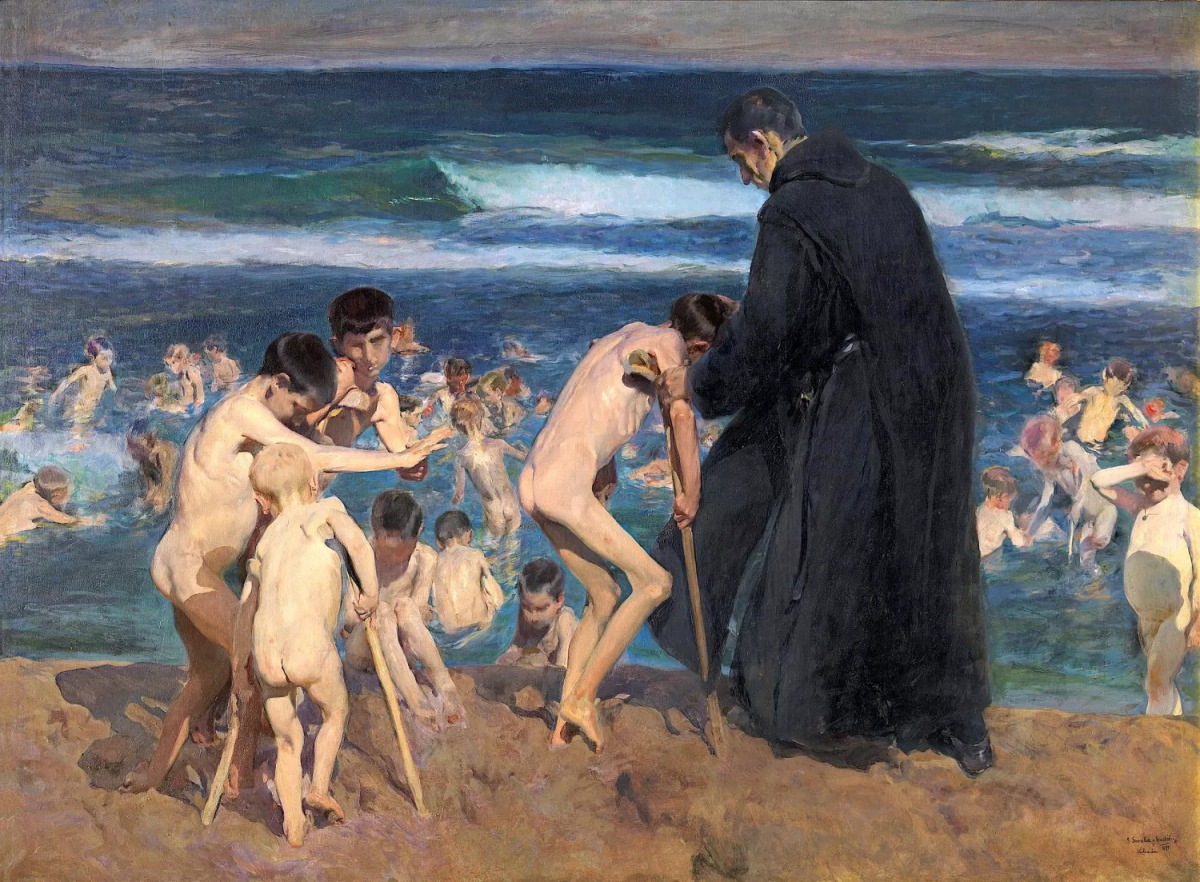
In 1899, the Valencian painter Joaquin Sorolla created one of his most striking and moving works: Sad Inheritance! (“Triste herencia!”)⁵. The monumental canvas depicts a scene on the Cabanyal beach in Valencia: a group of naked children, their bodies marked by disease and disability, bathe in the sea under the watchful gaze of a monk of the Order of Saint John of God. One of the children, in the center of the composition, leans with difficulty on crutches, his atrophied legs an eloquent testimony to the sequelae of a paralyzing disease such as polio.
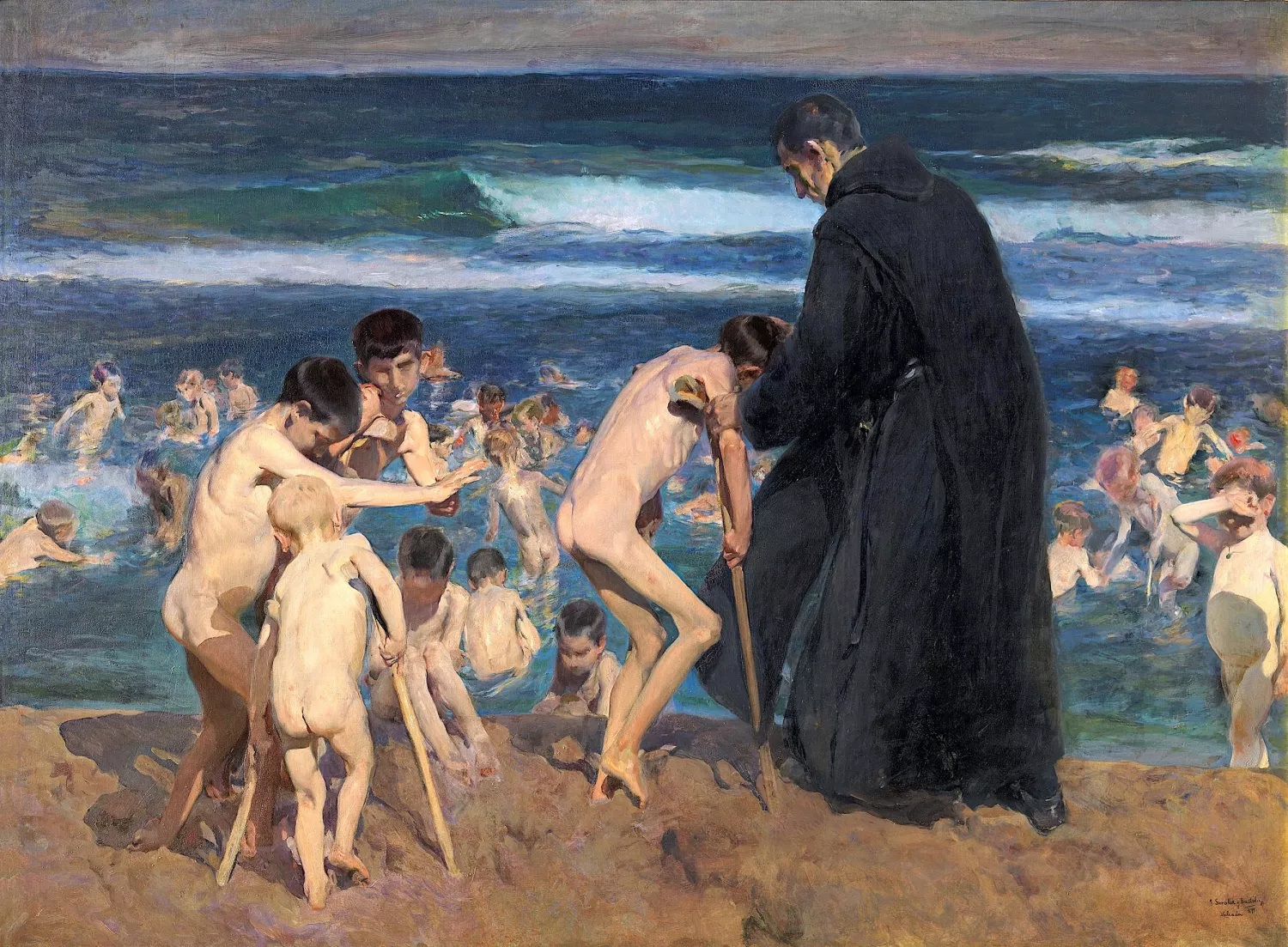
The work, which earned Sorolla the Grand Prix at the 1900 Paris Universal Exposition and the Medal of Honor at the National Exhibition of Fine Arts, is a powerful social document. The artist himself confessed the suffering it caused him to paint it: “I suffered terribly when I painted it. I had to force myself the whole time. I will never paint a subject like that again” (“Sufri terriblemente cuando lo pinte. Tuve que forzarme todo el tiempo. Nunca volvere a pintar un tema como ese”). Although it was painted before the great polio epidemics of mid-century, the work captures a timeless reality: the vulnerability of childhood to disease in a society where care for the disadvantaged depended more on religious charity than on a structured public health system.
The Meaning of “Sad Inheritance”
The work’s title is profoundly significant. “Sad inheritance” (“Triste herencia”) was an expression of the era that alluded to the consequences children suffered from their parents’ diseases and addictions, such as congenital syphilis. However, the painting transcends this interpretation to speak of a broader and more desolate inheritance: the inheritance of poverty, marginalization, and helplessness. The children depicted were orphans from the Hospital of Saint John of God, victims of a society that could not protect them. The sea, which in other Sorolla works is a setting of joy and vitality, here appears in somber, almost threatening tones, reflecting the hopelessness of the scene. Sorolla’s painting functions as a premonition — a portrait of the helplessness that decades later would multiply on a devastating scale with the arrival of the great polio epidemics.
Polio in Spain until 1963: An Ignored Crisis
Poliomyelitis had existed in Spain since the beginning of the century, but it was after the Civil War that its incidence began to grow alarmingly⁵. Despite warnings from doctors and experts, the initial response of the Franco regime was characterized by denial and concealment. An institutional and media “veil of silence” was imposed over the epidemic⁵.
This management of the health crisis reveals a profoundly ideological logic. For a dictatorship that based its legitimacy on propaganda of order, efficiency, and strength, admitting the existence of an uncontrolled epidemic was an unacceptable sign of weakness. Public health was subordinated to the regime’s political image. This concealment had disastrous consequences, as it delayed the adoption of preventive measures and, above all, the implementation of vaccination campaigns that were already being carried out in other European countries⁵.
The Impact on Society and Families
The drama was lived in the intimacy of homes. The disease generated widespread social panic⁵. Affected families faced not only the pain of seeing their children paralyzed but also social stigma and an enormous economic burden, often feeling abandoned by an overwhelmed and ineffective healthcare system⁵. Polio also became a cruel marker of social class. Being transmitted by the fecal-oral route, its incidence was higher among families with the worst hygienic, sanitary, and housing conditions — the majority in postwar Spain⁵. The polio boys and girls grew up in a context of precariousness, long periods of hospital isolation, and limited healthcare — a reality that marked their lives forever⁵.
Chapter IV: Science against Paralysis: From the Microscope to the Vaccine
While the polio drama spread across Spain, science, though weakened by war and repression, did not remain inactive. At the heart of the scientific response to the epidemic were figures and institutions that were heirs to the tradition of the Cajal School, who had to navigate a complex landscape to apply advances in neuroanatomy, microbiology, and immunology to the most serious public health crisis of the postwar era.
The Neuroanatomical Connection: The Anterior Horn and the Work of Cajal
To understand the devastation of polio, it is necessary to return to the map of the nervous system drawn by Cajal. The poliovirus is a neurotropic agent that selectively attacks the motor neurons of the anterior horn of the spinal cord. The destruction of these cells, responsible for sending movement commands to the muscles, is what causes the flaccid paralysis that defines the disease.
Cajal’s monumental work, Degeneration and Regeneration of the Nervous System (1913–1914), becomes here the indispensable reference text⁶. Although his studies were based on mechanical injuries, the illustrations he made of motor neurons in the process of disintegration, of fragmenting axons, and of the failed attempts at regeneration are, in effect, a precise atlas of the neuropathology of poliomyelitis. His drawings of the anterior horn of the spinal cord and of the regeneration of the anterior roots provided the visual dictionary that allowed subsequent generations of physicians to understand the cellular basis of paralysis⁶. The work of his disciples, such as Jorge Francisco Tello, who continued research on nerve regeneration, deepened this fundamental knowledge⁶.
The Public Health Infrastructure: The Alfonso XIII Institute and Microbiology
Cajal’s legacy was not only conceptual but also institutional. As director of the Alfonso XIII National Institute of Hygiene (created in 1899), Cajal laid the foundations of modern public health in Spain⁴. Under his direction, the institute became a center for the large-scale production of serums and vaccines and the national reference laboratory for bacteriological diagnosis⁴. This capacity for microbiology — a discipline whose development in Spain was remarkable — was crucial. Works such as the Manual of General Pathological Anatomy and Foundations of Bacteriology, written by Cajal and updated by Tello, became formative texts for generations of physicians. Although in Cajal’s time the enemy was bacteria, the infrastructure and scientific culture he created were what, decades later, would be adapted to fight viruses.
Julian Sanz Ibanez: A Disciple at the Crossroads
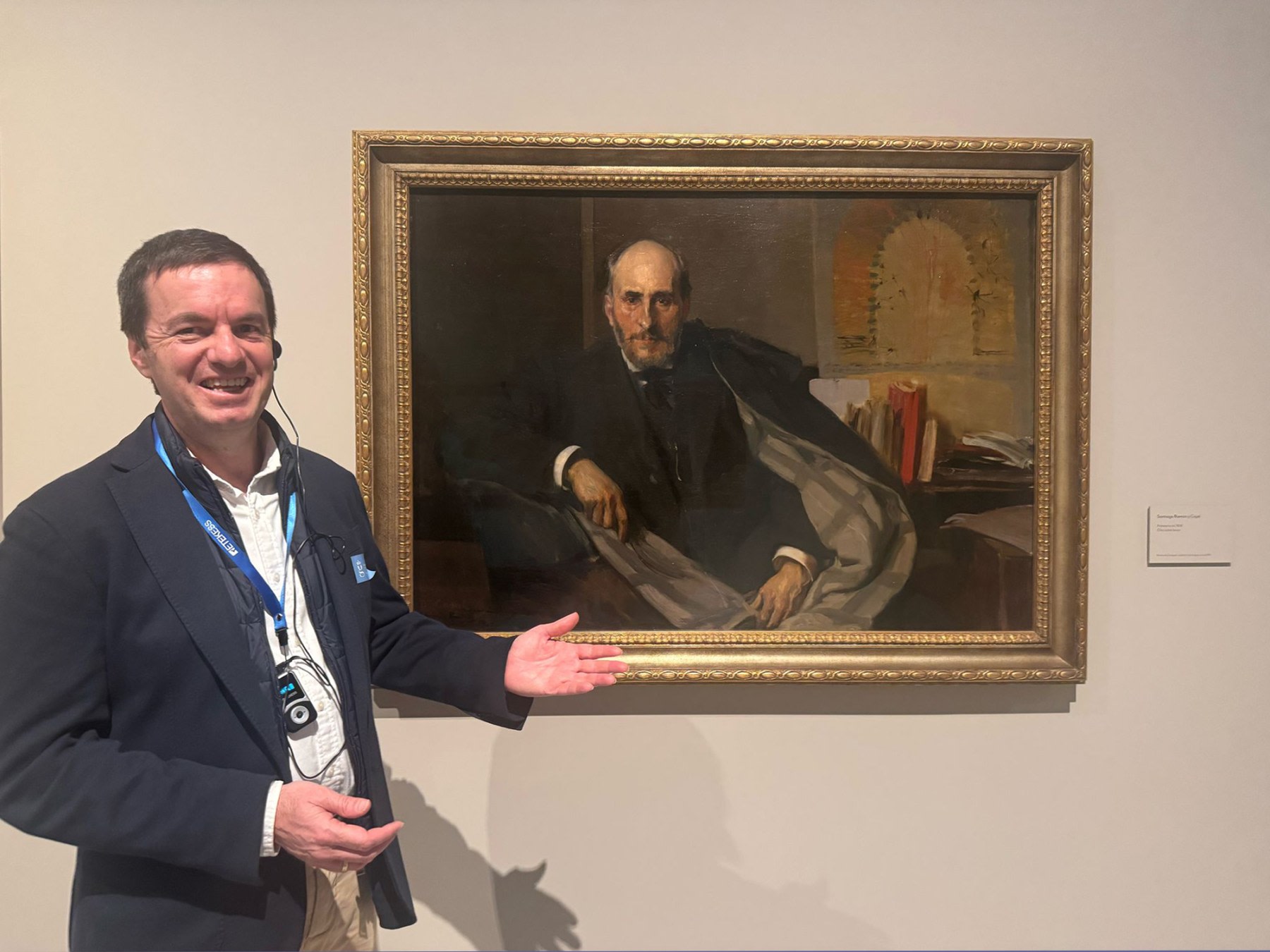
The figure of Julian Sanz Ibanez (1904–1963) is particularly revealing. Trained in Zaragoza and funded by Cajal himself at his institute, Sanz Ibanez is considered the last direct disciple of the master. Unlike his purged or exiled colleagues, he thrived under the new regime, acceding to the Chair of Histology and Pathological Anatomy and directing the Virus Section of the Cajal Institute.
Among his contributions, his studies on experimental poliomyelitis stand out. He assembled and isolated for the first time different strains of the poliovirus, which he inoculated into rabbits, monkeys, and chimpanzees to study the alterations of the peripheral nervous system and the muscular synapse. He demonstrated the importance of the myoneural lesion in the evolution of the paralytic process. Also of special interest are his research on rickettsia prowazeki in the vitelline membrane of the chicken embryo, on dormouse poliomyelitis, the experimental production of sarcoma in mice, and the chemical purification of the poliovirus.
Among his books, notable are: General Pathological Anatomy (Madrid, 1954), Lectures on Special Pathological Anatomy (Madrid, 1958), Intracranial Tumors (Madrid, 1955) published with Sixto Obrador Alcalde, and Radioisotopes and Brain Tumors (Madrid, 1957) with Sixto Obrador and Severino Perez Modrego. Some other publications include: Experimental Poliomyelitis (1943), New Advances in the Etiopathogenesis of Poliomyelitis (1946), Epidemiology of Poliomyelitis (1958), Modern Trends in the Treatment of Neoplastic Processes of the Nervous System (1948), and Classification of Tumors of the Central Nervous System (1961).
His most outstanding contributions were in the field of poliomyelitis and cancer. Applying the rigor of the Cajal School, his research ranged from virus isolation to the histopathology of the disease. His magnum opus was the book “Experimental Poliomyelitis” (“Poliomielitis experimental”), published in 1944 and awarded the CSIC’s Francisco Franco Science Prize⁹. This work represented one of the most important scientific contributions on the disease made in Spain and laid the foundations for subsequent studies.
The Battle of the Vaccines and the 1963 Campaign
The organized fight against polio was led by the National School of Public Health of the ISCIII, an institution heir to the Alfonso XIII National Institute of Hygiene directed by Cajal⁴. Leading this battle was the virologist Florencio Perez Gallardo (1917–2006). His team carried out the epidemiological studies that demonstrated the urgent need for mass vaccination.
However, implementation ran into an intense bureaucratic and ideological battle in 1963¹⁰. On one hand, the Compulsory Sickness Insurance, represented by the influential pediatrician Juan Bosch Marin, championed the injectable Salk vaccine (“killed viruses”). On the other, the Perez Gallardo team advocated for the oral Sabin vaccine (“attenuated viruses”), more suitable for a mass campaign¹⁰.
The dispute was resolved thanks to the evidence. In the spring of 1963, Perez Gallardo organized a pilot campaign with the oral Sabin vaccine in Leon and Lugo. The success was resounding and paved the way for the announcement, on November 14, 1963, of the First National Vaccination Campaign — a milestone that stopped the epidemic in its tracks and saved thousands of children¹⁰.
Chapter V: The Fracture: Civil War, Purges, and Exile
The flourishing of the Silver Age of Spanish science was brutally interrupted by the Civil War (1936–1939) and the subsequent establishment of the Francoist dictatorship. What had been a project of modernization and openness became a system of repression and isolation. Science, and especially the Cajal School, was one of its principal victims.
The Destruction of a Legacy
The Franco regime embarked on the systematic destruction of the intellectual heritage of the Free Institution of Education and its principal creation, the JAE³. These institutions were seen as the epitome of liberalism, secularism, and openness to Europe — ideas that were anathema to the National Catholicism of the “New Spain.” The JAE was dismantled and replaced by the Higher Council for Scientific Research (CSIC), a new entity whose declared mission was “to restore the classical and Christian unity of the sciences”³, ¹⁴. The cream of Spanish science, trained over decades with the JAE’s efforts, was cut down at the root³.
The “Purging” of Science
After the Francoist victory, a systematic and mandatory process of “purging” (“depuracion”) was set in motion at universities and research centers to expel all those considered disloyal to the new regime³. The case of Jorge Francisco Tello is a paradigmatic and painful example of this purge. Despite having remained in Madrid throughout the war, loyal to his post, and having been — alongside Fernando de Castro — the guardian of the invaluable Cajal Legacy, Tello was stripped of his chair and the directorship of the Cajal Institute on October 4, 1939. His loyalty to the Republic and his connection to the JAE were sufficient to condemn him to an “internal exile,” removed from the front lines of research and teaching³.
This tragedy reveals a profound paradox: the same regime that would appropriate Cajal’s figure as a symbol of national greatness mercilessly purged his most direct and loyal intellectual heirs. The guardians of Cajal’s material legacy were punished, while his intellectual legacy of freedom, rigor, and openness to the world was dismantled.
The Exile of the Wise
Those who did not suffer internal exile were forced into external exile. Pio del Rio Hortega, due to his well-known republicanism and having signed manifestos in support of the legitimate government, had to flee Spain in 1936. His odyssey took him first to Paris and then to the University of Oxford, invited by the prestigious neurosurgeon Hugh Cairns. Finally, in 1940, he settled in Buenos Aires, Argentina. There, far from the darkness descending upon Spain, he founded a new and fruitful school of neurohistology, training a new generation of disciples and continuing his pioneering work until his death in 1945. His influence in Latin America, already notable since his travels to Mexico and Cuba in the 1930s, was consolidated during his exile.
The Diaspora of Talent
Rio Hortega was not the only one. The youngest and one of the most brilliant of Cajal’s disciples, Rafael Lorente de No, had emigrated to the United States in 1931, frustrated by the lack of research opportunities in Spain². There he developed an extraordinary career at the Rockefeller Institute, becoming a central figure in world neurophysiology. His studies on the columnar organization of the cerebral cortex and, especially, his description of “reverberating circuits” — closed neuronal chains that could sustain activity over time — were the first biological demonstration of a feedback loop². This concept proved fundamental to the birth of cybernetics, and Lorente de No was one of the principal members of the influential Macy Conferences, alongside figures such as John von Neumann and Norbert Wiener.
The exile of figures of this caliber represented an irreparable brain drain for Spain. However, it also acted as a vector for the global dissemination of the knowledge and methodology of the Cajal School. While science withered in the “internal exile” of Francoist Spain, Cajal’s legacy flourished in external exile, ensuring its survival and influence in world neuroscience, albeit far from its place of origin. The war and dictatorship did not only halt scientific progress in Spain; they dismantled what, according to UNESCO, was one of the most successful scientific schools in history.
Epilogue: Interwoven Legacies in Memory and Science
The intertwined history of the Cajal School and the polio epidemic in Spain is a tale of light and shadow, of the pinnacle of intellectual achievement and the abyss of political and public health tragedy. It is a narrative that compels reflection on the fragility of progress and the profound consequences that political decisions have on a nation’s science and health.
The Cost of the Fracture
The blow dealt by the Civil War and the dictatorship to Spanish science was of catastrophic magnitude. The nation that, in the early decades of the twentieth century, had produced a Nobel laureate and several strong candidates to receive one — such as Rio Hortega, de Castro, and Lorente de No — was plunged into a scientific mediocrity that would take more than fifty years to begin to overcome³, ⁵. The internal and external exile of its best minds, the destruction of liberal research institutions, and the imposition of a dogmatic and isolated science left a void that marked generations. Cajal’s regenerationist dream — of a modern Spain driven by knowledge — was shattered.
The Memory of Polio
The legacy of polio remains alive in the memory and bodies of thousands of Spaniards. Decades after the epidemic, many survivors began to experience new debilitating symptoms: progressive fatigue, weakness, and muscle pain. This condition, known as Post-Polio Syndrome (PPS), has long been an invisible disease, often unrecognized by the Spanish healthcare system. In the face of this institutional void, it has been the associative movement that has taken up the banner of the fight for recognition and care. Associations such as the Asociacion Afectados de Polio y Sindrome Post-Polio de Espana, Asociacion Postpolio Madrid (APPM), Asociacion Cordobesa de Polio y Post-Polio, Associacio del Polio i Sindrome Postpolio de la Comunitat Valenciana (APIPCV), Asociacion Malaguena de Afectados Polio y Postpolio (AMAPyP), Asociacion de Afectados de Poliomielitis y Sindrome Postpolio de Castilla y Leon (POLIOCyL), **Mesa de afectados polio y SPP **(MAPPE), or the Associats de Polio i Postpolio de Catalunya (APIPPCAT), and it is fundamental to highlight the creation and role of the Federacion de Entidades de Polio y Sindrome Postpolio de Espana (FEP), have been essential in giving visibility to the problem, offering mutual support, and demanding the rights and medical care that the “polio boys and girls” deserve. Their fight is a constant reminder of the long-term consequences of a health crisis managed with negligence.
Final Conclusion
The stories told here — that of the “butterflies of the soul” that Cajal saw in the brain, that of the children of Sorolla’s “sad inheritance,” and that of science truncated by war — are, ultimately, two sides of the same coin. They represent the perpetual tension between the unlimited potential of human knowledge and the devastating capacity of ignorance and political barbarity to destroy it. The Cajal School demonstrated that Spain could achieve world-class scientific excellence. The management of polio demonstrated how easily that capacity could be squandered through institutional negligence and ideological narrow-mindedness. The legacy of both stories is a warning and an inspiration: a warning about the vulnerability of science and public health, and an inspiration to continue defending, as Cajal did, a future where knowledge is the principal engine of progress and the well-being of society.
Bibliographic References
-
De Castro, F. (1928). Sur la structure et l’innervation du sinus carotidien de l’homme et des mammiferes. Nouveaux faits sur l’innervation et la fonction du glomus caroticum. Trabajos del Laboratorio de Investigaciones Biologicas de la Universidad de Madrid, 25, 331-380.
-
Lorente de No, R. (1938). Architectonics and Structure of the Cerebral Cortex. In J. F. Fulton (Ed.), Physiology of the Nervous System (pp. 291-330). Oxford University Press.
-
Otero Carvajal, L. E. (2001). La destruccion de la ciencia en Espana. Depuracion universitaria en el franquismo. Historia y Comunicacion Social, 6, 149-186.
-
Porras Gallo, M. I. (2019). El Instituto Nacional de Higiene de Alfonso XIII: origen, creacion y labor desempenada. In A. Carrascosa & M. J. Baguena (Coords.), El desarrollo de la microbiologia en Espana (Vol. I, pp. 69-103). Fundacion Ramon Areces.
-
Porras Gallo, M. I., Ayarzaguena Sanz, M., de las Heras Salord, J., & Baguena, M. J. (Coords.). (2013). El drama de la polio: Un problema social y familiar en la Espana franquista. Los Libros de la Catarata.
-
Ramon y Cajal, S. (1913-1914). Degeneracion y Regeneracion del Sistema Nervioso. Moya.
-
Rio-Hortega, P. del. (1919). El “tercer elemento” de los centros nerviosos. Boletin de la Sociedad Espanola de Biologia, 9, 68-166.
-
Rio-Hortega, P. del. (1921). Estudios sobre la neuroglia. La glia de escasas radiaciones (oligodendroglia). Boletin de la Real Sociedad Espanola de Historia Natural, 21, 63-92.
-
Sanz Ibanez, J. (1944). Poliomielitis experimental. Consejo Superior de Investigaciones Cientificas.
-
Tuells, J. (2019). La batalla de Madrid por las vacunas antipoliomielitis (1963): ciencia, ideologia y poder en la primera campana de inmunizacion masiva en Espana. Gaceta Sanitaria, 33(5), 480-484.
Julian Sanz Ibanez
Julian Sanz Ibanez at BIOMEDES and at the RAMNE. Presentation of the Historical Documentary Archive of Pathology.
Julian Sanz Ibanez — Docs.Santiagoramonycajal
The Cajal Legacy vs. Albareda and the Sciences — Docs.Santiagoramonycajal
THE CARLOS III HEALTH INSTITUTE AND SPANISH PUBLIC HEALTH — Docs.Santiagoramonycajal
EPIDEMIOLOGICAL STUDIES — Docs.Santiagoramonycajal
THE ELIMINATION OF POLIO IN SPAIN - Rafael Najera — Docs.Santiagoramonycajal
WHO Virology Spain — Docs.Santiagoramonycajal