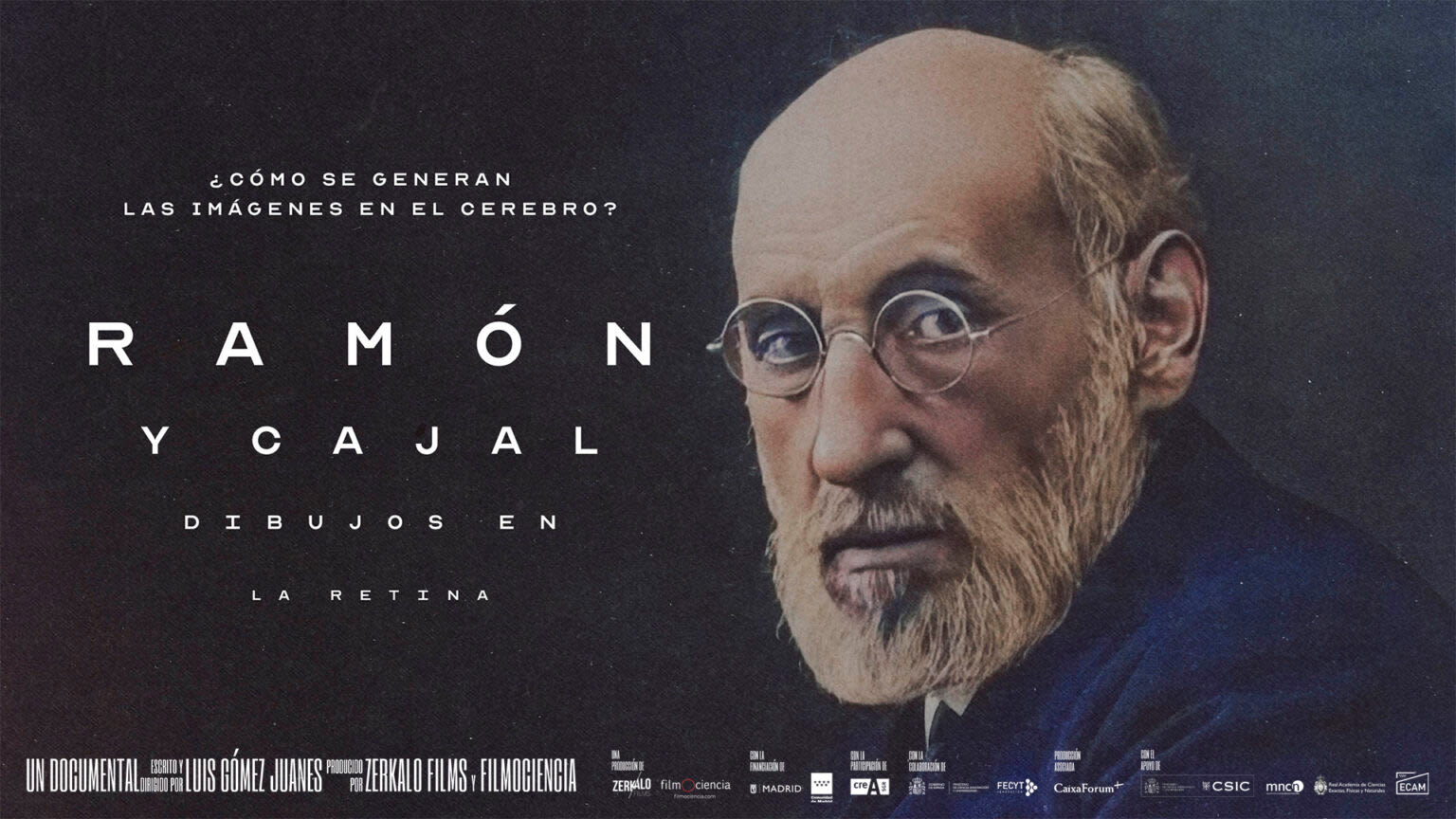
Scientific and historical significance of Santiago Ramon y Cajal and the Spanish School of Neurohistology, a journey that culminated with the inscription of their collective archives in the UNESCO Memory of the World Register in 2017. This inscription represents the formal international recognition not of an individual genius, but of a complete scientific ecosystem: a school of thought that revolutionized our understanding of the brain. The article traces the intellectual arc from Cajal’s foundational “Neuron Doctrine” to the crucial discoveries of his disciples — Pedro Ramon y Cajal, Jorge Francisco Tello, Nicolas Achucarro y Lund, Pio del Rio-Hortega, Domingo Sanchez y Sanchez, Fernando de Castro, Rafael Lorente de No, among others — who expanded and solidified his paradigm. It also examines the tragic fragmentation of this school by the Spanish Civil War and the subsequent diaspora, which paradoxically disseminated its influence worldwide. Finally, it deconstructs the “Cajal Legacy” as a unique form of documentary heritage, whose inscription by UNESCO serves as a powerful historiographical act that consolidates the collective nature of this scientific achievement and ensures its preservation for humanity.
Part I: The Architect of the Modern Brain: Santiago Ramon y Cajal
Chapter 1: The Origins of a Genius: Education and the Context of Spanish Science
1.1. An Indomitable Talent: Art, Anatomy, and Rebellion
The trajectory of Santiago Ramon y Cajal (1852-1934) was forged at the confluence of two passions: art and science. From childhood he displayed a natural inclination toward the visual arts, a vocation that frequently clashed with the iron discipline of his father, a pragmatic surgeon. His father, determined that the boy should follow in his footsteps in medicine, regarded his artistic pursuits as a distraction. Yet this duality proved to be the key to his future genius. His earliest anatomical studies were self-taught and unorthodox; during the summer of 1868, his father took him to cemeteries to unearth human remains, a macabre but effective lesson in osteology that awakened his interest in medicine through drawing. Later, during his formal studies at the University of Zaragoza, his drawing ability was at last recognized and put to use by his own father, who employed him to illustrate his anatomy lectures. This early synthesis of the artist’s precision and the anatomist’s curiosity laid the foundations for his subsequent scientific method.
1.2. Nineteenth-Century Spanish Science: A Fertile Desert
To appreciate the magnitude of Cajal’s achievements, it is essential to situate him within the context of late nineteenth-century Spain. The country found itself in a state of considerable scientific isolation from the principal currents of European research. Science was not a national priority, and resources were scarce. Against this backdrop, Cajal has often been interpreted as a miraculous “exception.” A deeper analysis, however, reveals that he did not emerge from an absolute void. He was, in part, the product of an incipient movement of intellectual regeneration and modernization, driven by currents such as the Institucion Libre de Ensenanza (Free Institution of Education), with which he had contact and which promoted educational and scientific renewal in the country. This “fertile desert” provided the ground upon which an exceptional mind, though largely self-taught, could flourish against all odds.
1.3. The “EUREKA” Moment: The Encounter with the Reazione Nera
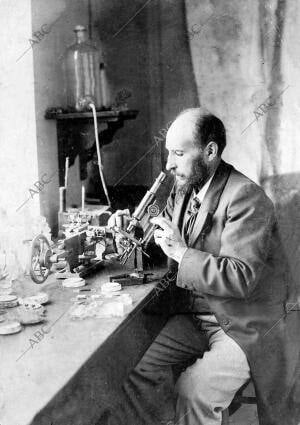
The turning point in Cajal’s career occurred in 1887. During a visit to Madrid, the psychiatrist and neurologist Luis Simarro showed him preparations of brain tissue stained with a technique virtually unknown in Spain: the reazione nera (black reaction), developed by the Italian Camillo Golgi. For Cajal, observing for the first time the sharp, complete silhouette of a neuron, standing out in black against a translucent background, was both an aesthetic and intellectual revelation. He described the experience as an encounter with a “dark forest” that promised innumerable secrets. This moment catalyzed a radical shift in his focus: he abandoned his previous studies in pathology and microbiology to devote himself entirely to neuroanatomy. With a fervor that would define his entire career, he invested his own savings to purchase a microscope and the necessary reagents, setting up a small laboratory in his home to master and refine the technique.
His largely self-taught training and his relative isolation from the great European scientific centers, where the reticular theory held sway, became a decisive advantage. Not having been indoctrinated in the prevailing dogma, he was able to interpret what he saw under the microscope with an open mind, free from the prejudices that blinded many of his contemporaries. This independence of thought, forged by necessity, was the condition that allowed him to conceive a conceptual revolution from direct observation.
Chapter 2: The Neuron Doctrine: A Scientific and Artistic Revolution
2.1. The Central Conflict: Reticularism vs. Neuronism
In the late nineteenth century, the field of neuroanatomy was dominated by the Reticular Theory. Championed by prominent figures such as Joseph von Gerlach and Camillo Golgi himself, this theory held that the nervous system was a continuous, uninterrupted network, a syncytium of fused fibers in which individual cells did not exist as separate entities. It was a logical view given the limitations of the techniques of the era, which showed brain tissue as an inextricable tangle. Against this dogma, Cajal proposed a radically opposed idea: the Neuron Doctrine. Based on his meticulous observations, he asserted that the nervous system, like all other tissues of the body, was composed of individual, discrete cells that would later be called “neurons.” These cells, he maintained, were not fused but communicated with one another by contact (contiguity) at specialized points, without cytoplasmic continuity.
2.2. Perfecting the Tool: Cajal’s Method
Cajal’s success did not rest solely on his theoretical acuity but also on his methodological genius. He did not simply use the Golgi stain; he modified and systematically perfected it to suit his objectives. His most brilliant innovation was the “ontogenetic method”: the strategic use of tissues from embryos and newborn animals. Cajal correctly intuited that at these early stages of development, neural circuits would be simpler, connections less dense, and, crucially, axons would have less myelin. Since the Golgi stain works best on unmyelinated axons, this choice allowed him to visualize complete neurons, from their dendrites to the tip of their axon, with unprecedented clarity that was impossible to achieve in the dense, complex adult brain. This methodological ingenuity provided him with the irrefutable evidence for his theory.
2.3. The Arrows of Thought: The Law of Dynamic Polarization
Cajal did not stop at the static description of the cell. In 1891, he formulated his second great principle: the Law of Dynamic Polarization. He postulated that the nerve impulse is unidirectional, flowing predictably through the neuron: it is received by the dendrites and cell body (soma) and transmitted to other cells via the axon. This idea transformed the map of the brain from a mere collection of anatomical structures into a dynamic, functional information-flow diagram. For the first time, one could think about the brain in terms of circuits and signal processing. The “arrows of thought,” as they have been called, now had a direction.
2.4. Drawing as Evidence: The Fusion of Art and Science
In Cajal’s work, scientific drawing transcends mere illustration to become a primary document, an analytical tool, and a powerful instrument of persuasion. His illustrations, of extraordinary precision and beauty, were “pieces of reality” that made the invisible visible and the complex comprehensible. The clarity and detail of his drawings were fundamental in convincing the international scientific community, especially after his presentation at the Congress of the German Anatomical Society in Berlin in 1889, which launched his career. He combined scientific objectivity with poetic metaphors, as when he described pyramidal cells as “butterflies of the soul” (“mariposas del alma”), endowing his science with a unique narrative force that captivated his colleagues.
This power of persuasion was put to the test on the most important stage of all: the Nobel Prize ceremony of 1906. The prize was awarded jointly to Cajal and Camillo Golgi, a decision that Cajal himself described as a “cruel irony of fate” (“cruel ironia del destino”). Far from representing the recognition of a consensus, the prize reflected a deep division in the field. Their theories were fundamentally irreconcilable. The confrontation became explicit in their acceptance speeches: Golgi devoted his lecture to attacking the Neuron Doctrine, defending his reticular vision, while Cajal used his to present the overwhelming evidence in favor of neuronal individuality. This public clash demonstrated that the scientific revolution was in full swing, not concluded. Time, and technology, would prove Cajal right. The invention of the electron microscope in the 1950s finally made it possible to visualize the synaptic cleft, the physical gap between neurons, definitively confirming the Neuron Doctrine and closing the debate that the Nobel had left open.
Chapter 3: Beyond the Neuron: Plasticity, Regeneration, and the Humanist
3.1. “The Sculptor of His Own Brain”: The Notion of Neuronal Plasticity
Cajal’s vision extended far beyond the basic structure of the nervous system. He was one of the earliest and most eloquent advocates of neuronal plasticity, an extraordinarily advanced idea for his time. He popularized the term “plasticity” and proposed that the basis of learning and memory lay in the capacity of neurons to modify their connections, strengthening some and creating new ones in response to experience and mental exercise. His famous phrase, “Every man can, if he so desires, be the sculptor of his own brain” (“Todo hombre puede ser, si se lo propone, escultor de su propio cerebro”), encapsulates this dynamic and optimistic vision of the brain as a malleable, not fixed, structure. This idea, though ignored for decades, is today one of the fundamental pillars of modern neuroscience and the basis of the synaptic theory of memory.
3.2. Mapping the Microcosm: Growth Cones and Dendritic Spines
Cajal’s genius lay in his ability to identify key structures and correctly deduce their function. He discovered the axonal growth cone, the dynamic structure at the tip of developing axons that, according to his hypothesis, acts as a “battering ram” guided by chemical signals (neurotropism) to find its way in the embryonic brain. He was also the first to identify and ascribe importance to dendritic spines, small protuberances on dendrites that his contemporaries dismissed as mere staining artifacts. Cajal, with his extraordinary intuition, recognized that they were the actual sites of synaptic contact, the points where communication between neurons was established, thereby increasing the surface area for connectivity. Both discoveries provided the physical mechanisms for his theories on brain development and plasticity.
3.3. The Patriot of Science: Institution Builder
Cajal’s impact was not confined to the laboratory. Deeply concerned about Spain’s scientific backwardness, he became a “patriot of science,” a tireless champion of the country’s scientific modernization. His appointment as president of the Junta para Ampliacion de Estudios e Investigaciones Cientificas (JAE) (Board for the Advancement of Studies and Scientific Research) in 1907 was a decisive milestone. From this position, he directed the most ambitious project of scientific regeneration in the history of Spain, promoting structural changes in the educational system and, fundamentally, creating a fellowship program for young researchers to train in the best laboratories in Europe. The JAE was the seedbed of Spain’s golden age of science and the direct precursor of the present-day Consejo Superior de Investigaciones Cientificas (CSIC) (Spanish National Research Council) and of the Instituto Cajal (Cajal Institute) itself, thus ensuring an institutional legacy that endures to this day.
3.4. A Pillar of Public Health: The National Institute of Hygiene
Cajal’s contribution to Spain’s scientific infrastructure transcended neuroscience to lay the foundations of modern public health. In 1899, in response to the cholera epidemics ravaging Europe, the Instituto de Sueroterapia, Vacunacion y Bacteriologia Alfonso XIII (Alfonso XIII Institute of Serotherapy, Vaccination, and Bacteriology) was created by Royal Decree under the Directorate General of Health. Cajal was appointed its first director, a position he held until 1920. Under his leadership, the institute became a nerve center for research, vaccine and serum production, and the teaching of microbiology, playing a fundamental role in the fight against infectious diseases. His most faithful disciple, Jorge Francisco Tello, worked closely with him and succeeded him as director in 1920, continuing his work of modernization and epidemic control. Although the original building was destroyed during the Civil War, the work and structure of this institute are the direct historical antecedent of the present-day Instituto de Salud Carlos III (ISCIII) (Carlos III Health Institute), established in 1986, which is today Spain’s principal public biomedical research body.
3.5. The Total Intellectual: Photographer, Writer, and Philosopher
Cajal’s scientific genius was inseparable from his profound humanism. He was a Renaissance man in the modern era, with a curiosity that encompassed multiple fields. He was a passionate and pioneering photographer who went so far as to write a technical manual on color photography and who experimented with microphotography with great skill. His photographic legacy, which includes rare color plates produced using the Lippmann method, is of incalculable value. He was also a prolific writer, the author of autobiographical works such as Recuerdos de mi vida (Recollections of My Life), manuals on scientific method such as Reglas y consejos sobre investigacion biologica (Advice for a Young Investigator), and even works of fiction. His interests extended to psychology and philosophy; he investigated phenomena such as hypnosis and analyzed his own dreams. This integrated vision of knowledge, in which art, science, and the humanities nourish one another, is essential for understanding the true dimensions of his figure.
Part II: The Orchestra of Thought: The Spanish School of Neurohistology
Chapter 4: The Creation of a Scientific Tradition
4.1. From the Solitary Laboratory to the Scientific Ecosystem
The international recognition of Cajal, particularly after receiving the prestigious Moscow Prize in 1900, convinced the Spanish government of the need to provide him with adequate resources for his research. This support materialized in the creation of the Laboratorio de Investigaciones Biologicas (Laboratory of Biological Research) in 1901, which would later, in 1922, become the Instituto Cajal. This transition from a private, precarious laboratory to a state-funded institution was crucial. It transformed Cajal’s work from an individual effort into a collective project, creating a dynamic scientific ecosystem capable of attracting, training, and retaining a generation of talented researchers. This was the crucible in which the Spanish School of Neurohistology was forged.
4.2. Cajal’s Pedagogy: Rigor and Freedom
As a teacher, Cajal developed a pedagogical style as effective as his histological techniques. He was known for his exacting standards, demanding that his disciples achieve absolute mastery of the complex staining techniques and display tireless dedication to the microscope. However, this rigor was combined with a remarkable intellectual generosity. Unlike many European laboratories, organized in a strictly hierarchical fashion, Cajal shared his enthusiasm and granted his collaborators considerable freedom to explore their own lines of research. He did not seek mere assistants but aimed to train independent scientists. This balance between a common technical foundation and freedom for individual exploration was the engine of the extraordinary creativity and productivity of his school, enabling it to produce figures who would shine in their own right.
Chapter 5: The Great Disciples and the Expansion of the Frontiers of Knowledge
The true measure of Cajal’s genius lies not only in his own discoveries but in his ability to create a school of thought that continued, complemented, and on occasion surpassed his work. The members of the Spanish School of Neurohistology were not mere satellites but a constellation of stars who expanded the frontiers of knowledge, opening entirely new fields of research.
5.1. Nicolas Achucarro: The Pioneer of Neuropathology
Nicolas Achucarro y Lund (1880-1918) was one of the most brilliant and tragically short-lived figures of the School. Trained under luminaries such as Pierre Marie in Paris and Alois Alzheimer in Munich, Achucarro brought to Spain the most advanced techniques and problems of European neuropathology. He was a pioneer in the study of neuroglia, developing an innovative staining method using tannin and ammoniacal silver that opened new avenues for visualizing these cells. His work laid the foundations for research into the “third element” and he was the direct mentor and protector of Pio del Rio-Hortega, guiding him in his first steps and whose line of research he would inherit. His premature death at the age of 37 from Hodgkin’s disease was an incalculable loss, cutting short the career of one who was destined to consolidate neurology as a clinical and scientific specialty in Spain.
5.2. Pio del Rio-Hortega: The Discoverer of the “Third Element”
Pio del Rio-Hortega (1882-1945) is, after Cajal, the most distinguished figure of the School. His contribution was monumental: he solved the enigma of what Cajal had vaguely called the “third element” of the central nervous system — those cells that were neither neurons nor the already-known astrocytes. Using an innovative silver carbonate staining technique of his own devising, Rio-Hortega identified and characterized two fundamental cell types previously unknown: microglia, the brain’s resident immune cells, and oligodendroglia, the cells responsible for forming the myelin sheaths that insulate axons. This discovery completed the census of the main cell types of the CNS and opened entire fields in neuroimmunology and glial biology. His work on the classification of brain tumors was also pioneering, and he was nominated for the Nobel Prize on two occasions.
The story of Rio-Hortega, however, reveals the complexity of the “School of Cajal.” He was not a direct disciple in the strict sense; his principal mentor was Nicolas Achucarro, another key figure of the school. It was after Achucarro’s premature death that Rio-Hortega briefly joined Cajal’s laboratory, but the relationship was tense and he soon founded his own laboratory, which became a first-rate research center. Cajal himself was initially skeptical of his discoveries and took years to accept them fully. This dynamic demonstrates that the School was not a monolithic entity but a network of groups with their own lines of research, internal tensions, and debates. The success of Rio-Hortega outside Cajal’s direct control is, paradoxically, the greatest testimony to the strength of the intellectual tradition that the master had inaugurated: it was a paradigm so robust that it could flourish and bear extraordinary fruit even at a distance and in an environment of rivalry.
5.3. Pedro Ramon y Cajal: The Strategic Collaborator
Pedro Ramon y Cajal (1854-1950), Santiago’s younger brother by two years, was an indispensable scientific collaborator, though his career is often overshadowed by that of his brother. After an adventurous youth that took him to spend seven years in South America, he returned to Spain to study medicine. Although they never physically worked in the same laboratory, they maintained a strategic long-distance collaboration through an intense correspondence. Pedro’s role was crucial in establishing the universality of the Neuron Doctrine. While Santiago focused on mammals, Pedro systematically applied the same techniques to the nervous system of birds, reptiles, and amphibians, demonstrating that neuronal principles were a fundamental biological law across the entire vertebrate kingdom. His work was not merely confirmatory; his studies on the optic tectum of birds, for example, provided Santiago with key evidence for formulating the Law of Dynamic Polarization. Alongside his research, he pursued a distinguished career as professor of Histology in Cadiz and later of Gynecology and Obstetrics in Zaragoza, where he was a pioneer in the use of biopsies and radiotherapy for the treatment of tumors.
5.4. Domingo Sanchez y Sanchez: The Cartographer of Invertebrates
Domingo Sanchez y Sanchez (1860-1947), a native of Salamanca, is an essential though often less recognized figure of the School. Of humble origins, his tenacity led him to become Cajal’s principal collaborator in a crucial area of research: the structure of the nervous system of invertebrates. While Pedro Ramon extended the Neuron Doctrine to non-mammalian vertebrates, Sanchez’s work was fundamental in demonstrating the universality of Cajal’s principles in another great lineage of the animal kingdom. His meticulous studies on the nervous system of insects, particularly their visual system, and of other invertebrates such as hirudineans (leeches), provided an indispensable comparative basis that reinforced the validity of the neuron theory as a fundamental biological principle. He worked at the Instituto Cajal until his death in 1947 and was also one of the disciples who helped protect the legacy during the Civil War.
5.5. Jorge Francisco Tello: The Faithful Disciple and Successor
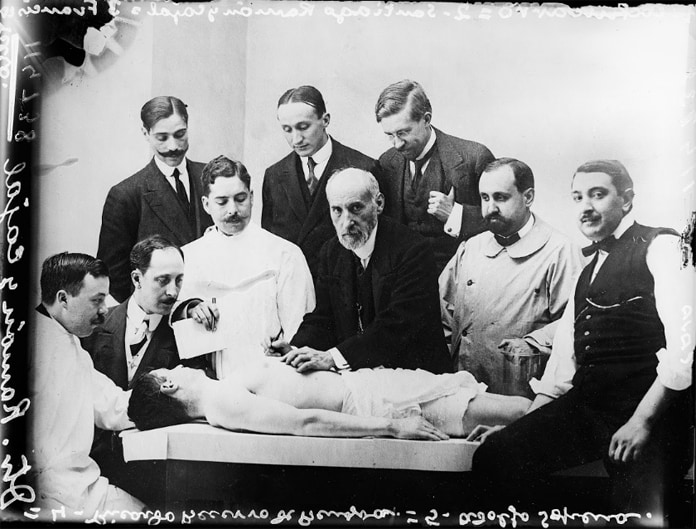
Jorge Francisco Tello (1880-1958) was Cajal’s first and most faithful disciple, joining his laboratory in 1902. Considered his natural successor, he was appointed director of the Instituto Cajal after the master’s death in 1934. His loyalty was both personal and scientific; he was a steadfast defender of the Neuron Doctrine and of the neurotropism hypothesis. His research focused on the processes of nerve degeneration and regeneration and on neuroembryology, a field in which he expanded Cajal’s work. Together with Fernando de Castro, he played a heroic role during the Civil War, protecting the Institute and Cajal’s invaluable legacy. However, his career was cut short by the Francoist purge, which stripped him of all his positions in 1939, forcing him into an “internal exile” until he was rehabilitated just before his retirement. Despite this, he succeeded in creating his own school of anatomical pathologists, ensuring the continuity of a part of the scientific tradition.
5.6. Jose Maria Villaverde: The Bridge between Neurohistology and Psychiatry
Jose Maria Villaverde y Larraz (1888-1936) represents the neuropsychiatric branch of the School of Cajal. He was a central figure of the “first Spanish psychiatric generation,” a group that sought to modernize the study of mental illness by grounding it in the solid foundations of Cajal’s histopathology. His relationship with the master was exceptionally close; he co-authored 32 histological studies with Cajal, a testament to their profound collaboration. His prestige was such that, following Cajal’s death, he was elected to occupy his chair at the Royal National Academy of Medicine. Villaverde was also one of the founders of the influential journal Archivos de Neurobiologia, a pillar for the dissemination of the new biological psychiatry in Spain. His promising career came to a tragic end when he was murdered in Madrid in the early months of the Civil War, in 1936.
5.7. Fernando de Castro: The Decoder of the Chemoreceptors
Fernando de Castro (1896-1967) represents another of the School’s great triumphs. His principal contribution was the first anatomical and functional description of the arterial chemoreceptors. Applying the meticulous histological techniques of the school, de Castro studied the innervation of a small structure at the bifurcation of the carotid artery, the glomus caroticum. He concluded that its rich sensory innervation indicated that it was not a gland, as previously believed, but a sensory organ dedicated to “detecting certain qualitative variations in the composition of the blood” (“captar ciertas variaciones cualitativas en la composicion de la sangre”).
This discovery provided the indispensable anatomical basis for the physiological work of the Belgian Corneille Heymans, who experimentally demonstrated the respiratory reflexes controlled by these chemoreceptors, earning him the Nobel Prize in 1938. The international scientific community has often considered that de Castro deserved to have shared that prize, since his anatomical hypothesis was what guided the definitive physiological research. De Castro’s work is a paradigmatic example of the interdependence between anatomy and physiology: physiology posed a question (where do these reflexes originate?) that the anatomy of the School of Cajal was able to answer, in turn enabling the conclusive physiological proof. In addition to his scientific work, de Castro, together with Tello, played a heroic role in protecting the Cajal Legacy during the Civil War.
5.8. Rafael Lorente de No: The Architect of Cortical Circuits
Rafael Lorente de No (1902-1990) was Cajal’s youngest disciple and the one who carried the school’s principles into the field of systems neurophysiology. Although he developed most of his career in the United States, his foundations were forged at the Instituto Cajal. His contributions were seminal: he was the first to describe the vertical columnar organization of the cerebral cortex, a fundamental principle of cortical function, and the existence of recurrent or feedback circuits, in which neurons not only send information forward but also return it to modulate the activity of the circuit itself. His concept of feedback loops was a precursor to cybernetics. He also established the modern nomenclature for the subregions of the hippocampus (CA1, CA2, CA3, CA4), which is universally used today. Lorente de No became one of the most eminent neurophysiologists in the United States, demonstrating the reach and applicability of Cajalian principles to the function of large-scale brain circuits.
5.9. Julian Sanz Ibanez: The Last Disciple and the Fight against Polio and Cancer
Julian Sanz Ibanez (1904-1963) is considered the last direct disciple of Cajal, who awarded him a fellowship and appointed him professor at his Institute. His career represents the transition from classical neurohistology to virology and oncological pathology. His most significant contribution was in the field of poliomyelitis; he was a pioneer in isolating strains of the virus and studying the pathogenesis of the disease in animal models. His monograph Poliomielitis experimental (Experimental Poliomyelitis, 1944) was a reference work in Spain and laid the foundations for subsequent research on the virus. Furthermore, Sanz Ibanez was a central figure in the fight against cancer. In 1947 he was appointed director of the National Cancer Institute and, most importantly, was a founder and promoter of the Asociacion Espanola Contra el Cancer (AECC) (Spanish Association Against Cancer), as well as of the Sociedad Espanola de Anatomia Patologica (Spanish Society of Anatomical Pathology). His institutional work was key in organizing oncological research and patient care in postwar Spain.
5.10. Other Pillars of the School
The greatness of the School is completed by the contributions of many other researchers. Gonzalo Rodriguez Lafora (1886-1971) was a pioneer of biological psychiatry. A disciple of Cajal and Achucarro, his most celebrated contribution was the description in 1911 of intracytoplasmic inclusions in the neurons of patients with progressive myoclonic epilepsy, a disease that today bears his name. His work, published while he was directing the histopathology laboratory in Washington D.C., connected for the first time a specific neuropathological finding with a type of familial epilepsy. A founder of Archivos de Neurobiologia, Lafora was a key figure in the modernization of Spanish psychiatry, advocating a medical and biological approach to mental illness. His career, like that of so many others, was cut short by exile to Mexico after the Civil War.
The School also benefited from the contribution, often silenced by history, of women such as the laboratory technician Manuela Serra and the Australian researcher Laura Forster (1858-1917). Forster, who held a medical degree from the University of Bern, spent several months in Cajal’s laboratory in 1911 to refine her knowledge of neurohistological techniques. At Cajal’s own suggestion, she studied nerve degeneration and regeneration following spinal cord injury in birds, applying neurofibrillar techniques to these species for the first time. Her findings, which confirmed Cajal’s results in mammals, were published in the laboratory’s journal, in Spanish and with elegant illustrations. Cajal recognized the importance of her work by citing it in his own publications and included her in the list of the principal collaborators of his School. Forster’s scientific career came to an abrupt and tragic end: with the outbreak of wars in Europe, she enlisted as a volunteer surgeon and died of influenza in 1917 while treating the wounded on the Russian front during the First World War.
Table 1: Principal Disciples of the Spanish School of Neurohistology and Their Fundamental Contributions
| Disciple | Period of Activity / Principal Discovery / Impact and Relevance / Pedro Ramon y Cajal |
|---|---|
| Neuron Doctrine in non-mammalian vertebrates | (reptiles, birds). Demonstrated the universality of Cajal’s principles, giving them a broader evolutionary basis. |
| Domingo Sanchez y Sanchez | (1860-1947) 1890-1947 Application of the Neuron Doctrine to the |
| nervous system of invertebrates | . Key collaborator of Cajal who extended the validity of his theories to insects and other invertebrates. |
| Nicolas Achucarro | (1880-1918) 1908-1918 Pioneer in the study of |
| neuroglia | and |
| neuropathology | . Developed new staining techniques. Introduced biological psychiatry and modern neuropathology in Spain. Mentor of Pio del Rio-Hortega. |
| Jorge Francisco Tello | (1880-1958) 1902-1958 Studies on |
| degeneration and regeneration | of the nervous system. First disciple and successor of Cajal. Consolidated and defended the master’s work. Advocate of neurotropism. |
| Pio del Rio-Hortega | (1882-1945) 1913-1945 Identification and characterization of |
| microglia | and |
| oligodendroglia | . Completed the cellular map of the CNS. Founded neuroimmunology and glial biology. Nominated for the Nobel Prize twice. |
| Gonzalo R. Lafora | (1886-1971) 1906-1971 Description of |
| Lafora disease | (progressive myoclonic epilepsy). Pioneer of biological psychiatry in Spain, connecting histopathology with mental disorders. |
| Jose Maria Villaverde | (1888-1936) 1919-1936 Application of neurohistology to |
| psychiatry | . Key figure in biological psychiatry. Co-author of 32 works with Cajal. Murdered at the start of the Civil War. |
| Fernando de Castro | (1896-1967) 1916-1967 Discovery of the |
| arterial chemoreceptors | in the carotid glomus. Provided the anatomical basis for understanding cardiorespiratory reflexes. Considered deserving of the Nobel Prize. |
| Rafael Lorente de No | (1902-1990) 1921-1990 Description of the |
| columnar organization of the cerebral cortex | and |
| feedback circuits | . Founder of systems neuroscience and circuit neurophysiology. Precursor of cybernetics. |
| Julian Sanz Ibanez | (1904-1963) 1930-1963 Pioneering research on the |
| polio virus | and |
| experimental oncology | . Founder of the Spanish Association Against Cancer (AECC). Last direct disciple of Cajal. |
Chapter 6: The Diaspora and Resilience: The Legacy Truncated by the Civil War
6.1. The Shattered Silver Age
The scientific and cultural flourishing of Spain during the first decades of the twentieth century, known as the Silver Age (Edad de Plata), counted the School of Cajal and the JAE among its greatest exponents. This period of modernization and openness to Europe was brutally interrupted by the outbreak of the Spanish Civil War (1936-1939) and the ensuing dictatorship. The conflict brought about the dismantling of the institutional structures that had made the Spanish scientific miracle possible. The JAE was dissolved and replaced by a new body, the CSIC, with a radically different ideological orientation. The war and the political repression that followed caused the death, imprisonment, or exile of many of the country’s finest scientists, bringing an abrupt end to the golden age of Spanish neuroscience.
6.2. Exile: A National Tragedy, a Global Sowing
The diaspora of Cajal’s disciples is one of the great tragedies of Spanish science. Pio del Rio-Hortega, a man of liberal convictions, was forced into exile, passing through Paris and Oxford before settling permanently in Buenos Aires, Argentina, where he continued his work and trained a new school until his death. Rafael Lorente de No, already in the United States, saw his ties to Spain permanently severed and consolidated his career there. Others, such as Gonzalo R. Lafora, Isaac Costero, and Dionisio Nieto, found refuge in Mexico, which under the presidency of Lazaro Cardenas maintained a generous policy of asylum for Spanish Republicans.
6.3. The Legacy in Exile: The Cajalian School in the Americas
Exile, though catastrophic for Spain, had a paradoxical effect: the global dissemination of the methodology and thought of the School of Cajal. The exiled scientists not only continued their research but became foundational figures in the scientific communities of their host countries. In Mexico, their impact was especially profound. The Spanish exiles were instrumental in establishing new research institutions, such as the Laboratorio de Estudios Medicos y Biologicos de la UNAM (Laboratory of Medical and Biological Studies of UNAM), whose name was an explicit homage to Cajal’s Madrid laboratory. There, they trained new generations of neuroscientists, effectively transplanting the “software” — the techniques, rigor, and philosophy of the School — to a new continent. Thus, the very historical event that destroyed the “hardware” — the laboratories and the scientific community in Madrid — was the catalyst that disseminated its influence throughout the world, laying the foundations for the development of modern neuroscience in Latin America.
Part III: The Consecration of a Legacy: UNESCO Recognition
Chapter 7: The “Cajal Legacy”: Anatomy of a Scientific and Cultural Treasure
7.1. The Testament of a Sage
The existence of the extraordinary archive that we know today as the “Cajal Legacy” is owed to the foresight of its creator. In his will, Santiago Ramon y Cajal stipulated that his library, histological preparations, drawings, awards, and scientific instruments be preserved at his Institute after his death. His intention was not self-glorification but rather to leave a living patrimony that would serve as inspiration and a working tool for future generations of scientists. This act of generosity and foresight is the origin of one of the most important collections in the history of science.
7.2. Inventory of a Mind: Content and Composition of the Archive
The archive, officially designated the “Archives of Santiago Ramon y Cajal and the Spanish School of Neurohistology,” is a treasure of astonishing richness and diversity. An inventory conducted in 2008 catalogued more than 28,000 items. This collection includes not only Cajal’s materials but has been enriched with those of his principal disciples, forming a complete record of the activity of the entire School. It includes thousands of histological preparations, scientific drawings, manuscripts, a vast correspondence with scientists from around the world, photographs, books, awards (including the Nobel medal), and the instruments with which they revolutionized neuroscience.
7.3. A Living Heritage: The Dual Value of the Legacy
The Cajal Legacy possesses an exceptional value that resides in its triple nature:
-
Scientific-Historical Value: It is an irreplaceable primary source for studying the history of neuroscience. It allows one to trace, step by step, the birth of a new scientific paradigm, from the first observations through its consolidation and expansion.
-
Contemporary Scientific Value: Unlike many historical archives, a significant portion of the Cajal Legacy remains scientifically active. The histological preparations, thanks to their extraordinary preservation, can be studied using modern techniques, becoming “windows into the microscopic world” that Cajal observed.
-
Artistic Value: The drawings of Cajal and his school are universally recognized as masterpieces of scientific illustration. They combine rigorous anatomical fidelity with a compositional beauty that elevates them to the category of art. This fusion of science and art is one of the most singular and appealing characteristics of the legacy.
7.4. A History of Survival
The very existence of the Legacy today is almost a miracle. Its history is one of survival against adversity. It survived the bombardments that partially destroyed the Instituto Cajal during the Civil War, thanks to the courageous protection of his disciples Fernando de Castro and Francisco Tello, who safeguarded it from looting. After the war, a small museum was created in 1945 to exhibit it. However, in 1989, following a change of the Institute’s headquarters, the museum was dismantled and the vast collection was relegated to a small storage room of barely 19 square meters, where it remained for nearly three decades. This precarious situation underscored the urgency of formal protection and recognition to ensure its perpetual conservation.
Table 2: Quantitative Inventory of the “Cajal Legacy” (Based on the 2008 inventory)
| Type of Item | Quantity / Description and Significance / Histological Preparations |
|---|---|
| Books, Newspapers, and Journals | ~7,000 The personal and working library of Cajal and his school, with handwritten annotations that reveal their thought processes. |
| Photographic Archive | 2,773 Scientific photographs (microphotographs) and personal photographs. Includes 4 rare color photography plates using the Lippmann method, of which only about 400 exist worldwide. |
| Correspondence | 2,584 Letters with the leading scientific, political, and cultural figures of his time, mapping the intellectual network of the era. |
| Scientific Drawings (Cajal) | 1,800 Masterpieces of scientific illustration, considered primary research documents and works of universal artistic value. |
| Scientific Drawings (Disciples) | 1,165 Demonstrate the continuity and expansion of the visual and technical tradition of the School. |
| Manuscripts | 1,952 Drafts of articles, books, and laboratory notes documenting the process of scientific discovery. |
| Scientific Instruments | ~420 21 microscopes, 3 microtomes, scales, cameras, etc. The tools with which modern neuroscience was built. |
| Medals and Awards | 25 Include the Helmholtz Medal (1905) and the Nobel Prize medal and diploma for Physiology or Medicine (1906). |
| Personal Objects and Furniture | ~35 His work desk, glasses, passport, etc., offering an intimate view of the man behind the scientist. |
Table 3: Quantitative Inventory of the “Cajal Legacy and the Spanish School of Neurohistology” (Based on the 2007 inventory by the Ministry of Culture)
FundScientific publicationsLetters, documents, and manuscriptsDrawingsHistological PreparationsPhotographs and microphotographsCajal LegacySantiago RC: 405 scientific publications 83 conference papers, books, and monographs 18 book prologuesSantiago RC: 4186 documents and manuscriptsSantiago RC: 1756 drawings, 4 oil paintings. School: 889 drawingsSantiago RC: 3000 School: 14,1502773Rio-Hortega Archive35 scientific publications 1 handwritten book 4 handwritten conference papersCorrespondence with scientists (1910-1945): 500 Correspondence with artists and politicians: 250 Academic documentation and diplomas: 50 Visiting cards with texts by artists, scientists, and politicians: 20011 drawings6030 stereoscopic plates 150 photographs of Pio del Rio-Hortega at different stages of his lifeFernando de Castro Archive3 books 2 exercise notebooks for practical classes 65 scientific publicationsCajal and Castro manuscript (1933) 11 unpublished documents and manuscripts 200 letters 1 notebookFdC: 531 SRC: 68 NA: 7 PdR-H: 2 L. Simarro: 14129555 stereoscopic plates 11 photographs of SRC 48 photographs of FdC 2500 microphotographs of the SchoolPedro Ramon y Cajal ArchivePedro RC 20 scientific publications4 letters and manuscripts by SRC 8 letters and manuscripts by PRCPedro RC: 50 drawingsPedro RC: 125Santiago RC: 350 Stereoscopic platesLorente de No Archive65 drawings100
Chapter 8: The Inscription in the Memory of the World (2017)
8.1. The Memory of the World Programme: Context and Criteria
The UNESCO Memory of the World Programme, established in 1992, aims to safeguard the documentary heritage of humanity that possesses exceptional universal value. Its international register is not a mere honor roll but a mechanism to guarantee the preservation of and universal access to documents that are fundamental to the collective memory of humanity. Inscription is based on rigorous criteria, the principal one being “world significance,” which evaluates the document’s influence on global history, its cultural, social, or spiritual importance, and its uniqueness.
8.2. The Candidacy: A Collective Effort
The candidacy of the Cajal Legacy was a process driven by the scientific community itself. In 2015, a committee of Spanish and Australian neuroscientists, self-styled “The Cajal Legacy Group,” initiated the preparation of the nomination. The committee was composed of:
-
Juan Andres de Carlos Segovia (Committee Chair. Instituto Cajal, Madrid, Spain)
-
Ignacio Torres Aleman (Instituto Cajal, in his capacity as director of the Instituto Cajal, Madrid, Spain)
-
Laura Lopez Mascaraque (Instituto Cajal, Madrid, Spain)
-
Jose Luis Trejo Perez (Instituto Cajal, Madrid, Spain)
-
Fernando de Castro Soubriet (Instituto Cajal, Madrid, Spain; sole heir of Fernando de Castro)
-
Juan Lerma Gomez (Instituto de Neurociencias, Alicante, Spain)
-
Patricia Armati (Brain and Mind Research Institute, University of Sydney, Australia)
-
John Pollard (Brain and Mind Research Institute, University of Sydney, Australia)
The process secured decisive institutional support thanks to Severiano Hernandez, then Undersecretary of State for State Archives, who was instrumental in advancing the proposal and transforming it into a solid, well-substantiated state candidacy. This backing, together with the support of the Royal Household, through King Felipe VI himself, and of the global scientific community, conferred upon the nomination an incontestable legitimacy.
This collective effort demonstrated the profound consensus on the universal value of the archives.
UNESCO Spain Santiago Ramon y Cajal — Docs.Santiagoramonycajal
8.3. The Verdict: The Exceptional Universal Value of a Scientific School
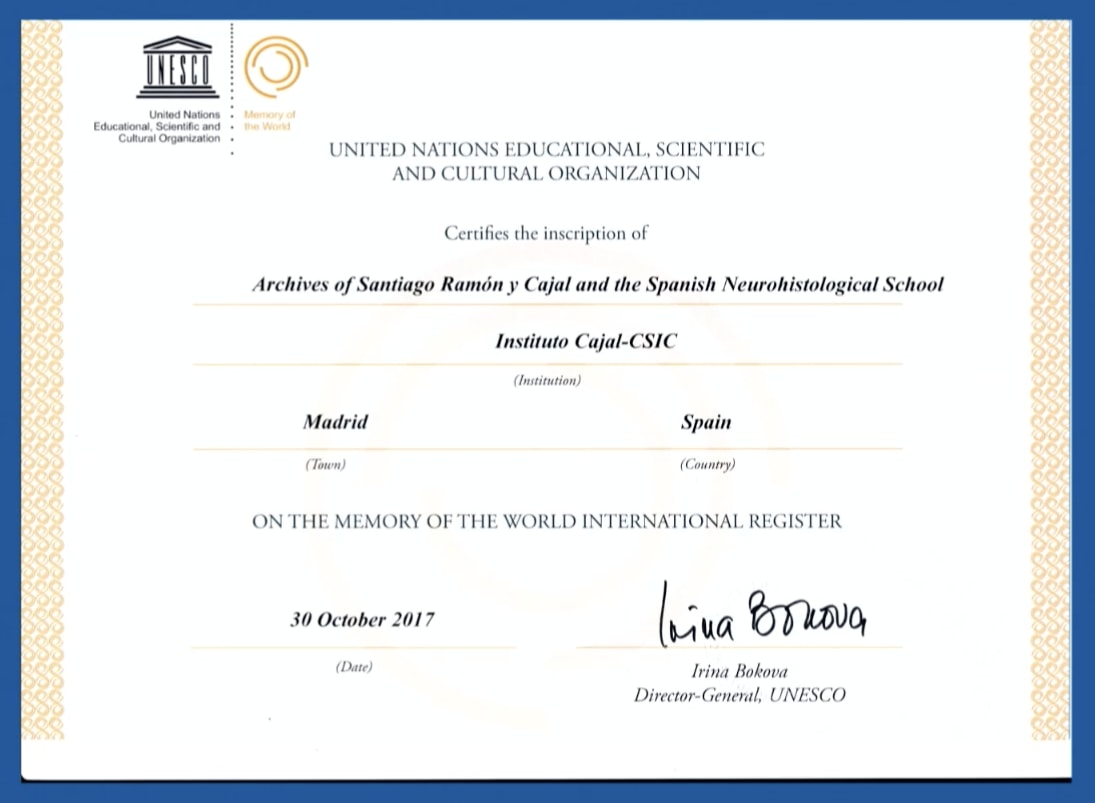
On October 31, 2017, the UNESCO International Advisory Committee recommended the inscription of the legacy in the Memory of the World Register. UNESCO’s decision represents far more than a posthumous honor to a brilliant scientist. It is a historiographical act of profound significance. The official title of the inscription, “Archives of Santiago Ramon y Cajal and the Spanish School of Neurohistology”, is itself a statement of principle. By explicitly linking Cajal with his School, UNESCO does not canonize an individual but an entire scientific ecosystem.
This act formally refutes the persistent and simplistic narrative of the “lone genius” or the “Spanish exception.” The nomination and inscription recognize that the “exceptional universal value” resides not solely in the initial flash of the Neuron Doctrine but in the complete cycle: the creation, flourishing, diversification, tragic diaspora, and global influence of a school of thought. UNESCO consecrates the network, not merely the principal node. It recognizes that Cajal’s greatest legacy was not only his discoveries but the creation of a scientific tradition, a method, and a community that permanently transformed our understanding of the brain.
8.4. The Consecration Ceremony: The Event at the University of Salamanca
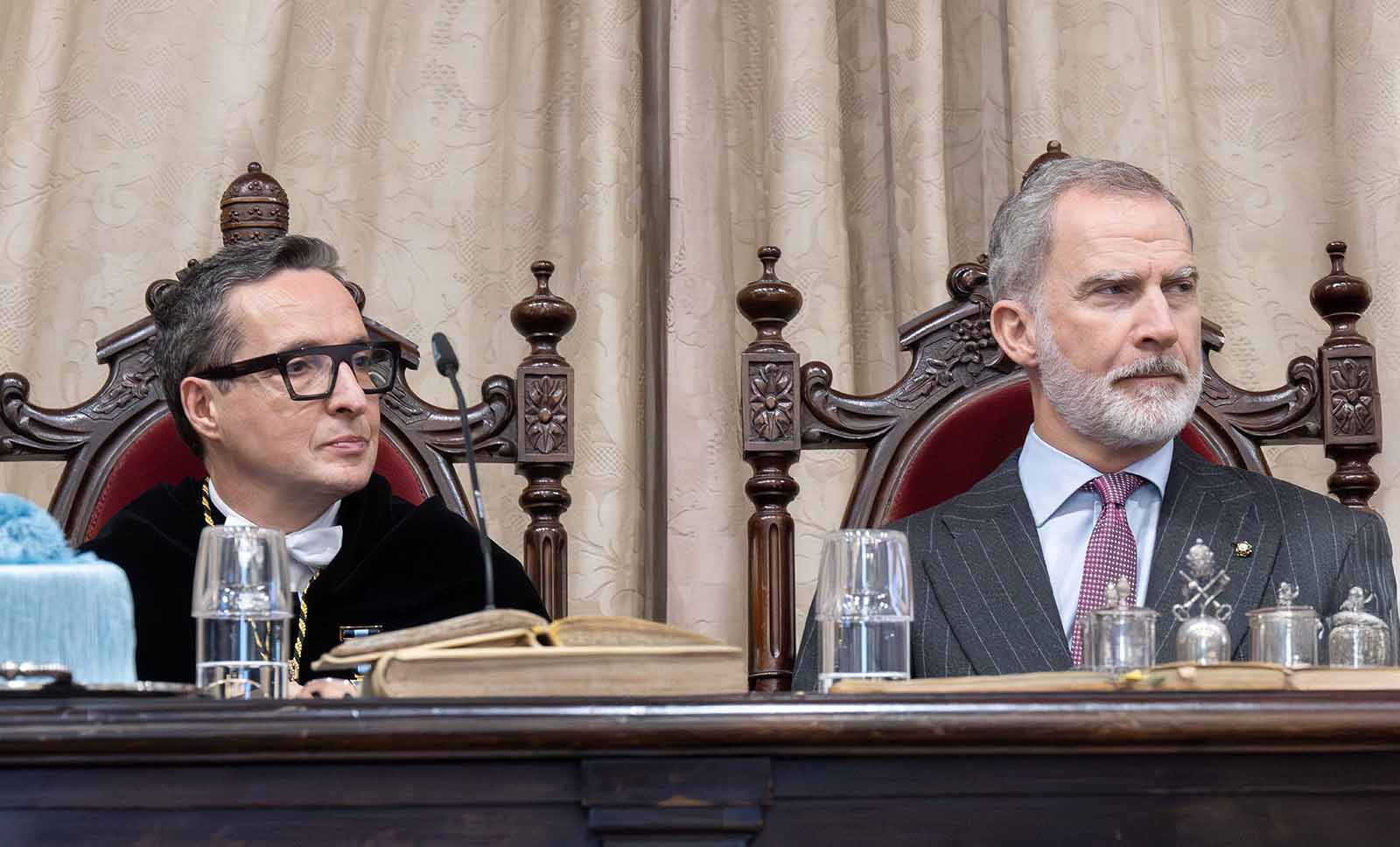
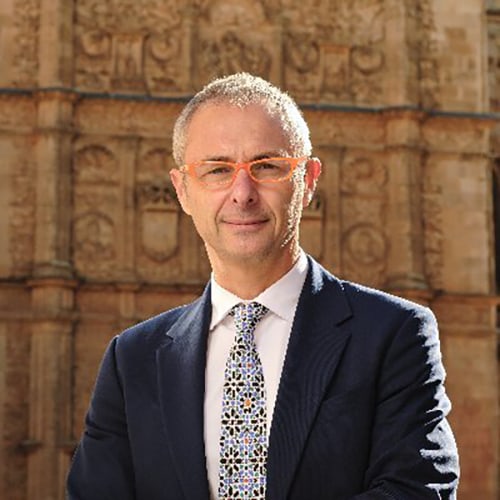
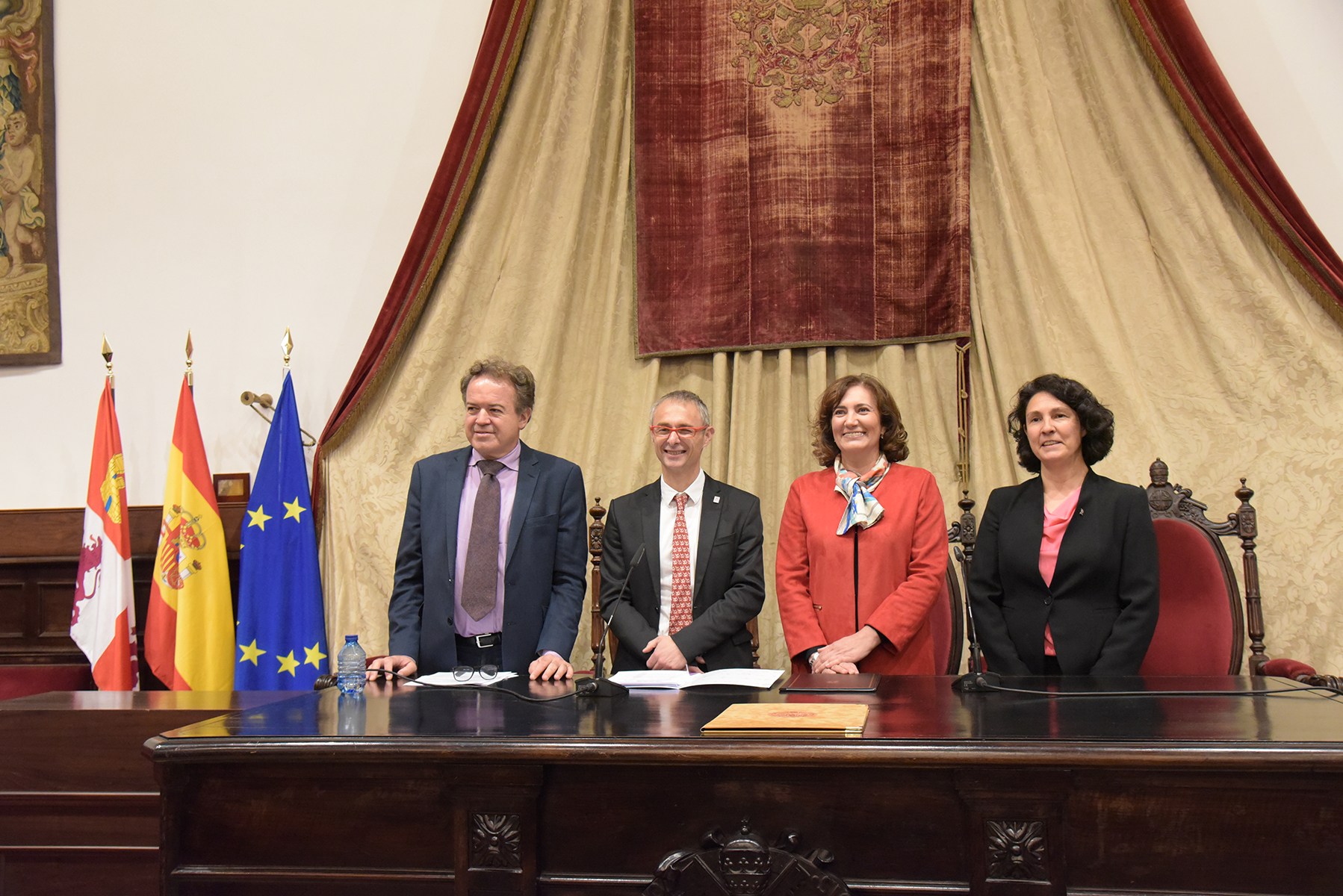
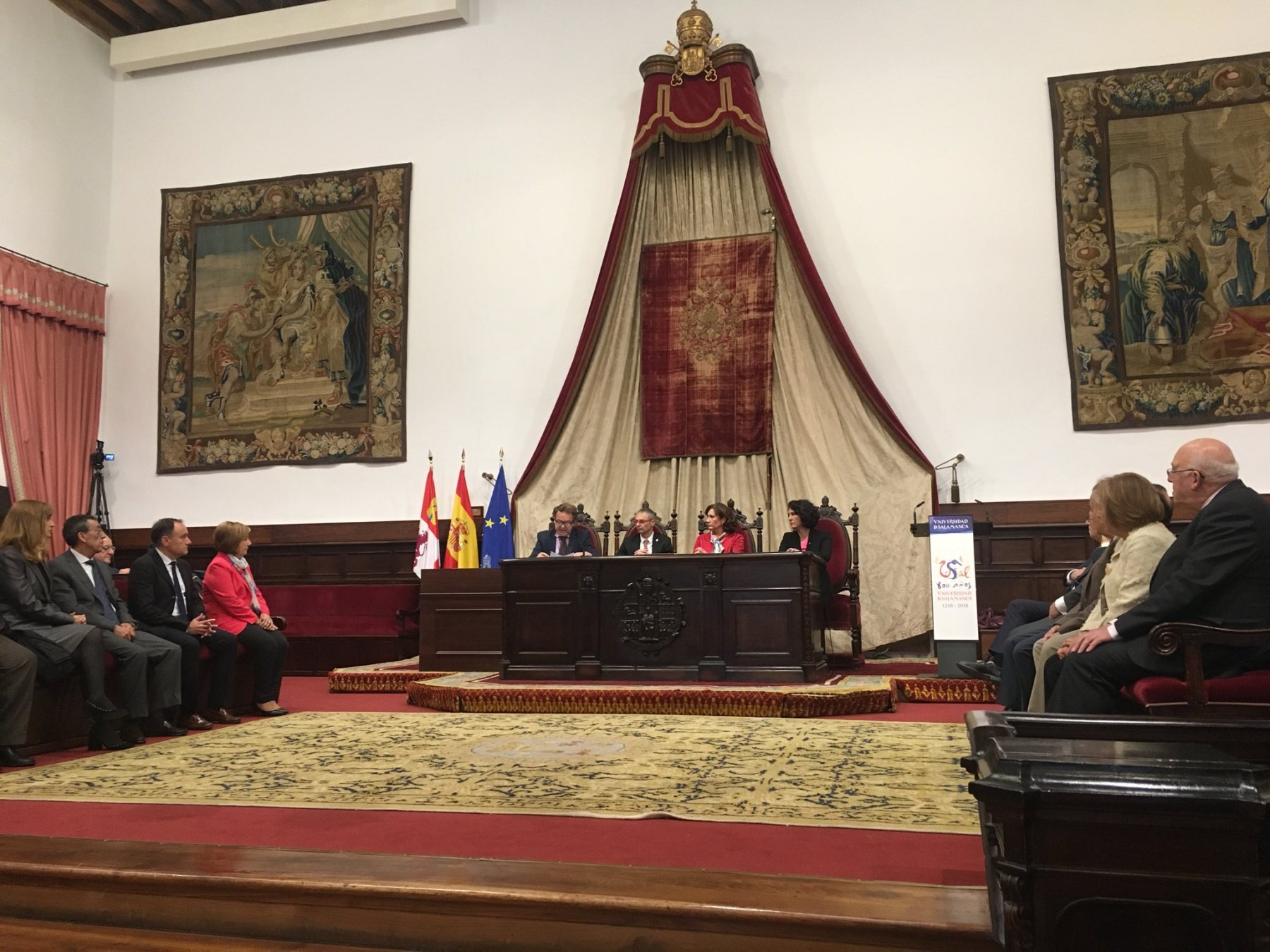
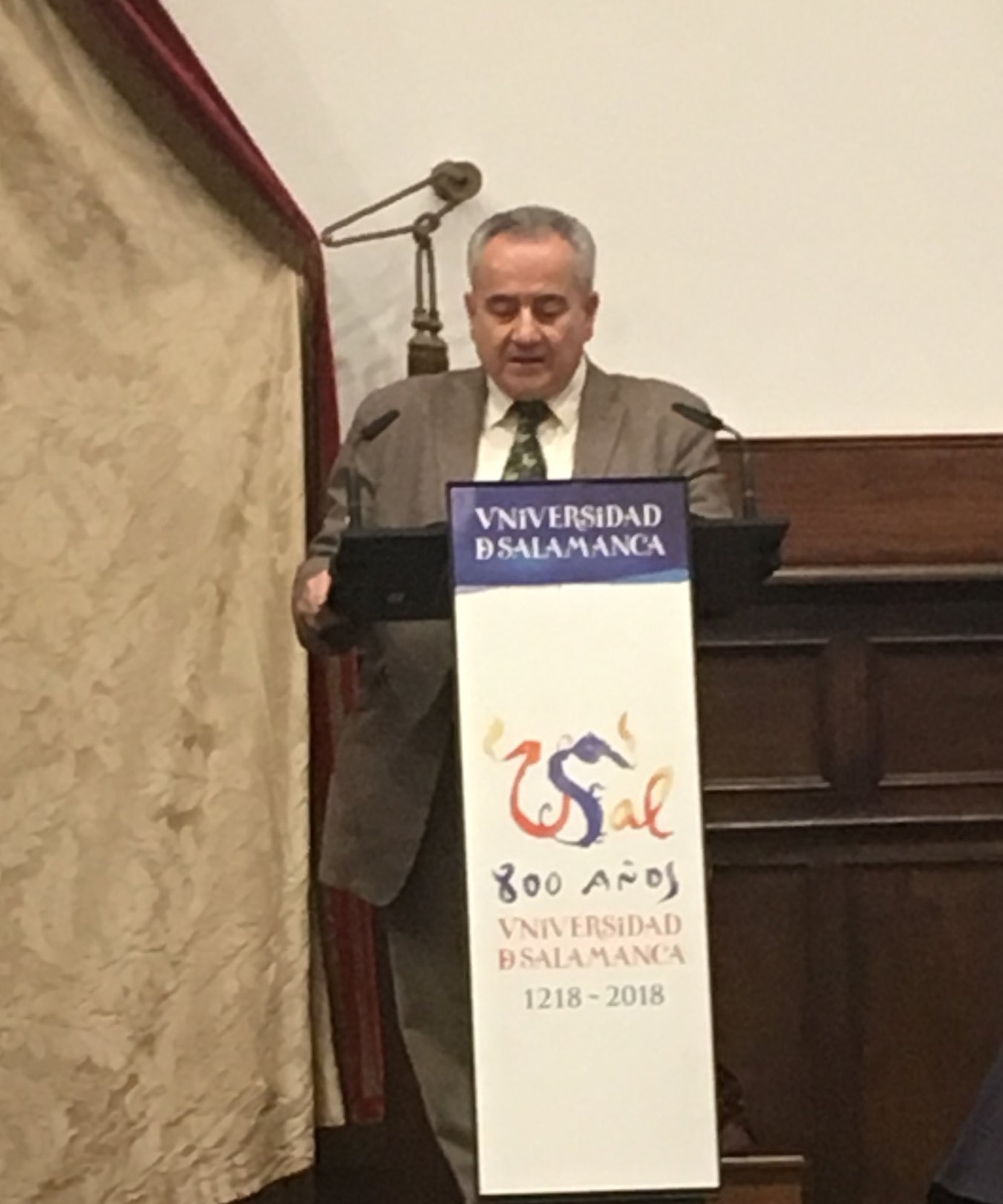
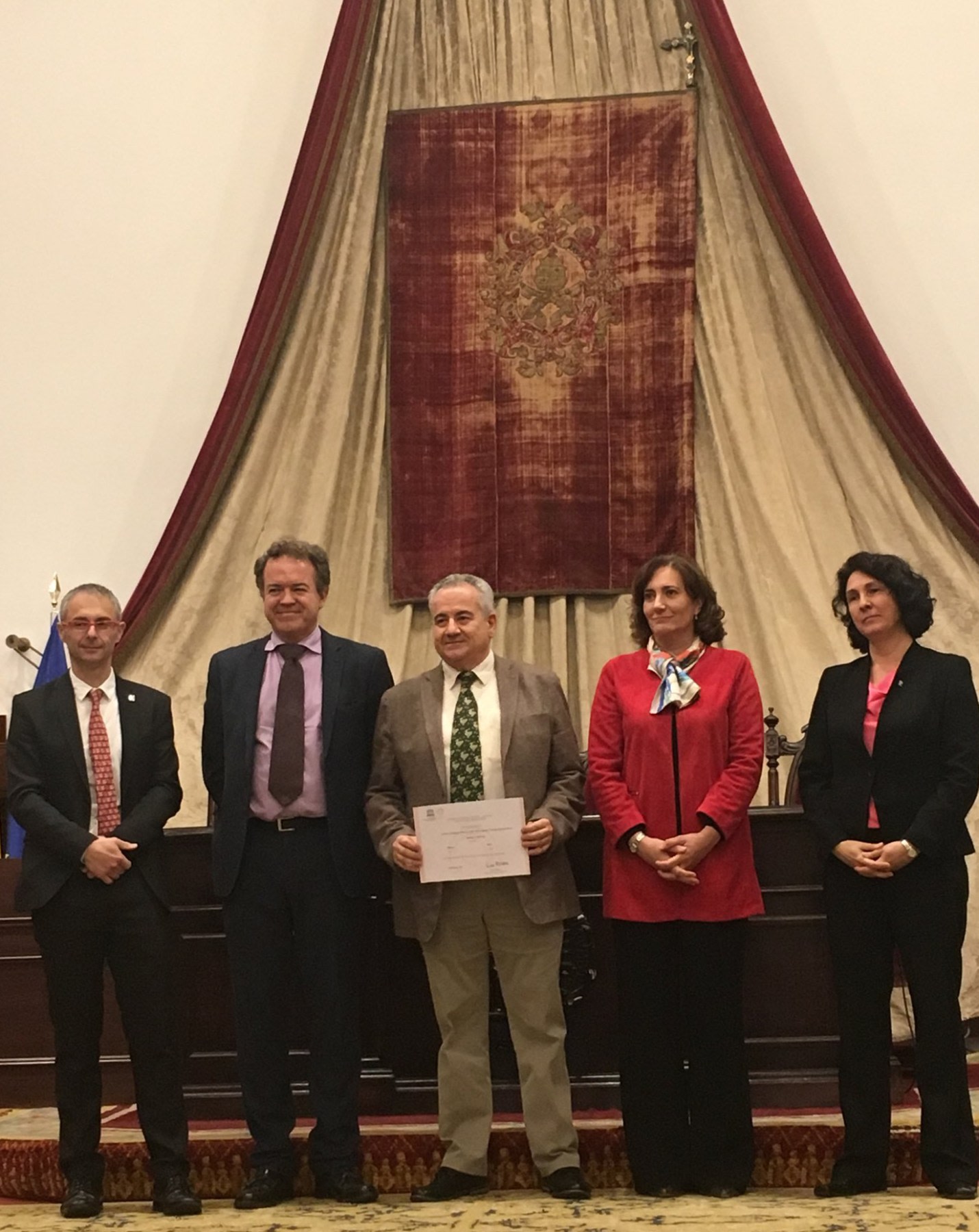
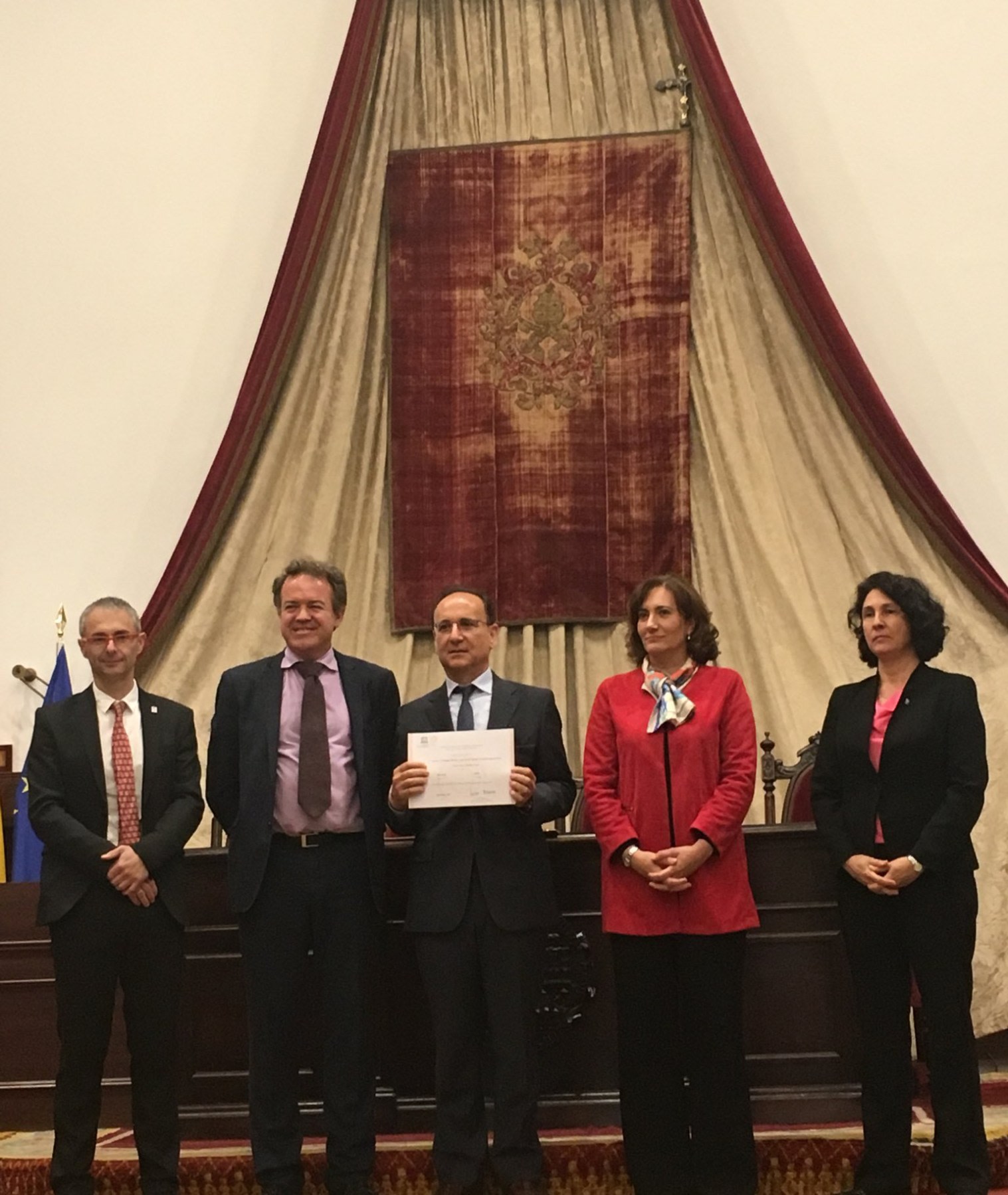
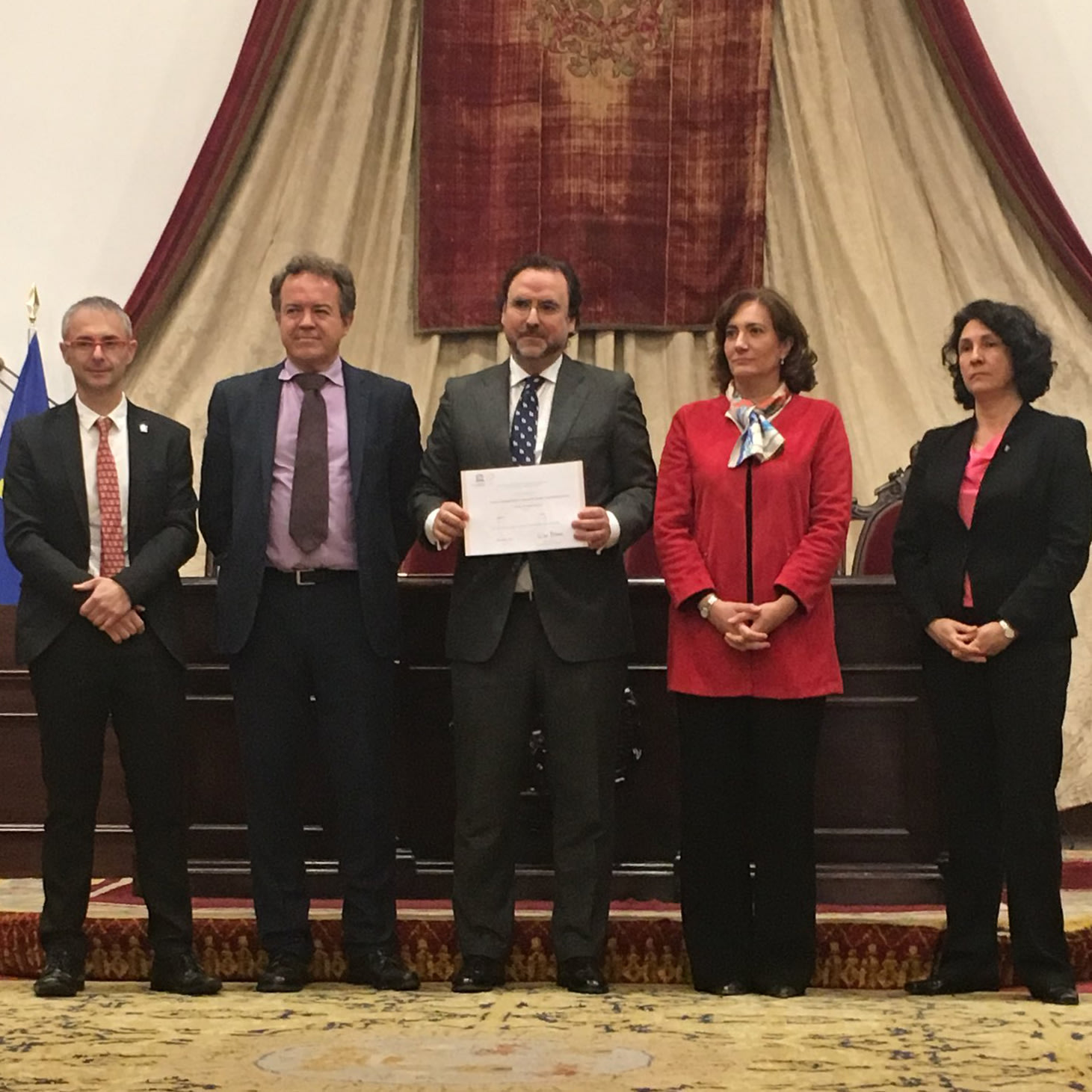
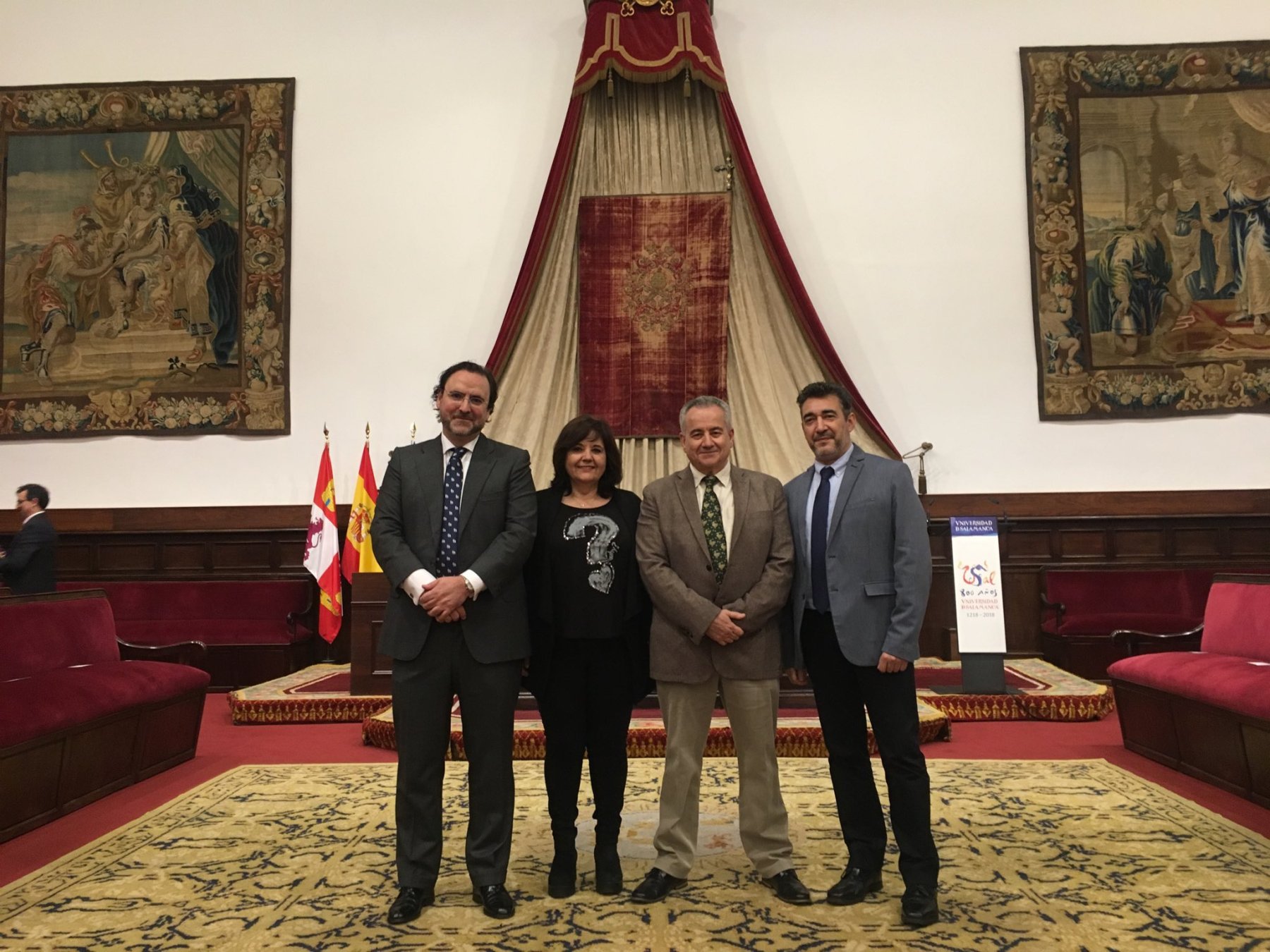
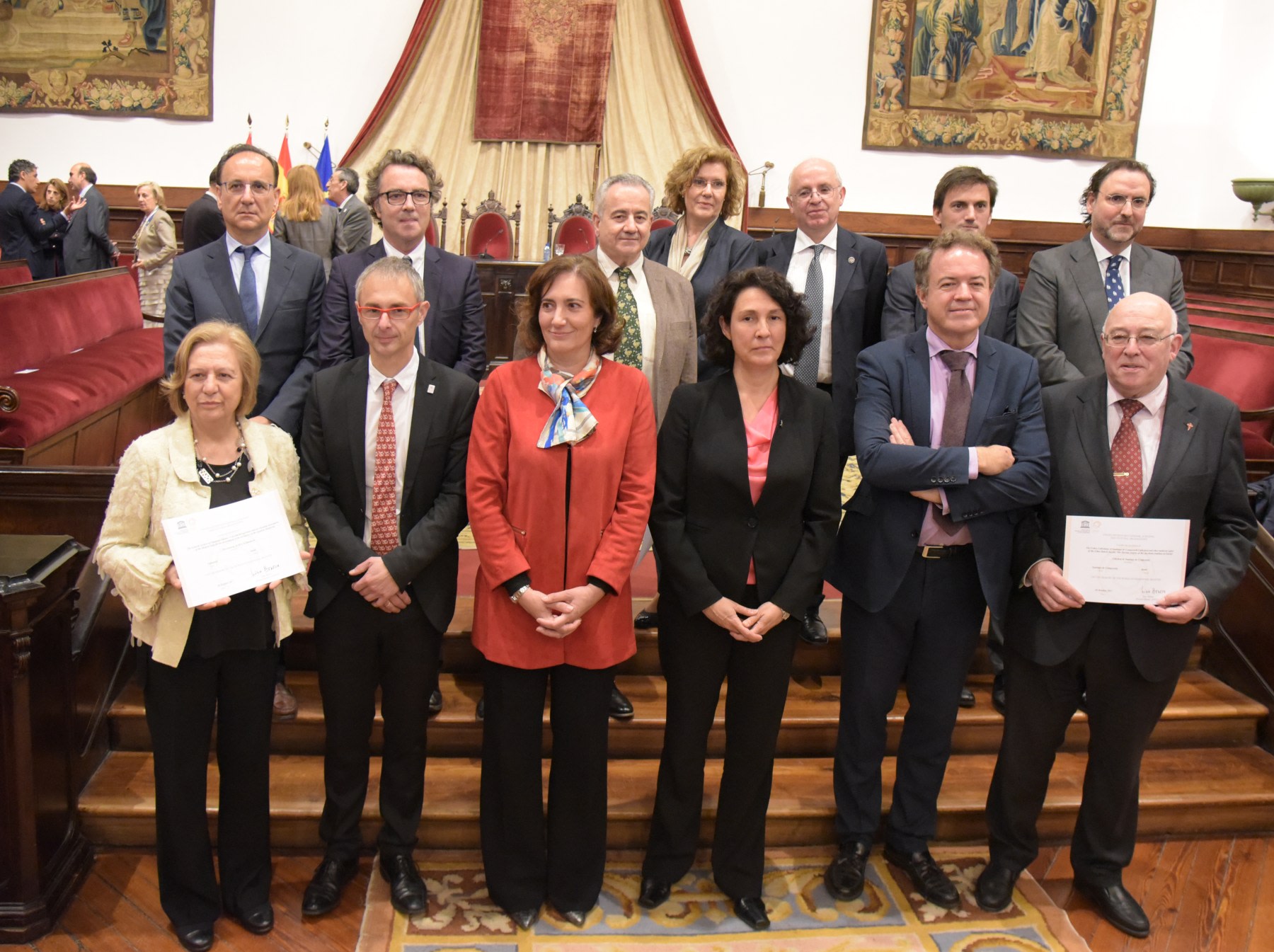
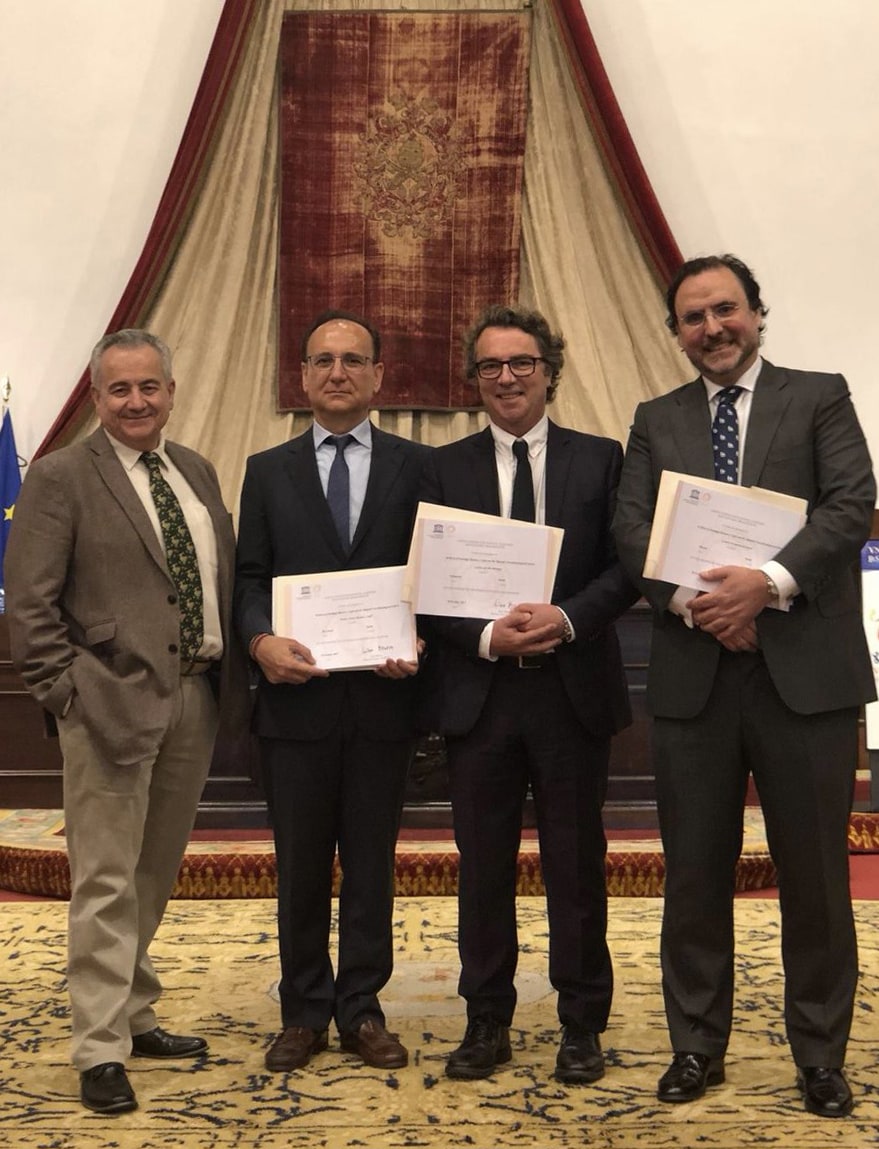
UNESCO’s recognition materialized in a solemn ceremony held on May 28, 2018, in the historic Paraninfo (Great Hall) of the University of Salamanca, within the framework of the commemoration of its 800th anniversary. The ceremony, hosted by then rector Ricardo Rivero Ortega, served for the official presentation of the diplomas certifying the inscription of Cajal’s and his School’s archives. This event not only celebrated the inclusion of the Legacy in the prestigious register but also reaffirmed the institutional commitment to its safeguarding and dissemination, consolidating its status as a universal treasure.
Official ceremony for the presentation of the diplomas certifying the “Archives of Santiago Ramon y Cajal and the Spanish School of Neurohistology” as Memory of the World.
At the ceremony, which explicitly recognized the archives of Cajal, his brother Pedro, Pio del Rio-Hortega, and Fernando de Castro, the value of this heritage as “the collective, documented memory of peoples” was highlighted. Luis Lafuente, Director General of Fine Arts and Cultural Heritage, emphasized the importance of the UNESCO programme in protecting a legacy that is “especially fragile and at constant risk of disappearance,” ensuring that it is accessible to researchers and society “permanently and without obstacles.” The diploma of Rafael Lorente de No was presented in Mexico, where his archive is held.
Chapter 9: Conclusions and Recommendations: The Future of the Legacy in the Twenty-First Century
9.1. Synthesis: From the Neuron to the Memory of the World
The trajectory of Santiago Ramon y Cajal and his school represents one of the most extraordinary epics in the history of science. It was born from the vision of an individual who knew how to fuse art and science to decipher the structure of thought. It grew into a world-class school that placed Spain at the forefront of biomedical research. It was tragically dismembered by a civil conflict, yet its influence, far from being extinguished, was disseminated across the globe. Finally, this material and intellectual legacy has been recognized and protected as the heritage of all humanity. The journey from the solitary observation of a neuron to the inscription in the UNESCO Memory of the World closes a circle, consolidating the place of Cajal and his school in the pantheon of the great milestones of human knowledge.
9.2. The Cajal Museum: A Historical Debt and an Opportunity for the Future
The inscription in the UNESCO register in 2017 was not an endpoint but a catalyst. The international visibility and the conservation responsibility that accompany the recognition have been determining factors in settling a historical debt to Spanish science. In June 2024, the Government of Spain approved the creation of the Museo Cajal (Cajal Museum), a national museum to be headquartered in Madrid. This project fulfills a demand long sustained by the national and international scientific community and by Cajal’s own will. The future museum will not merely be an exhibition space but is conceived as a dynamic center for research, conservation, and public engagement, destined to become a world reference for the history of neuroscience.
9.3. The Digital Legacy: Conservation, Access, and Global Dissemination
In the twenty-first century, the preservation of documentary heritage is inseparable from its digitization. Initiatives such as the “Espacio Cajal” (Cajal Space), developed by the CSIC and accessible through its Simurg portal, are fundamental to fulfilling the UNESCO mandate of guaranteeing universal access. The digitization of thousands of drawings, preparations, manuscripts, and photographs not only ensures their conservation against physical deterioration but makes this treasure available to researchers, educators, and the general public worldwide. The digital strategy of the future museum will be key to maximizing the global impact of the legacy.
9.4. Recommendations and Future Perspectives
The Cajal Legacy, now consecrated as Memory of the World, must serve as an active tool for the future. Its potential should be harnessed to:
-
Promote STEM education: Its drawings and discoveries are a first-rate pedagogical tool for inspiring scientific vocations.
-
Advance scientific diplomacy: The legacy is an ideal platform for fostering international collaborations and projecting the image of Spain as a country of science.
-
Bridge the “two cultures”: Cajal’s work is the perfect example of the symbiosis between science and art, and should be used to promote interdisciplinary dialogue and a more integrated vision of knowledge.
-
Serve as a model for conservation: The management and dissemination of the Cajal Legacy can become an exemplary case study in how to preserve and revitalize scientific heritage in the digital age, fulfilling the high responsibilities that UNESCO recognition entails.
Table 4: Chronology of the Legacy: From Creation to Consecration
| Year | Key Milestone / Significance / 1888 |
|---|---|
| Neuron Doctrine | . Beginning of the revolution in neuroscience. The reticular theory is refuted. |
| 1899 | Creation of the |
| Alfonso XIII Institute of Hygiene | with Cajal as its first director. Laid the foundations of modern public health in Spain. Precursor of the present-day Carlos III Health Institute (ISCIII). |
| 1900 | Cajal receives the |
| Moscow International Prize | . Key international recognition that spurred the creation of his first state-funded laboratory. |
| 1901 | Creation of the |
| Laboratory of Biological Research | . Institutionalization of Cajal’s work. The School begins to take shape. |
| 1905 | Receives the |
| Helmholtz Medal | from the Berlin Academy. Consolidation of his prestige as one of Europe’s most important scientists, a prelude to the Nobel. |
| 1906 | Cajal receives the |
| Nobel Prize | jointly with Golgi. Supreme international recognition, despite the theoretical controversy. |
| 1907 | Creation of the |
| Board for the Advancement of Studies (JAE) | with Cajal as president. Engine of Spain’s scientific modernization and of the School’s formation. |
| 1919-1928 | Key discoveries by the disciples (Rio-Hortega, Tello, Ramon, Sanchez, de Castro, etc.). The School reaches maturity and expands the frontiers of neuroscience. |
| 1934 | Death of Santiago Ramon y Cajal. He bequeaths his scientific patrimony to the Instituto Cajal to inspire future generations. |
| 1936-1939 | |
| Spanish Civil War | . Destruction of the institutional framework (JAE), diaspora and exile of the majority of the disciples. |
| 1945 | Inauguration of the first |
| Cajal Museum | at the Institute. First attempt to preserve and exhibit the legacy, protected during the war by Tello and de Castro. |
| 1989 | Dismantling of the museum. The Legacy is stored under precarious conditions for nearly 30 years, underscoring its vulnerability. |
| 2017 | Inscription in the |
| UNESCO Memory of the World Register | . International recognition of the universal value of Cajal and his School as a collective achievement. |
| 2018 | |
| Diploma presentation ceremony | at the University of Salamanca. Official ceremony in the historic Paraninfo of the University that materialized UNESCO’s recognition, within the framework of the institution’s 800th anniversary. |
| 2024 | Approval of the |
| Royal Decree for the creation of the Cajal Museum | . Fulfillment of a historical debt, driven by UNESCO recognition, to give the legacy a permanent home. |
X. Principal Bibliography
-
Ramon y Cajal, S. (1923). Recuerdos de mi vida (3rd ed.). Imprenta de Juan Pueyo.
-
Ramon y Cajal, S. (1888). “Estructura de los centros nerviosos de las aves.” Revista Trimestral de Histologia Normal y Patologica, 1, 1-10.
-
Ramon y Cajal, S. (1891). “Significacion fisiologica de las expansiones protoplasticas y nerviosas de las celulas de la substancia gris.” Revista de Ciencias Medicas de Barcelona, 17, 5-15.
-
Garcia-Lopez, P., Garcia-Marin, V., & Freire, M. (2010). “The histological slides and drawings of Cajal.” Frontiers in Neuroanatomy, 4, 9.
-
Ramon y Cajal, S. (1906). “The structure and connexions of neurons.” Nobel Lecture.
-
Ramon y Cajal, S. (1899-1904). Textura del sistema nervioso del hombre y de los vertebrados. Imprenta y Libreria de Nicolas Moya.
-
Najera Morrondo, R. (2020). El Instituto de Salud Carlos III en el marco de la evolucion de la Salud Publica. Instituto de Salud Carlos III.
-
Ramon y Cajal, S. (1912). La fotografia de los colores. Bases cientificas y reglas practicas. Nicolas Moya.
-
De Castro, F. (1981). Cajal y la Escuela Neurologica Espanola. Ediciones de la Universidad Complutense.
-
Achucarro, N. (1911). “Nuevo metodo para el estudio de la neuroglia y el tejido conjuntivo.” Boletin de la Sociedad Espanola de Biologia, 1, 139-141.
-
Rio-Hortega, P. del (1919). “El ‘tercer elemento’ de los centros nerviosos.” Boletin de la Sociedad Espanola de Biologia, 9, 68-183.
-
Rio-Hortega, P. del (1921). “Estudios sobre la neuroglia. La glia de escasas radiaciones (oligodendroglia).” Boletin de la Real Sociedad Espanola de Historia Natural, 21, 63-92.
-
Ramon y Cajal, P. (1896). El encefalo del camaleon. Imprenta de la Revista de Archivos.
-
Sanchez y Sanchez, D. (1908). El metodo Cajal en el sistema nervioso de los invertebrados. Tipografia de E. Casanal.
-
Tello, J. F. (1923). Ideas actuales sobre el neurotropismo. Discurso de ingreso en la Real Academia Nacional de Medicina.
-
Villaverde, J. M. (Trans.). (1924). Tratado de Psiquiatria (by E. Bleuler). Calpe. (Prologue by S. Ramon y Cajal).
-
De Castro, F. (1926). “Sur la structure et l’innervation de la glande intercarotidienne (glomus caroticum) de l’homme et des mammiferes, et sur un nouveau systeme d’innervation sensorielle de l’aorte.” Trabajos del Laboratorio de Investigaciones Biologicas de la Universidad de Madrid, 24, 365-432.
-
Lorente de No, R. (1933). “Studies on the structure of the cerebral cortex. I. The area entorhinalis.” Journal fur Psychologie und Neurologie, 45, 381-438.
-
Sanz Ibanez, J. (1944). Poliomielitis experimental. Consejo Superior de Investigaciones Cientificas.
-
Lafora, G. R., & Glueck, B. (1911). “Beitrag zur Histopathologie der myoklonischen Epilepsie.” Zeitschrift fur die gesamte Neurologie und Psychiatrie, 6(1), 1-14.
-
Forster, L. (1911). “La degeneracion traumatica en la medula espinal de las aves.” Trabajos del Laboratorio de Investigaciones Biologicas de la Universidad de Madrid, 9, 255-268.
-
Pascual, P. (2013). “La penetracion de las ensenanzas de Cajal en Mexico: el papel de los exiliados.” Neurosciences and History, 1(4), 154-161.
-
Viudas Camarasa, A. (2018). “Los testamentos del Nobel Santiago Ramon y Cajal y Silveria Fananas Garcia.” Boletin de la Real Academia de Extremadura de las Letras y las Artes, 26, 137-196.
-
UNESCO. (2017). Archives of Santiago Ramon y Cajal and the Spanish Neurohistological School. Memory of the World International Register. Nomination form.
-
Gobierno de Espana. (2024). Real Decreto 590/2024, de 25 de junio, por el que se crea el Museo Cajal. Boletin Oficial del Estado, 154, 76839-76842.
-
CSIC. (n.d.). Espacio Cajal. Simurg: Patrimonio Digitalizado del CSIC. Retrieved from SIMURG.
Photographs: Jose Luis Trejo, Laura Lopez Mascaraque, and the University of Salamanca.