A Context of Contrasts: Spain in 1923
In February 1923, when Albert Einstein set foot on Spanish soil, he arrived in a country of profound contradictions. On the one hand, Spain was experiencing the so-called “Silver Age” (Edad de Plata) of science and culture, a period of intense longing for modernization and convergence with Europe. Institutions such as the Board for the Extension of Studies and Scientific Research (JAE), chaired by Nobel laureate Santiago Ramón y Cajal, were driving an unprecedented academic renewal. On the other hand, the country was mired in the “Crisis of the Restoration,” an era of political instability, acute social struggles, the rise of nationalisms, and the bloody failures of the War in Morocco. Gun violence plagued the streets of Barcelona, and barely six months after Einstein’s visit, General Miguel Primo de Rivera would stage a coup d’état that abruptly put an end to this turbulent period.
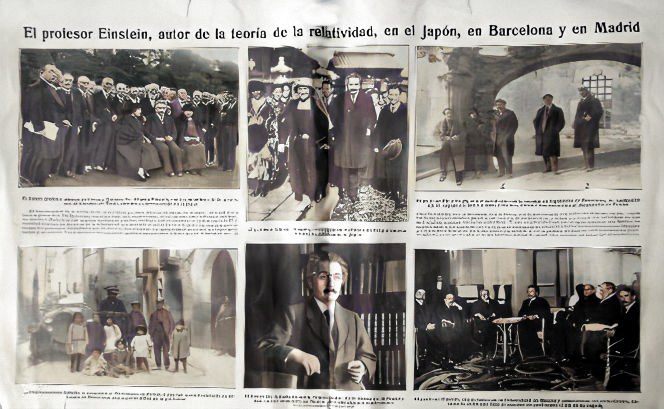
In this effervescent setting, the arrival of Einstein — already transformed into a global icon following the confirmation of his theory of relativity and the award of the 1921 Nobel Prize in Physics — was far more than a scientific event. It became a symbol of progress, a catalyst for debate, and a media phenomenon that captivated a society eager for role models.
The Invitation: An Effort Toward Modernity
Einstein’s visit was not a matter of chance but the result of a concerted effort by the Spanish scientific elite to connect with the European avant-garde, as Mètode reminds us.
Albert Einstein had been invited to Spain by the mathematician Julio Rey Pastor, who contacted him in Berlin in the spring of 1920. In July, Rey Pastor wrote a formal letter on behalf of the Institut d’Estudis Catalans — with a firm proposal — and of the Board for the Extension of Studies, from which he likewise expected a positive response. Einstein initially accepted, but a few days later withdrew, citing too many commitments.
In the summer of 1921, the engineer Esteban Terradas Illa wrote to remind him of the invitation, and Einstein replied that he could carry out his stay in Spain during the 1922–1923 academic year. Terradas, a professor in Barcelona, member of the Academy of Sciences and Arts and of the Institute of Catalan Studies, had remained in the background during the first invitation, but now took the lead, since his friend Rey Pastor had been hired by the University of Buenos Aires. Terradas, together with the physicist Blas Cabrera, was one of the earliest exponents of Einsteinian physics, initially concerning the nature of radiation.
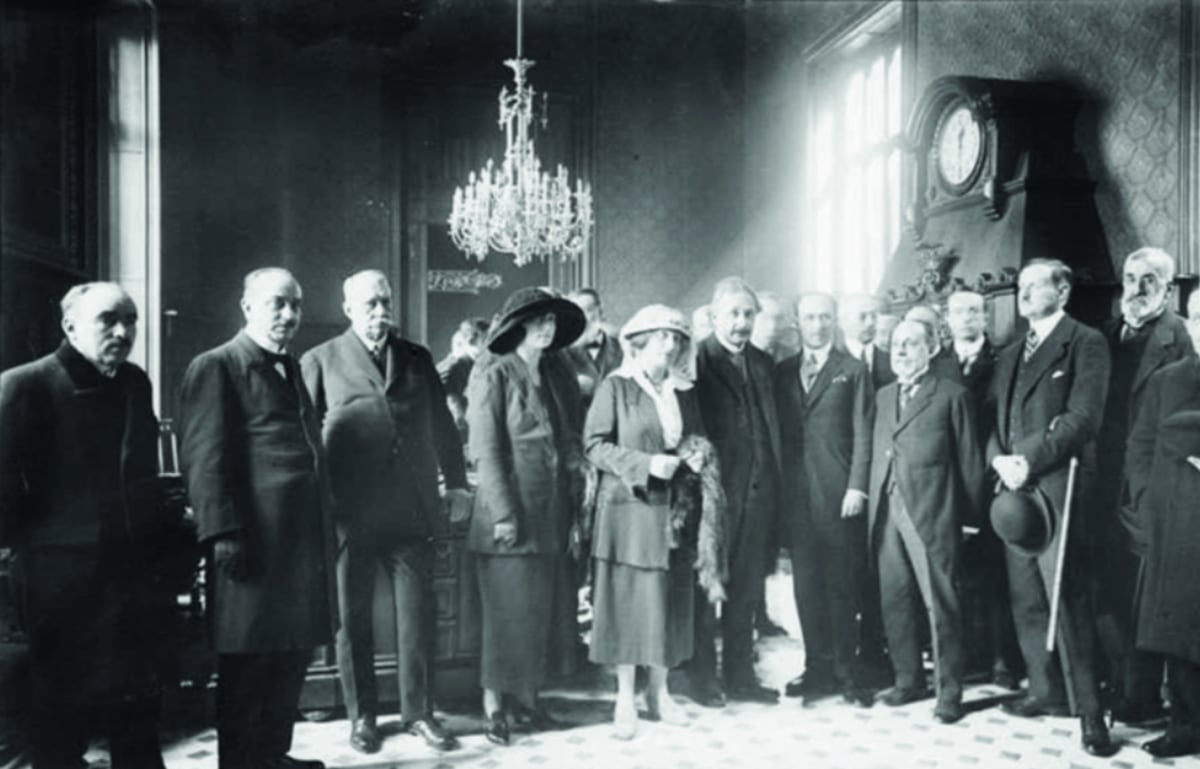
Einstein arrived in Barcelona on 22 February 1923. He had taken a train from Marseille after disembarking at Toulon. He was coming from Palestine, a visit that had been full of emotions. Before that, he had gone to Japan on a lecture tour that generated enormous expectation: at Keio University, Einstein spoke for six hours — with a one-hour break — before an audience of 2,000. On the outward journey to Japan, while boarding, he was informed that he had been awarded the Nobel Prize in Physics for 1921 (the 1922 prize went to Niels Bohr). From Singapore, he sent a telegram announcing his arrival in Barcelona.
Barcelona (22 February – 1 March): The People’s Hero
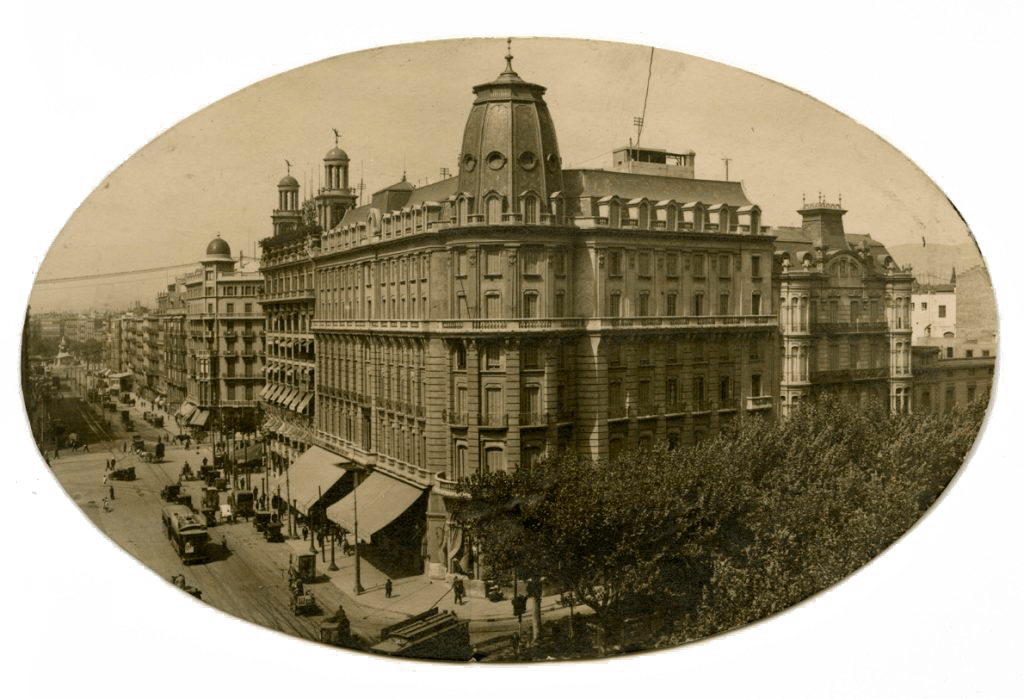
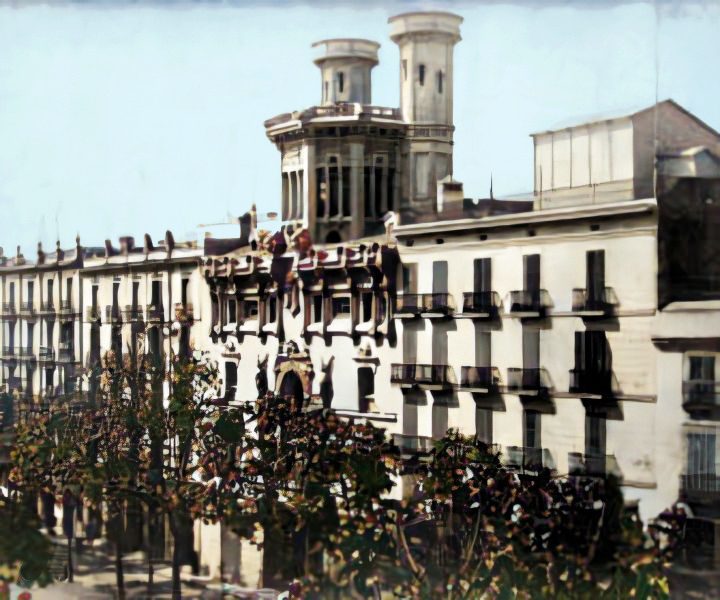
The arrival of Albert and Elsa Einstein in Barcelona on 22 February was, to say the least, chaotic. The scientist had forgotten to send a telegram specifying his arrival, so no one was waiting for them at the Estación de Francia. Unable to find his host, Esteban Terradas (whose daughter had tragically died five days earlier), the couple checked into a modest guesthouse on La Rambla, the Hotel Cuatro Naciones, instead of the luxurious Hotel Colón that had been reserved for them. Once located, their hosts found him in his hotel room, sitting on the bed, calmly playing the violin.
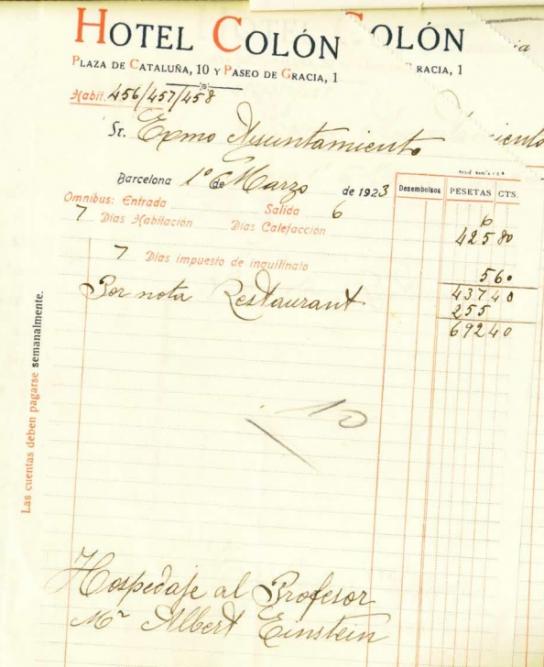
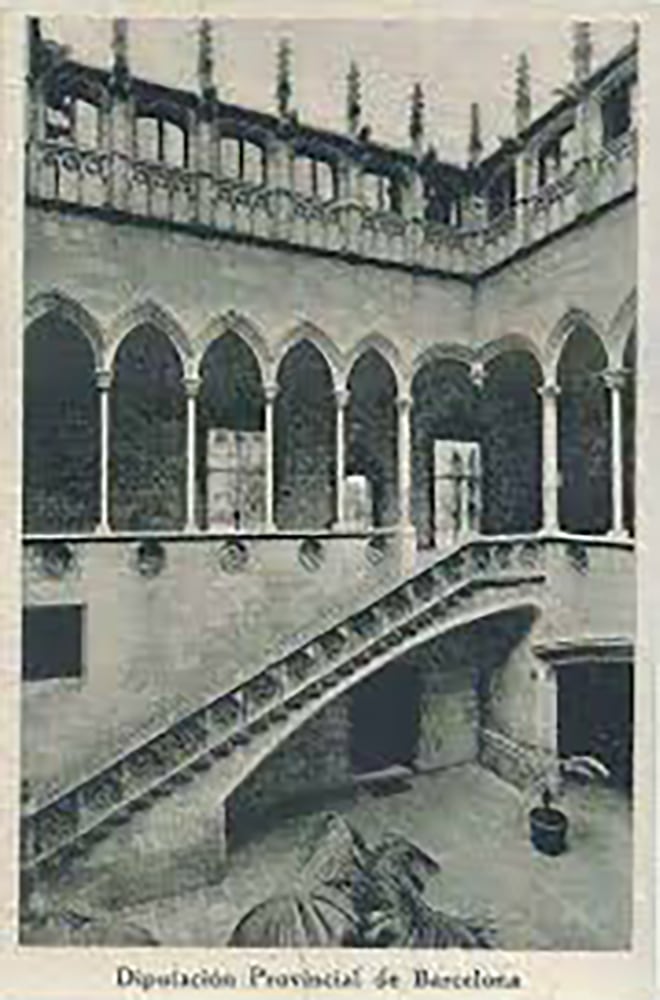
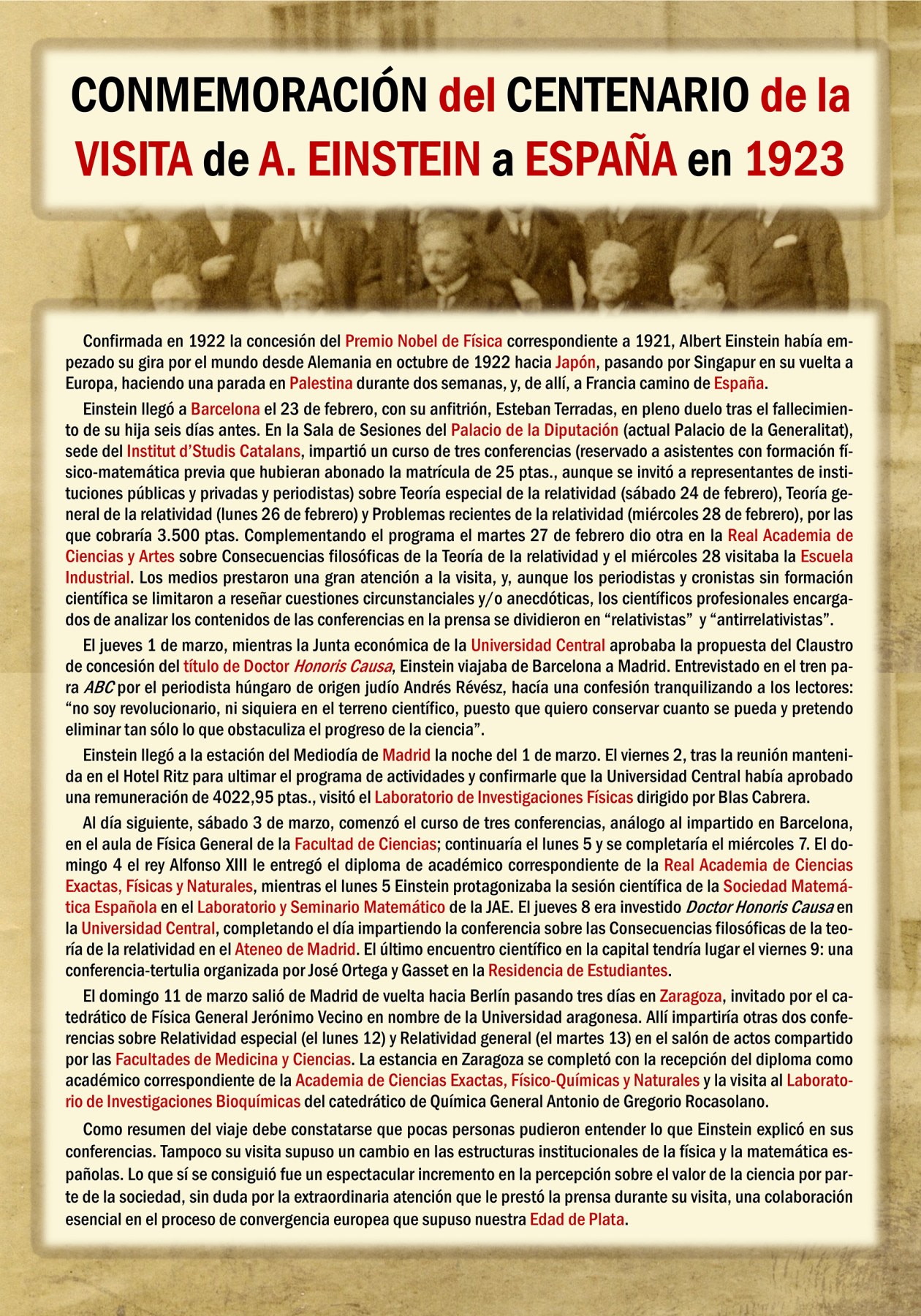
In Barcelona, Einstein was perceived as a popular hero and a symbol of cultural renewal. He delivered three lectures at the Palacio de la Diputación on special relativity, general relativity, and his most recent research.
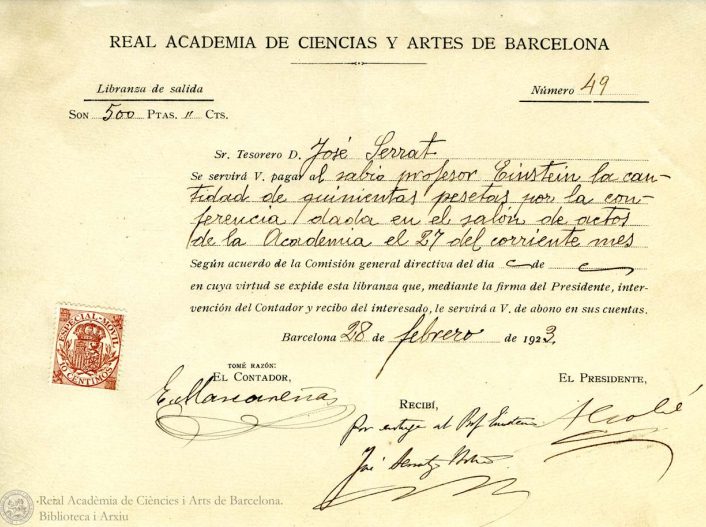
And a fourth at the Royal Academy of Sciences and Arts on the philosophical consequences of his theory.
Although admission cost 25 pesetas and he spoke in a mixture of German and French, the halls were packed. The audience, though for the most part unable to follow his complex explanations, was fascinated by the “magic word” that promised to reform the old concepts.
His schedule was intense and varied. He made tourist excursions to the monastery of Poblet and the churches of Terrassa. He visited innovative educational projects such as the Escola del Mar (School of the Sea) and the Grup Escolar Baixeras.
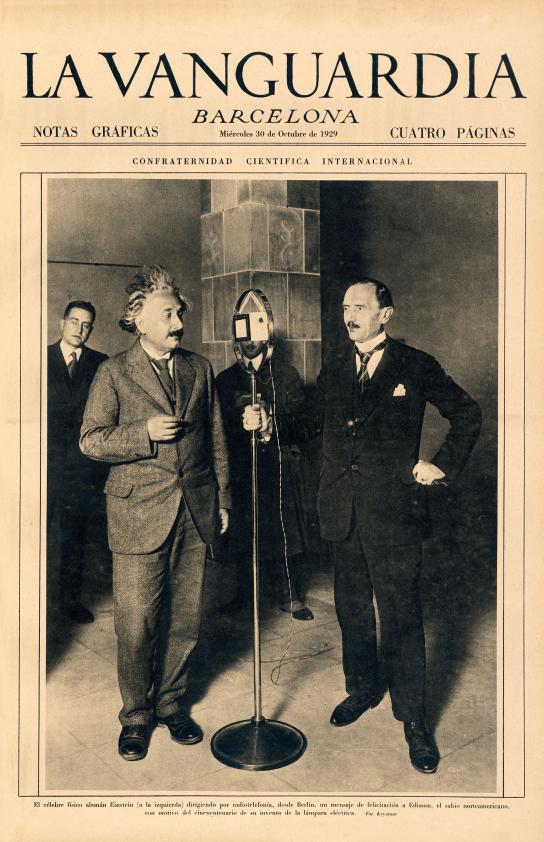
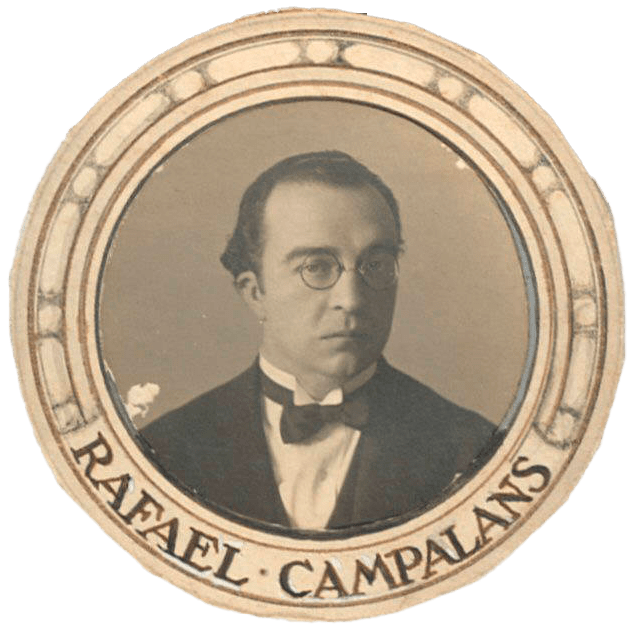
In a gesture of social sensitivity, he met with the leader of the anarchist trade union CNT, Ángel Pestaña, whom he recommended to read Spinoza. He was feted with sardanas at the Escola Industrial and with a memorable dinner at the home of Professor Rafael Campalans.
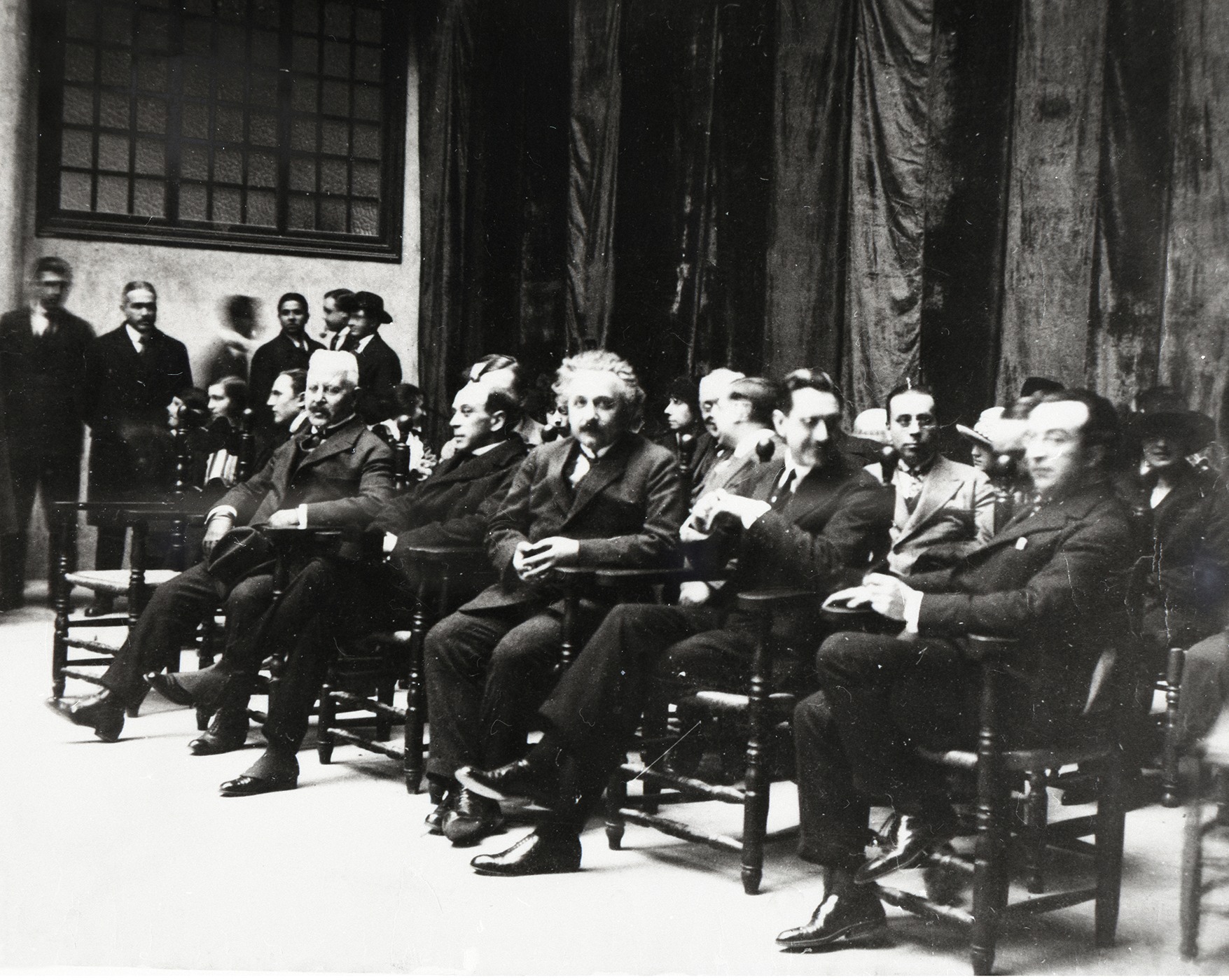
In his diary, Einstein summed up his stay with satisfaction: “Much fatigue, but very kind people (Terradas, Campalans, Lana…), folk songs, dances, Refectorium. It was pleasant!” (“Mucha fatiga, pero gente muy amable (Terradas, Campalans, Lana…), canciones populares, bailes, Refectorium. ¡Ha sido agradable!”).
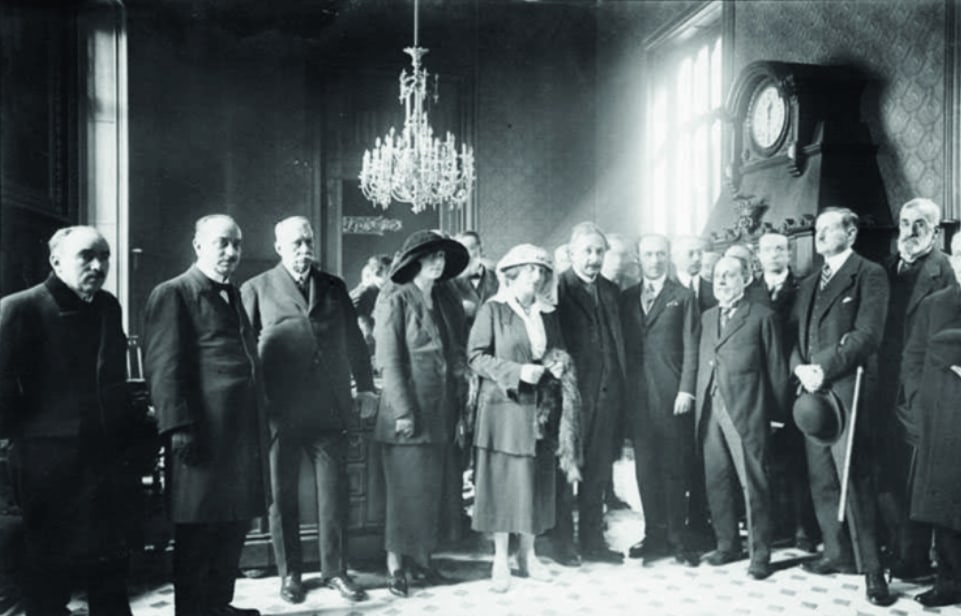
The Relativist Dinner: A Tribute of Wit and Humour
One of the most memorable events of his stay in Barcelona was the dinner offered in his honour on the evening of 27 February at the residence of professor, engineer, physicist, and politician Rafael Campalans, on Calle Rosselló. The evening, cooked by Campalans’ own mother, was a display of wit, a tribute that blended high culture with popular humour.
The menu, printed in Gothic lettering, was composed in what the press of the day dubbed “relativist Latin,” and each dish was a scientific or philosophical joke.
“The menu concludes by establishing the time and space of the dinner: Calle Rosselló 168 and the second calends of March.” (“El menú acaba estableciendo el tiempo y el espacio de la cena: la calle Rosselló 168 y las segundas calendas de marzo.”)
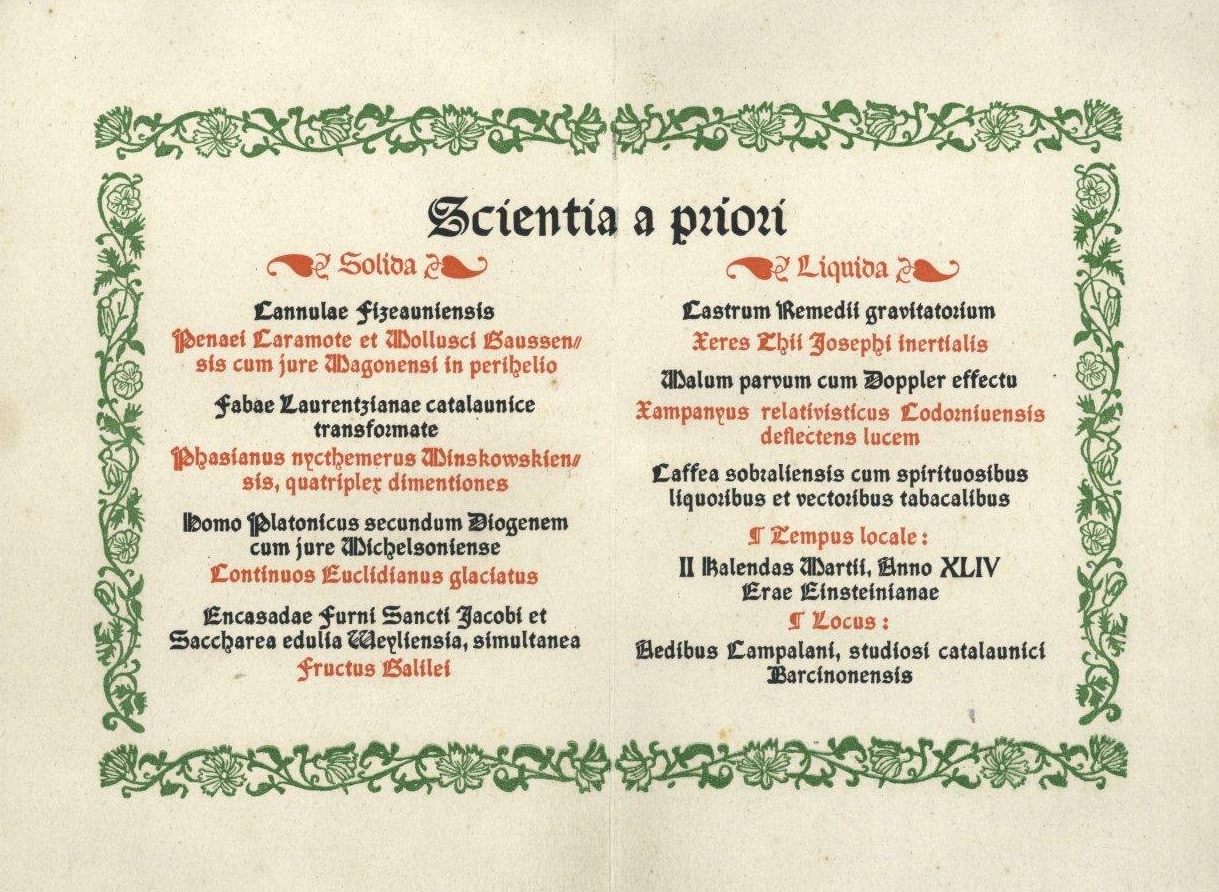
/ Coena in honorem Doctoris Einstein Pontificis scientiarum
{autograph signature} Albert Einstein 1923
/ Scientia a priori
Solida
• Cannulae Fizeauniensis
• Penaei Caramote et Mollusci Gaussensis cum jure Magonensi in perihelio
• Fabae Laurentzianae catalaunice transformate
• Phasianus nycthemerus Minkowskiensis, quatriplex dimentiones
• Homo platonicus secundum Diogenem cum jure Michelsoniense
• Continuos Euclidianus glaciatus
• Encasadae Furni Sancti Jacobi et Saccharea edulia Weyliensia, simultanea
• Fructus Galilei
Liquida
• Castrum Remedii gravitatorium
• Xeres Thii Josephi inertialis
• Malum parvum cum Doppler effectu
• Xampanyus relativisticus Codorniuensis deflectenslucem
• Caffea sobraliensis cum spirituosibus liquoribus et vectoribus tabacalibus
Tempus locale
• II Kalendas Martii, Anno XLIV Erae Einsteinianae [1923]
Locus
• Aedibus Campalani, studiosi catalaunici Barcino-nensis
/ Dinner in honour of Doctor Einstein, Pontiff of Science
{Autograph signature} Albert Einstein 1923.
/ Science a priori
Solids
• Cannelloni à la Fizeau
• Prawns and mussels à la Gauss with mayonnaise sauce at perihelion
• Broad beans à la Lorentz, Catalan-transformed
• Silver pheasant à la Minkowski in four dimensions
• Platonic man according to Diogenes with Michelson sauce
• Euclidean continuous ice cream
• Enquesadas from the Horno de Sant Jaume, and Weyl pastries, simultaneous
• Galileo’s fruit
Liquids
• Gravitational Castell del Remei
• Inertial Tío Pepe sherry
• Small apple with Doppler effect
• Relativistic Codorníu champagne that deflects light
• Sobral coffee with spiritous liqueurs and tobacco vectors
Local time
• The second day before the calends of March, Year XLIV of the Einsteinian Era [1923]
Place
Residence of Campalans, Catalan scholar of Barcelona
SCIENTIA A PRIORI (Science a priori)
Solids:
-
Cannulae Fizeauniensis: Cannelloni à la Fizeau (a nod to the French physicist who measured the speed of light).
-
Penaei Caramote et Mollusci Gaussensis cum jure Magonensi in perihelio: Prawns and mussels à la Gauss with mayonnaise sauce at perihelion (alluding to non-Euclidean geometry and Einstein’s explanation of the orbit of Mercury).
-
Fabae Laurentzianae catalaunice transformate: Broad beans à la Lorentz, Catalan-transformed (a reference to the Lorentz transformations, key to relativity).
-
Phasianus nycthemerus Minkowskiensis, quatriplex dimentiones: Silver pheasant à la Minkowski in four dimensions (a tribute to his former professor’s concept of spacetime).
-
Homo platonicus secundum Diogenem cum jure Michelsoniense: Chicken with Michelson sauce (recalling Diogenes’ mockery of Plato’s definition of man — “a featherless biped” — and the crucial Michelson-Morley experiment).
-
Continuos Euclidianus glaciatus: Euclidean continuous ice cream (a joke about the abandonment of Euclidean geometry in his theories).
-
Encasadae Furni Sancti Jacobi et Saccharea edulia Weyliensia, simultanea: Enquesadas from the Horno de Sant Jaume and Weyl pastries, simultaneous (a fresh cheese cake and a nod to mathematician Hermann Weyl and the concept of simultaneity).
-
Fructus Galilei: Galileo’s fruit.
Liquids:
-
Castrum Remedii gravitatorium: Gravitational Castell del Remei wine.
-
Xeres Thii Josephi inertialis: Inertial Tío Pepe sherry.
-
Malum parvum cum Doppler effectu: Cider (small apple with Doppler effect).
-
Xampanyus relativisticus Codorniuensis deflectens lucem: Relativistic Codorníu champagne that deflects light (joking about the curvature of light).
-
Caffea sobraliensis cum spirituosibus liquoribus et vectoribus tabacalibus: Sobral coffee with liqueurs and cigars (tobacco vectors), in honour of the place in Brazil where his theory was confirmed during the 1919 eclipse.
Among the guests were the German consul, Ulrich von Hassell, and his wife, Ilse von Tirpitz, senior officials of the Barcelona City Council, and the colleagues who had organized his trip and the dinner, Lassaleta and Lana Sarrate.
The evening was enlivened by the music of guitarist Regino Sáenz de la Maza, who performed beautiful guitar compositions, the soprano Andreua Fornells who sang a selection of traditional songs, and the Barcelona Trio who played selected pieces from their finest repertoire. Einstein signed a copy of the menu as a memento.
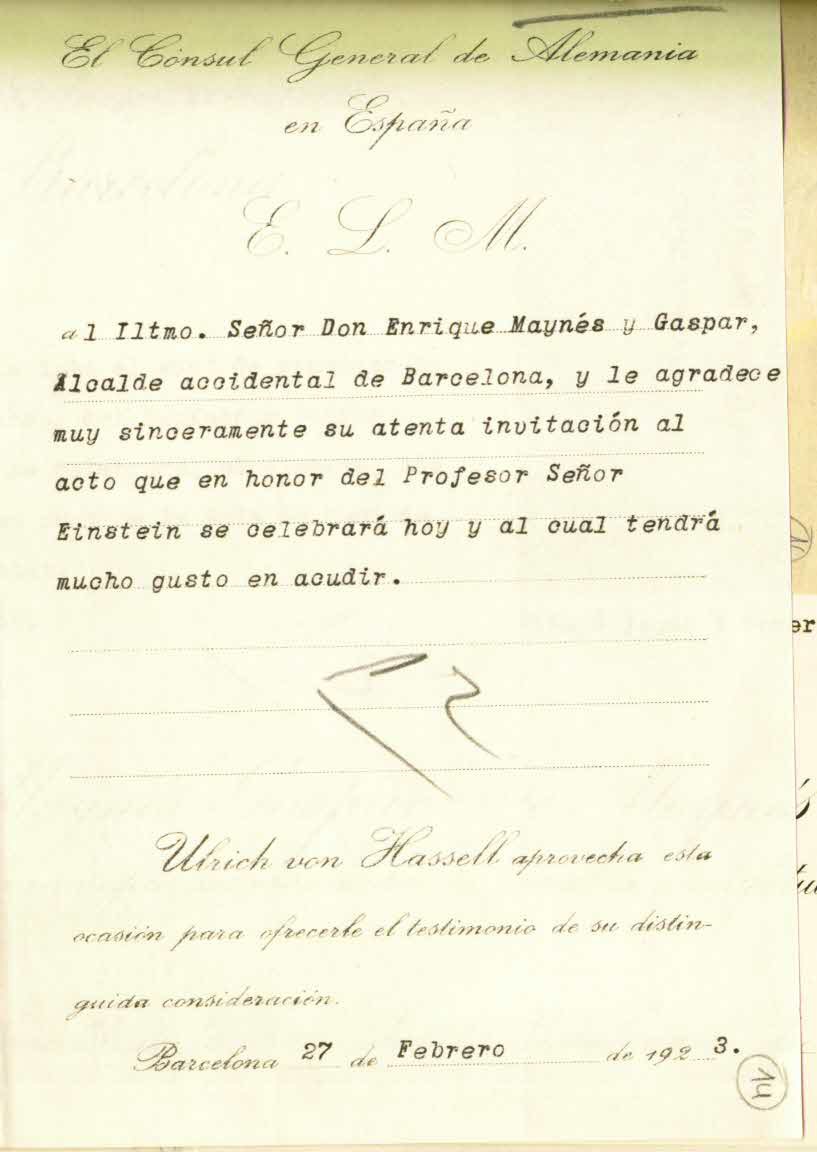
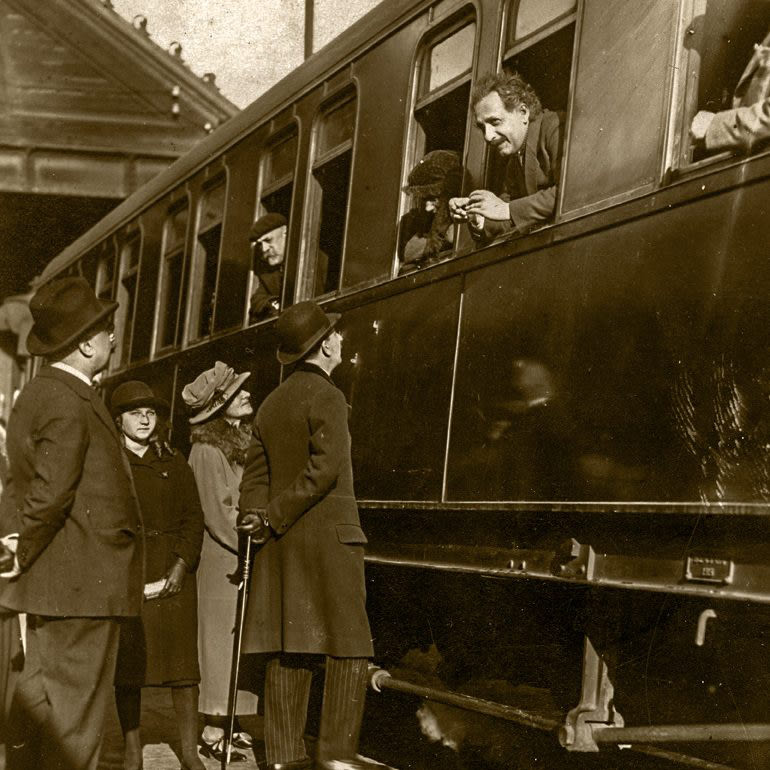
On 1 March, when he departed from Barcelona, he was accompanied by, among others, the German consul, Ulrich von Hassell, and the acting mayor of Barcelona, Enrique Maynés y Gaspar.
Madrid (1 – 11 March): Honours, Intellectuals, and a Fairy Tale
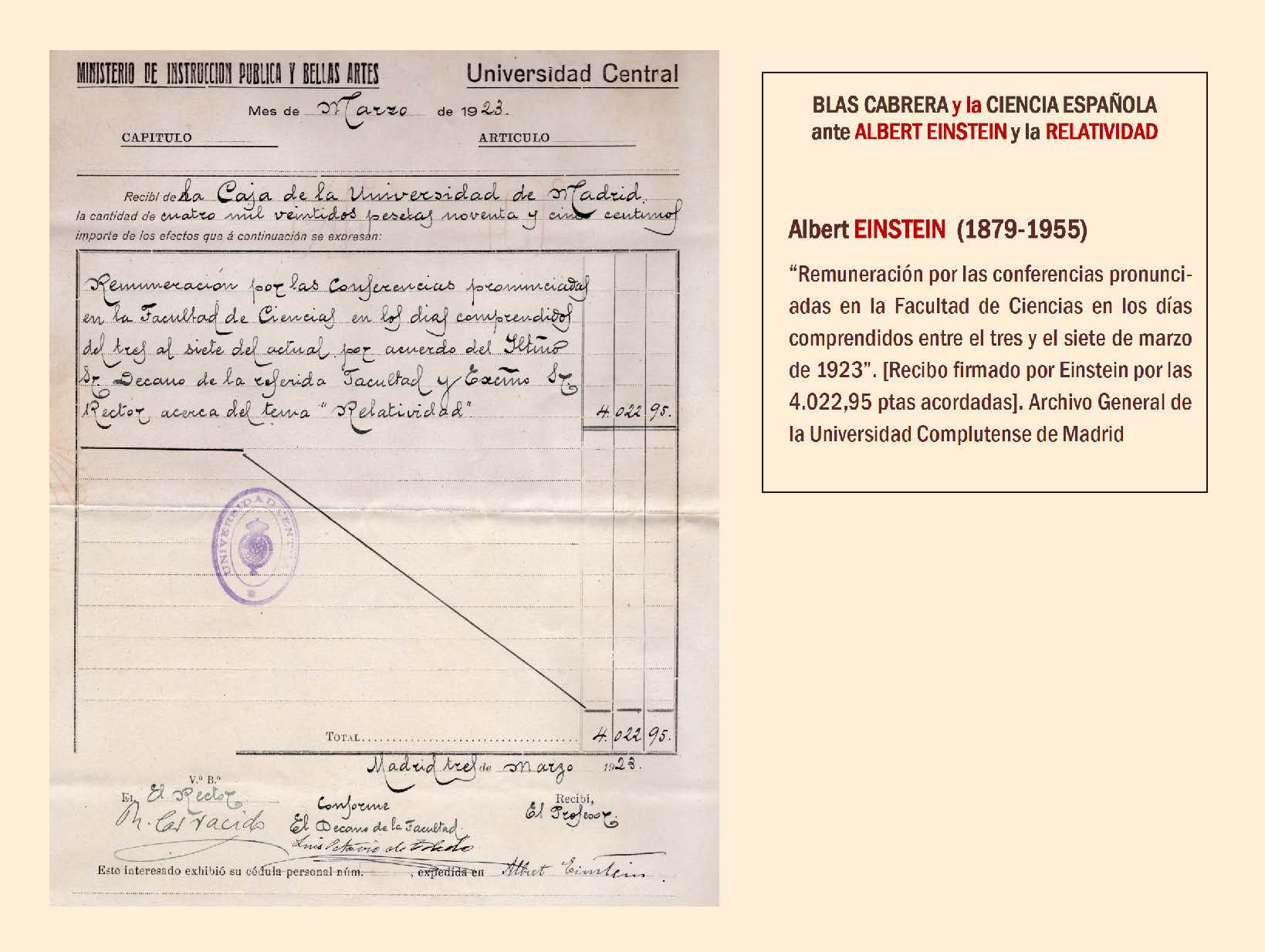
On the same 1 March, Einstein arrived in Madrid, where the reception was far more formal and ceremonial. He stayed at the Hotel Ritz and delivered his lectures at the Universidad Central. The visit proved very lucrative for him; for the entire Spanish tour, a payment of 7,000 pesetas was agreed, a very considerable sum for the time. For his Madrid lectures alone he received 3,500 pesetas, the equivalent of a university professor’s annual salary. In fact, a receipt signed by Einstein himself on 3 March survives, for the sum of 4,022.95 pesetas for one of his talks.
His audience was composed of the country’s intellectual and political elite, including such figures as Gregorio Marañón, Ramón Gómez de la Serna, Julio Palacios, Pío Baroja, Antonio Machado, Manuel Machado, María de Maeztu, Eugenio d’Ors, José Ortega y Gasset, Pérez de Ayala, Manuel B. Cossío and D. Miguel de Unamuno y Jugo.
The Host: Blas Cabrera, Father of Spanish Physics
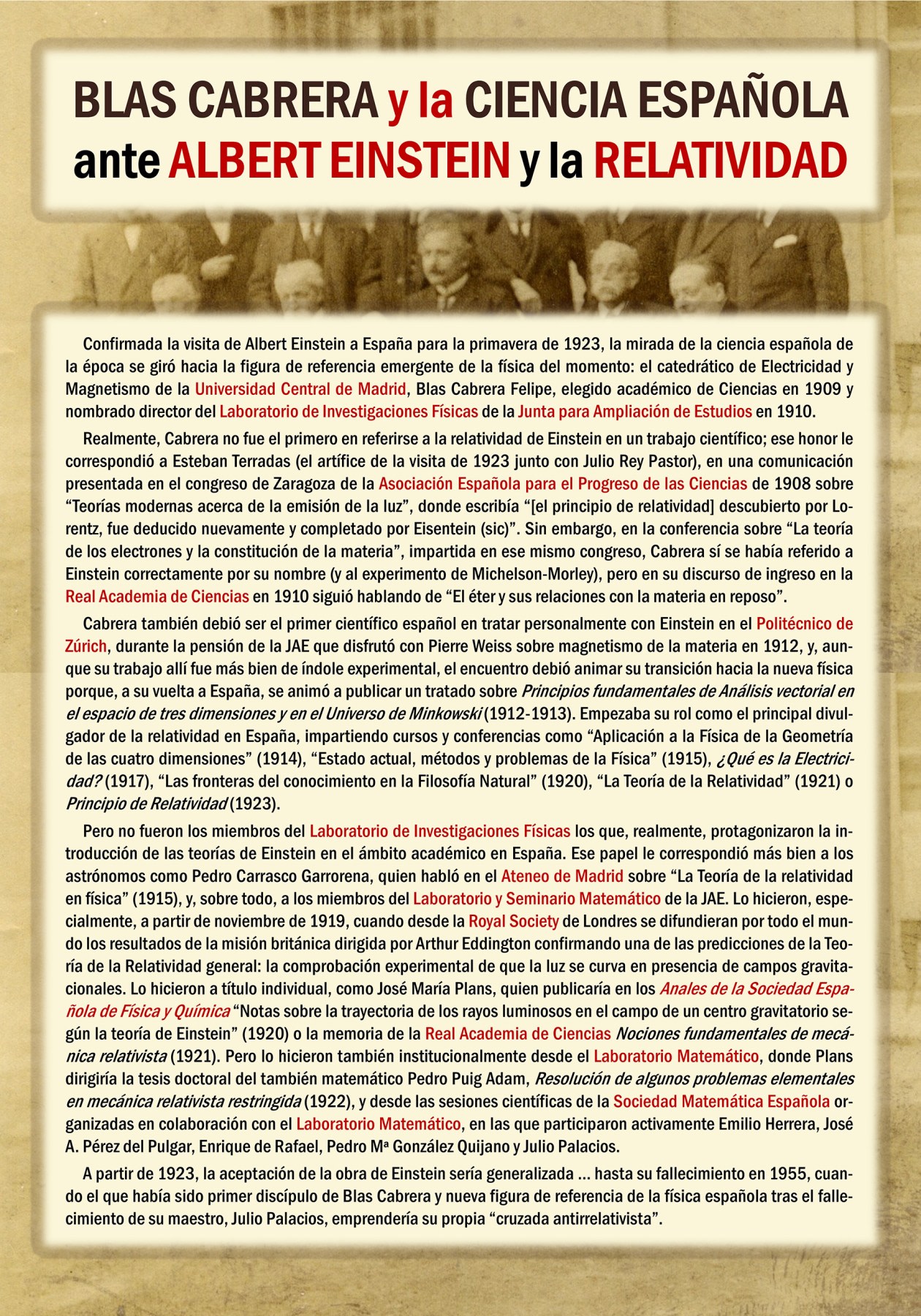
If the key figure in Barcelona was Terradas, in Madrid the principal host was Blas Cabrera y Felipe (1878–1945), considered the father of modern physics in Spain. Don Blas studied his secondary education in La Laguna. He then moved to Madrid, where he began studying law, following the family tradition. However, he met Santiago Ramón y Cajal, who persuaded him to leave law and study science. Thus, he graduated in Physical and Mathematical Sciences at the Universidad Central de Madrid and received his doctorate in physical sciences in 1901, with the thesis: “On the Diurnal Variation of the Horizontal Component of the Wind” (“Sobre la variación diurna de la componente horizontal del viento”), and was appointed professor four years later.
Director of the prestigious Laboratory of Physical Research, Cabrera was the most prominent Spanish physicist of his time and one of the few who had introduced and deeply understood the theory of relativity, publishing that same year his work Principio de relatividad (The Principle of Relativity). As SINC reminds us, he was one of the founding members of the Spanish Society of Physics and Chemistry, and the Anales of that institution served as his platform for publishing his earliest works. His experiments on electromagnetism at the Laboratory of Physical Research were making him a world expert in the field, but he felt the need to further his training abroad.
With the support of the Board for the Extension of Studies, he travelled in 1912 to Zurich, Switzerland, where he met Einstein and their friendship began. The purpose of the trip was to learn the most advanced techniques in the laboratories of the great authority on magnetism of that era, Pierre Weiss. The arrival was far from easy.
As Cabrera related in a letter, Moles, who was also on a fellowship at the centre, explained that he should have applied for enrolment in advance. The Spanish physicist went to see Professor Weiss: “He told me it was impossible to give me a place to work because his laboratory was completely full” (“Me dijo que le era imposible darme sitio para trabajar porque tenía el laboratorio completamente lleno”).
Fortunately, after the initial uncertainty, the Spanish physicist proved his worth and the master placed at his disposal the means and a room to work: “The professor visits me two or three times a day, proposing new problems to solve, which surely cannot all be tackled during our stay here” (“El profesor me visita dos o tres veces al día, proponiéndonos nuevos problemas a resolver, que seguramente no podrán todos ser abordados durante nuestra estancia aquí”). And so it was, and the collaboration between the two scientists continued for more than two decades.
On 4 March 1923, the rapport between the two was immediate. At the Royal Academy of Sciences, Cabrera delivered a welcome address that moved Einstein. The German genius noted in his diary that he had written a response to the address and, according to accounts of the time, declared: “Your words have reached the depths of my heart because they show the conscious and affectionate manner in which you have studied the work of my life” (“Vuestras palabras han llegado a lo más hondo de mi corazón porque demuestran la forma consciente y cariñosa con que habéis estudiado el trabajo de mi vida”).
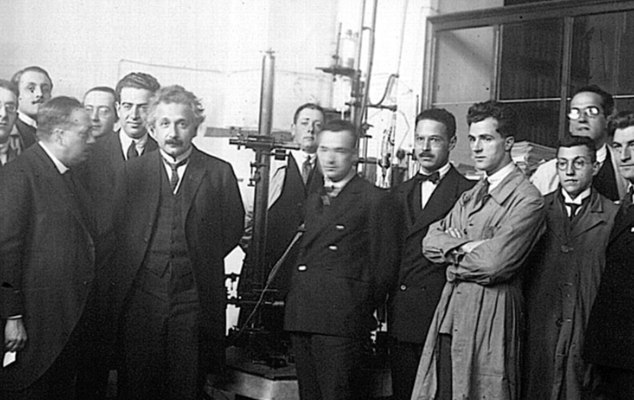
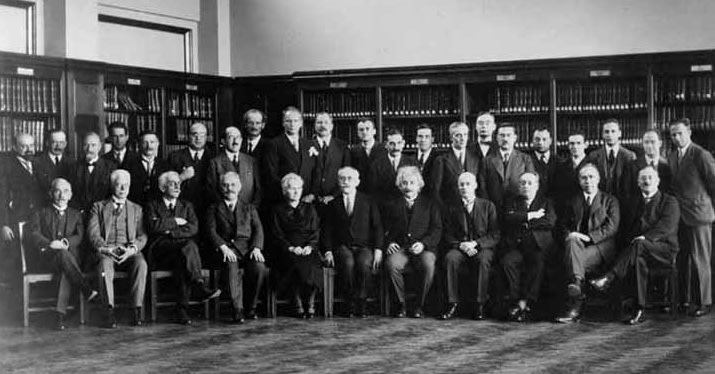
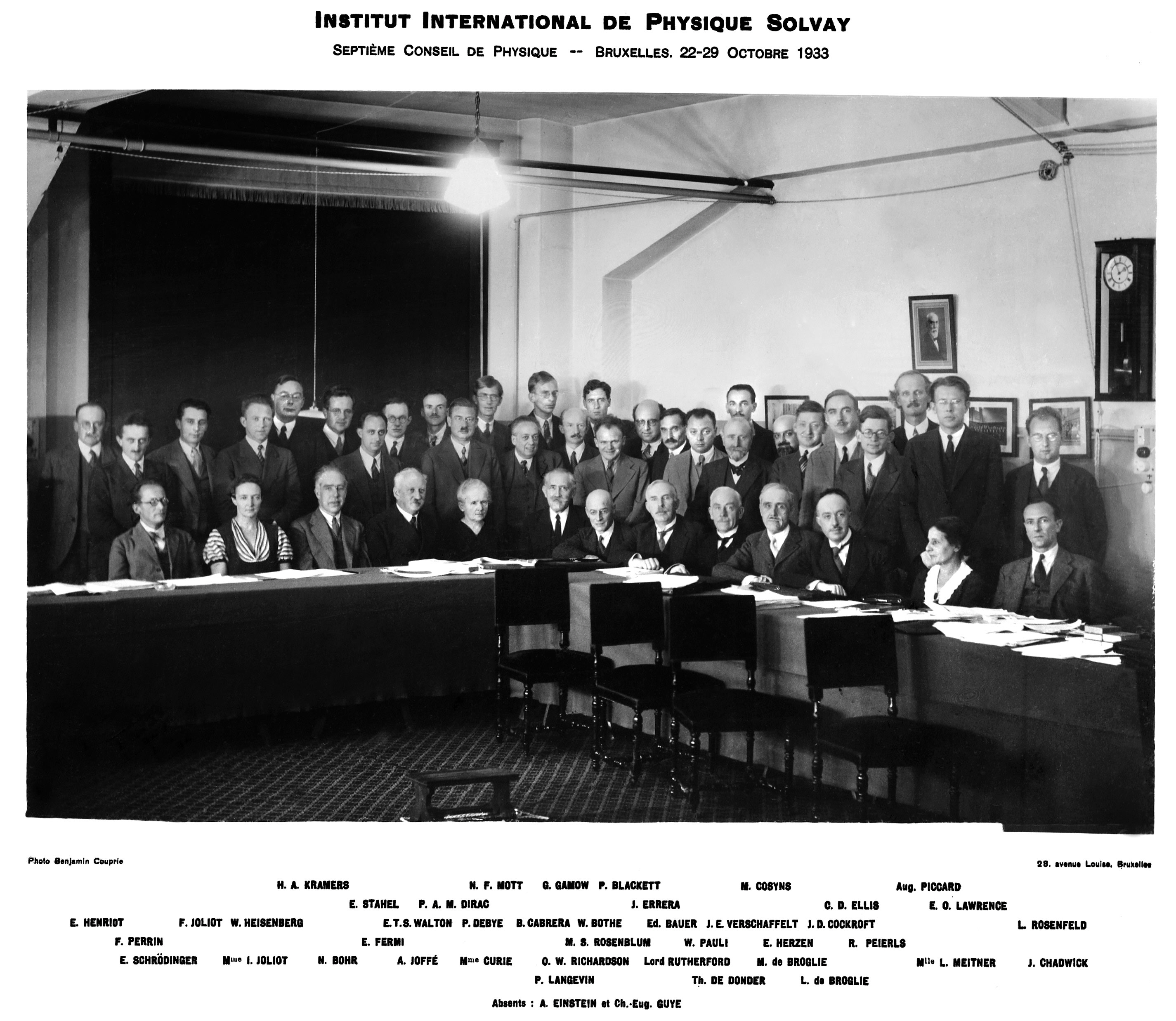
The relationship between the two was no mere formality of host and guest, but an encounter between peers. Einstein’s respect for Cabrera was such that, years later, he and Marie Curie sponsored the Spanish physicist’s entry into the select club of world science: the Solvay Conferences. Cabrera participated in the 6th (1930) and 7th (1933) editions, rubbing shoulders with the elite of physics. An iconic photograph from the 1930 congress shows him seated in the front row between Nobel laureates Richardson and Niels Bohr, just a few seats from Einstein, Marie Curie, Planck, Heisenberg, and Schrödinger — a visual testament to the international summit reached by Spanish science during the Silver Age, before the Civil War cut everything short, condemning Cabrera to die in exile in Mexico.
6th Solvay Conference: Cabrera was one of 26 participants, among whom there were already 12 Nobel Prize winners in Physics.
7th Solvay Conference, devoted to magnetism, the Spanish physicist’s specialty.
Encounters at the Summit: Cajal, the King, and Ortega
In addition to Cabrera, Einstein met with the highest figures in the country.
As Alejandro Alagón recounts for the Diario del Alto Aragón, the meeting with Don Santiago Ramón y Cajal took place at the latter’s home in Madrid on 5 March 1923, at 8:30 in the evening, following a lecture on relativity delivered at the Spanish Mathematical Society.
J. Montes Santiago notes that it was a relative of Einstein named Kuno Kochertaler who accompanied him to Cajal’s home. No photographs of the moment exist; it was brief, and few details of the conversation are known. Ramón y Cajal was then 71 years old, suffering the after-effects of the malaria he had contracted in Cuba, and afflicted by a deafness that hampered his conversations.
Although by that time he seldom appeared in public, he must have felt a special emotion upon receiving the German genius.
Albert Einstein had known of Ramón y Cajal for some twenty years and had taken an interest in his discoveries concerning neuronal tissue, especially following the award of the Nobel Prize in Medicine in 1906. It was precisely at that time that Einstein was publishing those revolutionary papers in which he presented his Theory of Relativity, even though they were then ignored by the scientific authorities of the day. Both Einstein and Cajal were researchers who combined three decisive keys to achievement, which in the words of Eduardo Punset are: first, their integrity; second, the capacity to be provocateurs by refuting principles considered immovable but which they questioned as erroneous; and third, the ability to disseminate their findings using the most modern technologies of their time. Both revolutionized the science of their era: Cajal with the study of neuronal connections inside the human brain, and Einstein with his contributions on the relationship between space-time and the gravitational deflection of light.
Since Einstein did not speak Spanish, it is very likely that the two conversed in French and that an interlocutor was present. Albert Einstein recorded the encounter in his diaries with the words: “Visit with Cajal, incredible old head. Gravely ill.” (“Visita con Cajal, increíble cabeza anciana. Gravemente enfermo.”)
Einstein’s phrase, terse in his Diaries, reveals a sincere emotion at the encounter. The meeting between the two Nobel laureates — the most cited scientists in history in their respective fields — was a stellar moment, although other sources suggest it may have been made possible thanks to Blas Cabrera, one of those closest to the German Nobel laureate and at the same time a devotee of the Spanish one: “To him I owe all that I am or may come to represent in the future” (“A él debo cuanto soy o pueda significar en el porvenir”). As José María Serrano Sanz notes in the Heraldo de Aragón.
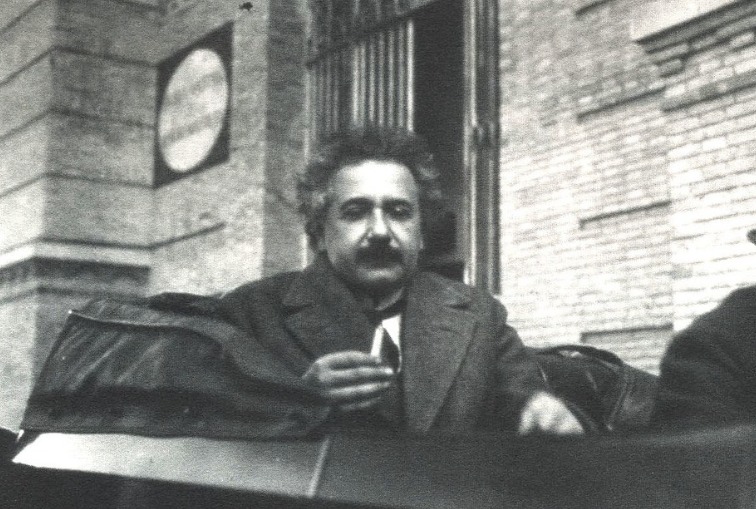
On 7 March he was received by King Alfonso XIII. Einstein noted: “Audience with the king and the queen mother. […] The king, simple and dignified, filled me with admiration” (“Audiencia con el rey y la reina madre. […] El rey, sencillo y digno, me produjo admiración”). The monarch appointed him a member of the Royal Academy of Sciences, and he was invested Doctor Honoris Causa by the Universidad Central. From that ceremony there remains this curious photograph in which nearly all those present, including the king, appear with their eyes closed, while Einstein is the only one with his eyes open.
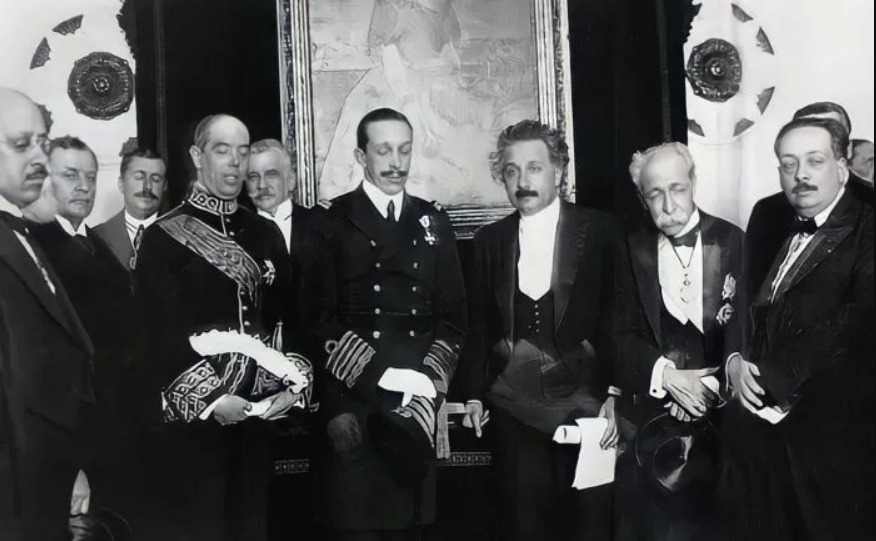
His Majesty the King appointed him a member of the Royal Academy of Sciences, and the marine biologist Odón de Buen made him a surprising proposal: to lead an expedition to study the solar eclipse due to take place in Mexico in September of that year.
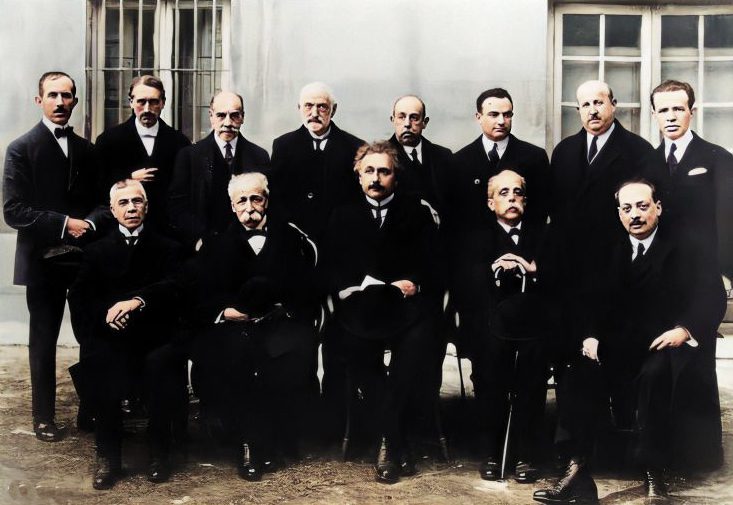
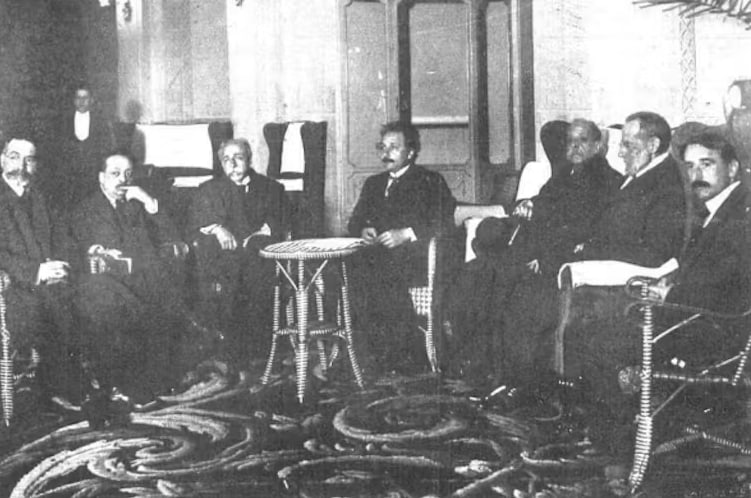
“The visit to Madrid was coming to an end. There remained a weekend of unscheduled time that gave the Einsteins the freedom for family visits and to return to the Prado,” notes Thomas F. Glick.
As we can see, despite such a packed schedule, Einstein — who, besides science, was a lover of art, literature (he declared that The Brothers Karamazov by Dostoevsky and Don Quixote by Cervantes were, for him, supreme works) and music — found time to slip out of the Hotel Palace where he was staying and visit the Museo del Prado on three separate occasions.
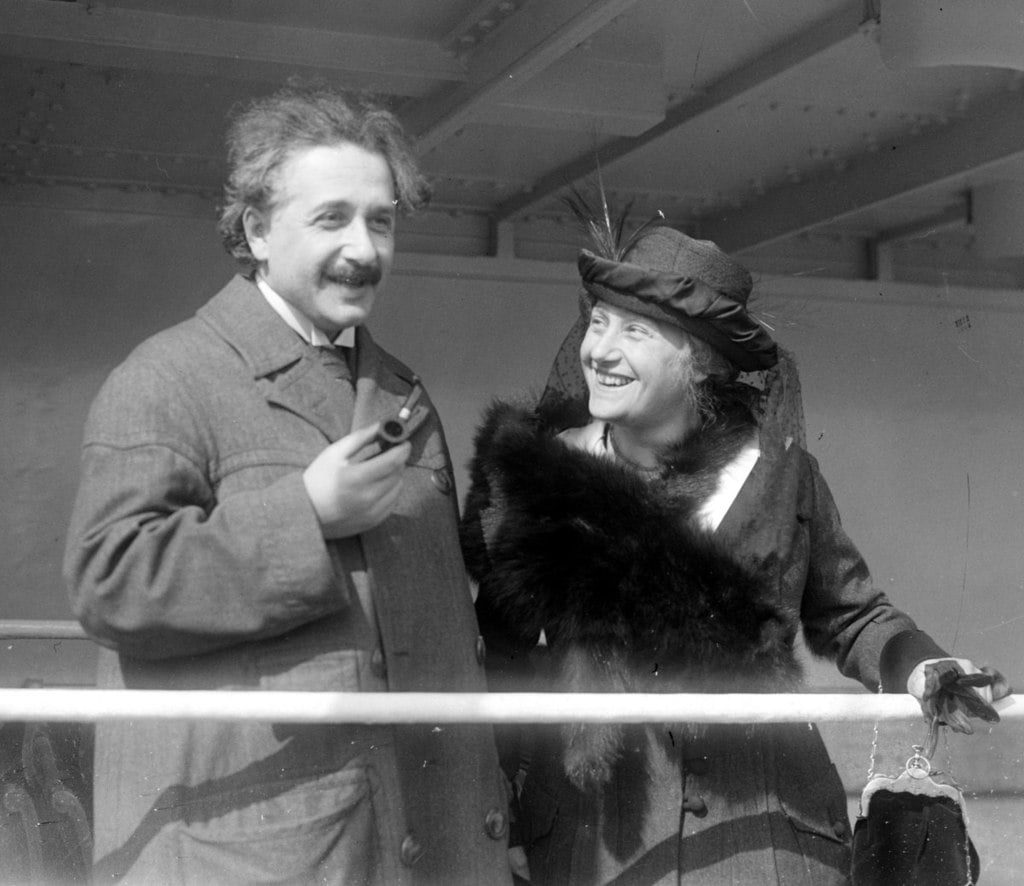
Einstein at the Colina de los Chopos: An Afternoon at the Residencia de Estudiantes
Einstein’s visit to Madrid had one of its culminating moments at a place that was, in itself, a universe in ferment: the Residencia de Estudiantes (Students’ Residence). Situated on what was then known as the Colina de los Chopos (Hill of the Poplars), the Residencia was not a simple university dormitory; it was the intellectual heart of the Spanish Silver Age, a crucible of the avant-garde where science, art, and literature coexisted in constant and fruitful dialogue. Through its corridors and gardens passed the most brilliant scientific minds alongside young men who would define twentieth-century Spanish culture, such as Federico García Lorca, Salvador Dalí, and Luis Buñuel Portolés. The arrival of Einstein at this epicentre of modernity, on 9 March 1923, was not just another lecture but a symbolic event that connected the Spanish avant-garde with the greatest scientific revolution of the moment.
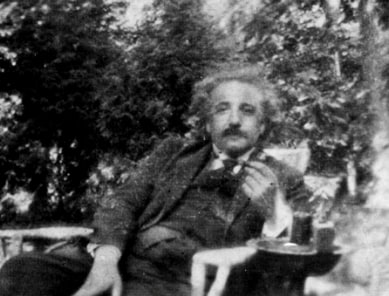
The central event of his visit to the Residencia was the lecture entitled “Summary of the Theories of Relativity” (“Resumen de las teorías de la relatividad”). The event was organized by the Board for the Extension of Studies and Scientific Research (JAE), the parent institution of the Residencia, and introduced by one of the most influential figures of the era: the philosopher José Ortega y Gasset. Ortega not only introduced the German genius but also served as his translator, becoming the indispensable bridge between Einstein’s complex thought, expressed in his mother tongue, and an audience eager for knowledge.
Beyond the formal lecture, Einstein’s visit to the Residencia included a gathering with Ortega y Gasset and other intellectuals. This more intimate, discursive format was characteristic of the institution’s atmosphere and allowed for a more direct exchange of ideas. For the residents, that afternoon was not merely the opportunity to see a world celebrity but to witness first-hand how the thought of the new century was being forged.
A Fairy Tale in Toledo
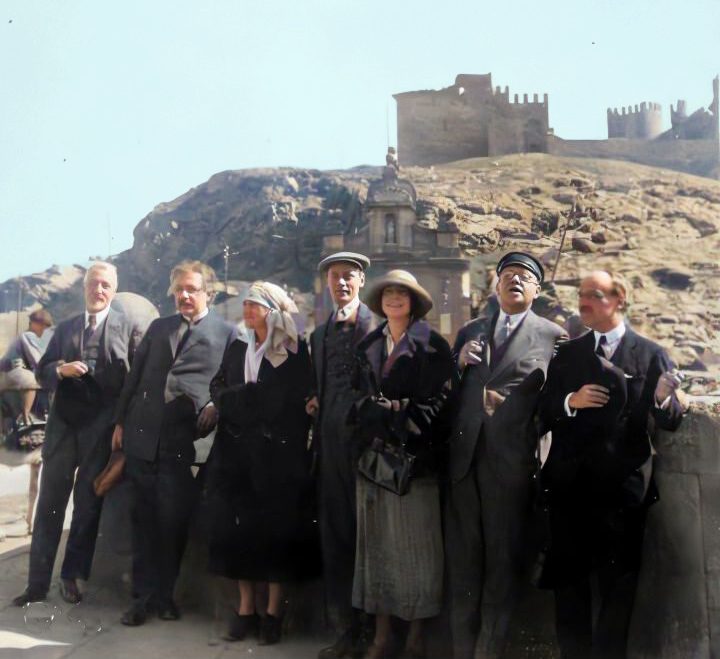
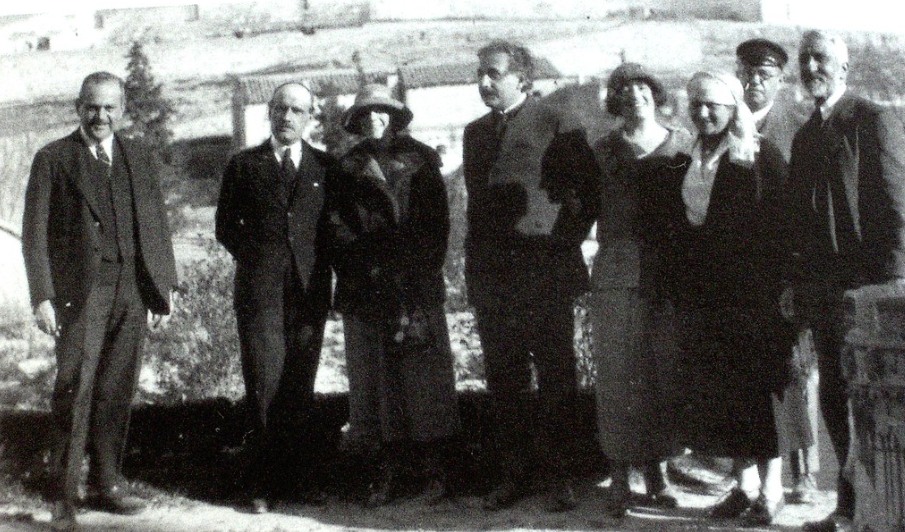
The climax of his stay in the capital was an excursion to Toledo on 6 March, guided by José Ortega y Gasset and the art historian Manuel B. Cossío. The experience left him in awe, as he recorded in his diary: “Trip to Toledo, camouflaged with many lies. One of the most beautiful days of my life. Radiant sky. Toledo is like a fairy tale” (“Viaje a Toledo camuflado con muchas mentiras. Uno de los días más hermosos de mi vida. Cielo radiante. Toledo es como un cuento de hadas”).
Zaragoza (12 – 14 March): An Unexpected Finale and the Spanish Soul
The visit to Zaragoza was not on the official itinerary. It was the result of the bold initiative of a group of university professors, led by the physicist Jerónimo Vecino, who boarded Einstein’s train as it passed through the city and convinced him to make a stop.
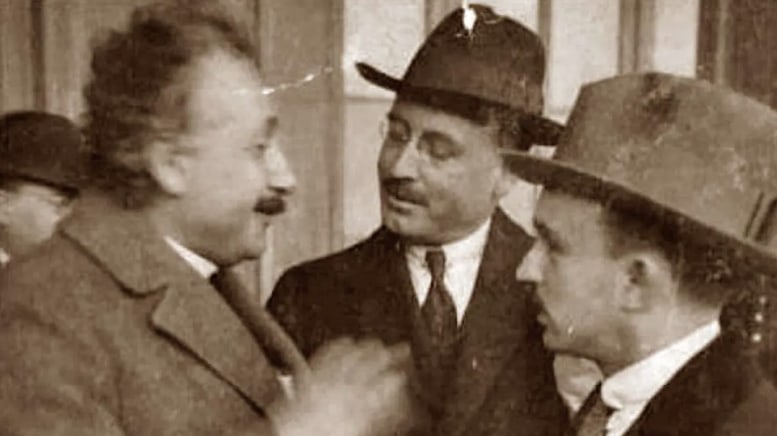
In barely 50 hours, Einstein delivered two lectures on relativity at the Paraninfo of the University, visited the Laboratory of Biochemical Research of Antonio de Gregorio Rocasolano — whose work on Brownian motion connected directly with one of Einstein’s 1905 papers — visited the Basilica of El Pilar, the Lonja — from which he emerged with enthusiasm — the Aljafería Palace, and the Seo Cathedral. He also found time to attend a performance of La Viejecita, a comic zarzuela by Miguel Echegaray that was a hit at the time, at the Teatro Principal. As Zaragoza Guía recalls in its excellent article.
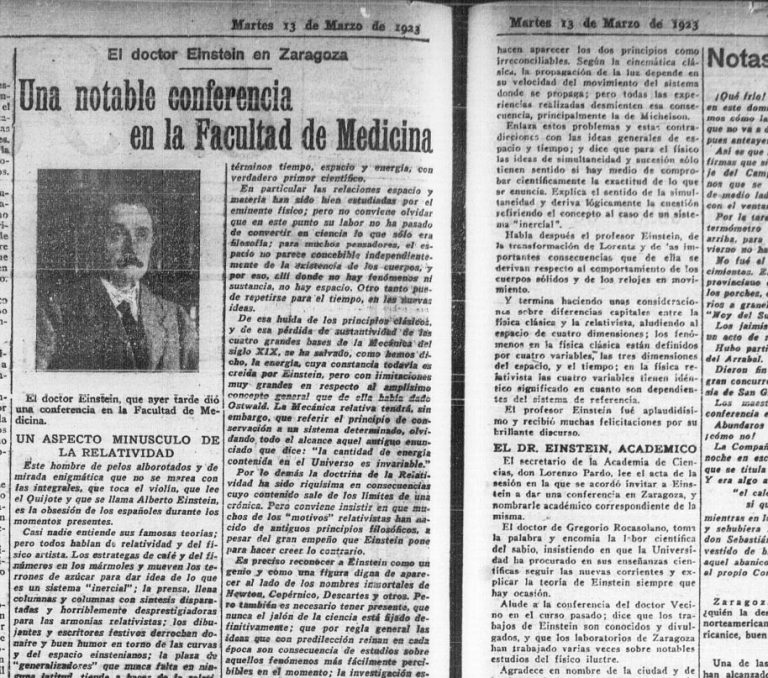
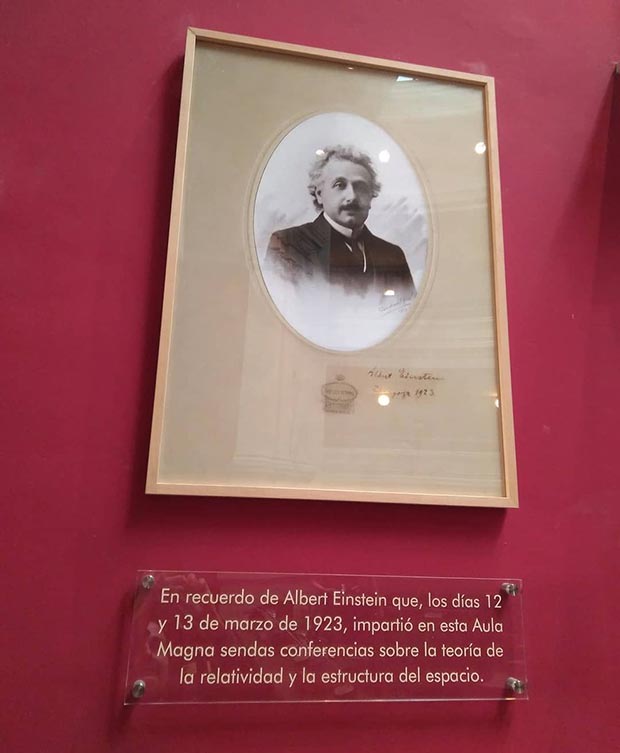
On Monday 12 March 1923, at 6 o’clock in the evening, barely two hours after his arrival, Einstein delivered in French in the Aula Magna of the Faculty of Medicine and Sciences (today the Paraninfo building) his first lecture, which dealt with his theory of relativity. With the hall packed, he expounded his theories in an event of great academic significance, presided over by the rector of the University of Zaragoza, Ricardo Royo Villanova.
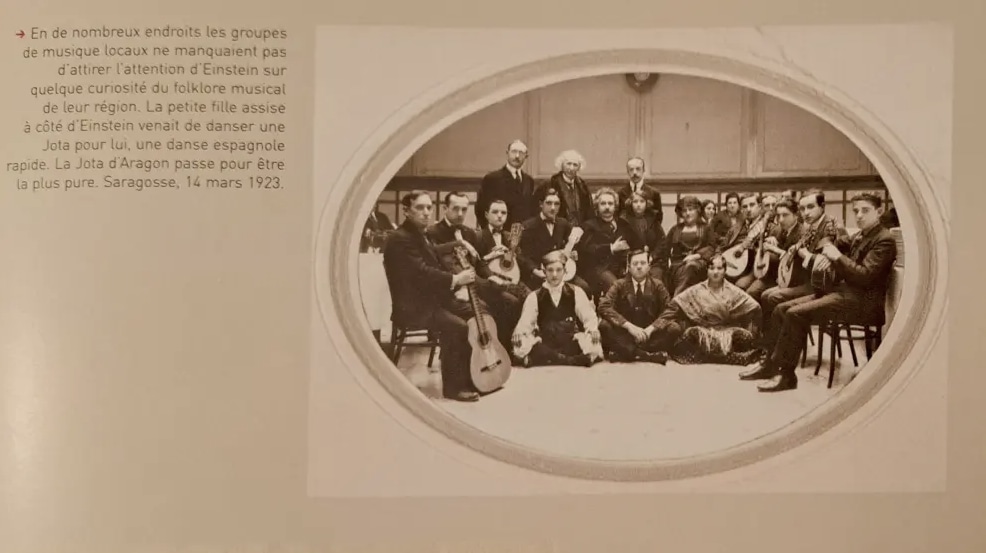
The visit culminated with the celebration of his 44th birthday, on 14 March. At the Casino Mercantil he toasted with sparkling wine and, at a party at the German consulate, played the violin and was feted with Aragonese jotas. It is said that the gesture moved him deeply, to the point that he kissed one of the young female singers on the forehead and posed for a photograph with her. It was then that he declared that “until this moment, only in Zaragoza had he perceived the heartbeat of the Spanish soul” (“hasta el momento actual, solo en Zaragoza había percibido las palpitaciones del alma española”). One of the best-remembered anecdotes concerns the blackboard he used in his second lecture; the rector asked to keep it as a relic, but over time its trace was lost, giving rise to a mystery that endures.
Einstein delivered a speech in German in which he expressed his concern for the Weimar Republic, which, after Germany’s defeat in World War I, was plunged in a deep economic and social crisis, and in which he voiced “his confidence that the crisis in Germany would be overcome so as to make possible the urgently needed reconstruction of Europe” (“su confianza de que se llegue a salvar la crisis de Alemania para hacer posible la urgentemente necesaria reconstitución de Europa”).
The night before leaving the city, the German consul in Zaragoza, Gustavo Freudenthal, invited him to dinner at his home on the Coso and organized a small party. Einstein never parted with his violin when travelling, and he offered a short concert after dessert, accompanied by a young pianist from Zaragoza, Trinidad Castillo.
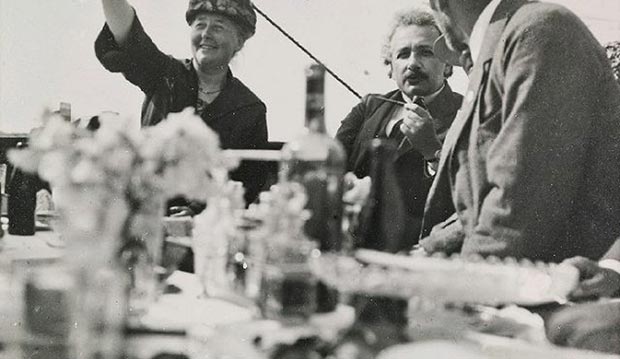
Einstein departed on the afternoon express train bound for Bilbao on 14 March 1923. He received 575 pesetas for each lecture and an additional 250 pesetas for expenses.
The Intellectual Encounter: Ortega and Relativity
Beyond the anecdotes, Einstein’s journey to Spain gave rise to a fascinating encounter of ideas, particularly with José Ortega y Gasset. In 1923, Ortega published El tema de nuestro tiempo (The Theme of Our Time), a work in which he developed his philosophy of “perspectivism” and “vital reason.” Ortega argued that there is no single, absolute truth; rather, reality is composed of infinite perspectives, each anchored in the vital “circumstance” of an individual. The complete truth could only be the sum of all these perspectives.
This philosophy resonated profoundly with Einstein’s scientific revolution. Just as Ortega demolished the “pure reason” and abstract rationalism of the old tradition, Einstein had demolished Newton’s absolute concepts of space and time, demonstrating that they depended on the observer’s state of motion. Both, from physics and philosophy respectively, were articulating a new vision of the world in which reality is not a fixed, independent entity but something defined in relation to the subject who observes it. Their encounter in Madrid and their walk through Toledo were not merely a social event but a dialogue — explicit or implicit — between two of the minds that were defining the sensibility of the twentieth century.
The Legacy of a Relative Journey
Einstein’s visit to Spain was a social event of the first order. The press followed his every move, and his figure became a topic of conversation in cafes and the subject of caricatures. Anecdotes such as that of a chestnut seller in Madrid who shouted at him “Long live the inventor of the automobile!” (“Viva el inventor del automóvil!”) illustrate the enormous gap between his fame and the real understanding of his work.
From a strictly scientific standpoint, the direct impact was limited; no new lines of research were opened as a result of his lectures. However, the cultural effect was immense. The visit spectacularly raised public awareness of the value of science and helped to integrate Spain into the European intellectual debate, leaving an indelible mark on a society that was approaching modernity with both hope and unease.
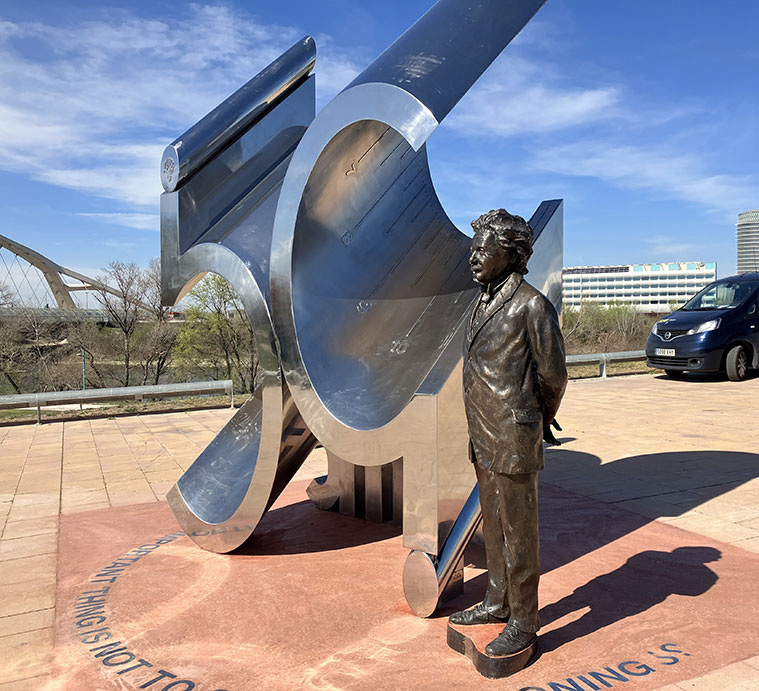
Contribution by Academician D. Jesús Martínez Frías
All religions, arts, and sciences are branches of the same tree.
Albert Einstein
Einstein’s Contributions to Earth Sciences 🌍
Although he is world-famous for his “Annus Mirabilis” and his revolutionary theories in physics, the impact of Albert Einstein’s ideas was not confined to that field. The article “A review of the contributions of Albert Einstein to Earth Sciences” highlights that Einstein also made significant and specific contributions to the Earth Sciences, which are little known and scattered across the literature. These contributions can be classified into three fundamental areas: geodynamics, geological catastrophism, and fluvial geomorphology.
1. Geodynamics: Earth Crust Displacement
Einstein’s principal contribution in this field is linked to his support for the controversial theory of
Earth Crust Displacement (ECD), proposed by Charles Hapgood.
-
Hapgood’s theory: It suggested that the Earth’s lithosphere (the rigid crust) could, on occasion, slide as a single piece over the asthenosphere (the more plastic inner layer). The proposed mechanism was the accumulation of enormous ice masses in the polar regions, whose weight and asymmetric distribution would generate a centrifugal impulse from the Earth’s rotation. Upon reaching a critical point, this impulse would cause the crust to slide, displacing the poles toward the equator.
-
Einstein’s interest: Einstein was “electrified” by Hapgood’s idea, calling it “original, of great simplicity, and of great importance for everything relating to the history of the Earth’s surface.” However, despite his support, he maintained certain reservations, doubting whether the weight of the ice was sufficient to move the crust and whether the crust could slide easily over the inner layers.
-
Current perspective: Today, the theory of plate tectonics has largely eclipsed Hapgood’s hypothesis. The article notes that the ECD theory does not satisfactorily explain phenomena such as isostasy (the equilibrium of the crust over the mantle) and is contrary to current geological knowledge.
2. Geological Catastrophism: The Velikovsky Case
Einstein also became involved in debates over catastrophism, the theory that the Earth has been affected by violent, rapid, globally significant events. His participation centred on the work of Immanuel Velikovsky.
-
Velikovsky’s theory: In his book Worlds in Collision, Velikovsky proposed that catastrophic events described in ancient texts were caused by a comet ejected by Jupiter, which, after passing close to Earth and Mars and wreaking havoc, stabilized in an orbit to become the planet Venus.
-
The evolution of Einstein’s opinion: Over nearly a decade of correspondence, Einstein’s position on Velikovsky evolved notably:
Initial scepticism: He admitted that extraterrestrial catastrophes had occurred, but denied that Venus could be the cause, considering Velikovsky’s arguments “very weak” in the face of the laws of astronomical mechanics.
-
Defence of scientific debate: He was critical and angered by the “intolerance and arrogance” of some scientists who attacked Velikovsky with prejudices and unscientific arguments. This led him to his famous assertion: “catastrophes yes, Venus no” (“catástrofes sí, Venus no”).
-
Support for the right to dissent: The article concludes that Einstein’s “support” was not a scientific acceptance of Velikovsky’s ideas, but a defence of his right as a scientist to question the established model and propose alternatives.
3. Fluvial Geomorphology: The Formation of Meanders 🏞️
Perhaps his most solid and enduring contribution in this field was his explanation of the formation of meanders in rivers, published in a scientific paper in 1926.
-
The “teacup paradox”: Einstein was the first to articulate how a helical flow (or secondary flow) is responsible for the formation and migration of river bends. He explained it with a simple experiment: if the liquid in a teacup is stirred, the tea leaves at the bottom do not move toward the edges due to centrifugal force but instead accumulate in the centre. This occurs because friction on the walls and bottom slows the liquid, creating a secondary circular motion that sweeps the bottom toward the centre and rises along the sides.
-
Application to rivers: In a river, this same helical flow causes the surface water, which moves faster, to be pushed toward the outer (concave) bank of the bend, increasing erosion at that point. The inertia of this flow causes the point of maximum erosion to shift slightly downstream, which means the meander not only amplifies but also migrates slowly along the channel.
-
Current perspective: The article states that, while his explanation of meander amplification through secondary flow is essentially correct and survives to this day, his idea that the Coriolis force is what initiates the meander is considered, in most cases, insignificant. Despite its validity, this contribution by Einstein has been widely overlooked in subsequent literature on the subject.
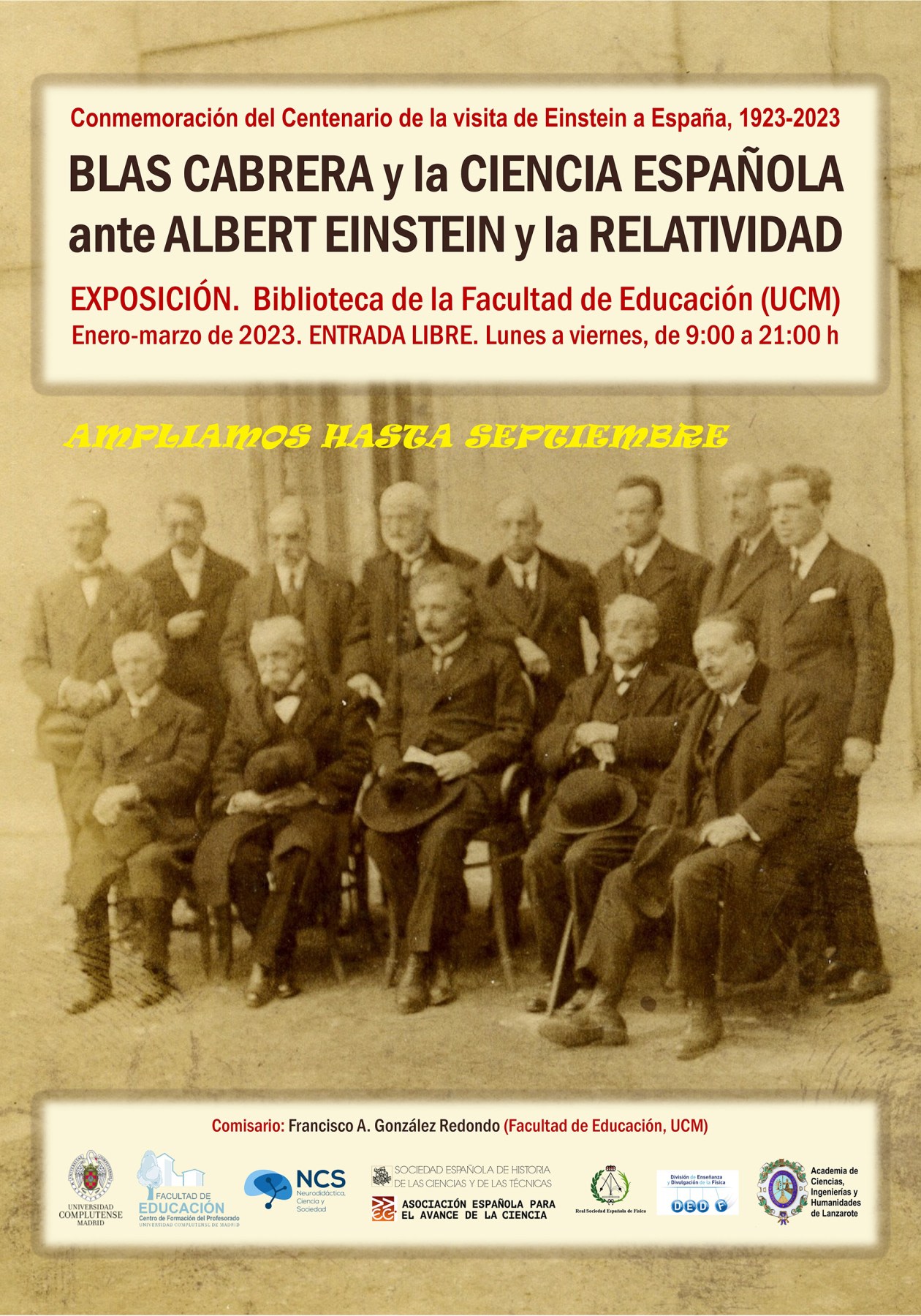
COMMEMORATION of the CENTENARY of A. EINSTEIN’s VISIT to SPAIN in 1923
BLAS CABRERA and SPANISH SCIENCE before ALBERT EINSTEIN and RELATIVITY. More information.
Bibliography
-
AEMET Blog. (2023, 29 July). “Some comments on the occasion of the centenary of Einstein’s visit to Spain.”
-
Alagón, Alejandro (via the Diario del Alto Aragón). Chronicle cited on the encounter between Einstein and Cajal.
-
General Archive of the Administration (AGA). Source of the photograph of Einstein’s visit to the Laboratory of Physical Research.
-
Albert Einstein Archives, Hebrew University of Jerusalem. Source of one of the photographs of the celebration of Einstein’s birthday in Zaragoza.
-
Barcelona Memory. (n.d.). “Einstein in Barcelona.”
-
El Cronista. Photographs of the events in Madrid.
-
Elías, Carlos (2007). “Media coverage of Einstein’s visit to Spain as a model of journalistic excellence.” Arbor: Ciencia, pensamiento y cultura, 183(728), pp. 899–909.
-
El Noticiero. Zaragoza newspaper that covered the scientist’s visit on 13 March 1923.
-
Escuela de Industriales UPM. (2015, 23 December). “Albert Einstein at the School of Industrial Engineering.” Flickr.
-
Catalan Foundation for Research and Innovation. (n.d.). “Einstein in Barcelona.”
-
Fundación Ortega y Gasset / Toledo olvidado. Source of the photograph of Einstein in Toledo.
-
Glick, Thomas F. (2005). Einstein y los españoles: Ciencia y sociedad en la España de entreguerras (Einstein and the Spaniards: Science and Society in Interwar Spain). Consejo Superior de Investigaciones Científicas.
-
Institute of Catalan Studies (@iec). (2023, 28 February). Today marks 100 years since Albert Einstein delivered the last of his lectures…. X.
-
Martínez-Frías, J., Hochberg, D., & Rull, F. (2006). “A review of the contributions of Albert Einstein to Earth Sciences….” Naturwissenschaften, 93, 66–71.
-
Mètode. Science communication journal of the University of Valencia.
-
Montes-Santiago, J. (2006). “The encounter between Einstein and Cajal (Madrid, 1923): a forgotten stellar moment of humanity.” Revista de Neurología, 43(2), pp. 113–117.
-
Mundo Gráfico. Magazine that published a photograph of Einstein on 7 March 1923.
-
Ortega y Gasset, José (1923). El tema de nuestro tiempo (The Theme of Our Time). Calpe.
-
Pola, A. (2023, 10 March). “The photograph of Einstein’s Aragonese party in Zaragoza that was saved by a hair’s breadth.” Heraldo de Aragón.
-
Pueyo, A. (2025, 12 March). “The day Einstein arrived in Zaragoza: 50 hours sufficed to admire Aragonese talent.” Aragón Digital.
-
Quintà, P. (2023, 23 February). “Albert Einstein’s visit to Barcelona: a Nobel laureate on the Rambla.” La Vanguardia.
-
Roca Rosell, Antoni (2004). “Einstein’s friendly visit to Barcelona in 1923.” Quark: Ciencia, medicina, comunicación y cultura, (31), pp. 42–47.
-
Rosenkranz, Ze’ev (Ed.). (2018). The Travel Diaries of Albert Einstein: The Far East, Palestine, and Spain, 1922–1923. Princeton University Press.
-
Sacristán, Enrique (2013, 8 March). “Blas Cabrera, the great Spanish physicist and friend of Einstein.” Agencia SINC.
-
Sallent, Emma, & Roca Rosell, Antoni (2005). “The ‘relativist’ dinner of Einstein in Barcelona.” Quark: Ciencia, medicina, comunicación y cultura, (36), pp. 73–84.
-
Serrano Sanz, José María (via the Heraldo de Aragón). Chronicle cited on the encounter with Cajal.
-
Solé, J. (2005). “Prof. Albert Einstein at the Escola Industrial in 1923.” UPCommons, Universitat Politècnica de Catalunya.
-
Universidad Complutense de Madrid. (2023). “Exhibition: Blas Cabrera and Spanish Science before Albert Einstein and Relativity.”
-
Wikipedia. “Albert Einstein.”
-
Wikipedia. “Elsa Einstein.”
-
Zaragoza Guía. “In the footsteps of Einstein in Zaragoza.”
Gift from the Barcelona City Council — Docs.Santiagoramonycajal