Spanish Federation of Associations and Clubs for UNESCO on the occasion of the International Day of Peace: Newsletter No. 47.
Message from the Director-General of UNESCO
September 21, 2025
For the second consecutive year, the world has reached a record level of armed conflicts: according to the Peace Research Institute Oslo, in 2024 there were 61 armed conflicts in 36 countries worldwide. These conflicts caused devastating loss of life and generated countless obstacles on the path to peace.
This year we celebrate the International Day of Peace around the theme “Act Now for a Peaceful World.” This theme reminds us that peace is not a given and that it requires constant and conscious resistance to all forms of hatred that can mutate and spread in our societies.
UNESCO works to build peace, above all, through education. Together with our Member States, we carry out programs for teaching about the Holocaust, genocides, and violent pasts. By raising awareness of the tragedies of the past, we aim to equip people around the world with the knowledge and values necessary to prevent future atrocities.
This work forms part of our broader fight against racism, antisemitism, and all forms of discrimination. Last December, UNESCO held the fourth edition of the Global Forum Against Racism and Discrimination, which brings together the international community to build peace by addressing the root causes of division.
We know that hatred, discrimination, and conflict thrive in environments where information is biased, distorted, or suppressed. That is why UNESCO works to train and protect journalists in conflict and crisis zones, such as Ukraine, Gaza, Lebanon, and Sudan. Furthermore, since 2021, we have mobilized 4 million US dollars through our Global Fund for the Defense of the Media, enabling us to help nearly 5,000 persecuted journalists worldwide.
At a time when people around the world, particularly young people, use the Internet as their primary source of information, we are working to combat the significant threats posed by misinformation and online disinformation to social cohesion. This involves, among other things, promoting media and information literacy: by providing people with tools to critically analyze information, we can reduce the risk of their falling prey to online content that seeks to reproduce harmful prejudices and stereotypes.
In his acceptance speech for the Nobel Peace Prize in 1964, Martin Luther King Jr. said:
I refuse to accept the view that mankind is so tragically bound to the starless midnight of racism and war that the bright daybreak of peace and brotherhood can never become a reality.
Martin Luther King Jr. Nobel Peace Prize, 1964
On this International Day of Peace, UNESCO calls upon the global community to echo these words and act for peace—not because it is easy, but because it is right and because it is possible.
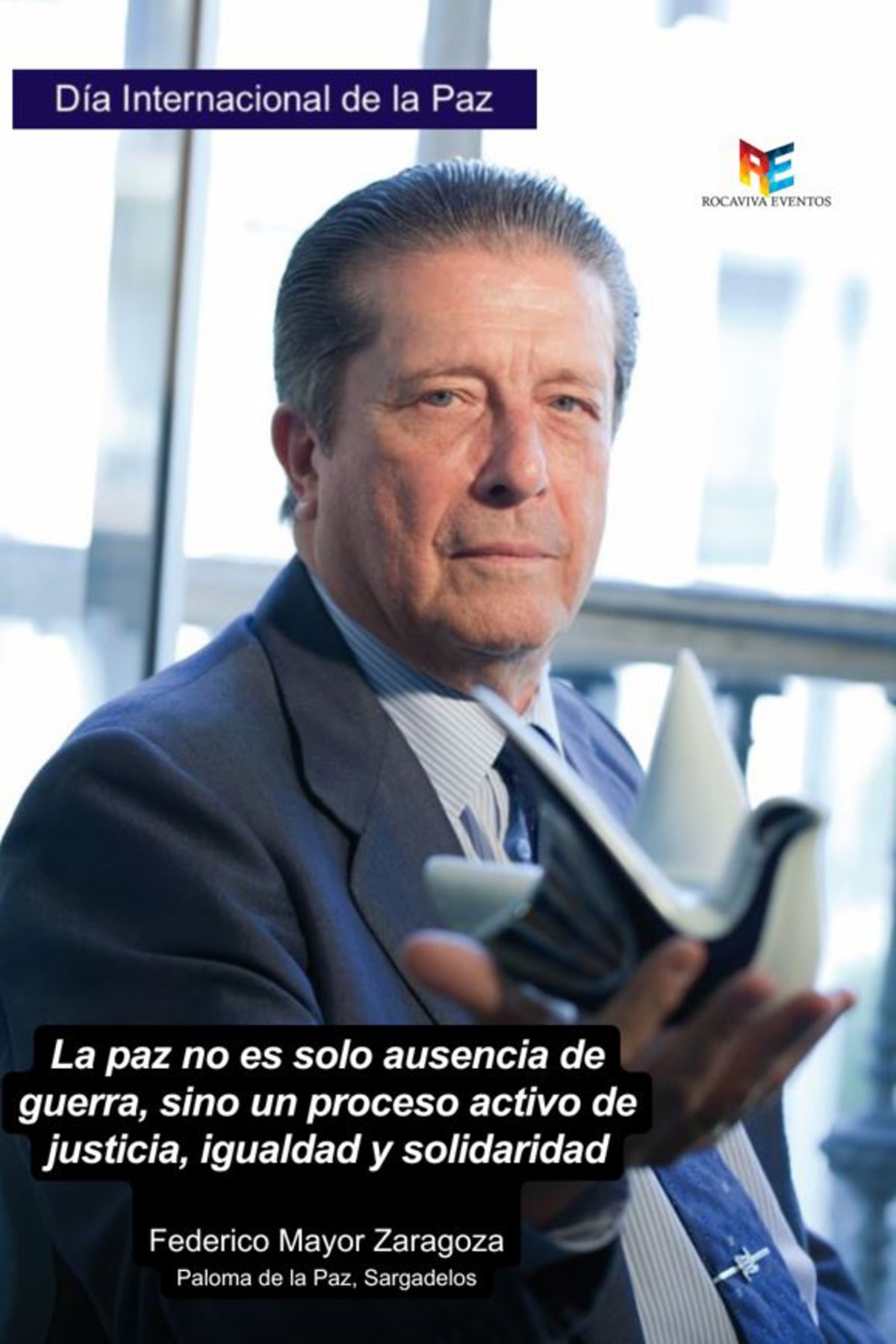
Peace is not merely the absence of war, but an active process of justice, equality, and solidarity. (“La paz no es solo ausencia de guerra, sino un proceso activo de justicia, igualdad y solidaridad.”)
Federico Mayor Zaragoza
All human beings are born free and equal in dignity and rights and, endowed with reason and conscience, should act towards one another in a spirit of brotherhood.
Article 1 of the Universal Declaration of Human Rights
Everyone talks about peace, but no one educates for peace. People educate for competition, and that is the beginning of any war. When we educate to cooperate and to be in solidarity with one another, that day we will be educating for peace. (“Todo el mundo habla de paz, pero nadie educa para la paz, la gente educa para la competencia y este es el principio de cualquier guerra.”)
María Montessori, 1937, Copenhagen
A culture of peace is a set of values, attitudes, and behaviors that promote nonviolence, tolerance, respect for human rights, justice, and solidarity, with the aim of resolving conflicts in a peaceful and constructive manner. It opposes violence in all its forms and seeks to create environments where coexistence is harmonious and individual and cultural differences are valued.
Federico Mayor Zaragoza
Spanish Federation of Associations and Clubs for UNESCO Avda. Reyes Católicos 4, 5th floor, 28040 (Madrid) Email: [email protected] / [email protected] Tel.: 606755174
Newsletter No. 47 — Docs.Santiagoramonycajal