Introduction: The Vindication of the Sage in the Age of Fragmentation
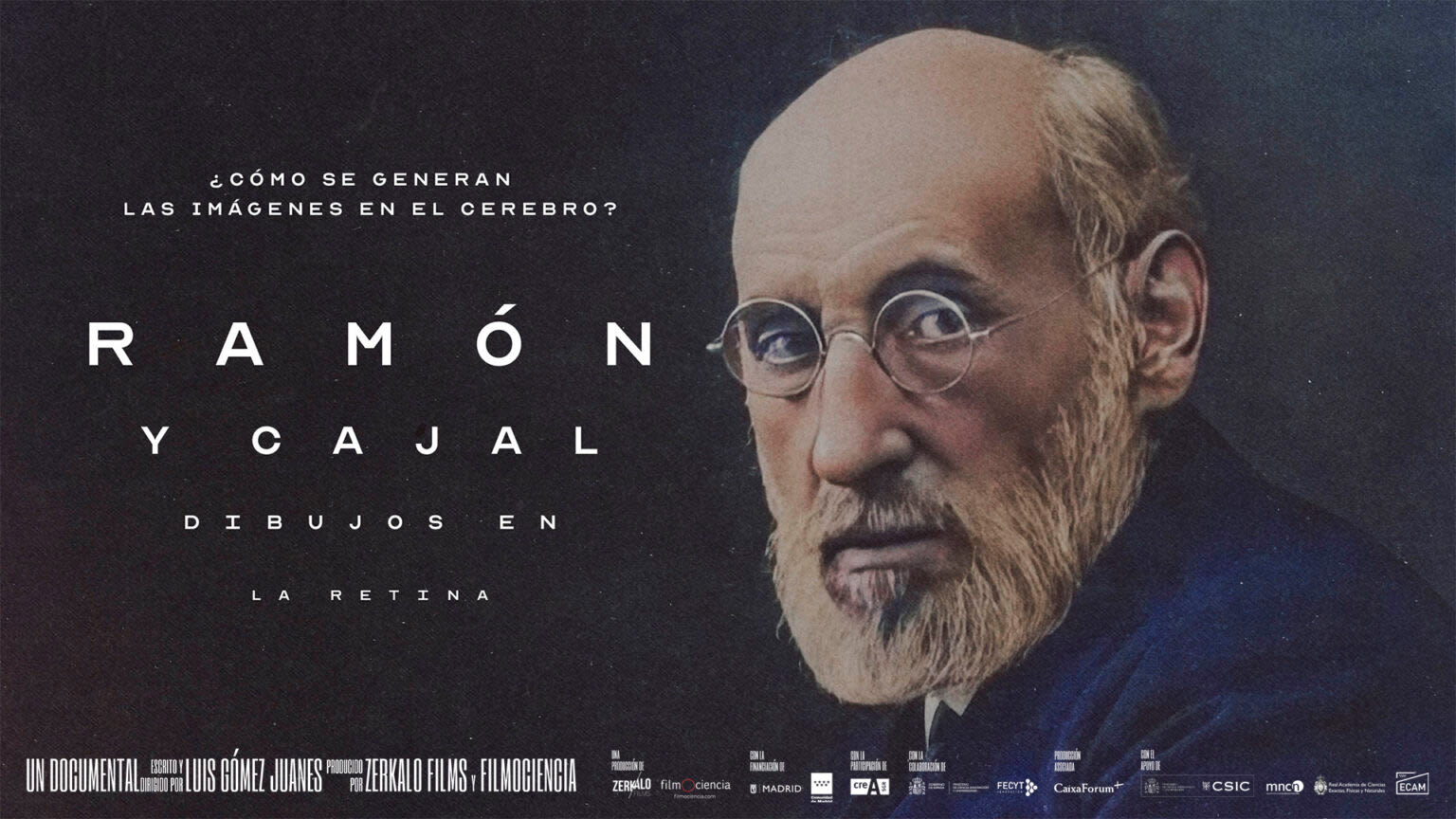
In an era defined by the fragmentation of knowledge, where the figure of the scientist is often reduced to that of a specialist in an ever-narrowing field, the legacy of Santiago Ramón y Cajal emerges not only with renewed relevance but with the force of a manifesto. Cajal was not merely a histologist; he was a sage in the deepest and most classical sense of the term, an intellectual beacon whose light encompassed Science, Art, Literature, and Philosophy with equal mastery. His genius lay not solely in the acuity of his gaze through the microscope but in the vastness of a spirit that integrated empirical observation with an exquisite artistic sensibility and a tireless philosophical inquiry into the ultimate nature of reality and the meaning of the human soul.
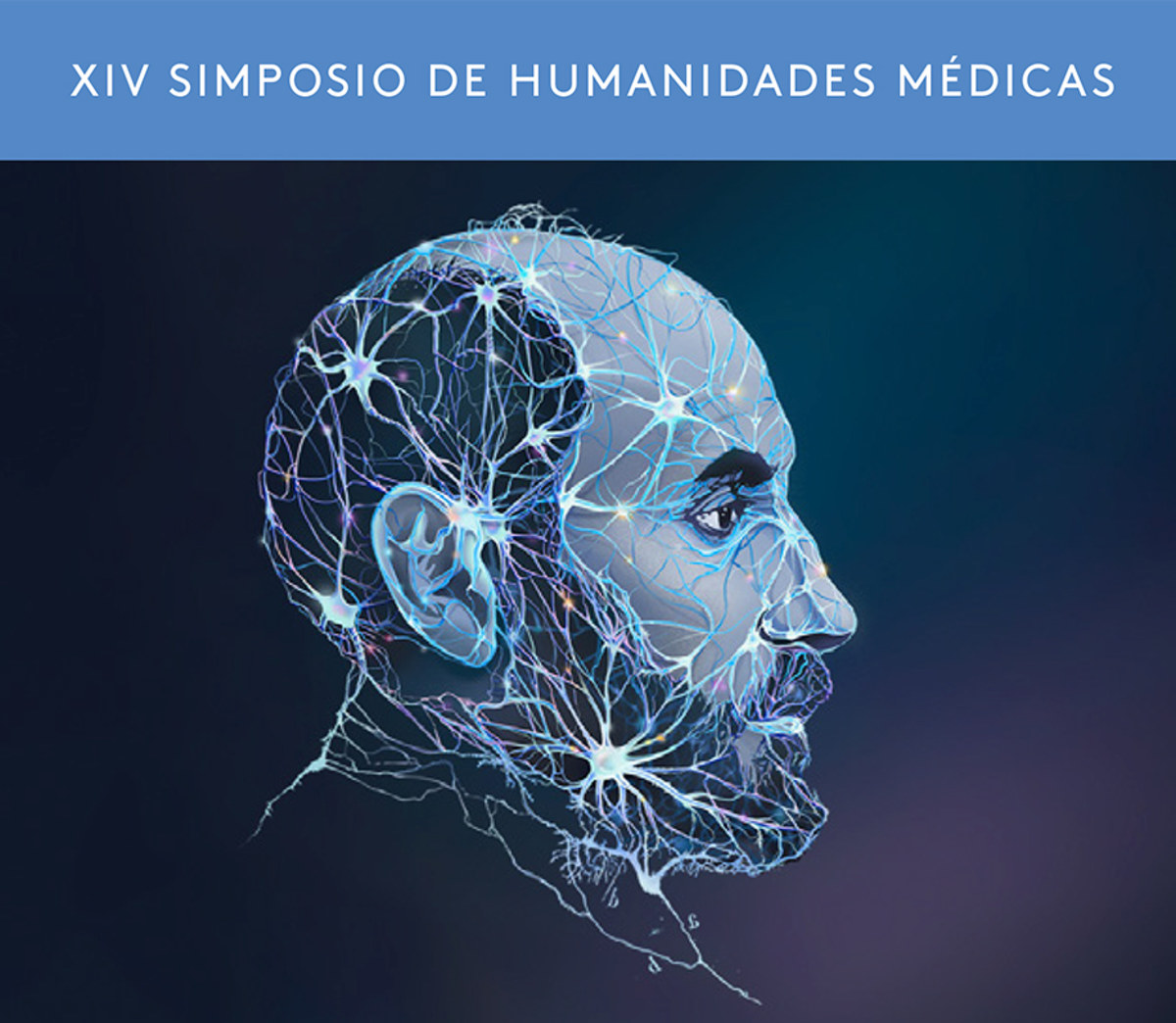
It is precisely to vindicate this holistic model of knowledge that CEU San Pablo University, through an emblematic collaboration between the CEU Ángel Ayala Institute of Humanities and the Faculty of Medicine, announces the celebration of the XIV Symposium on Medical Humanities. Under the eloquent title “RAMÓN Y CAJAL: SCIENCE, ART, AND THOUGHT”, this event, scheduled for October 23, 2025, is conceived not as a historical retrospective but as a vibrant and necessary dialogue on the nature of “true science”: one that, in the organizers’ words, “does not remain only in the order of what is seen but continues toward the order of being” (“no se queda solo en el orden de lo que se ve sino que continúa hacia el orden del ser”).
XIV Symposium on Medical Humanities October 2025 — Docs.Santiagoramonycajal
The very structure of the symposium—the union of a faculty of life sciences with an institute of humanities—is a declaration of principles. It reflects a philosophy that, like previous symposia centered on concepts such as “care” from an anthropological and ethical perspective, actively seeks to heal the fracture between the “two cultures.” This event thus stands as a testament to the institutional commitment to a model of research and teaching that recognizes the inseparable warp between scientific rigor and the depth of humanistic reflection. It is an invitation to rediscover Cajal not only as the father of neuroscience but as the archetype of the integral thinker, whose example offers us the keys to a more complete, more profound, and ultimately more human scientific endeavor.
The Heart of the Symposium: An Inquiry into Cajal’s “True Science”
The fundamental purpose of the symposium transcends mere biographical tribute to delve into the epistemological and philosophical core of Cajalian thought. The goal is “to recall Cajal as a model of the practice of true science,” a statement that contains a thesis of enormous significance. This “true science” is defined by its audacity in going beyond empirical data, transcending “the order of what is seen” and venturing into “the order of being.” With this premise, the symposium challenges the purely positivist vision of science, proposing that for Cajal, methodical observation was the point of departure, not the final destination, of an intellectual voyage that yearned to unravel the ultimate foundations of reality and the meaning of existence.
To understand this ambitious proposal, it is crucial to analyze the “two manias” that, according to Cajal himself, governed his intellect: the “reasoning mania” (“manía razonadora”) and the “literary mania” (“manía literaria”). The first embodied his insatiable scientific curiosity, the iron discipline, and the heroic perseverance that enabled him to map the “virgin forest” of the nervous system. The second, however, revealed an equally imperative need to understand, articulate, and transcend the human condition through art, writing, and philosophical reflection. They were not two dissociated facets but two sides of the same coin, fused by the yearning for total knowledge.
The symposium’s title—“Science, Art, and Thought”—is therefore not a simple enumeration of disciplines but the very architecture of Cajal’s intellect. Science is his method; Art is his language and his tool of visualization (his drawings are legendary for their aesthetic precision and heuristic value); and Thought is his ultimate aim, the philosophical synthesis that gives meaning to his discoveries. The event is structured as a reflection of this intellectual trinity, arguing that artistic sensibility and philosophical depth were not mere ornaments in Cajal’s life but intrinsic and essential components of his scientific method. In so doing, the symposium rescues Cajal not only as a giant of histology but as a profound philosopher of science, whose legacy challenges us to reflect on the nature and purposes of knowledge itself.
A Faculty of Experts for a Boundless Legacy: The Detailed Program
The extraordinary intellectual ambition of the symposium is confirmed by a meticulously designed program and a roster of speakers whose collective expertise spans every facet of the Cajalian universe. Each presentation has been conceived not as an isolated exposition but as a key piece within a coherent intellectual journey, promising to illuminate Cajal’s figure from novel and profound perspectives.
9:45 AM - Art and Literature in the Life and Work of Cajal
- Speaker: Augusto Blanco Alfonso. Physician and writer. Honorary Professor at UAM.
The day opens with an immersion into the artist’s soul, exploring Cajal’s “literary mania” through a figure who embodies, in the twenty-first century, that same duality. Dr. Augusto Blanco Alfonso, a family physician and professor, is a prominent promoter of “narrative medicine,” a discipline that arises in response to the growing technification of medicine and seeks to recover the reflective and human dimension of patient care. Through his works, such as Stories for Medical Students, Dr. Blanco Alfonso advocates for a medicine that listens, narrates, and understands the patient’s soul. His perspective is therefore ideal for analyzing how Cajal’s artistic sensibility and literary vocation not only coexisted with his scientific work but enriched it, endowing it with a unique depth and communicative power.
10:30 AM - The Son of Justo and Antonia
- Speaker: Carlos Gregorio Hernández. Professor of Contemporary History. Director of the CEU Ángel Ayala Institute of Humanities.
After exploring Cajal’s artistic spirit, the symposium delves into the man’s roots. Dr. Carlos Gregorio Hernández, as Director of the co-organizing institute, underscores the institutional commitment to this humanistic approach. His specialization as a historian of contemporary Spain, with a deep knowledge of the Restoration era, provides him with the precise tools to situate Cajal in his historical, social, and above all, familial context. The moving title of his lecture, “The Son of Justo and Antonia,” draws us away from the myth of the isolated genius to bring us closer to the flesh-and-blood human being, forged within a family and in a Spain undergoing profound transformations. This lecture promises to reveal the formative influences that shaped the character and indomitable will of the future Nobel laureate.
11:00 AM - Vocations That Make History: The Women of Cajal’s School
- Speaker: Cristina Nombela Otero. Associate Professor, Department of Biological and Health Psychology, Faculty of Psychology, UAM.
This presentation represents an act of historical restitution and one of the culminating moments of the symposium. Dr. Cristina Nombela, a distinguished neuroscientist, has been a key figure in the recovery of the “invisible scientists” who trained and worked in Cajal’s School. Her research has brought to light the contributions of pioneers such as the Australian Laura Forster and the Spanish scientists Manuela Serra, Soledad Ruiz-Capillas, and María Luisa Herreros, omitted by traditional historiography. Her work demonstrates that Cajal’s environment was more diverse and complex than previously believed, and that the master himself recognized the talent of these researchers, including them in the list of members of his School. Her lecture will not only enrich our understanding of the School but will connect its legacy with crucial debates on gender equality in science, demonstrating the symposium’s capacity to celebrate and, at the same time, critically reexamine history.
12:30 PM - Cajal in the Time of Cholera
- Speaker: Estanislao Nistal Villán. Associate Professor, Department of Pharmaceutical and Health Sciences, CEU San Pablo University.
From the perspective of a twenty-first-century virologist, Dr. Estanislao Nistal Villán will analyze one of Cajal’s most pragmatic and least-known facets: his work as a research physician during the cholera epidemic in Valencia (which actually affected more than half of Spain). Dr. Nistal is a renowned expert in innate immunity and virus-host interactions. His lecture will establish a fascinating bridge between the historical bacteriology of the nineteenth century, when the Vibrio cholerae bacillus was discovered, and contemporary challenges in virology and epidemiology. By examining how Cajal applied his scientific rigor and his capacity for observation amid a public health crisis, Dr. Nistal will demonstrate the perennial relevance of the Cajalian method and spirit for confronting the pandemics of yesterday and today.
1:00 PM - Cajal and the Spanish Neurological School: Its Impact on Our Lives Today
- Speaker: Fernando de Castro Soubriet. Cajal Center for Neuroscience / Spanish National Research Council–CSIC.
The inclusion of Dr. Fernando de Castro Soubriet is a living testament to history. He is not only a Senior Scientist at the prestigious Cajal Institute of the CSIC—the center that perpetuates the master’s name—but also the grandson of Fernando de Castro Rodríguez, one of the last and most brilliant direct disciples of Santiago Ramón y Cajal. Dr. de Castro Soubriet is, therefore, a living link in the chain of transmission of the Cajalian legacy. As a neurobiologist specializing in the development of the nervous system and in pathologies such as multiple sclerosis, he will offer an authoritative and unique vision of how the foundational discoveries of Cajal and his school continue to inform and drive the cutting-edge neuroscience that seeks solutions to the diseases afflicting us today.
1:30 PM - Cajal, the Invisible Parasites, and Autoimmunity: A Symphony of Science and Art
- Speaker: Carolina Hurtado Marcos. Associate Professor. Department of Pharmaceutical and Health Sciences, CEU San Pablo University. Recently awarded at the II Salamanca for Cajal and Science Conference with the II Santiago Ramón y Cajal Prize in Parasitology.
Returning to the synthesis between disciplines, Dr. Carolina Hurtado Marcos, an expert in parasitology, molecular immunology, and the relationship between pathogens and autoimmune diseases, proposes a lecture whose title is a statement of intent. “A Symphony of Science and Art” promises to explore how Cajal’s artistic ability to visualize and draw the microscopic world was fundamental to his discoveries, even beyond neurology. Her presentation will connect Cajal’s historical observations on microorganisms with current knowledge about the immune system and the relationship between infections and autoimmunity, demonstrating once again that the beauty and precision of his visual representations were, in themselves, a powerful tool for scientific research.
2:00 PM - Tonics of the Will: Reflections on the Vocation for Scientific Research in Ramón y Cajal
- Speaker: Sirga de la Pisa Carrión. Professor of Art History, CEU San Pablo University.
The symposium closes its narrative arc by returning to “Thought,” to the ethical and philosophical core of Cajal’s legacy. The title of the final lecture makes a direct reference to Tonics of the Will (Los tónicos de la voluntad), Cajal’s celebrated breviary of aphorisms on discipline, perseverance, and passion for work. The choice of a Professor of Art History, Dr. Sirga de la Pisa Carrión, to deliver this closing reflection is an inspired decision. It suggests an analysis of Cajal’s moral principles not only as text but from an aesthetic and ethical perspective, examining the “construction” of a scientific life as a work of art in itself, governed by harmony, structure, and an unwavering vocation for the beauty of truth. This lecture will culminate the day’s intellectual journey, synthesizing science and humanities in a final reflection on the spirit that animated one of the greatest scientists in history.
Event Agenda: Conference Guide
For the convenience of attendees, the complete program is presented below:
| Time | Activity/Lecture | Speaker and Main Affiliation |
|---|---|---|
| OPENING OF THE CONFERENCE | ||
| Tomás Chivato Pérez | , Dean of the Faculty of Medicine, CEU San Pablo University 9:45 AM Art and Literature in the Life and Work of Cajal | |
| Augusto Blanco Alfonso | , Physician and writer. | Honorary Professor at UAM 10:30 AM The Son of Justo and Antonia |
| Carlos Gregorio Hernández | , Director of the CEU Ángel Ayala Institute of Humanities 11:00 AM Vocations That Make History: The Women of Cajal’s School | |
| Cristina Nombela Otero | , Associate | Professor, Faculty of Psychology, UAM 11:30 AM |
| COFFEE BREAK | 12:30 PM Cajal in the Time of Cholera | |
| Estanislao Nistal Villán | , Associate Professor, CEU San Pablo University 1:00 PM Cajal and the Spanish Neurological School: Its Impact on Our Lives Today | |
| Fernando de Castro Soubriet | , Cajal Center for Neuroscience / CSIC 1:30 PM Cajal, the Invisible Parasites, and Autoimmunity: A Symphony of Science and Art | |
| Carolina Hurtado Marcos | , Associate Professor, CEU San Pablo University 2:00 PM Tonics of the Will: Reflections on the Vocation for Scientific Research in Ramón y Cajal | |
| Sirga de la Pisa Carrión | , Professor of Art History, CEU San Pablo University 2:20 PM | |
| CLOSING OF THE CONFERENCE | ||
| Carlos Gregorio Hernández Hernández | , Director of the CEU Ángel Ayala Institute of Humanities |
Organization, Registration, and Practical Information
Below are all the logistical details necessary to attend the event.
-
Organization: The symposium is jointly organized by the CEU Ángel Ayala Institute of Humanities and the Faculty of Medicine of CEU San Pablo University.
-
Symposium Direction: The academic direction of the event is led by Antonio Piñas Mesa, a key figure who embodies the symposium’s philosophy. As Associate Professor in the Department of History and Thought and at the Ángel Ayala Institute of Humanities, his teaching of Anthropology and Ethics within the Faculty of Medicine itself testifies to his commitment to the comprehensive training of future physicians. This XIV Symposium is not an isolated event but the continuation of an established tradition of “Medical Humanities Conferences” that Professor Piñas Mesa has coordinated at the university since 2012. His deep specialization in Spanish Medical Humanism, with publications and studies dedicated to masters such as Pedro Laín Entralgo, Gregorio Marañón, and Juan Rof Carballo, guarantees the rigor and pertinence of this tribute to Cajal. His leadership ensures that the event transcends mere historical analysis to become a genuine reflection on the humanization of healthcare, one of his principal lines of research.
-
Date and Time: The event will take place on Thursday, October 23, 2025, from 9:30 AM to 2:30 PM.
-
Venue: The conference will be held in the Auditorium of the EPS Building, located at the Montepríncipe Campus of CEU San Pablo University (Urbanización Montepríncipe, 28925 Alcorcón, Madrid).
-
Registration: Attendance at the symposium is free of charge. However, to ensure proper organization, it is essential to confirm attendance by completing the registration form in advance.
Conclusion: A Call to Cultivate the “Tonics of the Will”
The XIV Symposium on Medical Humanities presents itself as much more than an academic conference; it is a call to an exercise in intellectual and personal enrichment. It offers a unique opportunity to engage in dialogue with the multifaceted legacy of Santiago Ramón y Cajal, guided by a first-rate roster of experts who will address his figure from the perspectives of history, contemporary science, art, and philosophy.
To attend this conference is to accept an invitation to explore a model of science that resists the aridity of specialization—a model that is profoundly humanist, creative, and transcendent. It is an occasion to reflect on the scientific vocation, perseverance, and passion for knowledge—values that Cajal not only practiced but championed as pillars of all human progress.
In a world that often demands quick answers and pragmatic solutions, this symposium proposes a pause to cultivate the “Tonics of the Will.” It is a call to intellectual curiosity, to admiration for the beauty of truth, and to commitment to a pursuit of knowledge that, as Cajal demonstrated, is one of the noblest adventures of the human spirit. As he himself stated, “Every man can be, if he so desires, the sculptor of his own brain” (“Todo hombre puede ser, si se lo propone, escultor de su propio cerebro”). This symposium is, without a doubt, a magnificent tool for beginning to sculpt.