There are dates born with a vocation for commemoration, instants in which time seems to fold so that past and future may touch. The afternoon of last Monday, 24 November 2025, was one of them. The lecture hall of the Instituto Cajal, at the historic headquarters on Avenida del Doctor Arce, did not merely host an academic tribute; it was the stage for a ritual of transfer.
Under the title “Symposium Between Neurons and Legacy: Juan A. de Carlos and the Footprint of Cajal” (“Simposium Entre Neuronas y Legado: Juan A. de Carlos y la Huella de Cajal”), the scientific community gathered to bid farewell and honour Dr. Juan A. de Carlos, the figure who for decades has served as a “bridge-man” between the pipette and the archive, between the living neuron and historical memory.
With the move to the new Cajal Neuroscience Centre (CNC) in Alcala de Henares on the horizon, the event transcended a mere farewell to become a vindication of the “Double Helix” of Cajalism: experimental excellence and patrimonial stewardship.
I. Living Science: From Pesticides to the Architecture of the Cortex
The first session dismantled any notion that the honouree was merely a custodian of the past. The science of Juan A. de Carlos is alive, vibrant, and has created a school.
Dr. Laura Lopez-Mascaraque, CSIC Research Professor and scientific companion since the 1980s, opened the session with a masterful lecture titled “Juan A. de Carlos, neurohistologist: from apprentice to master of the developing brain”. Her presentation was a technical and conceptual journey that began by recalling Juan’s beginnings in 1982, studying the accumulation of pesticides in olives, before quickly leaping to frontier neurobiology.
In a dense and revealing passage, Lopez-Mascaraque outlined the key contributions of Facundo Valverde’s Comparative Neuroanatomy laboratory, which would become a joint venture. She explained how they tackled fundamental questions: How do axons of subplate neurons grow and orient during early cortical development, and what is their role in establishing cortico-thalamic pathways? She detailed the sophistication of their methods, from whole embryo in toto culture to the demonstration of tangential migration toward the cerebral cortex, using pioneering techniques such as ultrasound-guided intrauterine injections. Dr. Lopez-Mascaraque delved into complex questions such as the origin of cells populating the preplate and the nature of Cajal-Retzius cells, whose phenotype and migratory characteristics are determined at their origin yet show an astonishing plasticity in adapting to new routes when ectopically implanted. She also highlighted crucial discoveries such as tangential migration from the diencephalon to the telencephalon, regulated by the transcription factor Orthopedia (OTP), and concluded by explaining the mixed origin of subplate cells, demonstrating that they derive from both cortical and extracortical sources.
The baton was passed to Dr. Fernando Garcia-Moreno, now a leader at the Achucarro Basque Center for Neuroscience. His presentation, “Juan A. de Carlos as mentor”, contributed the human dimension of scientific rigour. Garcia-Moreno, a former doctoral student of Juan, recounted how his mentor’s intellectual demands and personal generosity were the substrate upon which he built his own career, now focused on evolutionary mechanisms connecting the avian and mammalian brains.
II. The Weight of Blood and Visionary Ideas
After the break, the symposium ventured into the depth of intellectual and family legacy, correcting frequent historical errors along the way.
Dr. Santiago Ramón y Cajal Agueras, Professor of Anatomical Pathology and great-grandson of Pedro Ramón y Cajal (Santiago’s younger brother, a giant of medicine often eclipsed by the Nobel laureate), took the podium to deliver the lecture “Cajal and his visionary ideas” (“Cajal y sus ideas visionarias”). With the authority of one who combines the blood of the Ramón y Cajal family with a brilliant career of his own in oncology and molecular pathology, Dr. Ramón y Cajal Agueras performed an intellectual dissection of Cajalian texts that anticipated modern cognitive neuroscience.
His analysis focused on five visionary pillars of his great-uncle’s work:
-
The anatomical mechanism of ideation: How Cajal intuited the physical basis of thought long before neuroimaging.
-
Talent and brain function: The Sage’s reflections on intellectual capacity and its biological substrate.
-
Natural selection and heredity: The integration of the Darwinian evolutionary vision into Cajalian histology.
-
Opposing emotions and ideas: An analysis of human psychology from the cellular perspective.
-
Association and attention: The connectivity mechanisms that integrate conscious experience.
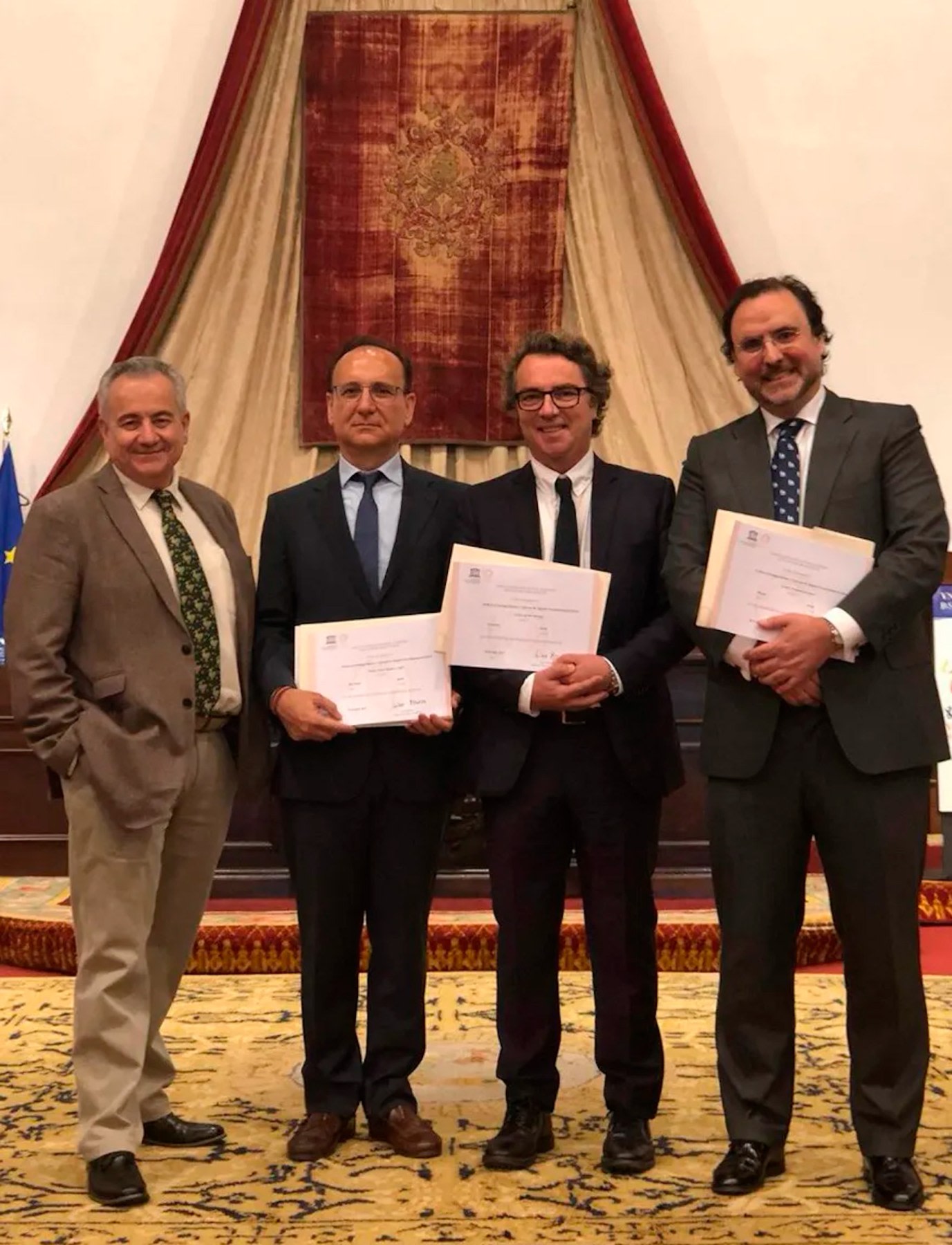
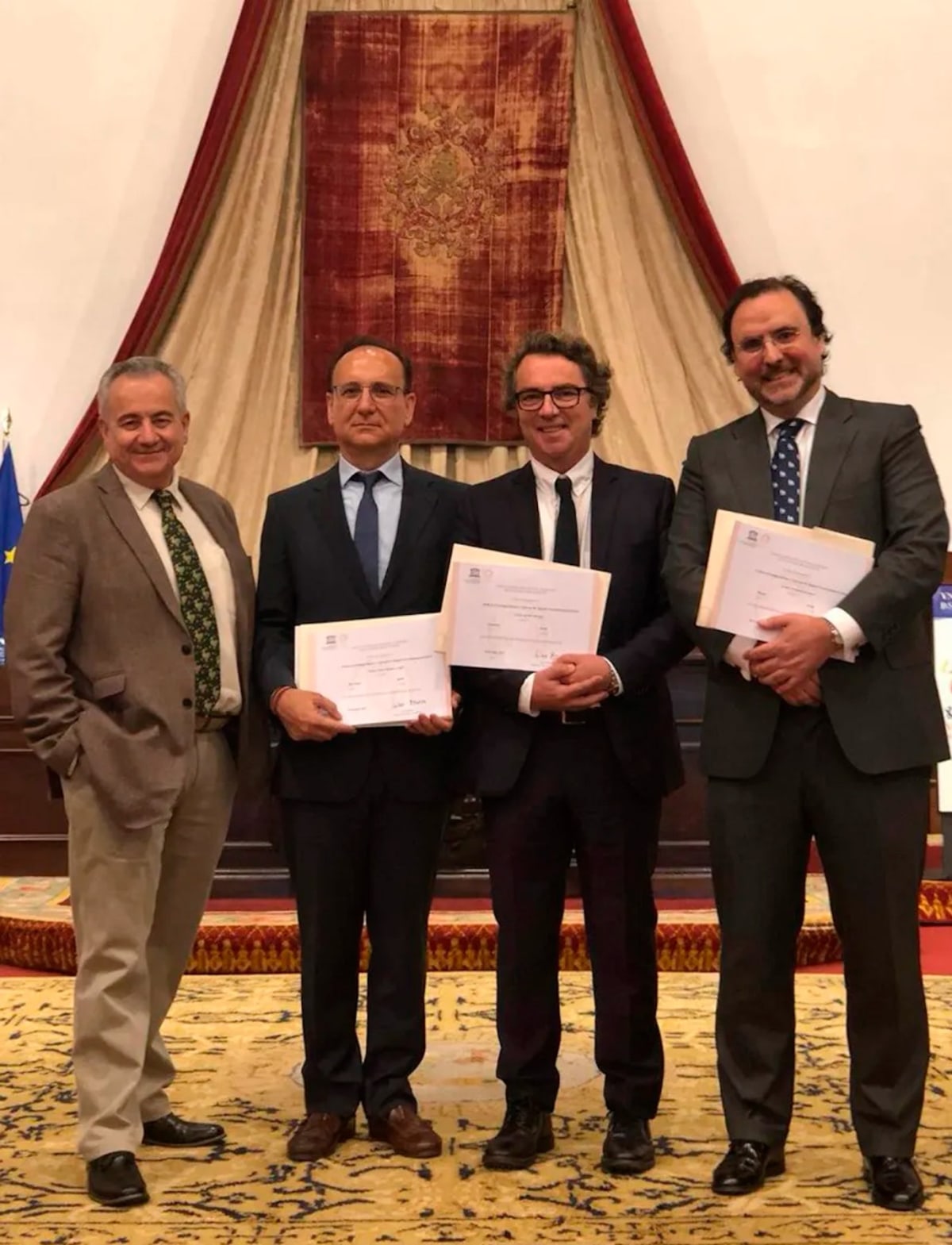
Next, Fernando de Castro Soubriet, grandson of Cajal’s disciple of the same name, narrated the “intrahistory” of a diplomatic victory. His talk explained how the “Cajal Legacy Group”, under the presidency and technical leadership of Juan A. de Carlos, achieved what seemed impossible: that UNESCO inscribed the archives of Cajal and his School in the Memory of the World register in 2017.
III. The Honouree: A Film Script for a Life in Science
The most touching and surprising moment arrived with the intervention of Juan A. de Carlos himself. Breaking academic protocol with the Almodovar-esque title “What Have I Done (in Neuroscience) to Deserve This?” (“Que he hecho yo (en Neurociencia) para merecer esto?”), Juan gifted the audience an unprecedented confession.
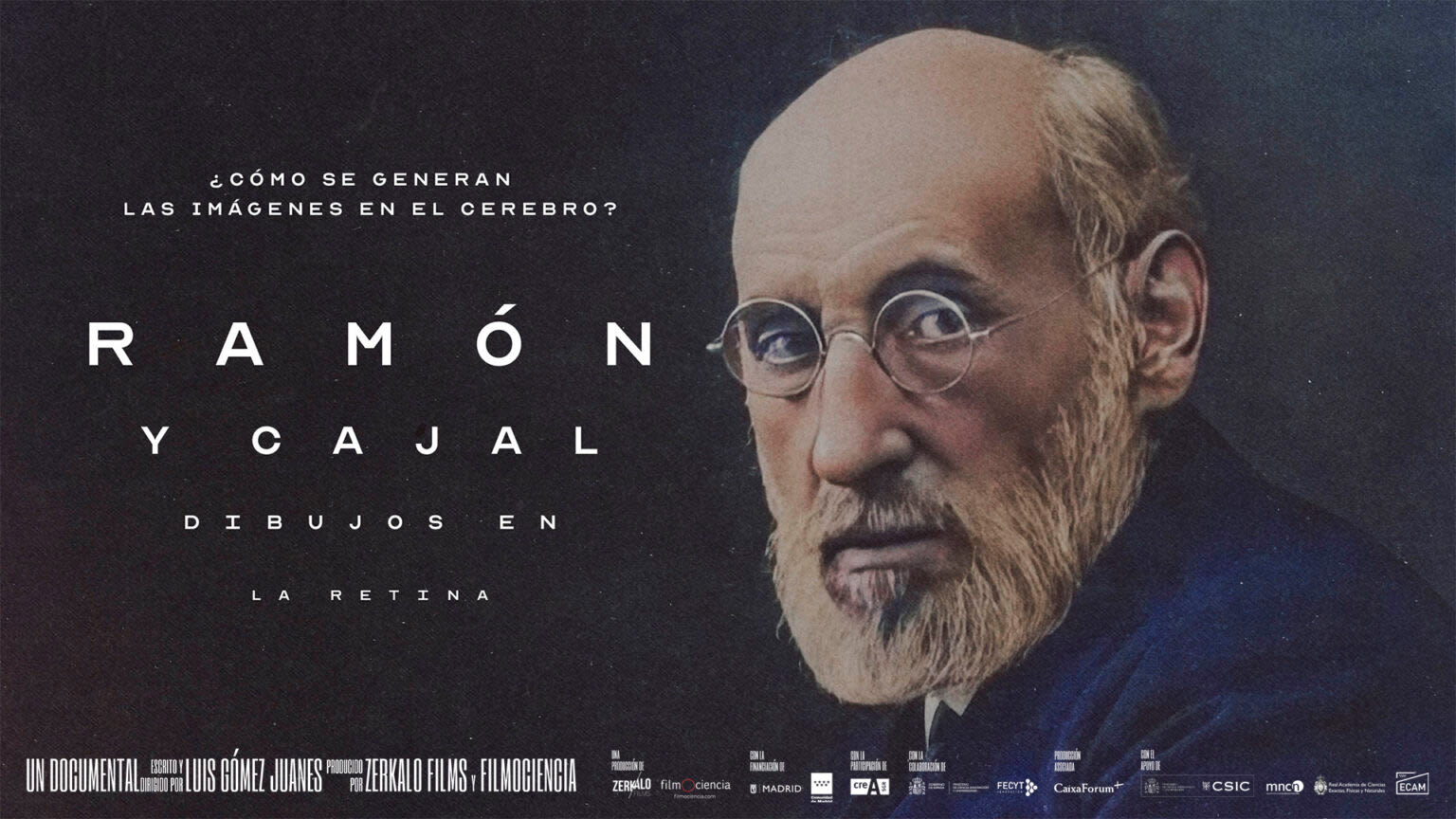
Projecting a 1982 image, he revealed his beginnings as a film extra. The auditorium burst into applause and laughter upon discovering that, before becoming the custodian of the legacy, Juan had participated as an extra in the legendary TVE series “Ramón y Cajal: Story of a Will” (“Ramon y Cajal: Historia de una voluntad”), directed by Jose Maria Forque. He walked through the set of Cajal’s laboratory dressed in period costume, not knowing that destiny would lead him to direct and preserve that very same laboratory in real life. A perfect metaphor for a life dedicated to science: from a secondary actor in fiction to a protagonist in real history.
IV. The Signature, Consciousness, and the Future
The event reached its institutional climax with two moments of enormous symbolic weight that united governance with metaphysics.
First, the intervention of Dr. Liset Menendez de la Prida, Director of the Instituto Cajal. Far from a standard closing speech, Menendez de la Prida raised her gaze toward the great challenges of current neuroscience. Connecting legacy with the vanguard, she spoke about consciousness, that ultimate mystery that Cajal could barely glimpse and that today, thanks to technology and the artificial intelligence she herself applies in her research on memory, we are beginning to interrogate.
Immediately afterwards, the solemn signing of the donation took place. Pedro Ramón y Cajal Agueras (brother of Santiago and also a great-grandson of Pedro Ramón y Cajal), representing the Ramón y Cajal Abogados law firm, put his signature alongside that of the director to formalise the delivery of facsimiles of the Teaching Panels (Cuadros Docentes).
This act of patronage resolves the great paradox of the legacy: while the originals (a Cultural Heritage Asset and Heritage of Humanity) remain at the Complutense University, these high-fidelity facsimiles will be hung on the walls, this time at the new CNC in Alcala, to teach and inspire new generations of researchers.
V. Distinguished Guests and the Embrace of Salamanca
The event enjoyed a “front row” of distinction that reaffirms the social and cultural relevance of the name beyond the laboratory walls.
Among the audience was the Marchioness of Ramón y Cajal, Dona Maria de Urioste, custodian of the family’s noble memory, accompanied by her son, Jose Antonio Montejo Urioste. Jose Antonio’s presence was especially significant, as he has recently gained great media prominence as the face of the successful “Extraordinary Brains” (“Cerebros Extraordinarios”) campaign of the Reina Sofia Foundation, promoting the donation of brain tissue for research.
Also noteworthy was the presence of Angel Canadas Bernal, great-grandson of Santiago Ramón y Cajal, who has just made international headlines for his generous donation of original drawings and a wooden plaque to the Nobel Museum in Stockholm, an act of scientific diplomacy that reinforces Cajal’s eternal bond with the institution that awarded him the prize in 1906.
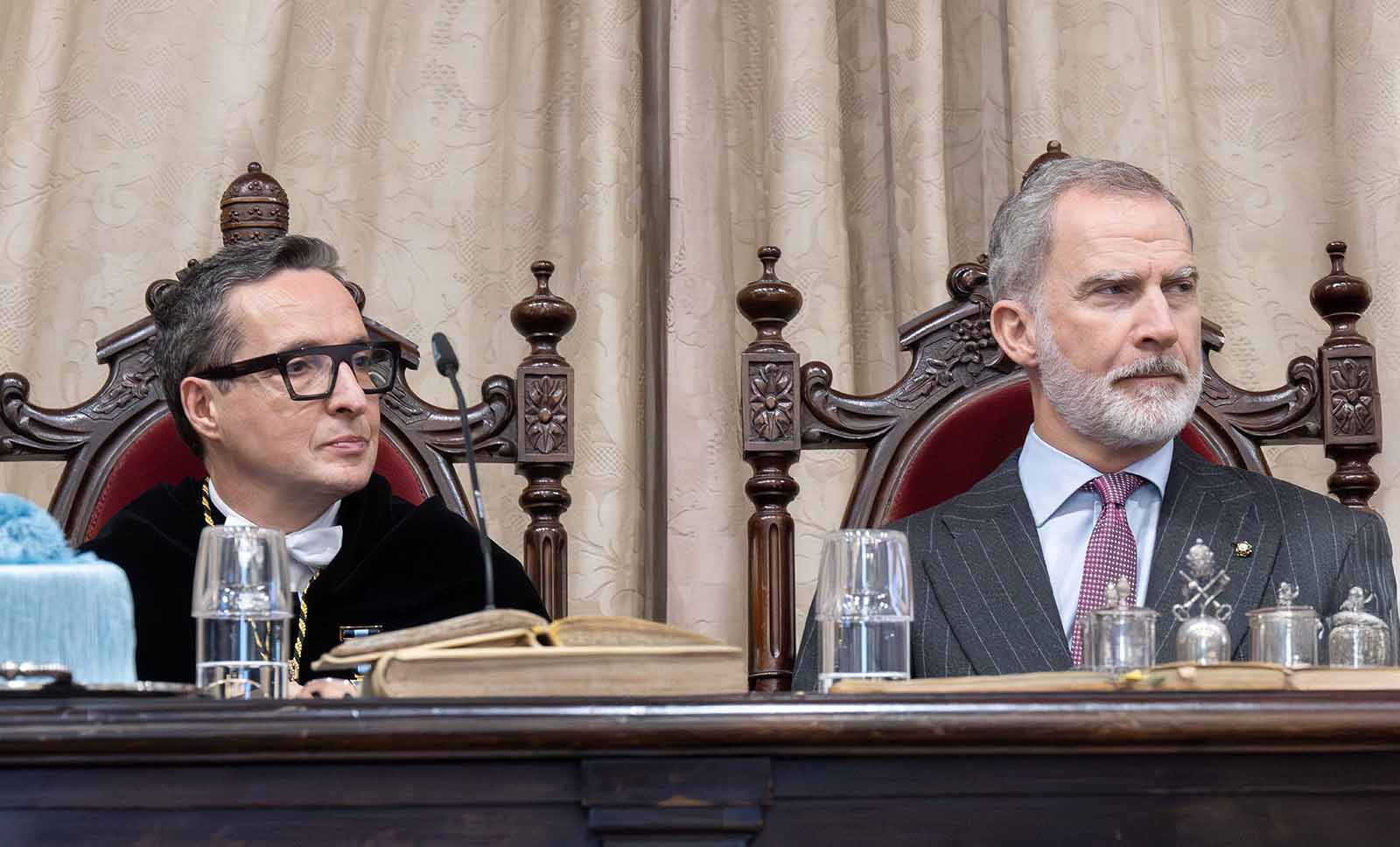
The final flourish, laden with territorial symbolism, was provided by Dr. Eduardo Weruaga, Professor at the University of Salamanca. Weruaga took the podium to present institutional gifts from the University of Salamanca to the honouree, sealing the alliance between the Instituto Cajal and the city of Salamanca, which hosts sister initiatives such as “Salamanca for Cajal and Science”.
The afternoon of 24 November was not a farewell. It was the confirmation that the Cajal ecosystem — science, family, legacy, and institution — is stronger and more united than ever. Juan A. de Carlos retires, but the machinery he helped oil, from UNESCO to the new CNC, continues running at full capacity.