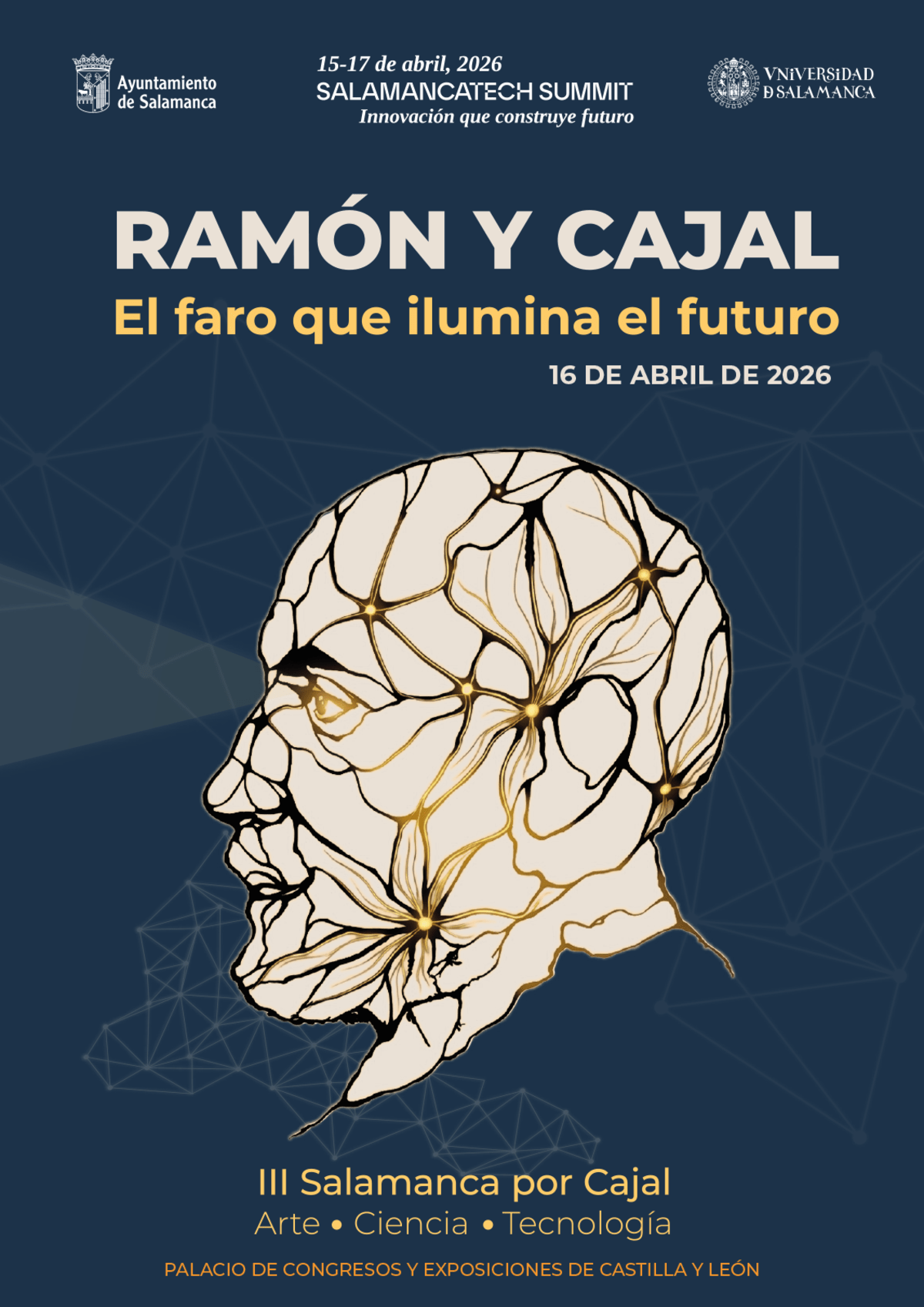
The Eternal Vigil of Science in the Pantheon of Memory
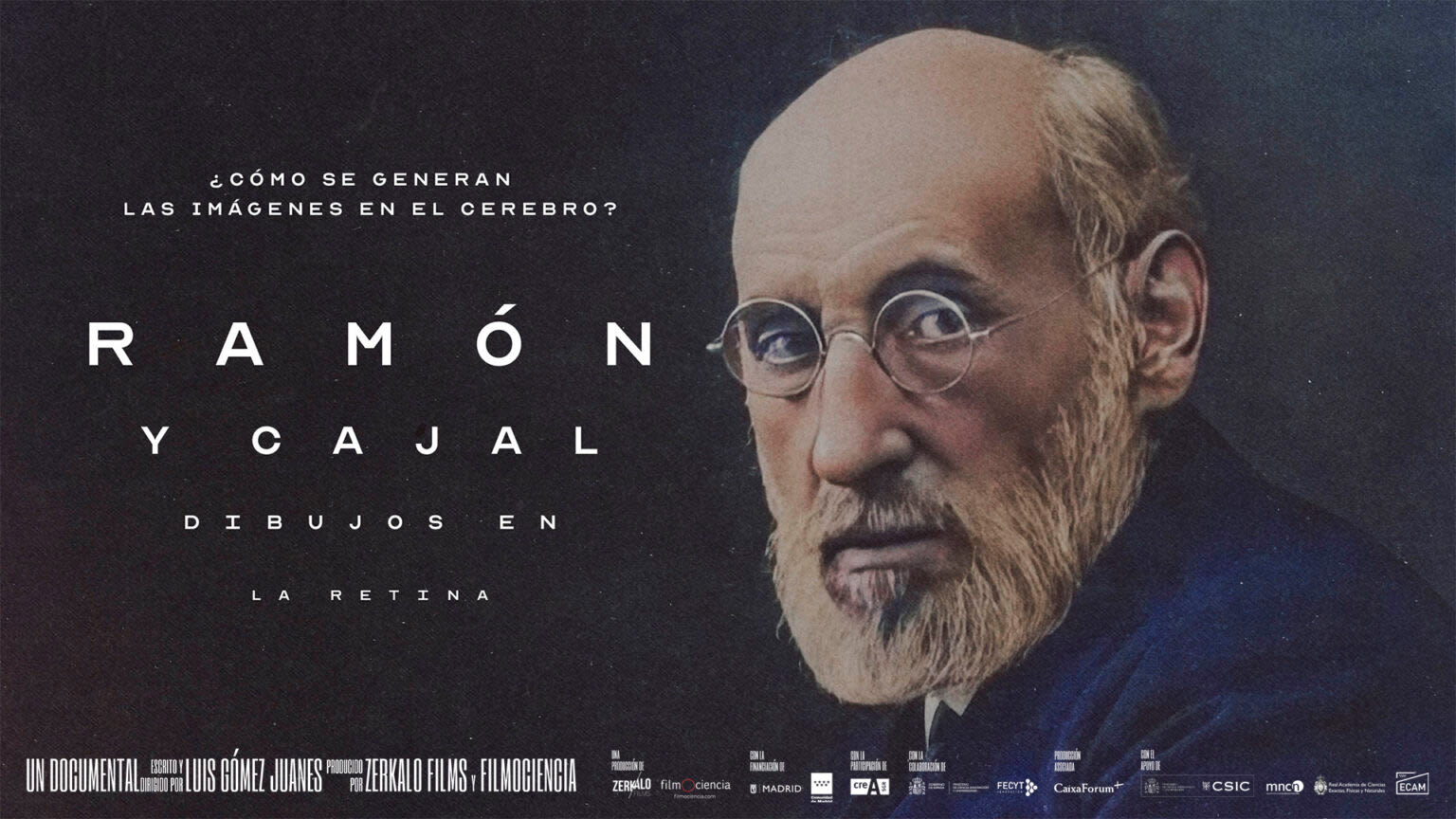
In the vast and often silent pantheon of Spanish science, the figure of Don Santiago Ramón y Cajal does not stand merely as a static memory, a bronze statue oxidised by time or a name in the street directory of our cities. Cajal is, on the contrary, a perpetual beacon, a “fixed star” in the intellectual navigation of our nation, whose light, far from fading with the passage of the century, seems to intensify in the face of the challenges of modernity. His legacy, which transcends the mere histology of the nervous system or the formulation of the inescapable Neuron Doctrine, constitutes a moral and philosophical architecture upon which any national scientific aspiration must be built. The mission of this website is to “reclaim, exalt, and render eternal tribute” to this titan, recognising him as an exemplary figure for humanity, using his life as a compass for future generations.
Nevertheless, the history of science is a living current, a Heraclitean river where the waters are never the same, though the channel endures. Reverence for the past, if it is to be fruitful, paradoxically demands a bold and defiant gaze towards the future. It is at this critical intersection between sacred memory and futuristic ambition that the figure of Sara García Alonso emerges with telluric force — a tenured researcher at the National Centre for Oncological Research (CNIO) and a member of the Astronaut Reserve of the European Space Agency (ESA). Let us examine her trajectory, her philosophy, and her symbolism not as an isolated event or a media anecdote, but as the contemporary, living, and vibrant embodiment of the “tonics of the will” that the master Cajal prescribed with prophetic severity more than a century ago.
Let us follow Sara García’s journey — a voyage that spans from the cellular microcosm of oncological research to the stellar macrocosm of space exploration — which resonates with an astonishing, almost mystical symmetry with the poetic and scientific intuitions of Don Santiago. Her figure serves to exorcise the “ghosts” of Spanish science described by Juan Pimentel, transforming the melancholy of “what could have been” into the certainty of what “is and shall be.” Here, molecular biology and astrophysics dialogue with history and philosophy, demonstrating that Spanish science, far from being a wasteland, is a deep forest whose roots, planted by Cajal, are today capable of touching the sky.
I. The Architecture of the Will: An Exegesis of the “Tonics” in the Space Age
1.1. The Doctrine of Effort and the Religion of Duty
To comprehend the magnitude of Sara García Alonso’s achievement and its pertinence in the portal of Illustrious Cajálians, it is imperative to revisit first the cornerstone of Cajal’s thought: the Will. In his immortal Reglas y consejos sobre investigación científica (Rules and Advice on Scientific Research, originally his admission speech to the Academy of Exact, Physical, and Natural Sciences), Cajal warned with paternal severity against the “feeble will” and the “utilitarian suggestions of the moral environment” that constantly threaten the young researcher. For the sage of Petilla de Aragón, genius was not a divine gift capriciously bestowed by providence upon a chosen few, but the mature fruit of “patience taken to the extreme,” a “tenacious attention” sustained over years of silent sacrifice.
Sara García Alonso personifies this doctrine with an almost canonical fidelity, becoming a living exegesis of the Cajálian text. In her testimonies, the astronaut systematically rejects the romantic and passive notion of innate talent to embrace the harsh, demanding, and glorious reality of daily sacrifice. “I never took my talent for granted” (“Nunca di por sentado mi talento”), she confesses with disarming humility, describing a youth marked not by idle leisure, but by Spartan discipline.
While her contemporaries indulged in the typical distractions of adolescence and early adulthood, she trained “every day, very hard.” The renunciation of parties, graduations, social events, and farewell dinners is presented in her narrative not as a regrettable loss, but as a conscious “choice,” a necessary tribute paid at the altar of excellence. This behaviour is the living echo, resonating across the decades, of what Cajal called the “religion of duty.” The master frequently lamented that the average student, anxious to fulfil a debt of honour to society or their parents, sought “a new vein, close to the surface,” hoping for easy and rapid success, the fortuitous finding that would exempt them from hard work.
On the contrary, true scientific glory — the kind that endures in the annals of history and transforms the material reality of a country — is forged in the solitude of the laboratory, in the incessant repetition of experiments, and in the renunciation of immediate vanities. Sara García, in describing her selection process for the ESA — a modern calvary of physical, psychological, technical, and medical tests overcome by an infinitesimal fraction of applicants — validates the Cajálian thesis that the “will” is the true engine of history. Her success is not an accident; it is the logical consequence of a life dedicated to cultivating that will, understood as a physical force capable of shaping not only one’s own brain, but destiny itself.
1.2. The Fight against Discouragement and “Excessive Admiration”
One of the psychological dangers that Cajal identified with greatest acuity in the psyche of the Spanish scientist was the “excessive admiration for the work of the great foreign initiators.” This paralysing reverence could lead the novice to believe that everything important had already been discovered, that the great topics were exhausted, or that the summits of knowledge were unattainable for a compatriot. Modesty, poorly understood, could become a “confession of intellectual insufficiency,” an excuse for inaction.
Sara García violently breaks with this inferiority complex that has at times afflicted Spanish science like a chronic illness. She confronts that “ghost” that Juan Pimentel lucidly describes when speaking of the “poorly buried corpses” of our scientific history and the sensation of permanent absence. By presenting herself as a candidate for astronaut, competing on equal terms against the scientific and military elite of all Europe, Sara defies not only the physical gravity of the planet, but also the historical gravity of national pessimism.
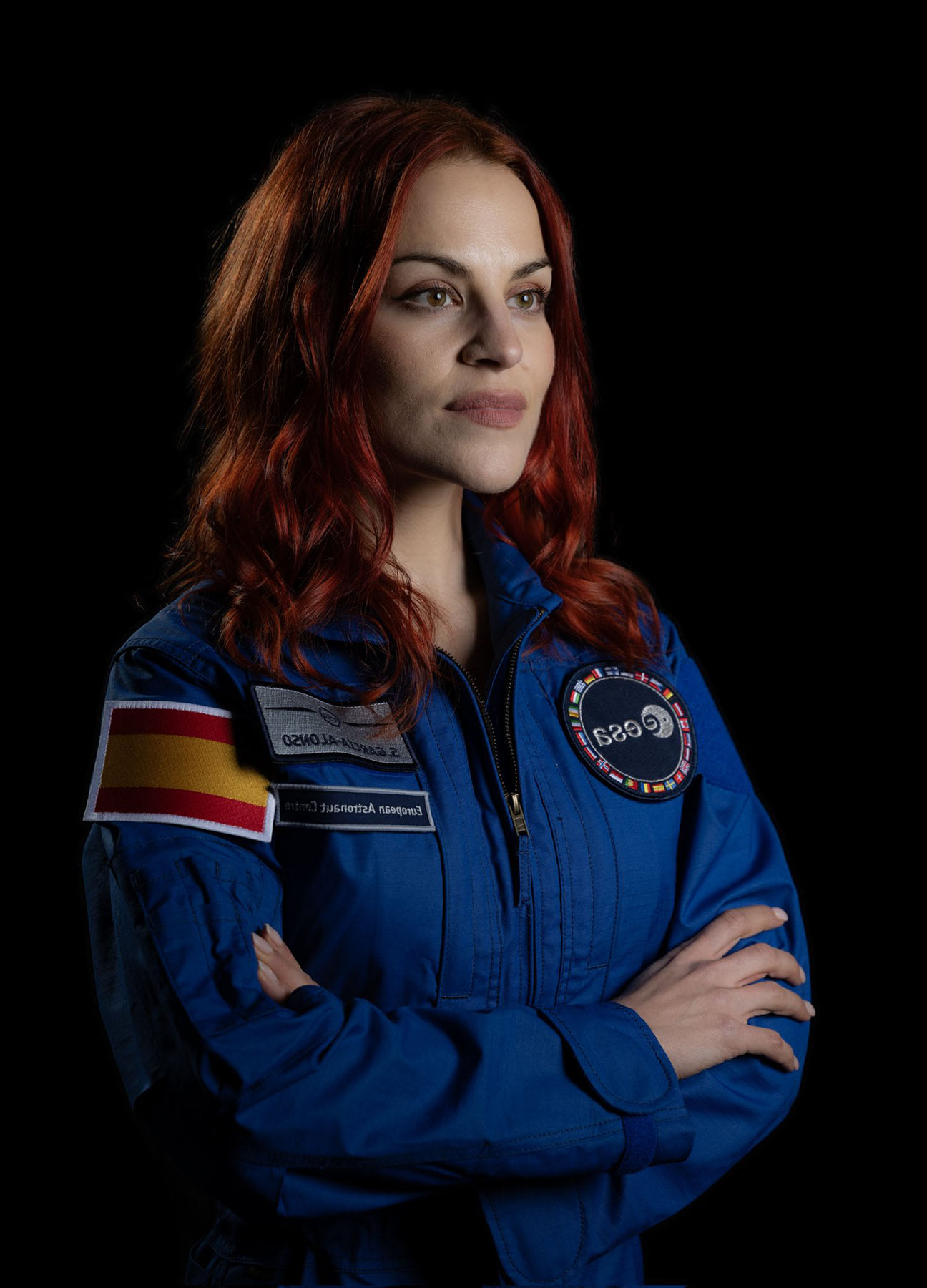
Her attitude reflects the Cajálian mandate that the Spanish researcher must shake off the yoke of mental laziness and self-pity to claim their legitimate place in the “front row of the world.” She is not intimidated by the “shoulders of giants” of the Soviet or American aerospace tradition; on the contrary, she climbs upon them with the naturalness of someone who knows they belong to that same lineage of explorers. In this sense, Sara García effects a psychological “regeneration” of the Spanish scientist, demonstrating that admiration for the greats must not lead to paralysis, but to emulation and, ultimately, to surpassing them.
1.3. Patriotism as a Scientific Engine and the “Brand Spain”
Cajal never separated his scientific labour from his deep and painful love for Spain. His work was permeated by a visceral regenerationist yearning: to elevate the decadent nation of 1898 through culture, science, and education. “The greatness and splendour of a people represent the sum of the culture and energy of its children” (“La grandeza y esplendor de un pueblo representan la suma de la cultura y la energía de sus hijos”), he wrote, linking national destiny to individual effort. For Cajal, patriotism was not an empty political discourse, but a continuous act of intellectual ennobling.
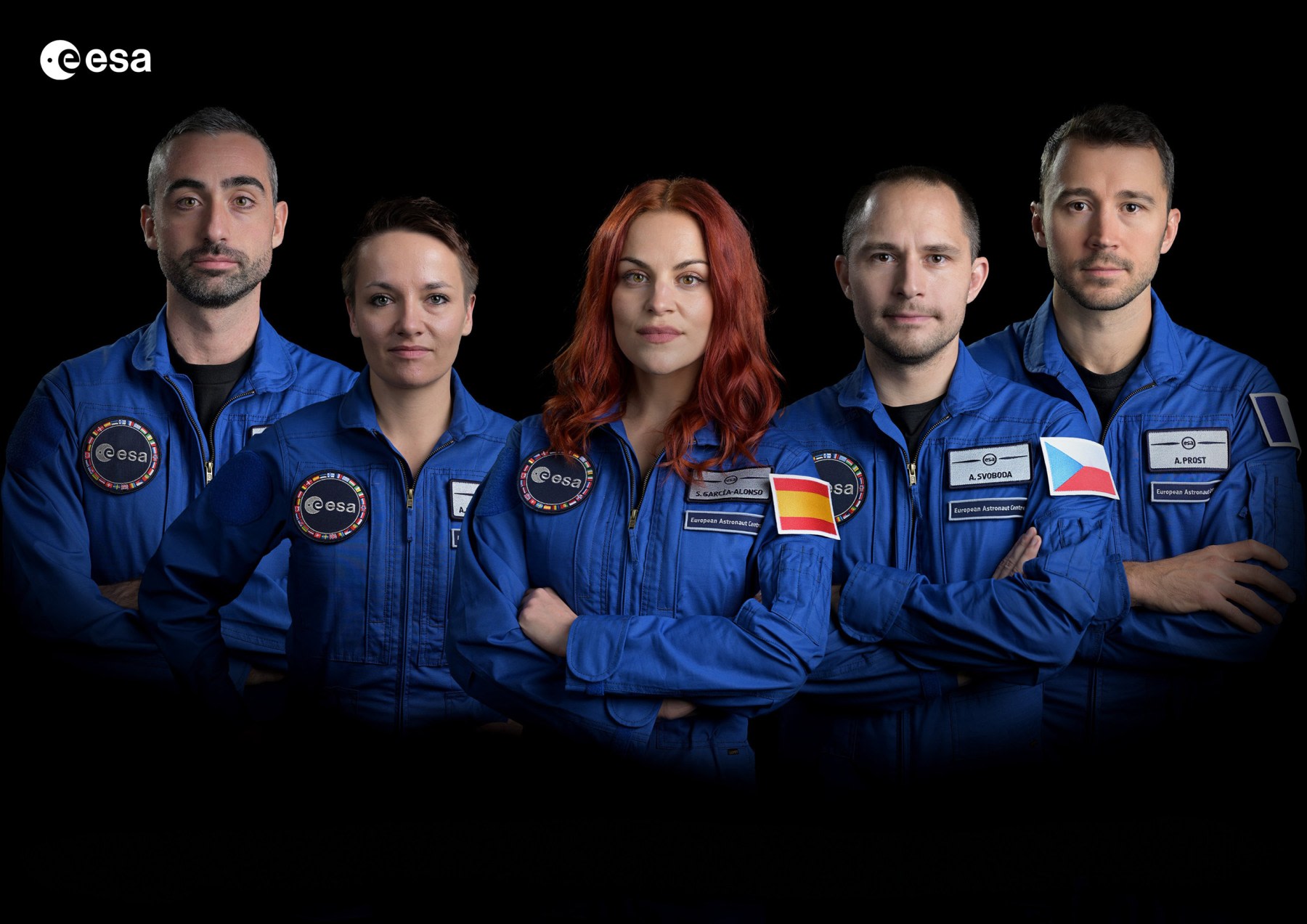
Sara García takes up this heavy baton of “Brand Spain” with moving and modern dignity. In a contemporary context where brain drain and the precariousness of funding have been constant and justified laments, her selection by the ESA and her cutting-edge work at the CNIO are seen as a “guarantee of reliability” and national excellence. Like the “MIURA” motto of the Spanish company PLD Space, which seeks to put Spain on the map of space launches, Sara becomes a living symbol of what — in the cultural, spiritual, and humanist sense that Cajal employed — can be achieved when provided with the means and the will.
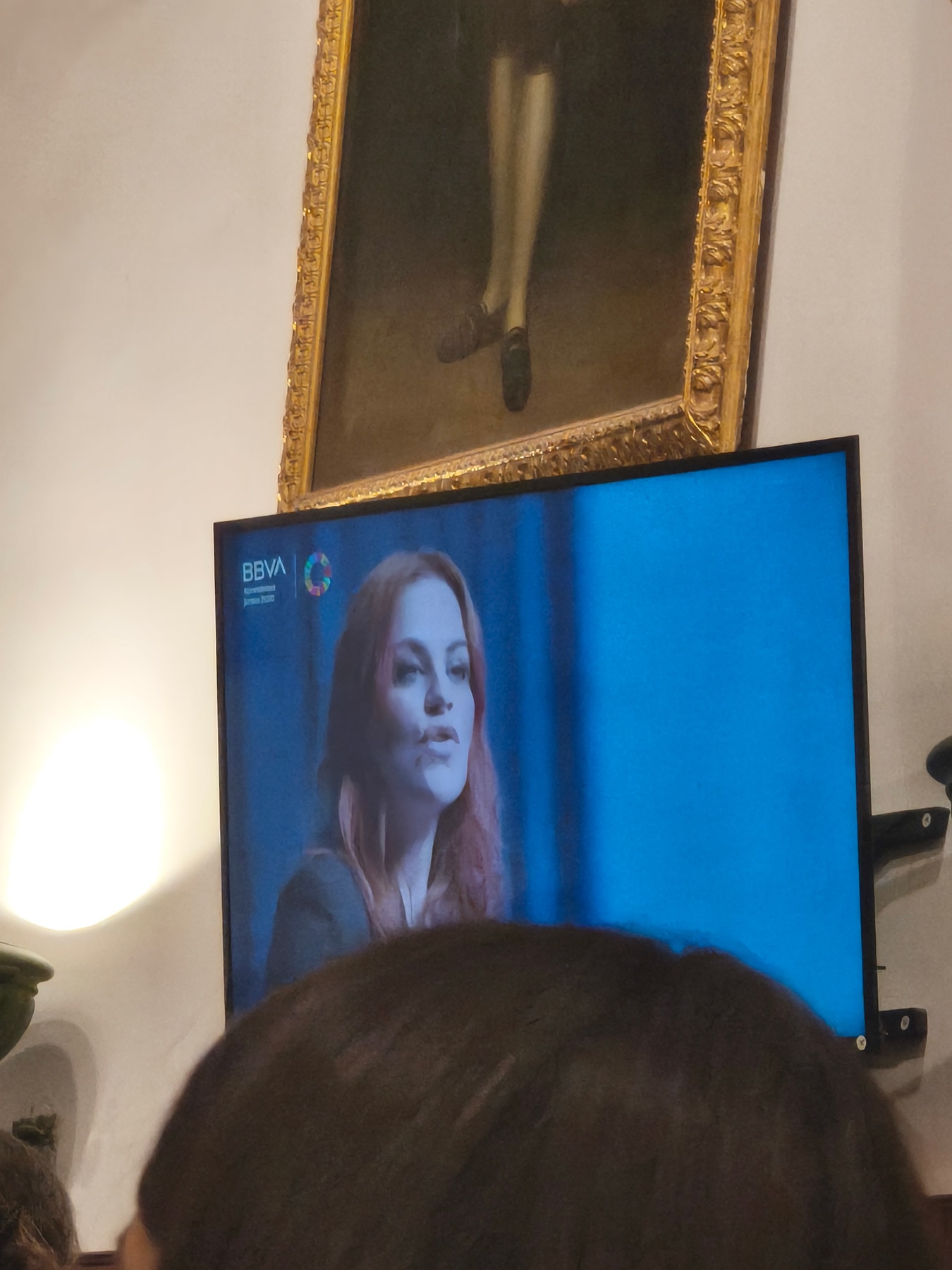
Her presence in the astronaut reserve is not merely an individual curricular achievement; it is the systemic validation of an educational and scientific structure that, despite its “myths and ghosts” and historical deficiencies, continues to produce titans capable of competing in the global arena. Sara García carries the flag not only on her suit, but in the ethics of her work, demonstrating that twenty-first-century scientific patriotism consists of technical excellence and the capacity to inspire future generations of Spaniards to look, quite literally, upward.
II. The Cognitive Cosmos: The Great Symmetry between Mind and Universe
2.1. From the Neuron to the Galaxy: A Transdisciplinary Odyssey
The deepest and most philosophical conceptual nucleus linking Sara García to the Cajálian universe is the fascinating, and often overlooked, symmetry between the microcosm (the brain) and the macrocosm (the universe). Cajal, the great “cartographer” of the virgin neuronal forest, intuited this connection with a clairvoyance that astounds. His celebrated aphorism, “As long as our brain remains a mystery, the universe, a reflection of the brain’s structure, will also remain a mystery” (“Mientras nuestro cerebro sea un misterio, el universo, reflejo de la estructura del cerebro, será también un misterio”), establishes a fundamental ontological identity between the observer (the mind) and the observed (the cosmos).
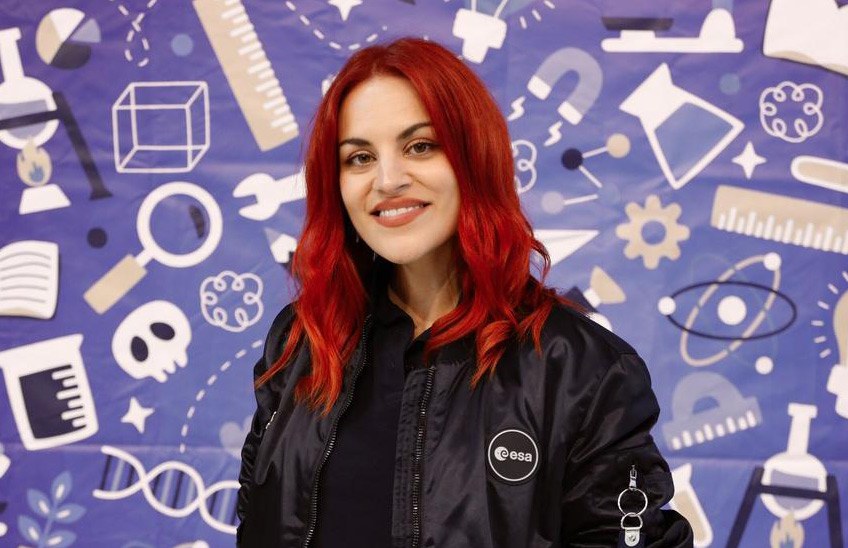
Sara García’s daily research in the CNIO laboratories centres on the most intimate microcosm: the molecular biology of cancer, the study of cells — those fundamental units of life that wage microscopic battles of life and death. However, her vocation and training as an astronaut project her violently towards the macrocosm, towards the immensity of the void and the stars. This pendular transit between the infinitesimal and the infinite is not a contradiction in her career, but a full realisation of the “transdisciplinary odyssey” that this website promotes under the evocative title of “The Cognitive Cosmos.” Sara is the traveller who traverses both scales of reality, unifying them in her own life experience.
2.2. Emily Dickinson’s Prophecy and Cajal’s Scrutinising Gaze
We must pause here with reverence before the “strange and beautiful symmetry” discovered and analysed between the poetic intuition of Emily Dickinson and the scientific codification of Cajal. In 1862, while a young Santiago was dreaming and mischievously roaming the mountains of Aragon, Dickinson, secluded in her room in Amherst, wrote a prophecy in verse: “The Brain — is wider than the Sky.”
This assertion, which might seem a mere poetic licence or a romantic hyperbole, is validated today by modern science and celebrated as a fundamental truth. The visual, structural, and mathematical analogy between the “Cosmic Web” (the large-scale structure of the observable universe, composed of filaments of dark matter and galaxy clusters) and the “Human Connectome” (the intricate network of neurons and synapses that constitutes our mind) is astonishing and “mathematically factual” according to recent studies. Both systems, the cerebral and the cosmic, possess approximately 10^11 nodes (neurons or galaxies) and follow nearly identical laws of complexity distribution, connectivity, and growth.
Cajal, patiently drawing the “mysterious butterflies of the soul” (“misteriosas mariposas del alma”) in his gaslit laboratory, was drawing, unknowingly, the map of the large-scale universe. Sara García, aspiring to travel into space, is traversing outward the same labyrinthine path that Cajal traversed inward. The depth of the sea (“Blue to Blue” in Dickinson’s poem) and the depth of space share the same unfathomable texture as the depth of the human mind. Sara García stands at the convergence point of these two depths, exploring the biology that enables consciousness and preparing to carry that consciousness to the stars.
2.3. Biogenic Magnetite: The Explorer’s Inner Compass
A scientific detail of exquisite beauty reinforces this mystical connection between biology and astrophysics: the discovery of biogenic magnetite in the human brain. These microscopic, geometrically perfect crystals, synthesised by our own cells, act as tiny compass needles, tuning the brain to planetary magnetic fields. We are, in a literal and physical sense, “antennae” of the cosmos, evolutionarily designed to be connected with the planet and, by extension, with the solar system.
Cajal, in his old age, had a “selfish whim” that reveals much about his spirit: the purchase of a telescope. His wife, Doña Silveria, lamented the expense during times of tight domestic economy, but for Cajal, gazing at the starry sky was not a distraction from his histological work, but a necessary extension of it. “Looking at the sky means transporting ourselves through time… it makes us small but, at the same time, makes us great” (“Mirar al cielo supone transportarnos en el tiempo… nos hace pequeños pero, a la vez, nos hace grandes”), Cajálian texts reflect on this hobby.
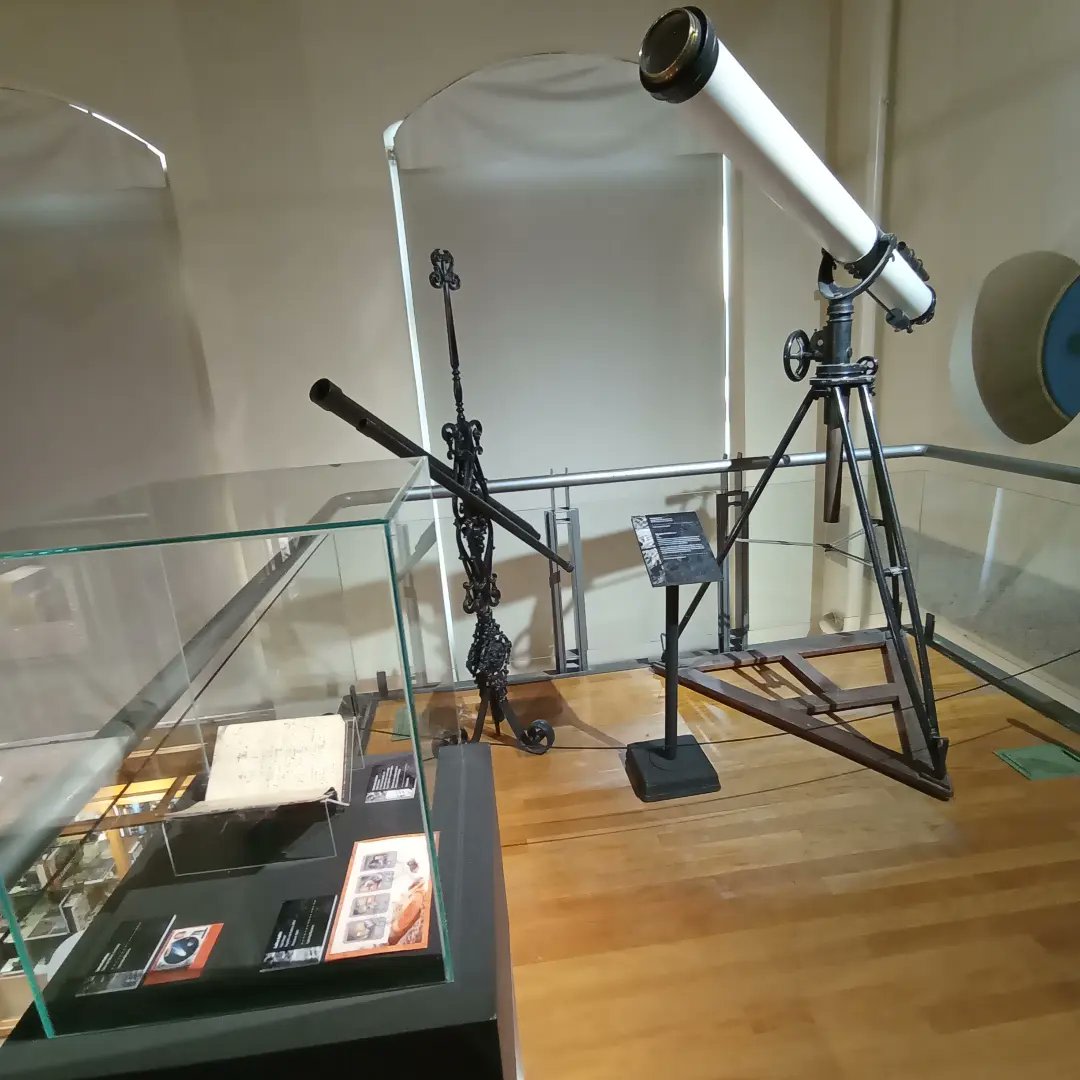
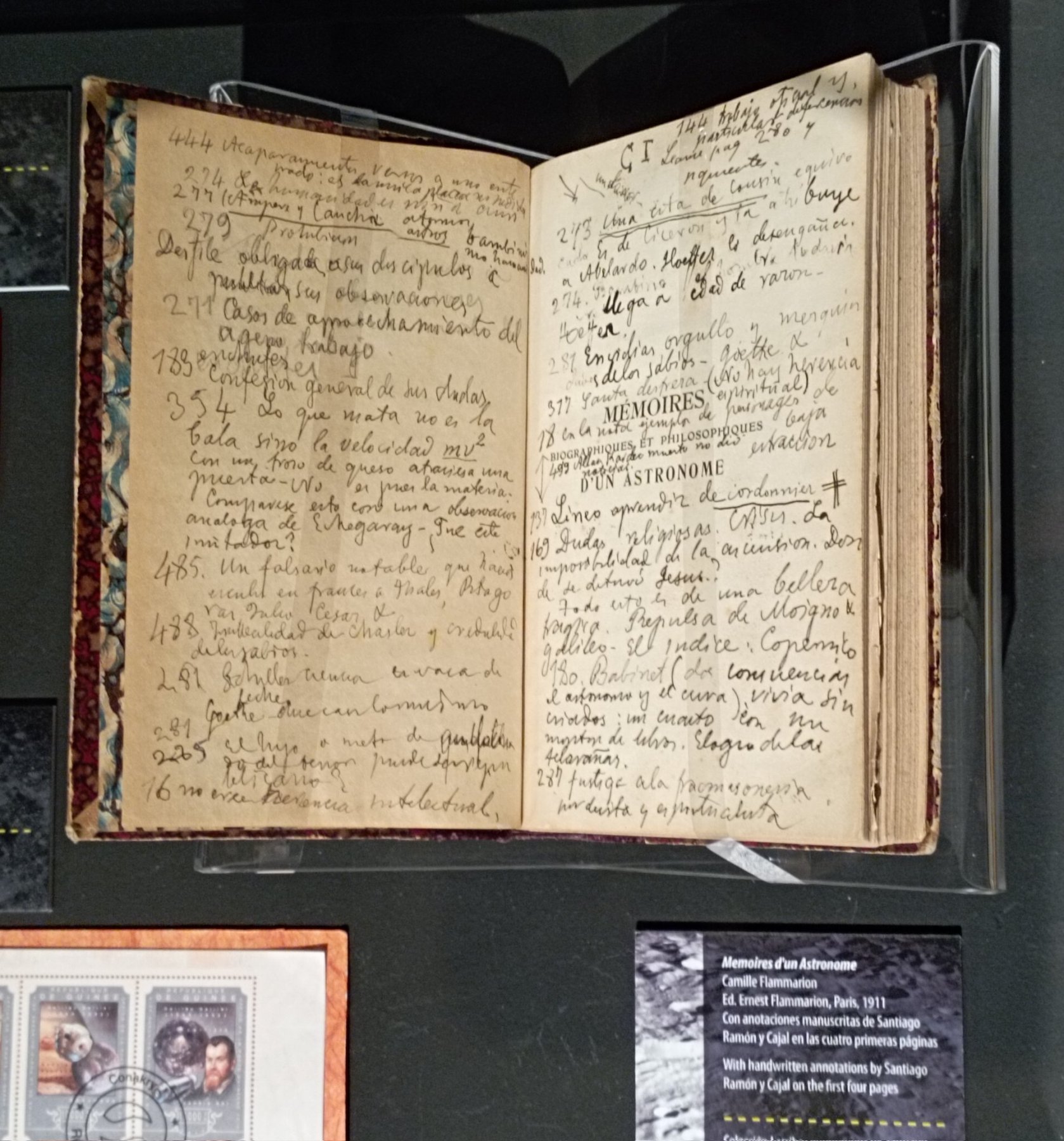
Sara García is the legitimate heir of that brass telescope. She does not merely look through the lens; she prepares to cross the threshold. Her journey closes the circle that Cajal opened with his eyepiece: the ceaseless pursuit of truth, whether in the silver stain of a histological plate or in the terrifying immensity of interstellar void. The astronaut carries with her the curiosity of the histologist, raising the Spanish gaze from the microscope to the event horizon.
III. Two Summits of Universal Thought: Salamanca and Cajal in Sara’s Trajectory
3.1. The Intellectual Structure of Spain: A Comparative Analysis
To fully comprehend the magnitude of Sara García’s figure and the renewed interest in Cajal, it is imperative to situate them within the broad context of Spain’s intellectual history. “Two Summits of Universal Thought” confronts and unites the School of Salamanca with the School of Cajal.
These two “summits” represent the master pillars of Spain’s contribution to Western civilisation:
| Characteristic | School of Salamanca (16th-17th centuries) / School of Cajal (19th-20th centuries) / Field of Study |
|---|---|
| Principal Achievement | Foundation of International Law, Human Rights. / Foundation of Neuroscience, Neuron Doctrine. |
| Instrument | Theological and Juridical Reason. / The Microscope and Empirical Observation. |
| Legacy | Structuring of the global moral and juridical world. / Structuring of the knowledge of the biological “self.” |
Sara García Alonso emerges in the twenty-first century as the potential seed of a third summit: that of Frontier Science and Technology. By uniting biomedicine (the direct and legitimate heir of the School of Cajal) with space exploration (humanity’s new frontier, requiring new legislation and ethics — echoes of Salamanca), Sara symbolises the dialectical synthesis of these traditions. She carries with her the humanist and universalist ethic of Salamanca — the concern for humanity as a whole — and the empirical, tenacious, and experimental rigour of Cajal. In her, the concern for humankind (Salamanca) unites with the study of life (Cajal) to launch into the conquest of the future.
3.2. The Fight against the Black Legend and the Memory of Oblivion
Juan Pimentel, in “Some Myths and Some Ghosts of Spanish Science,” provides the crucial historiographic substrate for understanding the mission. Spain has been viewed historically, from both outside and painfully from within, as a country of artists, mystics, and warriors, but alien to the scientific enterprise. The Prado Museum, described by Pimentel as a “place of memory and oblivion,” houses the spectres of our science. Originally projected as a great scientific complex (Natural History Cabinet), the building ended up as a picture gallery, symbolising for many the “corpse of what could have been and was not”: a Spain devoted to the arts through an incapacity for science.
The mission is to “exorcise” these ghosts, not through forgetting or denial, but through the exaltation of truth. In presenting Sara García, we do not merely celebrate an isolated individual success; we empirically refute the “Black Legend” of Spanish scientific incapacity. She is the living proof that science in Spain is not a fortuitous accident or a statistical anomaly, but a subterranean, resilient, and tenacious tradition that, when it finds even the smallest cracks of light and institutional support, flourishes with unusual vigour. Sara García transforms the “ghost” into “reality,” returning science to the centre of national pride, on the same level as the arts of the Prado.
IV. The Cajálian Mission Today: Institutional Objectives and Future Projection
4.1. The National Cajal Museum and the Neurosciences: A Temple for Science
One of the central and most urgent demands, which resonates powerfully with Sara’s figure, is the creation of the [National Cajal Museum and the Neurosciences](/en/buscar/?q=museo cajal). It is not a matter of erecting a mere storehouse of relics, display cases with medals and dusty microscopes, but of constituting a civic and dynamic temple. In “Santiago Ramón y Cajal: Architect of the Brain, Personal Mirror, and Pioneer of the Future,” a space that dialogues with the present is suggested.
Let us imagine this museum: in one room, Cajal’s Zeiss model microscope, its lenses worn by feverish use; in the adjoining one, Sara García’s blue ESA flight suit. Both instruments, separated by more than a century of technological history, nevertheless serve the same sacred purpose: the extension of human senses to comprehend hidden reality. The promotion of this museum is an act of historical justice and an imperative pedagogical necessity. Sara García, as a public figure, embodies the need for this space: she is the fruit of the legacy that the museum intends to preserve.
4.2. The Declaration of Salamanca and the Day of Cajal
The strategic objective of establishing 17 October as the “Day of Cajal and Science” and declaring it a national holiday through the Declaration of Salamanca for Science seeks to institutionalise scientific memory in the civic calendar, taking it out of the laboratories and into the streets. Sara García, with her growing media visibility and undeniable capacity for inspiration, is the natural and ideal ambassador for this cause, and from here we invite her to join. Her voice, which already inspires girls and young people, can carry the Declaration to new generations, reminding them that science is also homeland, and that discovery is a form of patriotism more elevated, lasting, and noble than military conquest.
4.3. Education, Values, and the Cajálian “Dataverse”
The digital innovation of the “Dataverse” promises to bring Cajal’s legacy to the virtual environment, creating a globally accessible content ecosystem. An avatar of Sara García can serve as an interactive guide, a modern “Virgil” uniting the analogue past with the digital future. Education, the fifth objective of the foundational mission, finds in her a perfect role model: a woman trained in Spanish public education (University of León) and at national centres of excellence (CNIO), who reaches the stratosphere through her own merits. This fulfils Cajal’s regenerationist aspiration to transform the educational structures of Spanish society to produce citizens capable of critical thinking and decisive action.
4.4. From the JAE to the ESA: Institutional Continuity
It is essential to trace the line connecting the Junta para Ampliación de Estudios (JAE) (Board for Advanced Studies), presided over by Cajal for a quarter of a century (1907-1932), with current institutions. The JAE was the titanic effort to “Europeanise” Spanish science, sending the best minds abroad to drink from the fountains of modernity and bring that knowledge back. Cajal knew that isolation meant the death of science.
Today, Sara García works at the CNIO, a world-class centre of excellence, and has been selected by the ESA, a pan-European agency. She represents the culmination of the JAE’s dream: Spanish science no longer needs only to “go out” to learn, but is an integral and constitutive part of the European scientific fabric. Europe is no longer merely a destination for our students; it is the natural stage where our scientific leaders, like Sara, operate with authority and respect.
V. The Explorer’s Logbook: Órbitas and the Pedagogy of Vulnerability
In January 2025, the publication of her book Órbitas. Apuntes de una vida en continua exploración (Orbits: Notes from a Life of Continual Exploration) marked a milestone in Spanish science communication, transcending the publishing sphere to become a sociological and pedagogical phenomenon of the first magnitude. This book is not a mere premature autobiography, but a spiritual and visceral update of Cajálian advice adapted to the fragility and complexity of the twenty-first century. If Cajal wrote Reglas y consejos from the authority of the consecrated master, Sara García writes Órbitas from the brutal honesty of the perpetual apprentice, offering what she herself calls “an emotional striptease.”
5.1. The Book as a Modern Pedagogical Artefact
Unlike nineteenth-century academic texts, Órbitas functions as an existential “flight log.” Structured in six thematic “orbits,” the work addresses identity, fear, and freedom with a voice that oscillates between scientific rigour and personal confidence. Sara openly confesses her struggles with impostor syndrome and anxiety, an act of “sincericide” that humanises the figure of the elite scientist. By affirming “when I grow up, I want to be free” (“de mayor quiero ser libre”), she reconfigures the scientific vocation: it is no longer merely a race of curricular obstacles, but an exercise in personal freedom and self-knowledge. This narrative offers young readers — especially women in STEM — a model of success compatible with vulnerability, breaking with the stereotype of the stoic, unreachable genius.
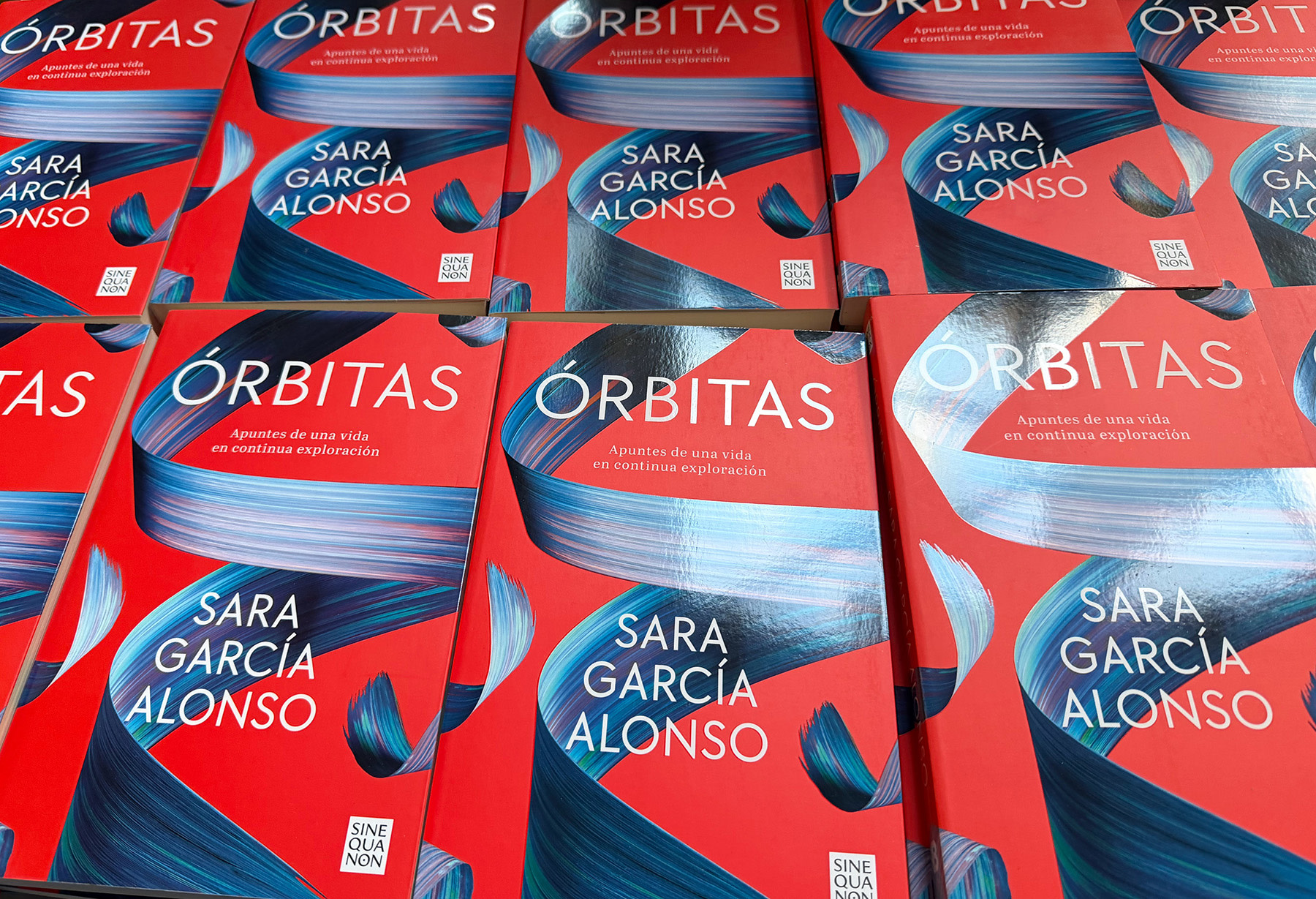 Órbitas by Sara García Alonso
5.2. The Liturgy of Salamanca: An Intergenerational Bridge
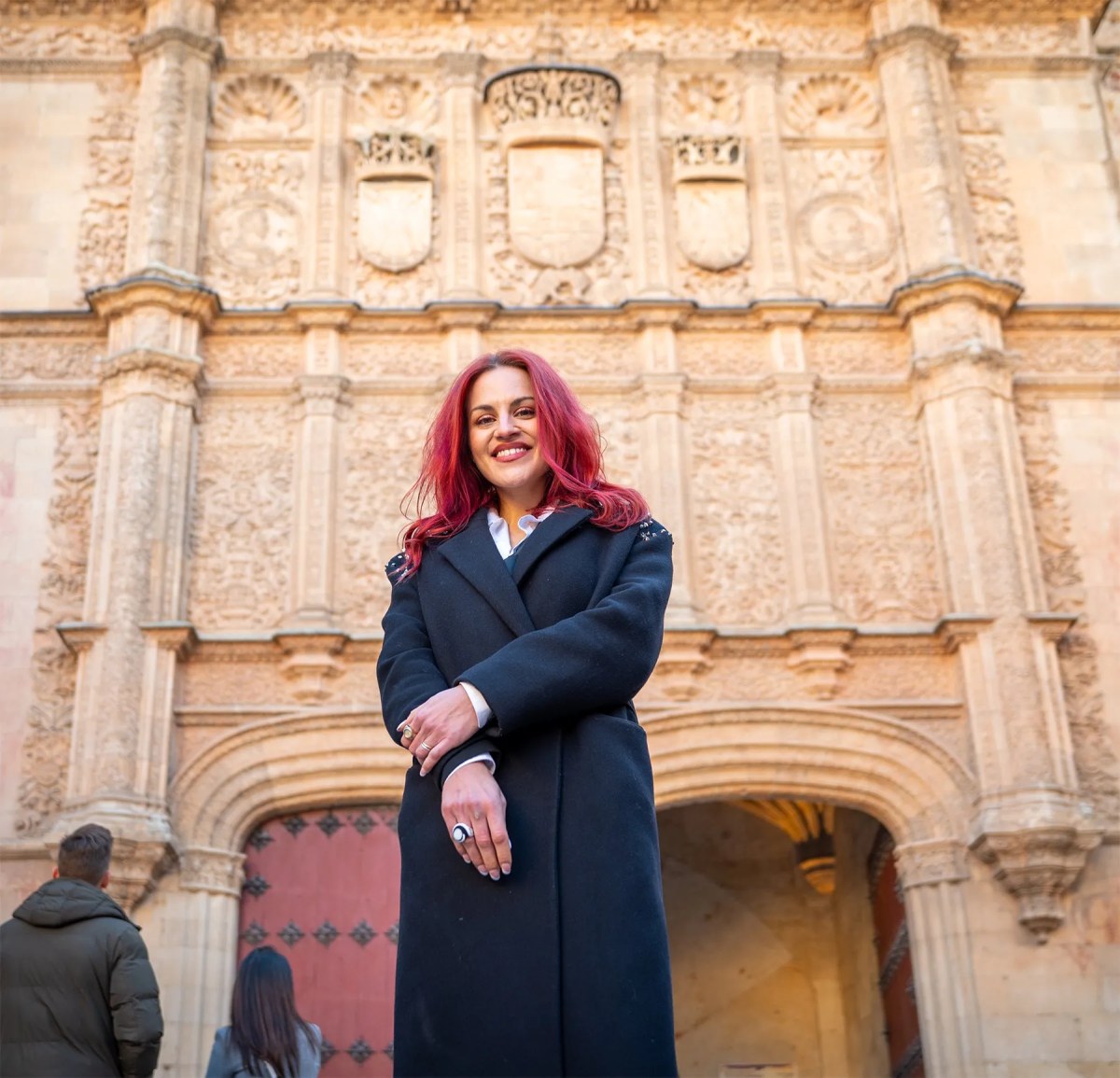
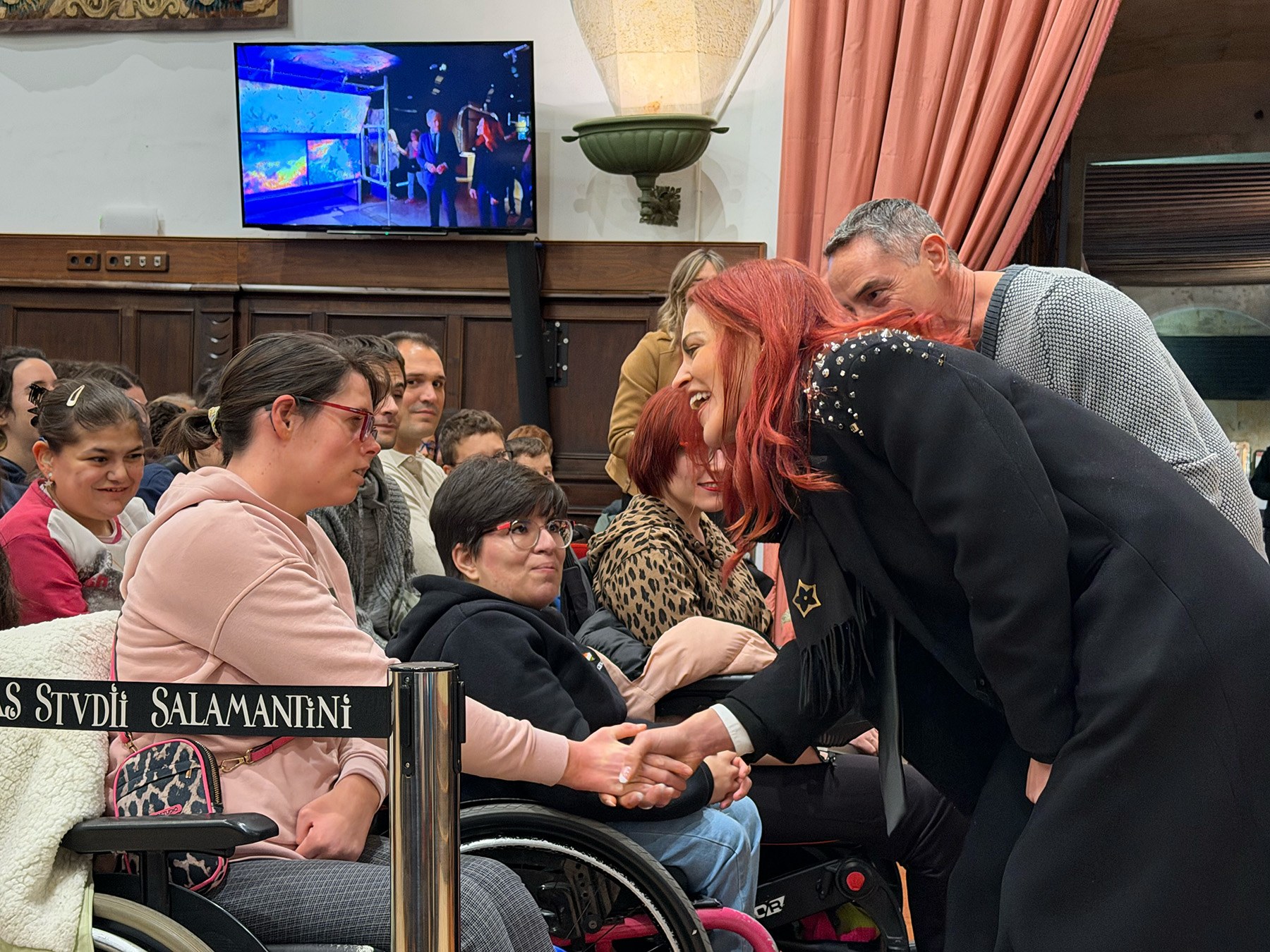
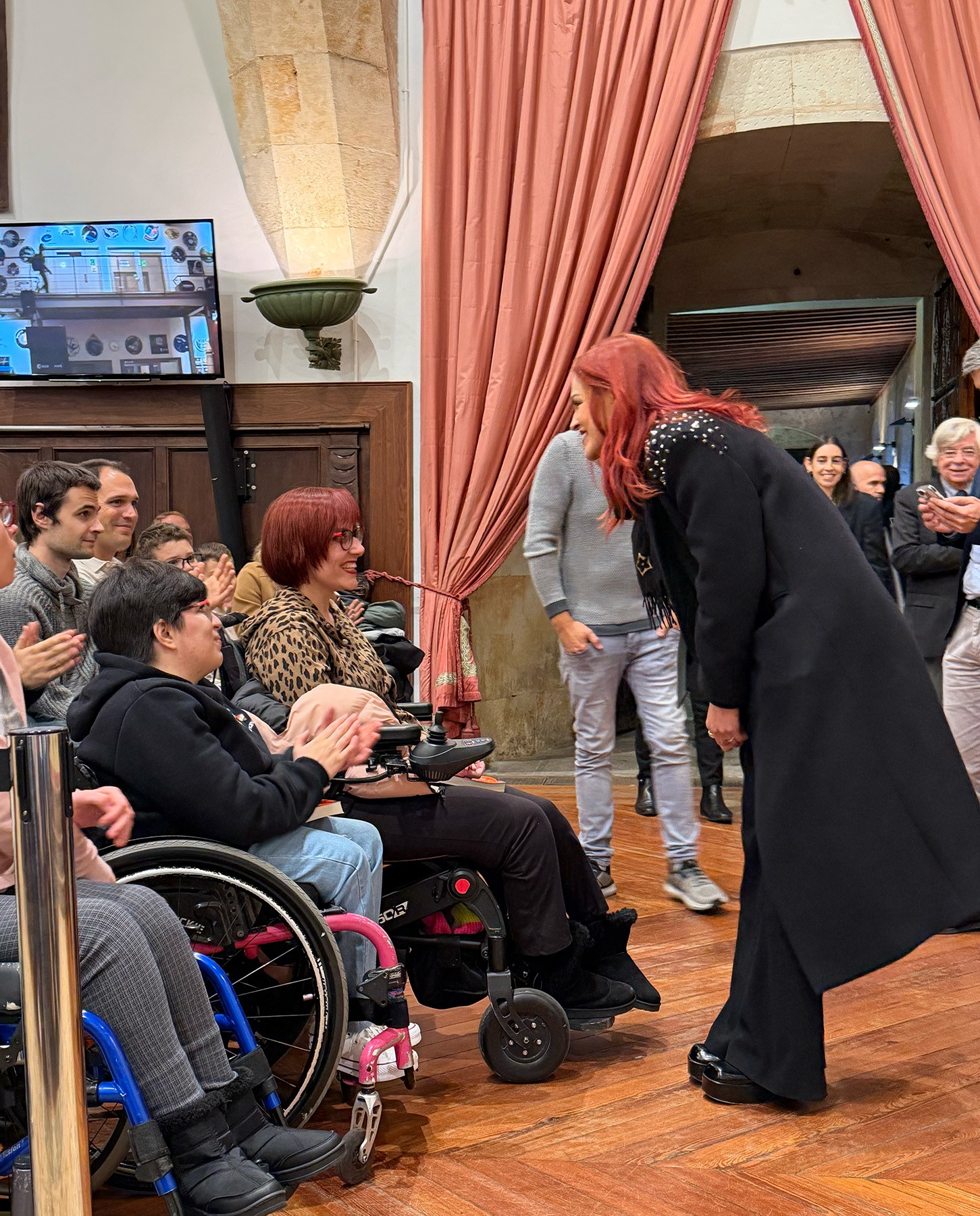
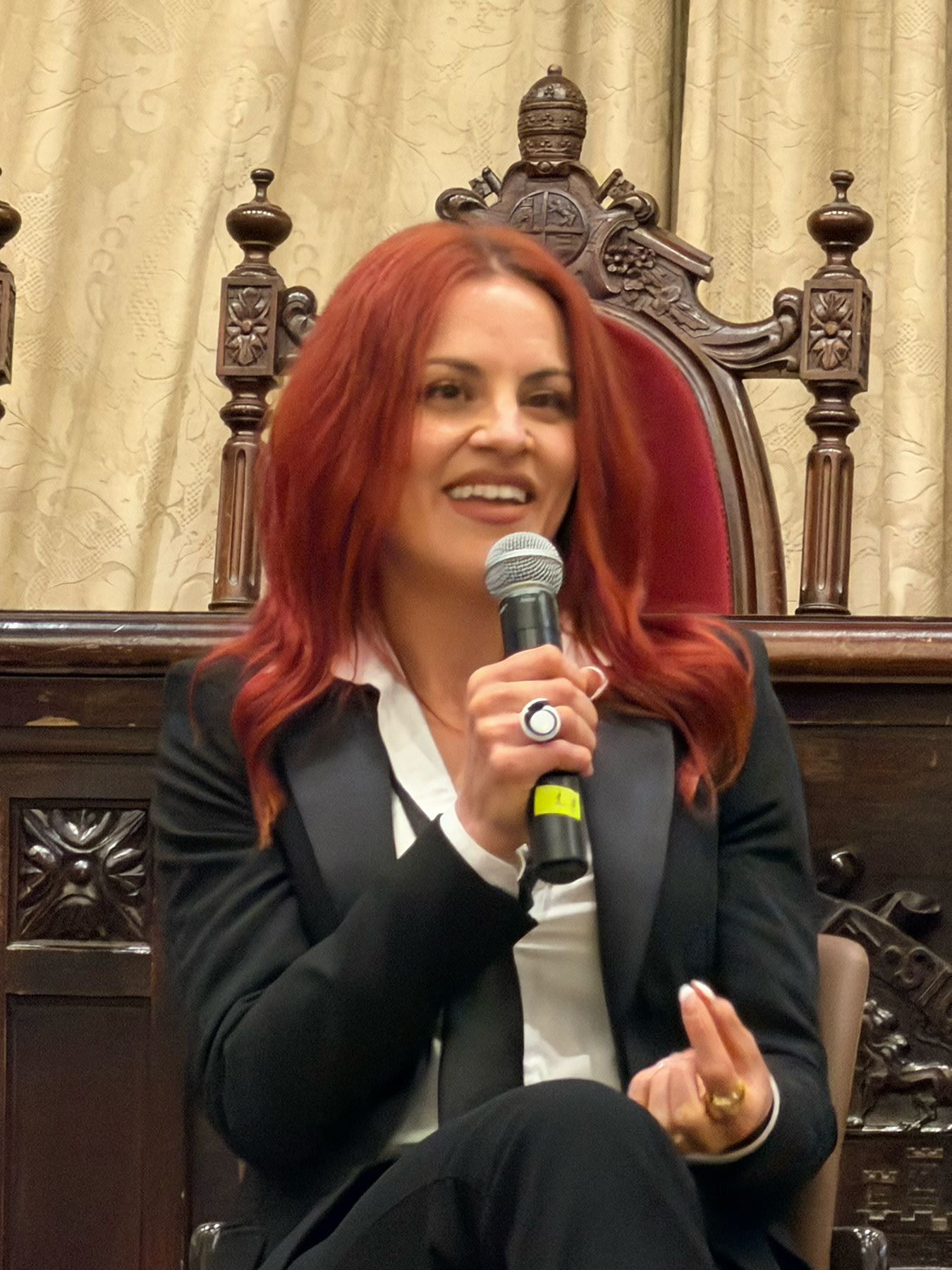
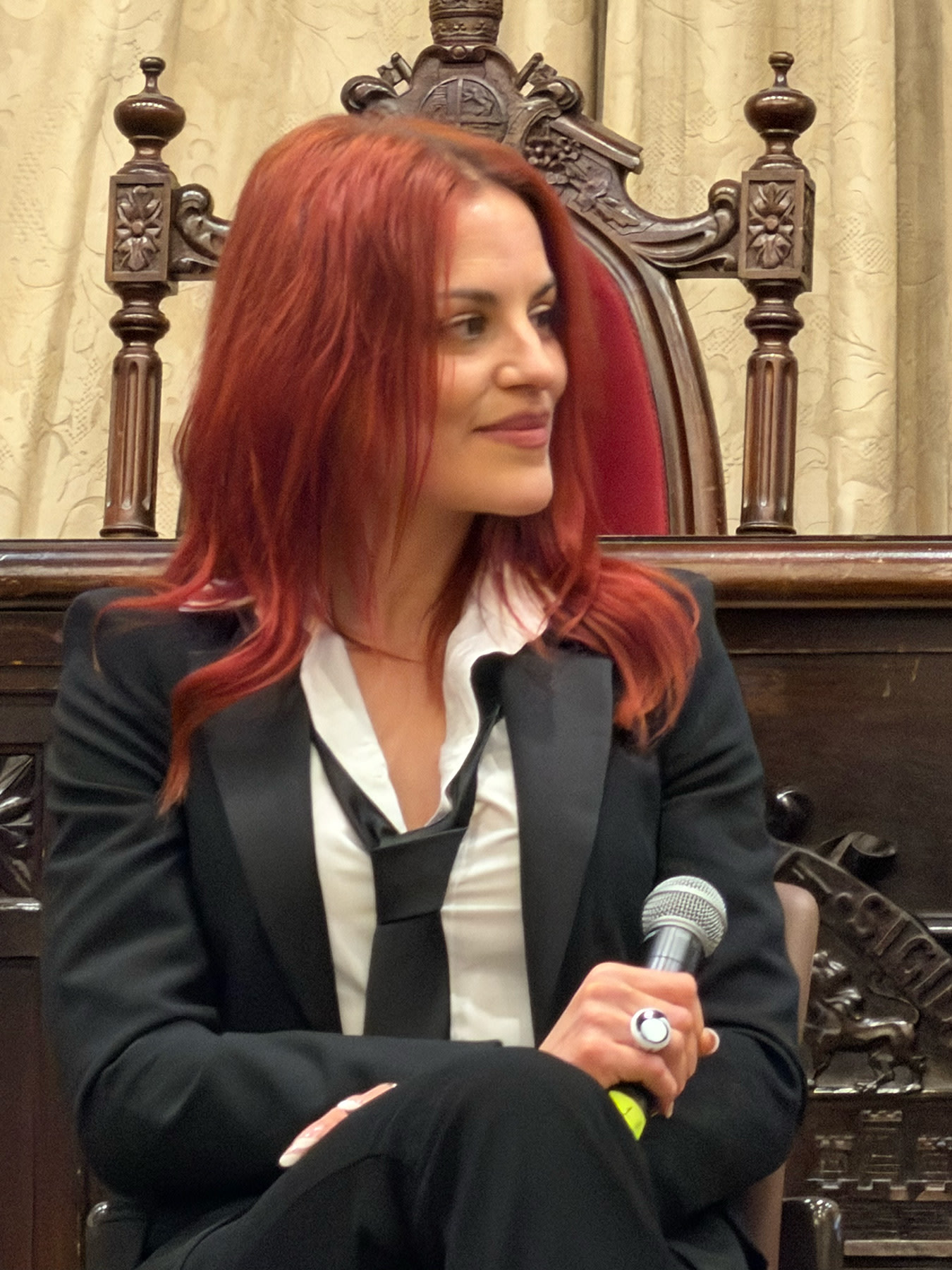
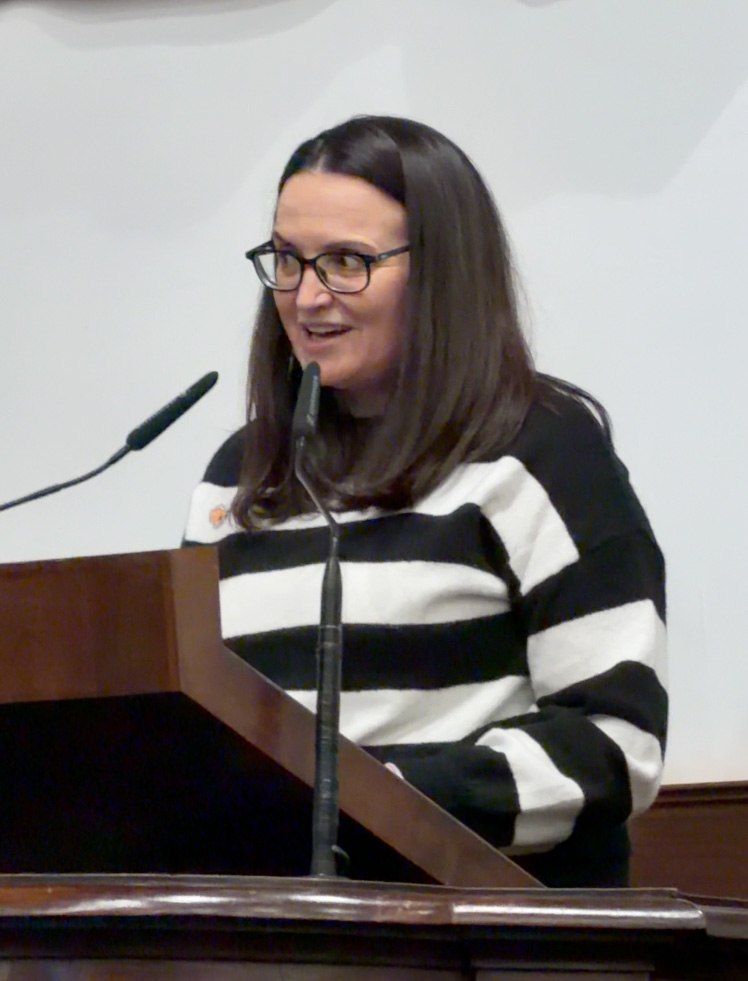
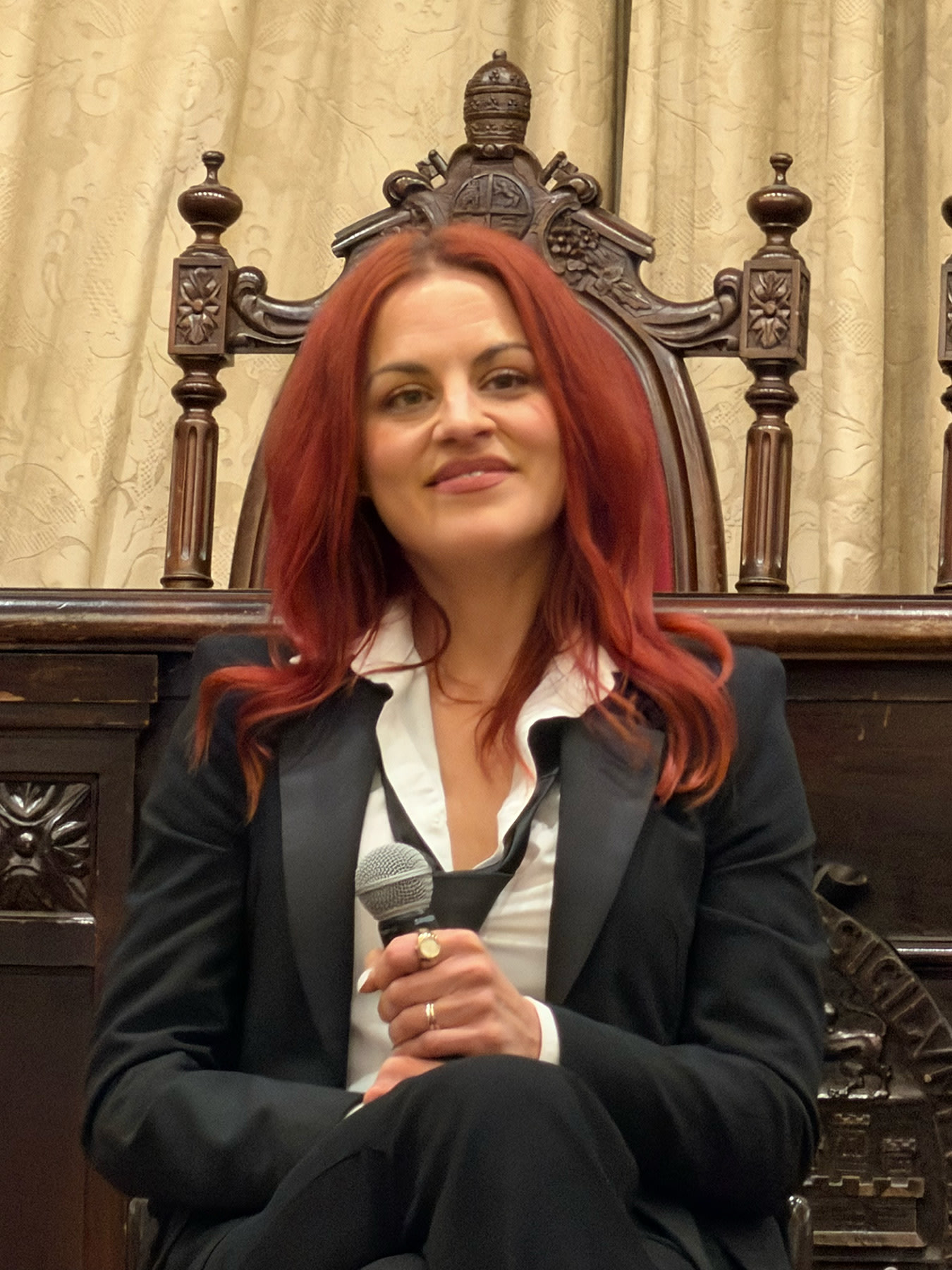
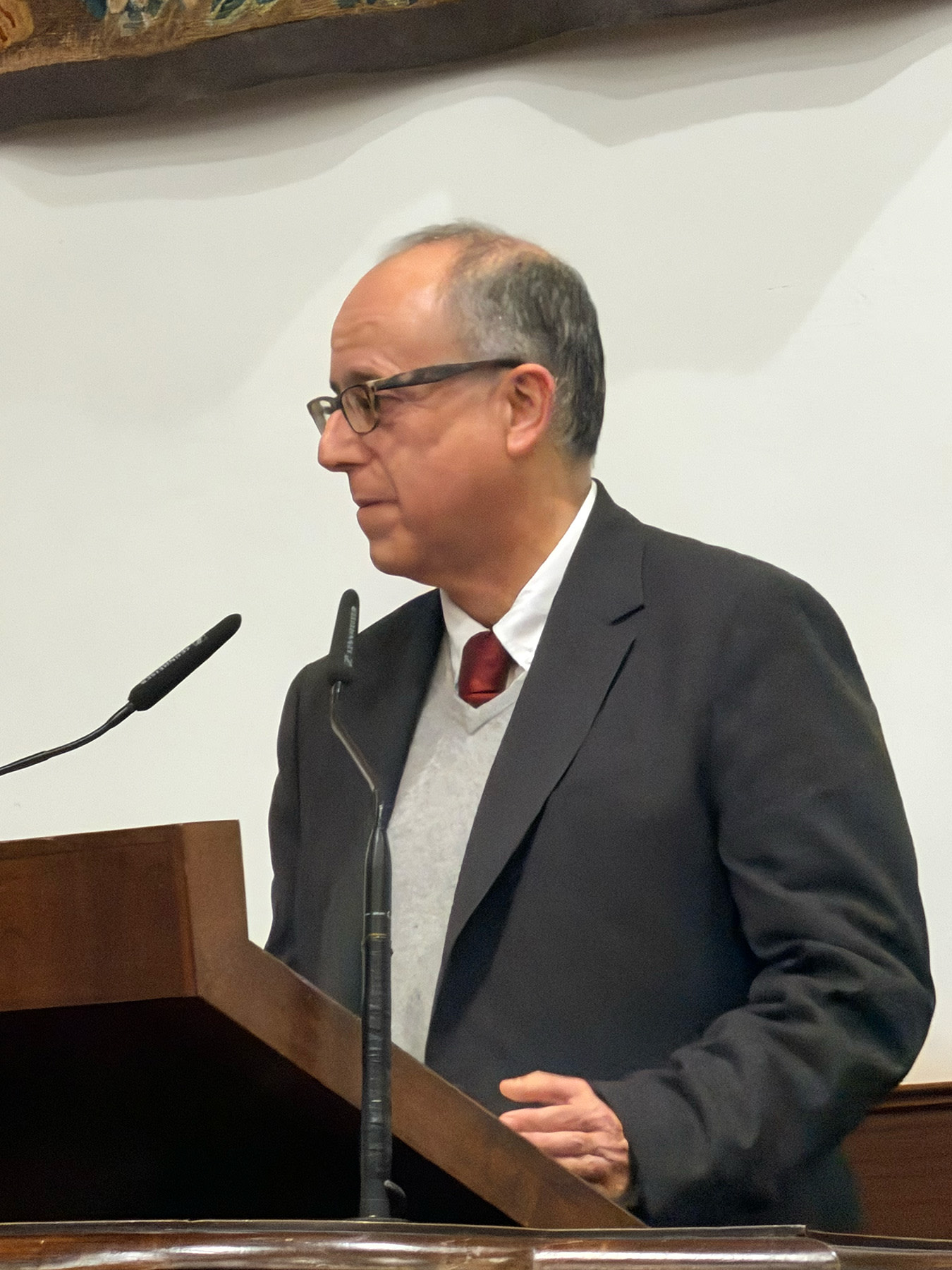
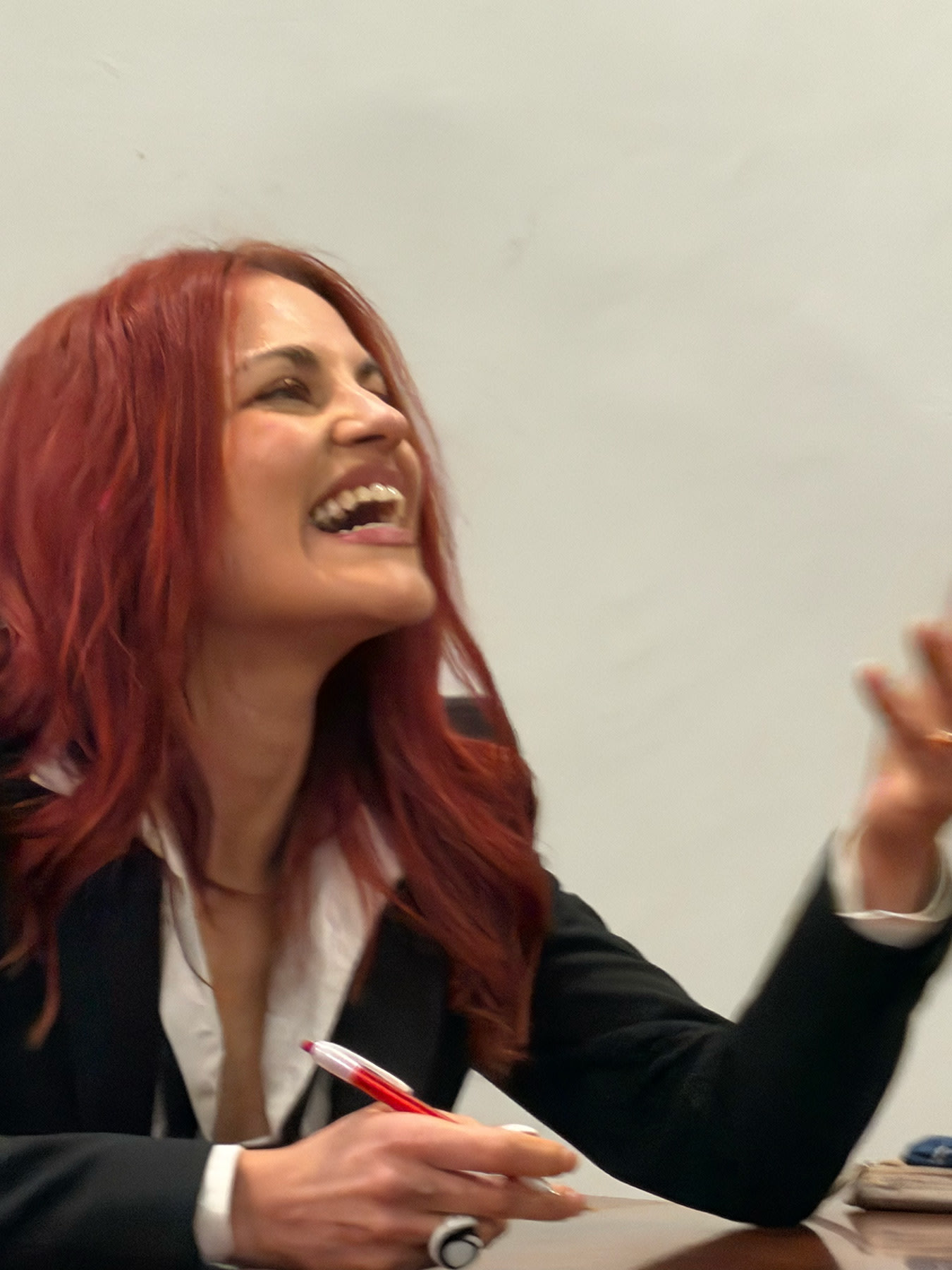
The event held in the Paraninfo of the University of Salamanca on 28 November 2025 became the physical consecration of this new pedagogy. After a technical lecture in the Aula Francisco de Vitoria, something occurred that would have deeply moved Don Santiago himself for its symbolism: the book-signing session lasted for hours, extending until 9:00 PM, the physical closing limit of the Historic Building.
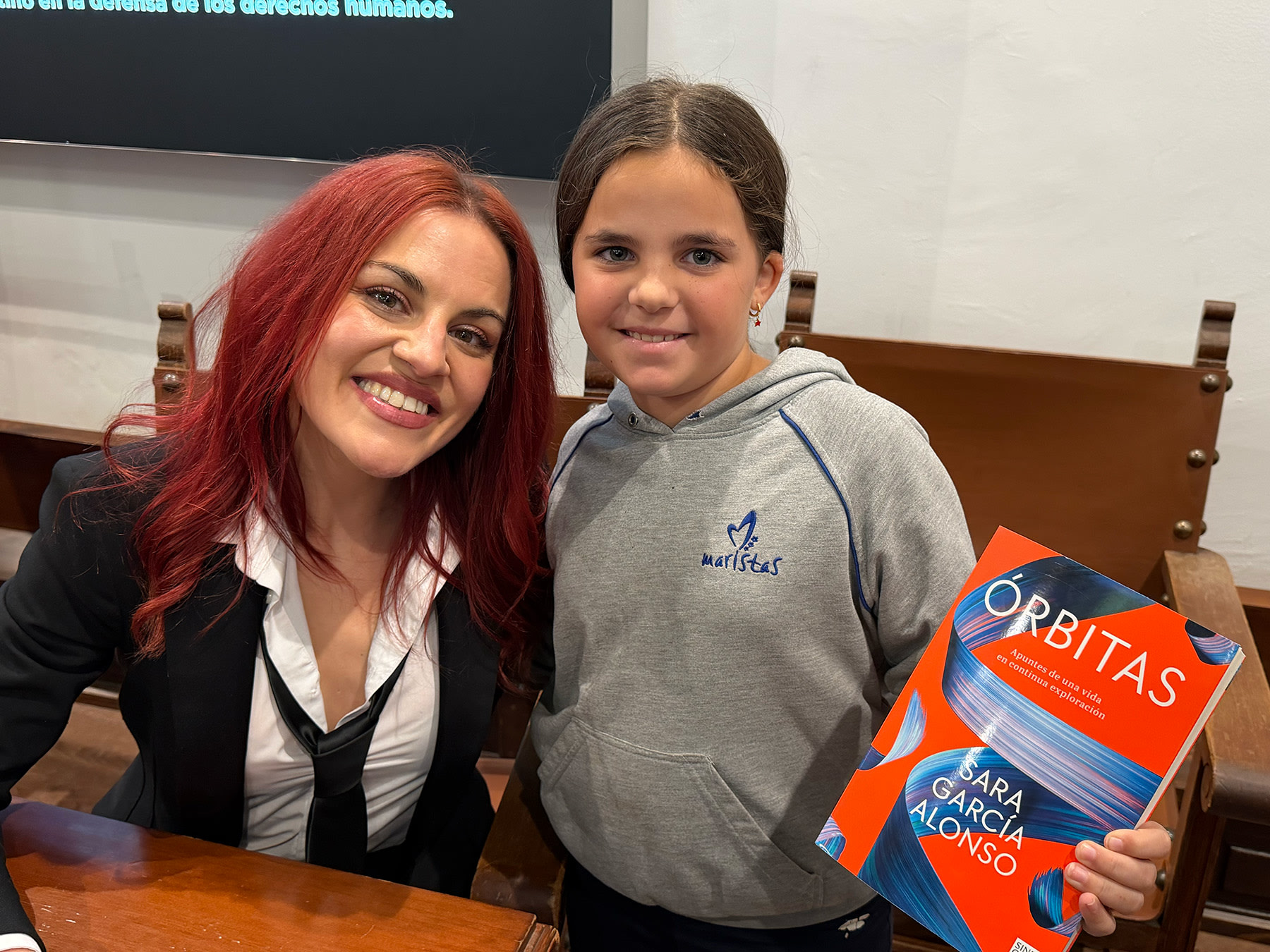 Sara and Carlota for a better present and future.
It was not a simple commercial signing; it was a ritual of knowledge transmission. Hundreds of university students, families, and children waited patiently in the cold Salamancan November to exchange a few words with the astronaut. In that exchange, the book acted as the modern “tonic of the will.” By signing each copy, Sara did not merely leave her signature; she validated the aspirations of a new generation, implicitly telling them: “your fear is valid, but your curiosity is stronger.”
5.3. Echoes of Cajal in Sara’s Ink
The connection with Cajal is inescapable. The master too was a prolific writer who understood the importance of narrative in shaping the minds of the young (Recuerdos de mi vida [Recollections of My Life], Charlas de café [Café Conversations]). Sara takes up that torch, but adapts it to the digital and emotional era. While Cajal exhorted the youth to cultivate an “iron will” to overcome national apathy, Sara invites them to embrace uncertainty as part of the scientific method. That signed book, which students carried home that night under the Salamancan sky, was not merely paper; it was, in the author’s words, an invitation for each person to find their own orbit, reminding them that Spanish science has the potential and the duty to reach the stars.
VI. Final Reflections: The Syllable and the Sound
6.1. The Ultimate Meaning of Exploration
Returning to the Emily Dickinson metaphor analysed in “The Cognitive Cosmos,” the poem concludes with a theological and epistemological sentence: the Brain differs from God only “as the Syllable from the Sound.” The Universe is the Sound: the raw vibration, the immense, mute, and chaotic energy. The Brain (and by extension, the scientist who uses it) is the Syllable: the articulated sound, endowed with meaning, grammar, and consciousness.
Cajal was the “great grammarian of biology” who taught us to read and articulate the syllables of life printed in the cerebral cortex. Sara García is now preparing to read the syllables of life in other worlds, or at least, to carry human consciousness — that fragile and precious “syllable” — into the vast “thunderous sound” of space. Her mission is to impose the order of knowledge (the syllable) upon the chaos of the void (the sound).
6.2. The Fire That Never Ceases
Sara García is not merely an astronaut or an outstanding biologist; she is a “daughter of Cajal” in the deepest sense of the term. In her unbreakable will, in her silent sacrifice far from the spotlights, in her gaze bravely fixed on the unknown, lives the same sacred fire that burned in the laboratory of Zaragoza, Valencia, Barcelona, or Madrid a hundred years ago. She reminds us that, although times change and tools evolve from the monocular optical microscope to reusable space rockets, the essence of science remains unalterable: it is the rebellion of the human spirit against ignorance and darkness.
Upon concluding these lines, one already feels the gravitational weight of history and the hopeful lightness of the future. Let it be recognised that, as Cajal predicted, as long as the brain remains a mystery, the universe will await us, patient and vast, to be discovered. And in that eternal quest, Spain, through figures like Sara and Santiago, has an indispensable word to pronounce before history.