1. Introduction: the carbon schism and the new quantum geometry
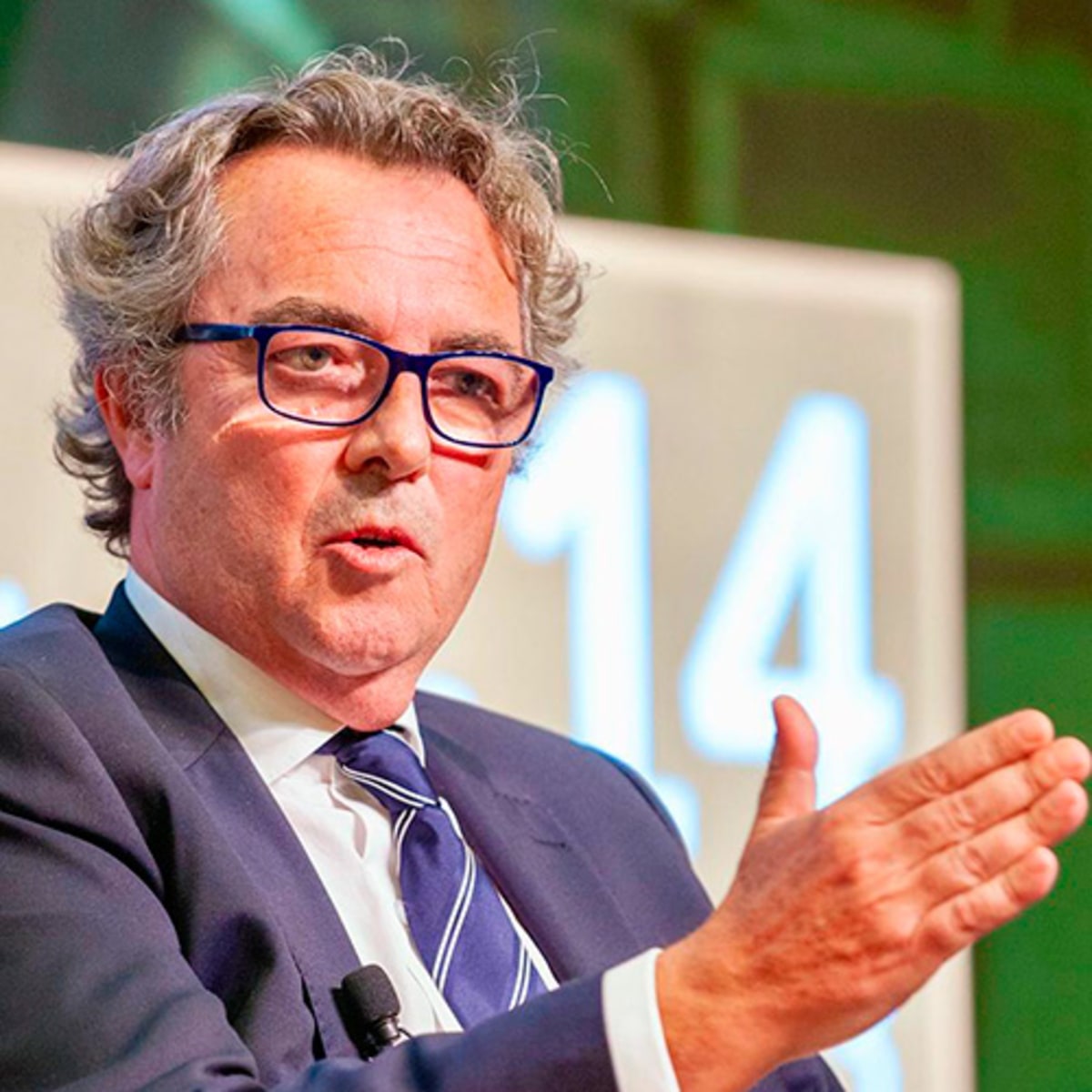
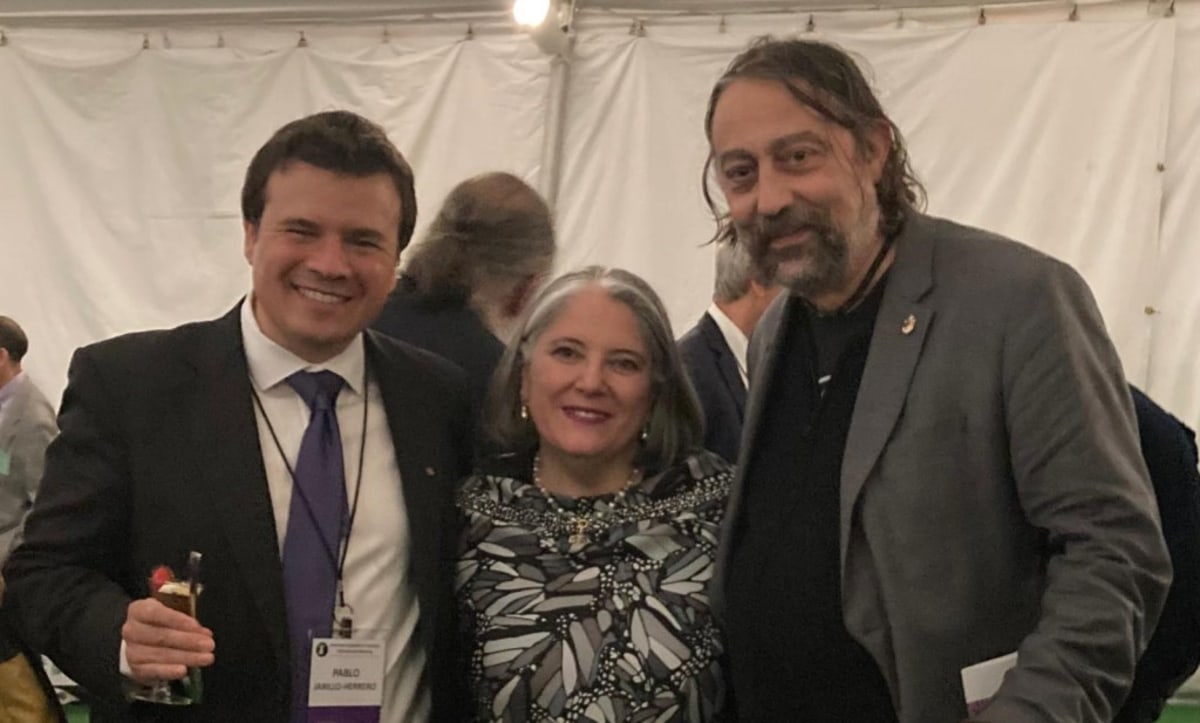
In the history of condensed matter physics, there exist moments of epistemological rupture where the understanding of electron behaviour changes radically. The last decade has witnessed one of these intellectual earthquakes, with its epicentre at the Massachusetts Institute of Technology (MIT), under the direction of the Spanish physicist Pablo Jarillo-Herrero. His work has not only revitalised the study of graphene but has inaugurated an entirely new discipline: twistronics.
The central premise defining Jarillo-Herrero’s career is deceptively simple: geometry is destiny. By manipulating the relative rotation angle between two atomically thin sheets of two-dimensional material, it is possible to fundamentally alter their electronic properties, transmuting an ordinary conductor into a correlated insulator or, more spectacularly, into an unconventional superconductor. This finding, experimentally realised in 2018 with the discovery of “magic-angle graphene,” has provided the scientific community with a platform of “quantum materials on demand.”
2. Genesis of an experimentalist: from Valencia to the global elite
2.1. Academic foundations and early diaspora
Pablo Jarillo-Herrero (Valencia, 1976) obtained his Physics degree from the Universitat de València (1999), his MSc from UC San Diego (2001), and his PhD from TU Delft (2005). After a postdoctoral stay at Columbia University (2006–2008), he joined MIT in 2008, where he rapidly ascended to hold the prestigious Cecil and Ida Green Chair in Physics (2018).
2.2. The laboratory as a “scientific startup”
Jarillo-Herrero implements a research philosophy he describes as a “scientific knowledge startup.” His group operates under a logic of intellectual venture capital: investing in unexplored directions assuming a high probability of failure in exchange for the possibility of a monumental discovery. He often compares his role to that of an explorer in a jungle, evoking the cinematic figure of Indiana Jones.
2.3. The human dimension and leadership
Far from the stereotype of the solitary physicist, Jarillo-Herrero cultivates a multidimensional profile. He is an active champion of diversity in science, having organised in 2016 the first Rising Stars in Physics academic workshop for women. His vision is that science must be as aspirational a career as elite sport.
3. The twistronics paradigm: magic-angle physics
3.1. The theoretical prelude: the forgotten 2011 prediction
In 2011, theorist Allan MacDonald and student Rafi Bistritzer predicted exotic behaviour in rotated graphene bilayers. At exactly 1.1 degrees of twist, the Fermi velocity of electrons would plummet to near zero, creating “flat bands” where electron-electron interactions dominate.
3.2. The experiment of the century: the 2018 confirmation
Led in the lab by doctoral student Yuan Cao, the team published two consecutive Nature articles in March 2018:
- Correlated Mott Insulator: At the magic angle, graphene ceased to conduct electricity at low temperatures.
- Tunable Superconductivity: Applying a small gate voltage to the insulating state produced an abrupt transition to a superconducting state.
The revolutionary aspect was its tunability: the entire phase diagram could be traversed in a single sample by simply turning a voltage dial.
3.3. The mechanics of flat bands
Normal graphene is like a motorway where electrons travel at high speed. At the magic angle, the Moiré interference acts as a monumental traffic jam: electrons stop. In this static situation, Coulomb interactions dominate, forcing electrons to organise collectively, giving rise to exotic states such as superconductivity or orbital magnetism.
| Property | Single-layer Graphene | Magic-Angle Bilayer Graphene |
|---|---|---|
| Electron Speed | ~1/300 speed of light | ~0 (they stop) |
| Dominant Interactions | Kinetic Energy | Coulomb (e-e) |
| Electrical Behaviour | Semimetal / Conductor | Correlated Insulator / Superconductor |
| Control Mechanism | Difficult chemical doping | Electrostatic gate voltage (easy) |
4. The current frontier: recent discoveries (2024–2026)
4.1. The “neuronal switch” and bistable superconductivity (2024)
The team developed a graphene-based superconducting switch exhibiting “bistability”—it can exist in two stable electronic states and switch between them via an ultrafast electrical pulse. This behaviour is analogous to a biological neuron’s firing, laying the foundations for next-generation neuromorphic computing.
4.2. Unconventional ferroelectricity and universal memory (2024–2025)
The team observed ferroelectricity in graphene bilayer systems—a property the symmetric carbon material should not possess. The Moiré-induced symmetry breaking enables it, allowing the integration of memory and logic in the same physical material, eliminating the von Neumann bottleneck.
4.3. Evidence of unconventional superconductivity in trilayers (2025)
Data confirmed that the electron pairing mechanism does not follow conventional BCS theory but is driven by strong electron-electron interactions, validating the hypothesis that magic-angle graphene is a clean analogue of the mysterious cuprates.
4.4. Automation of discovery: AI in the laboratory
The lab has implemented AI and Computer Vision systems to automate the search and characterisation of atomic-thickness material flakes, “industrialising” the serendipity process.
5. Recognition and international consecration
5.1. The Wolf Prize in Physics (2020)
Considered the most reliable Nobel predictor, awarded jointly to Jarillo-Herrero, MacDonald, and Bistritzer.
5.2. BBVA Foundation Frontiers of Knowledge Award (2025/2026)
Awarded to Jarillo-Herrero and MacDonald for inaugurating the “era of twistronics.”
5.3. Nobel candidacy and other honours
Since 2024, Jarillo-Herrero features on the Clarivate Citation Laureates list. Additional recognition includes:
- Oliver E. Buckley Prize (2020): The APS’s highest honour in condensed matter.
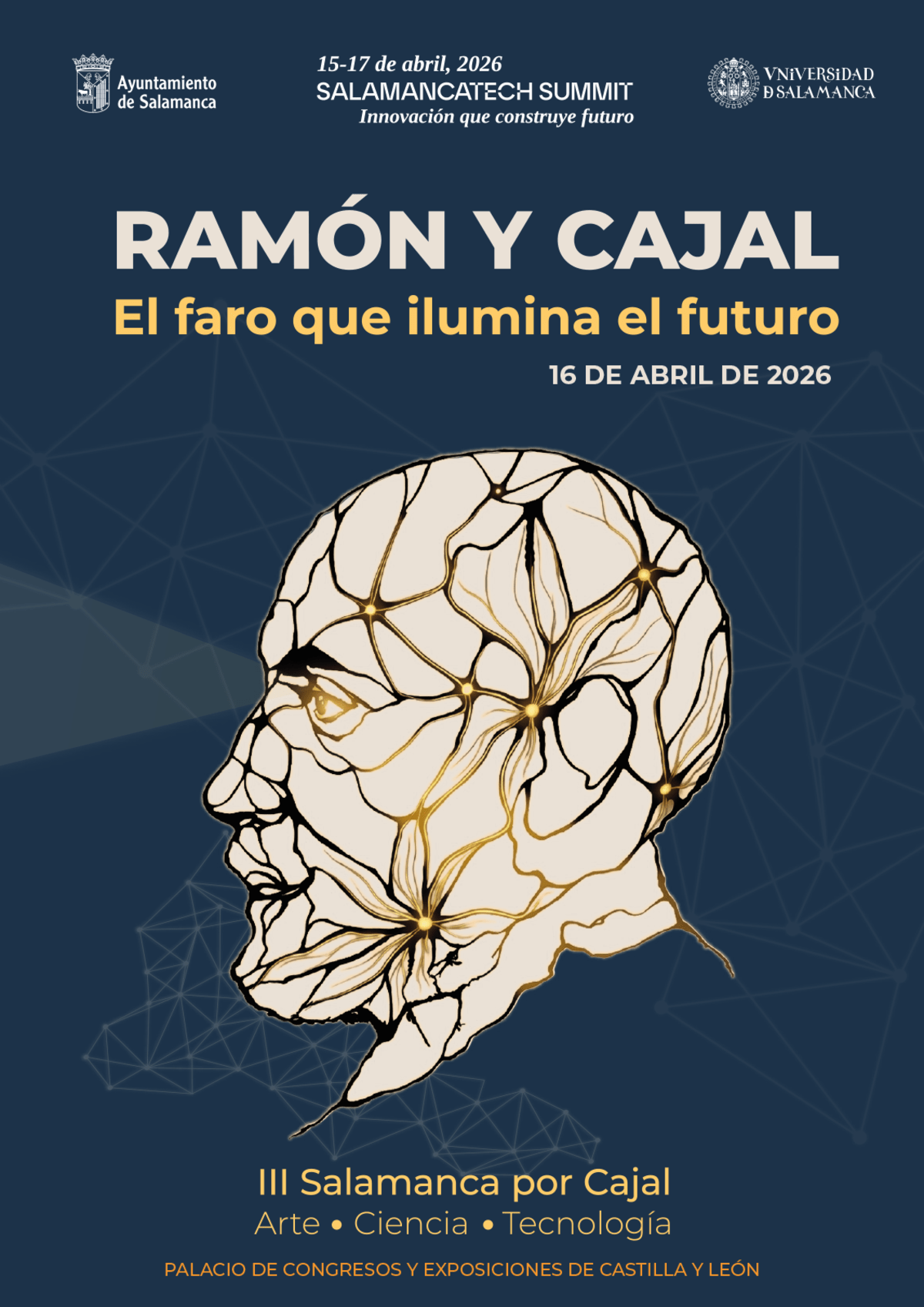
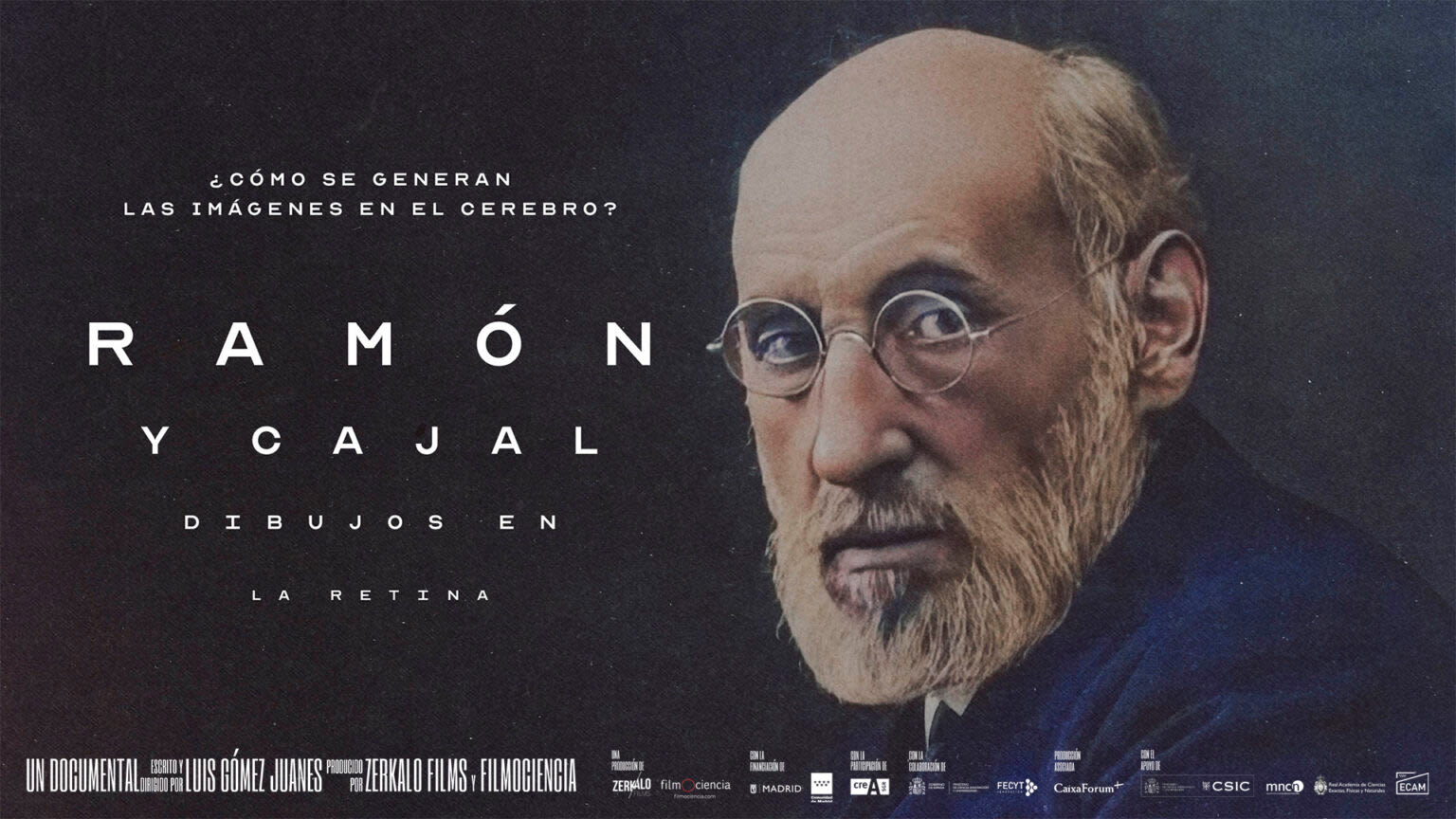
- Ramón y Cajal Medal (2023): From the Royal Academy of Sciences, closing an emotional circle with his historical reference.
- Member of the US National Academy of Sciences.
6. The Cajalian connection: from the neuron to the Moiré pattern
The parallel between Cajal and Jarillo-Herrero transcends mere rhetoric. Both demonstrated that the fundamental unit of their respective systems (the neuron, the graphene layer) only acquires meaning through its connections with others. Both proved that “geometry is destiny”: Cajal showed that dendritic morphology dictates neural function; Jarillo-Herrero that a 1.1-degree twist dictates electronic function.
Jarillo-Herrero himself has acknowledged that reading Cajal’s Tonics of the Will during his early years in the United States reinforced his conviction that perseverance and independence of thought are the true engines of scientific discovery. His trajectory—from Valencia to MIT via Delft and Columbia—mirrors Cajal’s own journey from Petilla de Aragón to the Nobel via Zaragoza, Valencia, and Barcelona.
7. Conclusions and outlook
Pablo Jarillo-Herrero has demonstrated that the technological revolution of the future is not about discovering exotic materials but about learning to look at the familiar from the right angle. His work transforms our understanding of matter and opens pathways toward room-temperature superconductivity, neuromorphic computing, and quantum technologies.
As the Spanish candidate with the strongest claim to the Nobel Prize in Physics, Jarillo-Herrero embodies the enduring relevance of the Cajalian values: will, method, and the audacity to explore paths no one else dared to take.