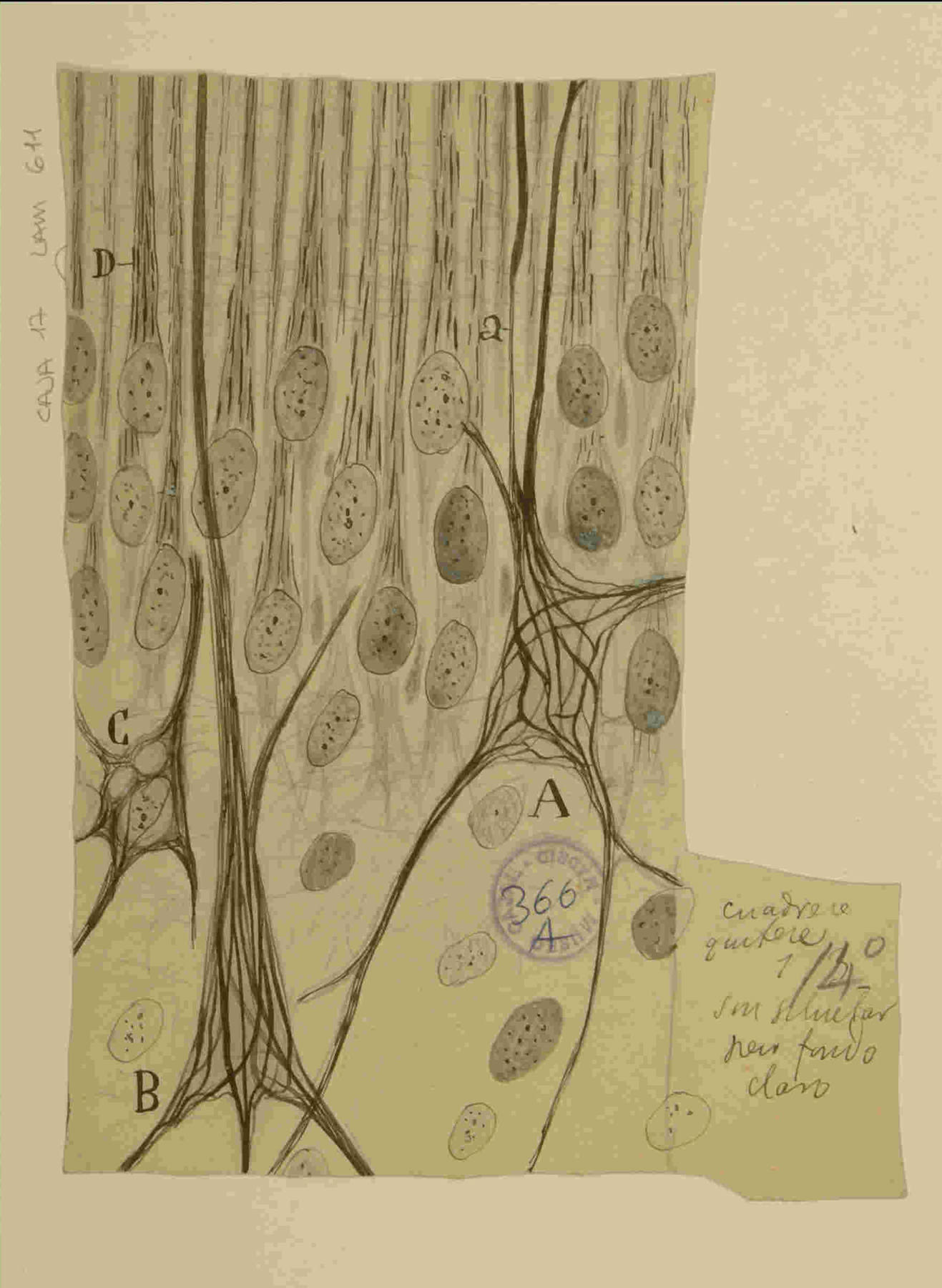
“Every man can be, if he sets his mind to it, the sculptor of his own brain.” (“Todo hombre puede ser, si se lo propone, escultor de su propio cerebro.”) — Santiago Ramón y Cajal
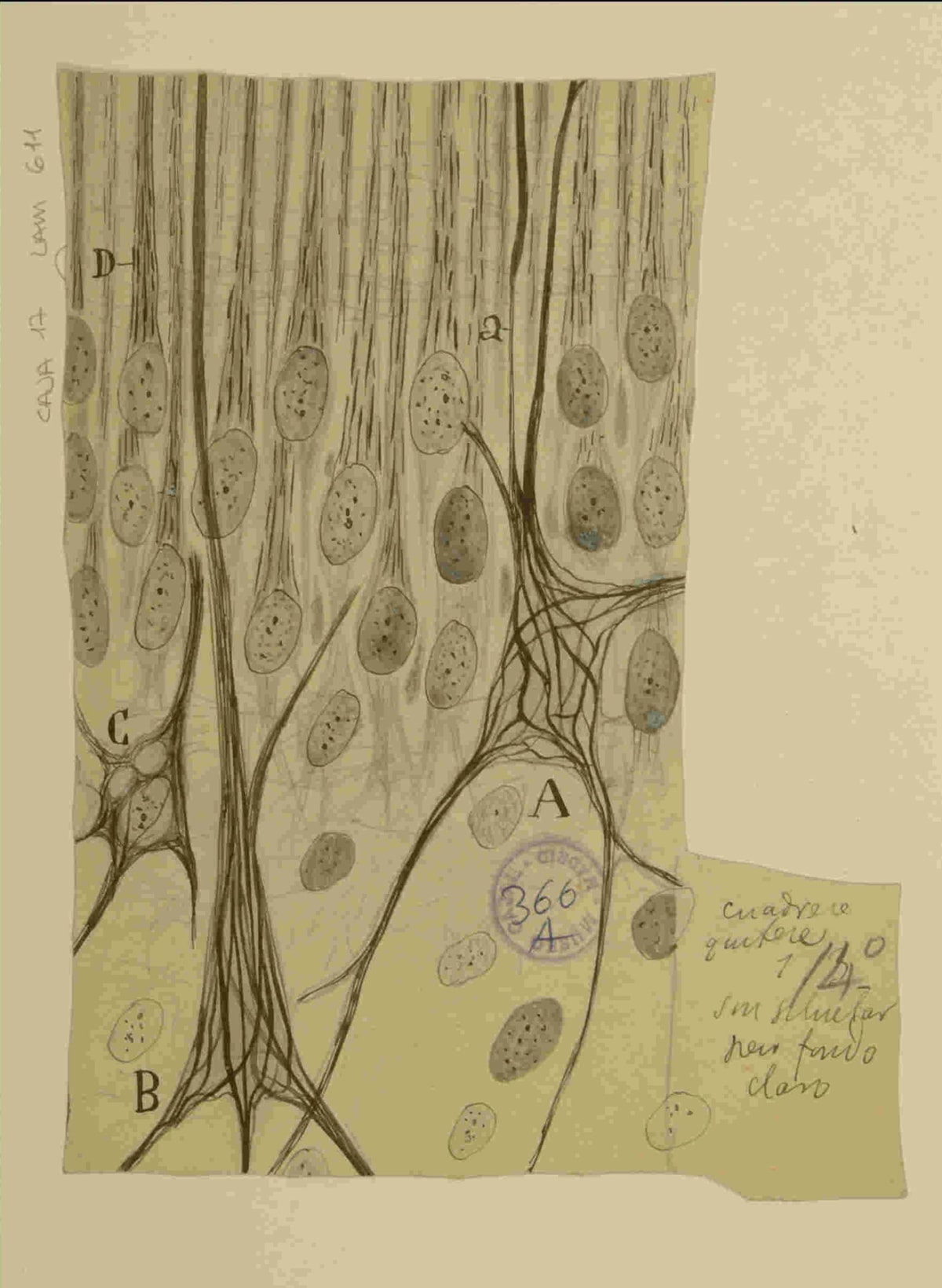
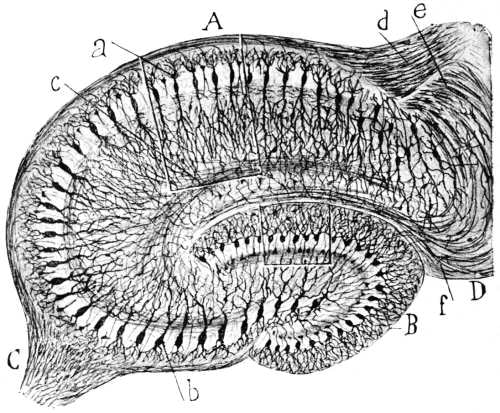 Classical architecture of the hippocampus and the fascia dentata. This diagram (Fig. 41) details the neuronal typology originally described by Golgi and Sala. Today, the neurobiological vanguard expands this structural map, revealing that the activity of these populations is not only morphological but follows universal stochastic laws for encoding navigation in complex environments.
Introduction: the eternal relevance of the fundamental question
When Santiago Ramón y Cajal peered through the eyepiece of his Zeiss microscope at the Calle del Príncipe, he did not merely see static cells; he saw “the butterflies of the soul,” a “garden of neurology” where life and thought intertwined in a dance of infinite complexity. Today, in 2025, neuroscience has replaced India ink and silver nitrate with single-cell sequencing and optogenetics, but the obsession remains the same: deciphering the laws that govern that “impenetrable forest” of neurons.
This article presents a synthesis of monumental research published in volume 113 of the journal Neuron (April 2025). We shall address them not as isolated facts but as the continuation of a dialogue initiated by the Spanish Neurohistological School.
I. The Geometry of Thought: from Cajal’s Labyrinth to Universal Stochastics
Cajal devoted his life to demonstrating that the brain was not a diffuse network but a system of precise contiguity. The research by Mainali, Azeredo da Silveira, and Burak offers a surprising answer that reconciles order with apparent chaos, centred on the hippocampus, the seat of our spatial memory.
The “Place Code” and the Gaussian Process
The study demonstrates that synaptic inputs to place cells can be modelled as a Random Gaussian Process. Using the Kac-Rice formula, it is shown that if the firing threshold is sufficiently high, a universal navigation structure emerges. The mathematics predict that the distribution of neuronal activity fields follows identical laws regardless of the environment.
Cajal’s Echo: This finding vindicates a vision of the brain where random connectivity is not noise but a functional resource enabling high-capacity spatial representations without the need for pre-wired topography.
II. The Dual Code of Stratification: the Vanguard of the Instituto Cajal
Dr Liset Menéndez de la Prida, Director of the Cajal Neuroscience Centre (CNC-CSIC) and Distinguished Cajalian, returns us to the structural precision that obsessed the master. Her recent study (Esparza et al.) in the hippocampus reveals that the “Cognitive Map” is not a single entity but a stratified system of parallel channels.
Parallel Maps and Ring Manifolds
Using miniscope imaging techniques, the team identified that the pyramidal cells of the deep and superficial layers of the CA1 region form independent spatial maps. Their activity is organised in mathematical varieties or “manifolds” with a 3D ring topology that simultaneously encodes position and direction of movement.
Most surprisingly, these layers react differently to change: while the superficial representation is stable, the deep one undergoes geometric transformations when the orientation of the environment is manipulated.
III. The “Second Brain”: Refining the Maps of Auerbach and Meissner
The work by Hamnett, Bendrick et al. takes up Cajal’s enteric legacy, using genetic tools to dissect a neuronal population the sage could only intuit by their forms: the glutamatergic neurons (VGLUT2⁺).
Architecture of Precision in the Colon
This study reveals an astonishing functional dichotomy in the large intestine, identifying two types of neurons acting as orchestra conductors:
-
Descending Longitudinal Interneurons (VGLUT2ᴸᵒⁿᵍ): Long-distance cables coordinating the peristaltic wave across centimetres.
-
Circumferential Neurons (VGLUT2ᶜⁱʳᶜ): A novel finding. These neurons embrace the intestine in local rings to enable mixing and storage.
IV. The Third Element Revealed: the Tragedy of Clonal Microglia
It was Cajal’s disciple, Don Pío del Río-Hortega, who in 1919 identified microglia as the “Third Element” of the nervous system. The study by Vicario, Geissmann et al. illuminates the dark side of these guardian cells, showing how they can become architects of neurodegeneration through somatic mosaicism.
In patients with histiocytosis, clones of microglia carrying the BRAF^V600E mutation colonise the brain. These cells can originate as early as the yolk sac, expanding silently for decades before creating a toxic environment that suffocates neighbouring neurons in the brainstem and cerebellum.
V. Neuronal Economy: the Logistics of Autophagy at the Synapse
How does a cell that must live 80 years without dividing maintain its integrity? The review by Karpova, Haucke, and Kreutz explores neuronal autophagy, the internal recycling system that enables the survival of the complex synaptic proteome.
Given the enormous distance between the synapse and the cell body, the neuron generates autophagosomes locally at the presynapse using proteins such as ATG9. Upon fusing with other organelles, they form amphisomes that travel back to the soma carrying survival signals. If this transport fails, communication is cut and the neuron begins to die retrogradely, a phenomenon that explains the progression of diseases such as Alzheimer’s.
Conclusion: science as an unfinished work
By integrating these 2025 advances, an image of the brain emerges that is at once faithful to Cajal and radically new. We see an organ where functional geometry is born from chance but refined through the precise stratification of its circuits. The work of figures such as Liset de la Prida at the Instituto Cajal demonstrates that the sage’s interdisciplinary curiosity continues to beat with force.
Don Santiago wrote: “The worst thing is not to commit an error, but to try to justify it, instead of using it as a providential warning of our ignorance” (“Lo peor no es cometer un error, sino tratar de justificarlo, en vez de aprovecharlo como aviso providencial de nuestra ignorancia”). Modern neuroscience, by expanding the classical maps, does nothing but honour the insatiable spirit of the Master.
This article has been prepared thanks to research from downloadable volume 113 of Neuron (2025), in tribute to the work of neuroscientists.
Cajal: Note on the Auerbach plexus of the frog — Docs.Santiagoramonycajal
150689x01 — Docs.Santiagoramonycajal