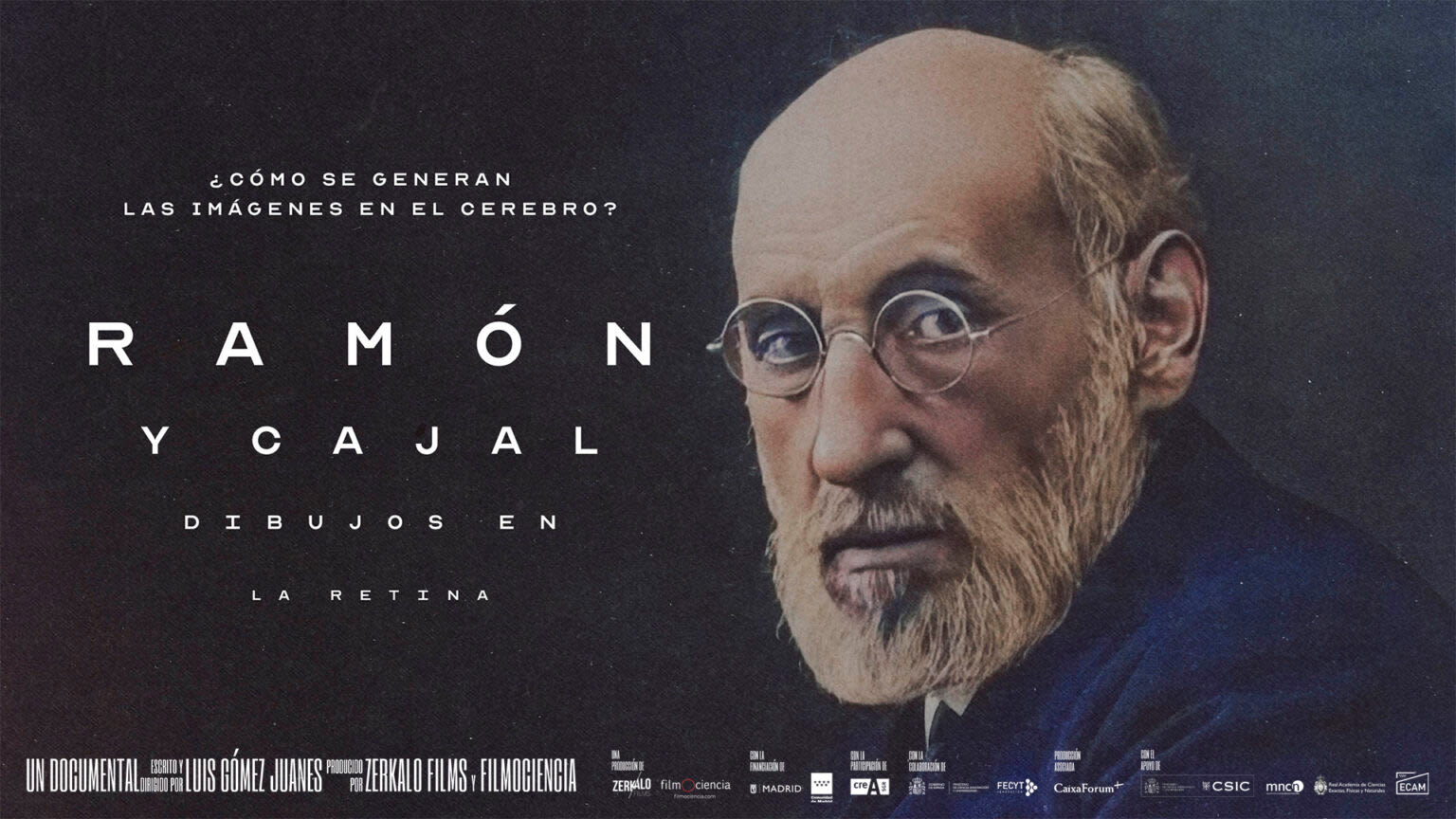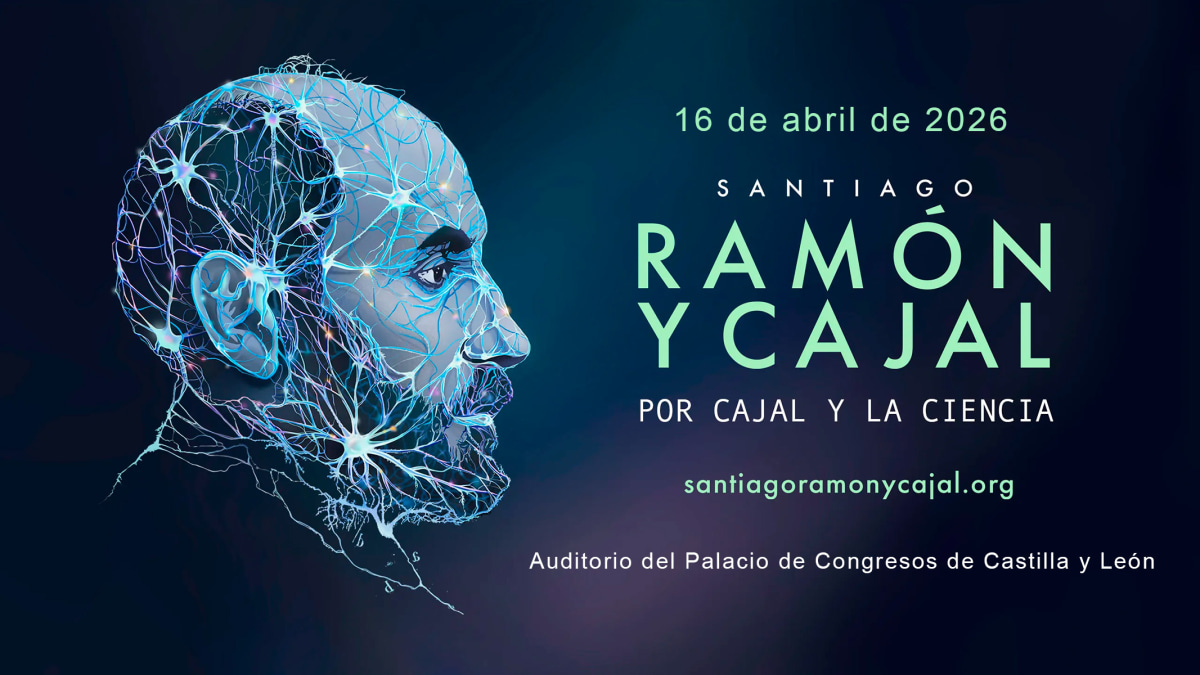
We will analyse how the legacy of D. Santiago Ramón y Cajal inspires predictive medicine and entrepreneurship at the Salamanca Tech Summit 2026, highlighting the arrival of the personal digital twin as the culmination of the Nobel laureate’s dream.
The city of Salamanca is preparing to turn the legacy of Santiago Ramón y Cajal into the engine of twenty-first-century innovation. From 15 to 17 April 2026, the Palacio de Congresos de Castilla y León will host the third edition of the Salamanca Tech Summit, under the motto “Innovation that builds the future.” At this gathering, Don Santiago’s name will not be a mere historical reference but the central axis of strategic sessions demonstrating why his thought continues to lead the science of tomorrow.
Registration is now open! Do not miss the opportunity to attend this internationally renowned event free of charge. You can secure your place on the official website or through the Eventbrite platform.
The digital renaissance and Cajal’s Salamancan heritage
The bond between Santiago Ramón y Cajal and the University of Salamanca (USAL) is deep and symbolic. The Salamanca Tech Summit 2026 seeks to revitalise this connection through “COMHIS: Hispanidad y Tecnología,” arguing that Cajal’s thought is the natural evolution of the humanism forged by the School of Salamanca in the sixteenth century. While the Salamancan theologians and jurists established the foundations of international law, Cajal established the foundations of the “right of the neuron” to be understood as an independent and sovereign unit.
Epistemological parallels: from Francisco de Vitoria to the neuron doctrine
Cajal’s “Spanish School of Neurohistology” reflects the lineage of masters and disciples who, like the Salamancan masters of the Golden Age, extended a universal thought based on independence of judgement and moral rigour.
| Concept | School of Salamanca (16th c.) / Cajal School (20th c.) / Salamanca Tech Summit (2026) / Ethical Core |
|---|---|
| Unit of analysis | The individual (person). The neuron (cell). The bit / node (data). |
| Methodology | Philosophical reasoning. Microscopic observation. Algorithms and quantum computing. |
| Social impact | International order. Regeneration of science. Digital economy and wellbeing. |
Structure of the Salamanca Tech Summit 2026: Think, Make, Care
The identity of Salamanca Tech is built upon three constellations that defined Cajal’s polymath life:
Think: the laboratory of imagination
This block explores generative AI and quantum computing. Cajal’s relevance is both technical and visionary: his discovery of dendritic spines and the axonal growth cone is the biological foundation of artificial neural networks. His legacy is so universal that, in 1998, the NASA Neurolab mission carried his drawings into space as a tribute to the “first cartographer of the brain.”
Make: from audience to the development of critical infrastructures
The “MAKE” pillar focuses on transforming Salamanca into a technology hub. Cajal was a pioneer in creating critical infrastructures, driving the birth of the Alfonso XIII National Institute of Hygiene and persuading the Government to create a modern Laboratory of Biological Research in 1901. Today, this spirit lives on in the Abioinnova incubator and the Ciudad del Talento centre. The Summit includes networking sessions to connect venture capital with local talent, following the model of excellence and merit that Cajal promoted.
Care: technology for a human city
Under the theme “Biotechnology for a better life,” the focus is on digital health and sustainability. This block highlights how modern technology is the contemporary extension of Cajal’s concern for public hygiene, medicine, research, and social development.
Thursday, 16 April 2026
-
“Why Cajal?” (11:30 – 11:45): Dr Carolina Hurtado (Universidad CEU San Pablo) analyses why his legacy remains the cornerstone of current science.
-
“Why does Cajal continue to lead the science of the future?” (11:45 – 12:10): A conversation with Jesús Martínez Frías (CSIC-UCM), David Ezpeleta Echávarri (Spanish Society of Neurology), and José María Medina Jiménez (Vice President of the Scientific Council of the Fundación Ramón Areces and Professor Emeritus of USAL). Leadership and mindset: will and polymath instinct.
-
“Extraordinary brains” (12:10 – 12:25): A look at the complexity of the brain with Alberto Rábano (Neuropathologist and Scientific Director of the CIEN Tissue Bank) and Arantxa Tabernero (Director of the Institute of Neurosciences of Castilla y León — INCYL). Science communication and the democratisation of knowledge.
-
“From telemedicine to the personal digital twin” (12:25 – 13:00): A journey through the evolution toward a more predictive, data-driven medicine. This round table features Jesús María Hernández Rivas (USAL), Santiago González Izard (ARSOFT), and Carlos Escobar Cervantes (Hospital La Paz), who affirms: “We already have the personal digital twin that Cajal wanted.”
-
“Why does Spain need a Cajal Museum?” (13:00 – 13:25): Debate with Elena Giné Domínguez (Cajal Legacy at the Universidad Complutense), Fernando de Castro Soubriet (custodian of the legacy of D. Fernando de Castro), José Antonio Montejo Urioste (Cajal’s great-great-grandson), and Juan del Río-Hortega Bereciartu (custodian of the legacy of D. Pío del Río Hortega). Institutional commitment: toward the National Cajal Museum.
Ramón y Cajal Awards: celebrating the legacy and the future
At 1:25 pm, the Summit reaches its institutional climax with the presentation of awards for research excellence:
-
II D. Santiago Ramón y Cajal Prize, Professor of Histology: Granted by the Spanish Society of Histology and Tissue Engineering (SEHIT). The ceremony will include a special address by Dr Manuel Garrosa (President of SEHIT and Deputy Director of INCYL) entitled: “Cajal: From Histology to Connectomics.”
-
I Marquesa de Ramón y Cajal Prize: An award of deep familial and institutional significance, to be presented by Dña. María Urioste Ramón y Cajal, Marquesa de Ramón y Cajal and great-granddaughter of the Nobel laureate.
Neuroscience and technology: the I Cajal NeuroChess Global Championship
A singular milestone of the event is the I Cajal NeuroChess Global Championship, directed by Grand Master Amador González de la Nava (Mainchess.com). For Cajal, chess was an “intellectual gymnastics” that reflected the strategy of synaptic connections. The tournament unites human strategic thinking with computational power in Salamanca, cradle of modern chess.
The Declaration of Salamanca for Science
We promote the “Declaration of Salamanca for Science”, calling for 17 October to be a national holiday and “Day of Cajal and Science.” It is a call for a culture of recognition for our most universal figure.
Conclusions: the Salamancan path of science
The Salamanca Tech Summit 2026 demonstrates that technology without humanism is noise. By placing Santiago Ramón y Cajal at the centre of the conversation on AI and biotechnology, Salamanca reaffirms its role as a beacon of knowledge. As the sage said: “Every human being, if they set their mind to it, can be the sculptor of their own brain” (“Todo ser humano, si se lo propone, puede ser escultor de su propio cerebro”). In April 2026, Salamanca will sculpt the future of Spanish science.
Be part of history! Register for free at the epicentre of innovation: https://summit.salamancatech.es/ and join the movement for Science.