When Santiago Ramón y Cajal voluntarily renounced part of his civil servant’s salary — from 10,000 to 6,000 pesetas — out of empathy with the “peasant taxpayer,” he could not have imagined that this gesture would inspire, more than a century later, a new philosophy of public oversight. Antonio Arias Rodríguez, Distinguished Cajalian, PhD from the University of Salamanca and former Auditor General of the Principality of Asturias, has turned that anecdote into a programme: the auditor of the twenty-first century must be, in his own words, a “maker of honesty.”
Graphite, diamond and graphene: the three states of public oversight
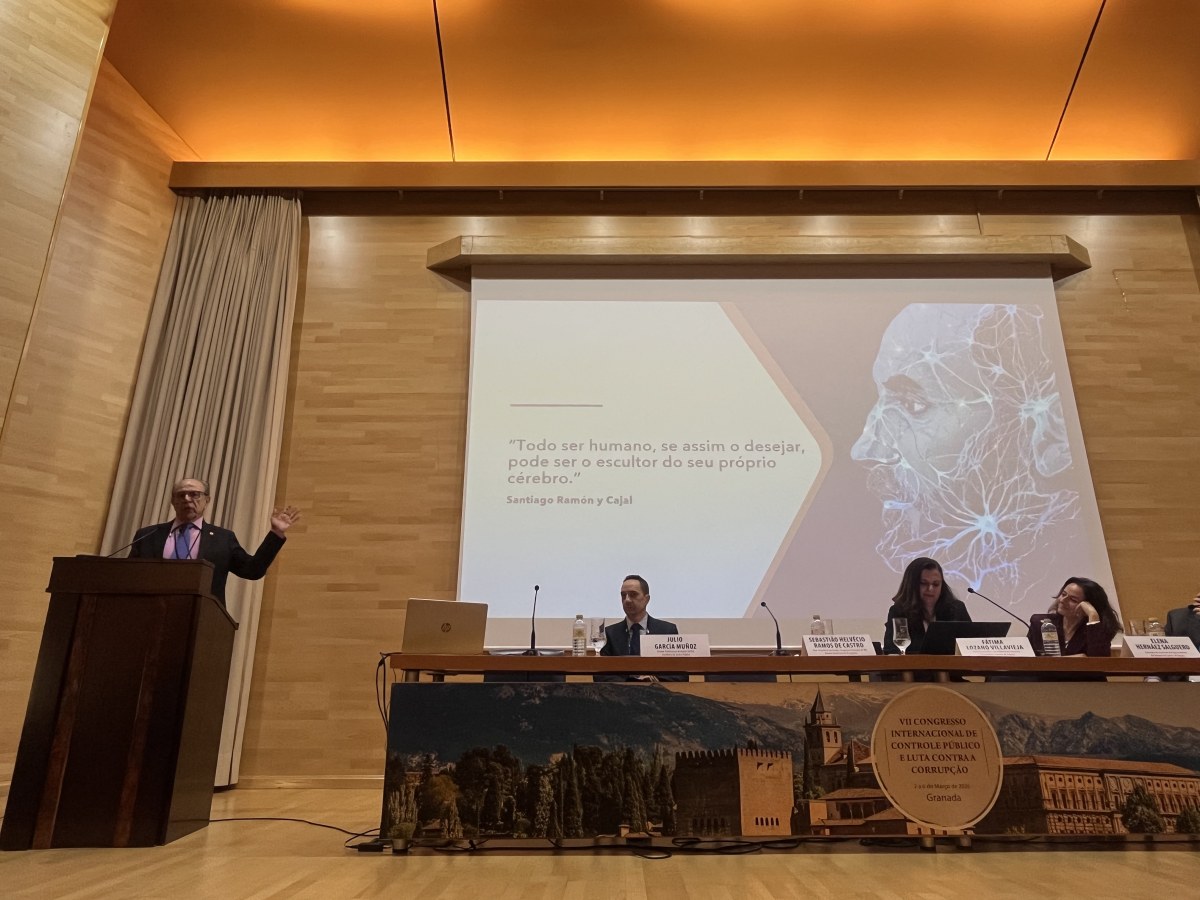
Arias’s central proposal — developed on his blog fiscalizacion.es and presented by Dr Sebastião Helvecio Ramos de Castro at the VII International Public Oversight Congress held in Granada in March 2026 — borrows a metaphor from chemistry. Carbon can take on radically different forms depending on how its atoms are arranged: graphite, diamond or graphene. The same is true of auditing.
The graphite model represents traditional auditing: it detects errors, flags irregularities, but lacks transformative force. The diamond model moves towards polished data and valuable results. But the highest aspiration is the graphene model: a predictive, transparent and resilient audit that links citizens to the real outcomes of public management.
This conceptual architecture was presented by Dr Sebastião Helvecio Ramos de Castro, Vice-President of Brazil’s Rui Barbosa Institute (IRB) and co-director of the Congress, Distinguished Cajalian and Distinguished Guest of the City of Salamanca, whose first slide was dedicated — as in previous years — to Santiago Ramón y Cajal. Helvecio has formalised the proposal in a formula:
2 Ci + (C · Si) + Nt = Graphene
Where Ci is citizen participation, C·Si is hybrid intelligence (human carbon and digital silicon) and Nt are international technical standards.
Cajal seduces North American auditors
The echo of Cajal’s legacy has reached the other side of the Atlantic. In April 2026, the US GAO — Government Accountability Office — published its second periodic report on emerging technologies, identifying neural implants as one of the three trends that the US Congress must monitor over the coming decade.
Neural implants for cognitive enhancement would enable direct brain-to-brain communication, accelerated learning and hands-free control of digital devices. But they would also compromise mental privacy and individual autonomy. This is precisely the territory of neurorights: the new fundamental right that UNESCO, Chile and the European Union are beginning to legislate to protect what Cajal himself would call the human being’s last sanctuary.
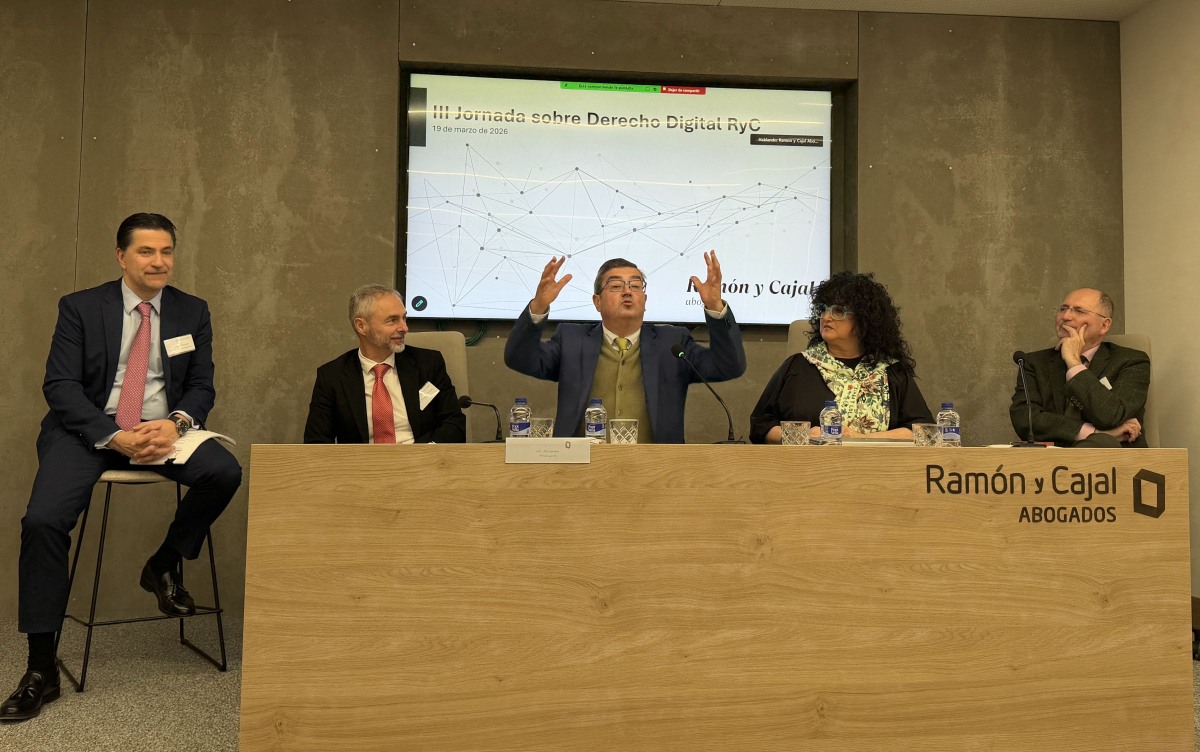
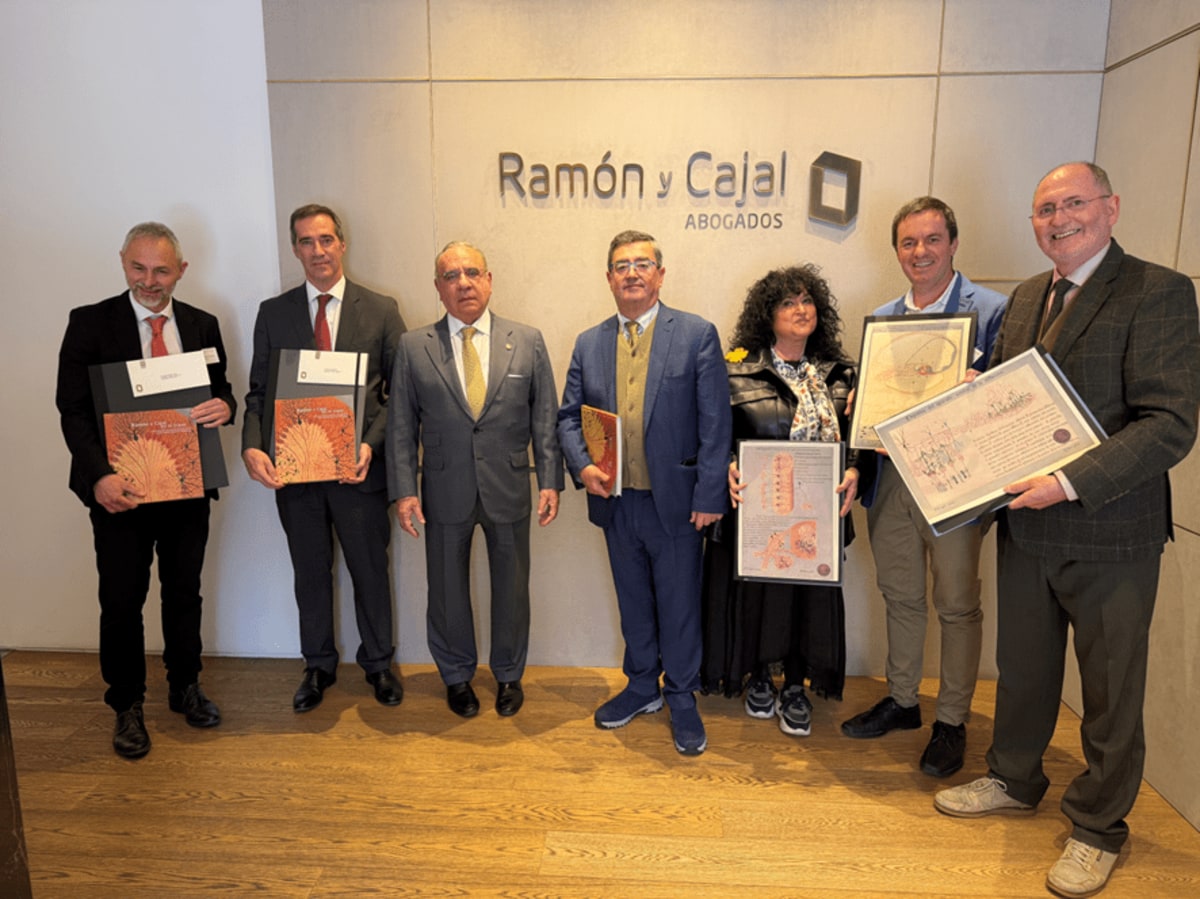
Arias took part in the III Digital Law Conference organised by the Ramón y Cajal Abogados law firm in Madrid, where the legal frameworks for protecting neural data, mental privacy and algorithmic bias were debated. A historical irony: the firm that bears the Nobel laureate’s name debating the rights his science made necessary.
The Jevons paradox and the algorithm auditor
In his article “Expectations, technologies and the Jevons paradox”, Arias applies to the public sector an observation by the Victorian economist William Stanley Jevons: when the efficiency of a technology increases, its consumption does not decrease but grows. What happened in the nineteenth century with coal happens today with data: the more we invest in digitalisation, the more new processes appear and the more budget evaporates.
The modern auditor can no longer be limited to reviewing invoices. They must audit algorithms, verify that automated decision-making systems do not discriminate, and ensure that AI in the service of the State respects fundamental rights. This is what Arias calls the silicon axis: the lens that allows massive deviations to be seen in real time. But without the carbon axis — the ethics, empathy and human judgement that Cajal embodied — that silicon is irrelevant.
Salamanca, 16 April: the meeting of two legacies
On 16 April, in the Sala Menor of the Palacio de Congresos in Salamanca, the III Salamanca por Cajal: Art, Science and Technology 2026 will bring together researchers, jurists and technologists to debate exactly these questions. The session “Cajal from AI to neurorights” — moderated by José Francisco Adserias with Ricardo Rivero and Rosario Arévalo — connects directly with Arias’s work: how do we protect the human mind in the age of neurotechnologies? What role belongs to law, audit and public ethics?
The answer, according to Arias, was given by Cajal more than a century ago: “Honesty is the only aristocracy.” The auditor who internalises that maxim needs no algorithm to know what to do.
Sources: fiscalizacion.es · GAO, Science and Tech Spotlight (2026) · Rui Barbosa Institute · III Digital Law Conference, Ramón y Cajal Abogados